
 By Reynand Wu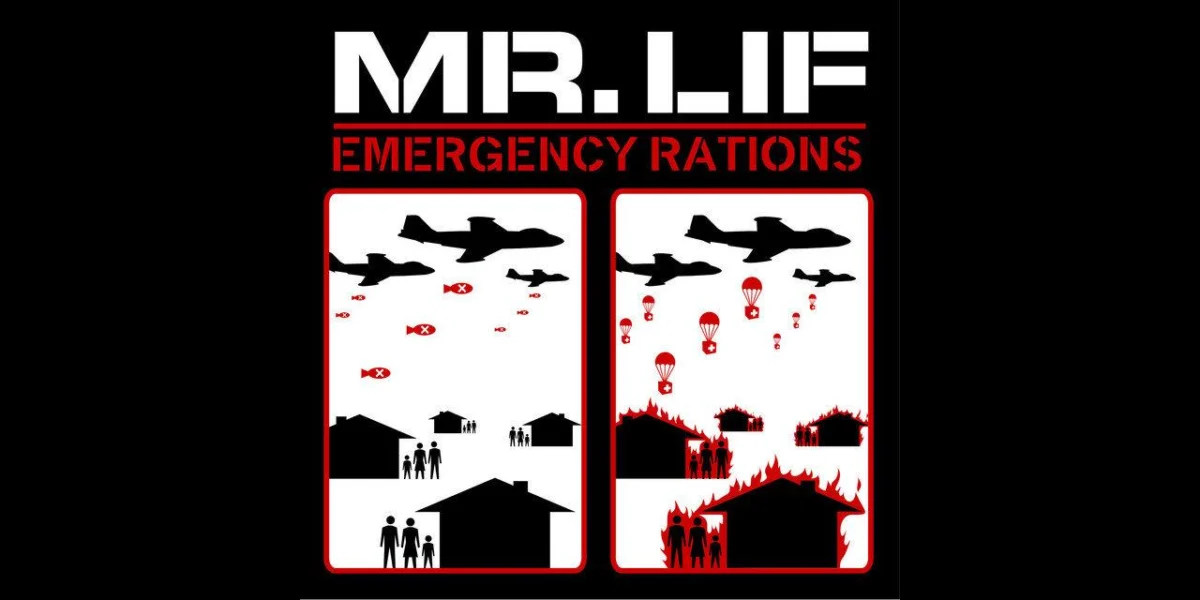
During the early aughts, the independent hip-hop landscape was dominated by a singular, defiant gravitational force: Definitive Jux. Founded by El-P following the collapse of Rawkus Records, the label promised a new frontier for the genre—one where boundary-pushing production met uncompromising, intellectual, and often radical lyrical content. Among the label’s roster, Mr. Lif emerged not merely as a contributor, but as the archetype of the "conscious rapper."
While Definitive Jux fostered a diverse array of experimentalists, it was Lif who provided the label with its foundational voice. His 2000 debut, the Enter the Colossus EP, served as the label’s inaugural release, signaling that El-P envisioned Lif’s specific brand of socio-political critique as the bedrock of the Def Jux identity.
Chronology: From Underground Protest to Modern Resonance
Mr. Lif’s ascent continued with the 2002 release of the Emergency Rations EP. Functioning as a narrative bridge—a "place-setter"—it arrived just months before his seminal full-length album, I, Phantom.
The EP opens with a skittish, cinematic skit detailing the rapper’s abduction by federal agents. At the time of its release, critical reception was mixed; Pitchfork famously dismissed the opening bit as "unfortunate and sophomoric," labeling the dramatization of government overreach as heavy-handed. However, looking back from the vantage point of 2026, the skit has transformed from a theatrical trope into a chillingly accurate prophecy. In an era defined by the normalization of state-sponsored surveillance, the disappearance of marginalized groups into black sites, and the aggressive prosecution of political dissent, Lif’s "sophomoric" sketch feels less like fiction and more like a documentary of our current reality.
The Architecture of Dystopia: Sound and Fury
Even if one concedes that the EP’s narrative skits occasionally lean into the didactic, the musical substance of Emergency Rations remains an undeniable high-water mark for underground hip-hop. Spanning seven tracks, the project balances the abrasive, gothic textures of the underground with the rhythmic precision of classic boom-bap and the synthesized, futuristic dread that would eventually define the El-P sound.
The brilliance of the EP lies in its internal structure. Lif adopts the persona of a revolutionary operative attempting to organize an uprising against a suffocating police state. This loose concept allows him to ground his "relentless, rapid-fire dystopian lyricism" in a narrative that prevents the project from feeling like a dry political lecture.
On the standout track "Jugular Vein," Lif establishes his mission statement: "Let me nutshell-tell my life story, but I got to hurry up, and kick it, ’cause the Feds are lookin for me." The track perfectly encapsulates the EP’s tension, blending high-stakes revolutionary fervor with the nerdy, insular charisma that made Lif so relatable—such as his offhand reference to Tekken 3’s Dr. Bosconovitch.
Supporting Data: The Edan Connection and Political Critique
The project shifts into a higher gear with "Heavy Artillery," produced by the legendary Edan. The track is a masterclass in tension, utilizing a relentless military-march percussion section layered with video-game-inspired explosions and low-frequency drones. It provides the perfect sonic landscape for Lif’s urgent, staccato delivery.
Following this is "Home of the Brave," a track that serves as a vital historical document of early-2000s dissent. In the immediate aftermath of the 9/11 attacks, the American political climate was marked by a stifling "with us or against us" orthodoxy. Lif, alongside artists like Sage Francis, acted as a primary counter-narrative. In "Home of the Brave," Lif explicitly deconstructs the Bush administration’s foreign policy, the war in Afghanistan, and the geopolitical hunger for oil:
"So Americans cheer while we kill their innocent families / And what better place to start a war / But build a pipeline, to get the oil that they had wanted before / America supported the Taliban to get Russia out of Afghanistan…"
While subsequent rappers would adopt similar political stances, many eventually drifted toward conspiratorial rhetoric. Lif, by contrast, remained focused on the intersection of class, imperialism, and systemic corruption.
Implications: A Critique of the Masculine and the Systemic
One of the most fascinating aspects of Emergency Rations is its thematic breadth. "Pull Out Your Cut" serves as a dual-purpose anthem: it is an old-school, funk-infused love letter to the pillars of hip-hop (Wu-Tang Clan, Ultramagnetic MCs, KRS-One), but it is also a piercing indictment of toxic masculinity. Long before the term became a staple of mainstream cultural discourse, Lif was identifying the damage caused by the "boys should never cry" mentality:
"Dudes are acting macho and they don’t know why / A famous never-written motto is that ‘boys should never cry’ / Keep all those emotions bottled up — now what’s up? / You can’t communicate once you became an adult."
This critique of social conditioning complements the EP’s broader exploration of capitalism. The project reaches its climax with the title track, "Phantom," the only contribution produced by El-P on the EP. The production is a harrowing, synth-heavy manifestation of the "smothering nature of capitalism."
The Institutional Legacy
The EP’s final act is a call to action that resonates as strongly today as it did in 2002. By listing the "phantoms"—the single mother, the office worker, the broke and tired laborer—Lif strips away the individual identity to show how the system consumes the populace. It is an anthemic moment that highlights how far ahead of the curve the Def Jux collective was in terms of thematic ambition.
Despite its critical and historical importance, Emergency Rations occupies a precarious space in the digital age. Following the dissolution of Definitive Jux, the rights and availability of the label’s catalog have become fragmented. The EP is notably absent from major streaming platforms, rendering it a "lost" relic of the era. While archival projects and platforms like Bandcamp serve as guardians for this music, the lack of widespread accessibility mirrors the very themes Lif rapped about: the erasure of the individual and the struggle to maintain one’s voice in an era of corporate consolidation.
Conclusion: Why It Matters Now
The resonance of Emergency Rations in 2026 is not merely a product of nostalgia. It is a testament to the fact that when an artist correctly identifies the machinery of power, their work retains its potency long after the political administration of the day has faded into history. Mr. Lif’s EP is a blueprint for dissent, a masterclass in production, and a stark reminder that the "phantoms" of the system are not just ghosts in the machine—they are the people currently living through the reality he predicted.
As we navigate our own era of surveillance, protest, and political volatility, the return to Emergency Rations feels less like a trip down memory lane and more like a necessity. It is a reminder that even when the system seems insurmountable, the act of speaking truth—rhythmically, surgically, and without fear—remains the most revolutionary act of all.
 Raul Delapena Setiawan
  Siti Muinah
  Asro
Asro 