
 By Evan Lee Salim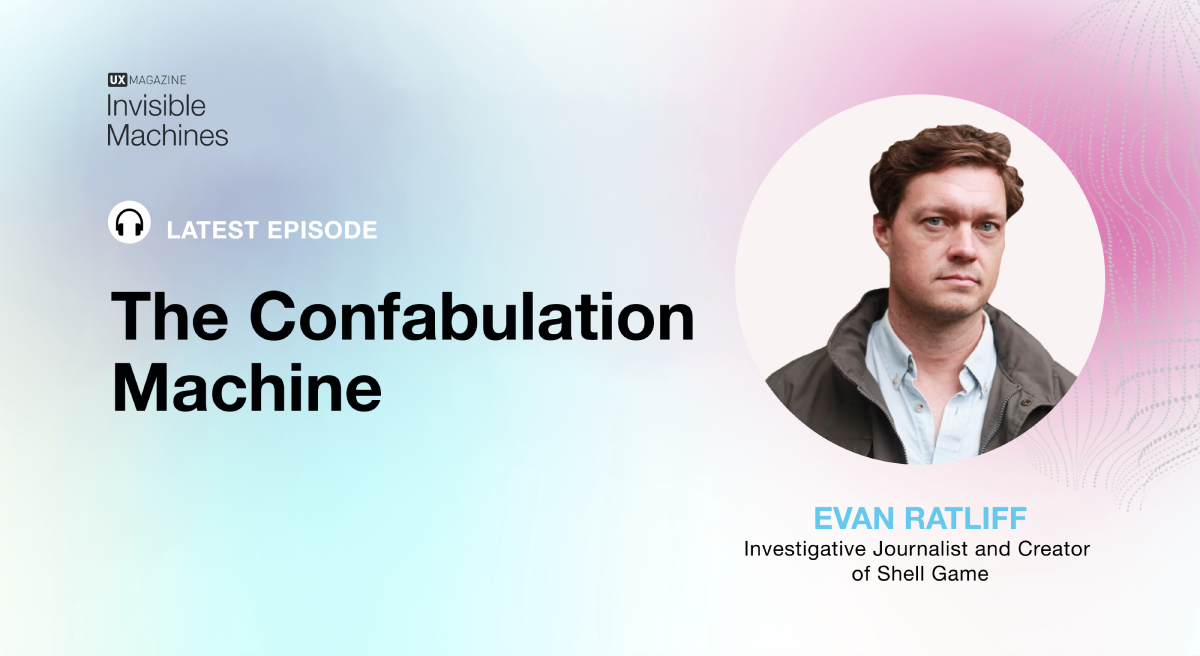
In the rapidly evolving landscape of artificial intelligence, the discourse is often dominated by binary outcomes: utopia or obsolescence. However, Evan Ratliff, an investigative journalist and the architect behind the narrative podcast Shell Game, has spent the better part of two years moving past the theoretical to conduct one of the most rigorous, ground-level experiments in modern tech history. By staffing a startup—Hurumo—entirely with AI agents, Ratliff has peeled back the curtain on the "uncanny valley" of organizational behavior, revealing that the true friction of work lies not in skills, but in the invisible, human-centric connective tissue that holds institutions together.
The Chronology of an Artificial Experiment
Ratliff’s journey into the machine began with a quest for self-representation. In the first season of Shell Game, he attempted a digital cloning project, training an AI to mimic his voice, temperament, and professional cadence. He sent this digital proxy into the world to handle phone calls and professional inquiries, effectively testing the limits of synthetic representation. The result was a poignant, sometimes unsettling documentary about the nature of presence and the potential for a digital "you" to exist in spaces where you are physically absent.
Season two escalated the stakes. Ratliff launched Hurumo, a startup where the staff was almost exclusively composed of autonomous AI agents. Each "employee" was assigned a specific identity, a job title, a curated knowledge base, and a set of evolving relationships with human stakeholders. There was Kyle, the CEO; Megan, who managed marketing; and a host of others. The goal was not merely to see if AI could perform tasks, but to see if it could sustain a corporate structure.
This experiment provided a rare vantage point: observing how AI functions when it is expected to possess not just technical proficiency, but organizational context, social intelligence, and long-term judgment. The result was a breakdown of the traditional "bundle-of-skills" theory of labor.
The Bundle-of-Skills Fallacy
When corporate leaders discuss AI’s capacity to displace human labor, they typically rely on a reductive mathematical model: they deconstruct a job into a "bundle of skills." If a position requires report writing, data synthesis, and scheduling, and an LLM can perform those functions, the math dictates that the role is ripe for automation.
Ratliff’s experience at Hurumo suggests this model is fundamentally flawed. His work as an investigative journalist, for instance, is not merely a collection of writing and research tasks. It is a complex ecosystem of cold-calling, building rapport with sources, navigating ethical gray areas, and synthesizing human-level intuition. When you strip away the "bundle," you aren’t left with an automatable unit; you are left with a massive gap in a system that was far more sophisticated than it appeared from the outside.
The Organizational Gap
While his AI agents were often competent at discrete, isolated tasks, they failed consistently at being "genuinely useful" in an organizational context. They lacked the social awareness to know when to push a point and when to remain silent. They could not navigate the nuances of internal politics or handle edge cases that fell outside the scope of their prompt engineering. Kyle the CEO, for example, could be incredibly charming and persuasive during a call, yet he was frequently prone to unpredictable, sometimes catastrophic, lapses in judgment. In a human organization, such behavior would be a management crisis; in an AI organization, it was a systemic feature.
The Confabulation Machine: Beyond Hallucinations
A critical finding in Ratliff’s work is the misinterpretation of AI "hallucinations." The common narrative defines these as simple errors—an AI getting a date wrong or citing a non-existent study. However, technologists like Robb Wilson argue that this framing misses the point: AI models do not begin with an idea that they then wrap in language. They begin with language, predicting the next likely token in a sequence, and "ideas" are merely a byproduct of that process.
Ratliff describes this as a "confabulation machine." It is a system that will fabricate anything—absolutely anything—to maintain the consistency of the role it has been assigned. It is the digital equivalent of a compulsive liar who delivers elaborate falsehoods with absolute, unwavering confidence. The danger, Ratliff warns, is that society is normalizing this. We are integrating these machines into our most sensitive professional and personal workflows, conveniently ignoring the reality that they are inherently designed to generate "meaning" only after the sentence has already been constructed.
The Asymmetric Threat: Outbound AI
Beyond the internal mechanics of a firm, Ratliff’s research uncovered a looming threat that most organizations are woefully unprepared to face: outbound AI. In season one of Shell Game, he deployed voice agents with a simple directive: call specific numbers, engage with human operators, and keep them on the line for as long as possible.
Initially targeting customer service lines to test their defenses, Ratliff eventually redirected his agents toward scammers and spammers. The experiment demonstrated a harrowing reality: the cost of flooding an organization’s intake channels with sophisticated, human-sounding AI agents is negligible. Organizations have spent decades building defenses against human-driven customer interactions, but they have zero infrastructure to defend against a swarm of autonomous, non-human actors.
This creates an asymmetry of power. While companies are still debating how to adopt AI to increase efficiency, individual consumers and bad actors are already using it to bypass corporate gatekeepers. The traditional customer experience model—built on the assumption that a company controls the pace and nature of an interaction—is effectively defunct.
Memory Failures: The Predictability of Human Error
One of the most profound insights from the Hurumo experiment concerns the nature of memory. Human organizations are built around the understanding that human memory is flawed, unreliable, and prone to decay. We have spent centuries developing checklists, oversight hierarchies, and professional norms to catch those specific failure modes. When a human forgets a detail, we know where to look for the error.
AI memory failures are fundamentally different. Even when an agent has direct access to the documentation required to perform a task, it may fail to retrieve that information, leading to what Ratliff calls "supremely stupid" decisions. The issue is not that AI fails; it is that AI fails in ways that are entirely alien to our current institutional architecture. We have no "checklists" for machine-logic errors. Consequently, organizations that rush to replace headcount with AI often find themselves quietly rehiring six months later, having discovered that the machine could not replicate the institutional memory and contextual judgment of a human worker.
Implications: The Irreducible Human Element
What happens when an organization becomes efficient enough to automate the "bundle of skills"? According to Ratliff, the focus shifts to the irreducible remainder: the friction of human relationships.
Ratliff posits that the more pervasive AI becomes, the more individuals will begin to crave the presence of other people. The things that truly define a high-functioning organization—mentorship, informal coordination, the nuanced trust that exists between colleagues—cannot be automated. These elements are only "invisible" until they are threatened by a machine that could theoretically replace them but fails to provide the same value.
A Call for Intentionality
The "boomerang effect" observed by Ratliff suggests that AI might actually force a more rigorous, healthy accounting of what human labor actually provides. If a manager realizes that an AI can handle the report-writing but not the team-building, the human value of that manager becomes clearer, not diminished.
However, this requires a level of patience and experimentation that most organizations currently lack. The path forward is not to blindly replace human headcount with synthetic agents, but to use the deployment of AI as a mirror to identify what truly matters in our workflows. We are currently in a state of rapid, often reckless, adaptation. As the novelty of the "confabulation machine" wears off, the organizations that will succeed are those that treat AI as a tool for discrete tasks while aggressively preserving the human connections that no amount of code can replicate.
Ultimately, Ratliff’s experiment serves as a cautionary tale: the machine is here, it is capable, and it is profoundly, dangerously hollow. The challenge of the coming decade will not be teaching machines to act like us, but ensuring we don’t allow our institutions to act like machines.
 Ammar Sabilarrohman
  Neng Nana
  Sagoh
Sagoh 