
 By Nana Muazin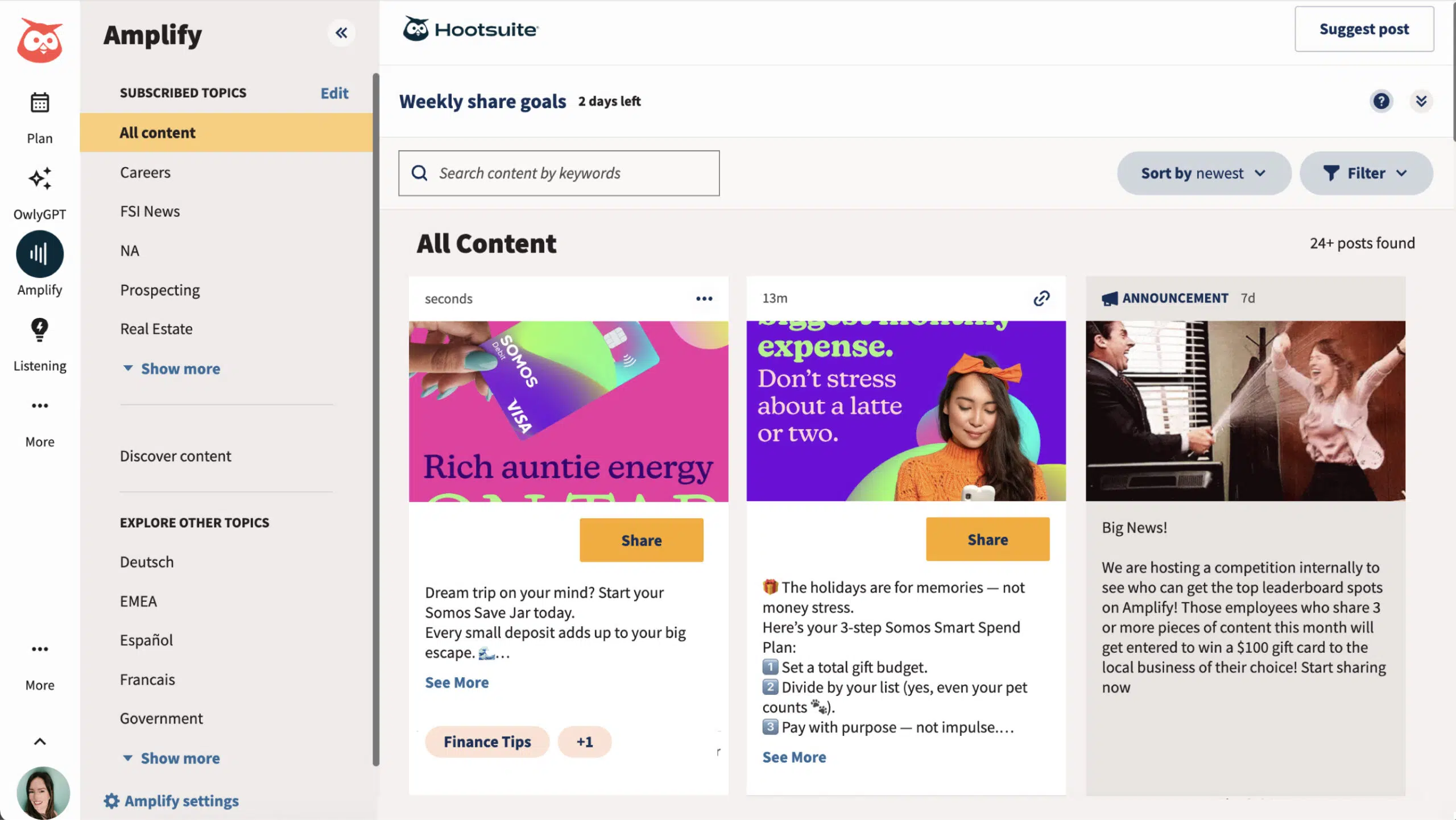
In an era where digital saturation has rendered traditional advertising increasingly transparent and skepticism toward corporate messaging is at an all-time high, brands are facing a critical challenge: how to be heard when audiences have stopped listening to logos. The answer, according to the latest data and industry shifts, lies not in bigger ad budgets or flashier algorithms, but in the voices already inside the company.
Employee advocacy—the practice of empowering team members to share company content, industry insights, and cultural milestones on their personal social media channels—has emerged as the most potent weapon in the modern marketing arsenal. As 2025 data from the Edelman Trust Barometer highlights, consumers are losing faith in institutional messaging, shifting their trust toward individuals. This article explores why employee advocacy is no longer an optional "nice-to-have" and how organizations are leveraging it to redefine brand authority.

The Core Mechanics: How Employee Advocacy Works
At its simplest, employee advocacy is the mobilization of your internal workforce as brand ambassadors. It involves providing employees with the resources, training, and content they need to share their professional journey and company news authentically.
While LinkedIn remains the primary theater for these efforts due to its professional nature, we are seeing a significant expansion into X (formerly Twitter), TikTok, and even private Slack communities. Unlike influencer marketing, which relies on paid, external partnerships, employee advocacy is internal and built upon a genuine connection to the organization. It is not about turning employees into robots who parrot corporate scripts; it is about providing a platform for them to share their expertise, which in turn elevates the brand they represent.

Distinguishing Advocacy from Influence
A common misconception in the C-suite is that employee advocacy is just another form of influencer marketing. The distinction is foundational:
- Influencer Marketing: External, transactional, and often paid. It serves to reach a specific, often pre-built audience.
- Employee Advocacy: Internal, organic, and rooted in company culture. It builds long-term trust through human-to-human connection.
- Brand Advocacy: Distinct from both, this comes from customers and fans. While valuable, it lacks the consistency and direct internal alignment that employee advocacy provides.
The Data-Driven Case: Why Employees Outperform Logos
The effectiveness of individual voices over corporate channels is backed by compelling data. Recent studies indicate that 60% of consumers place more trust in what individuals say about a brand than what the brand says about itself. Social media algorithms reflect this reality as well: content shared by personal profiles is consistently prioritized over brand-page posts, resulting in significantly higher organic reach.
Insights from Hootsuite’s 2024-2025 Performance Data
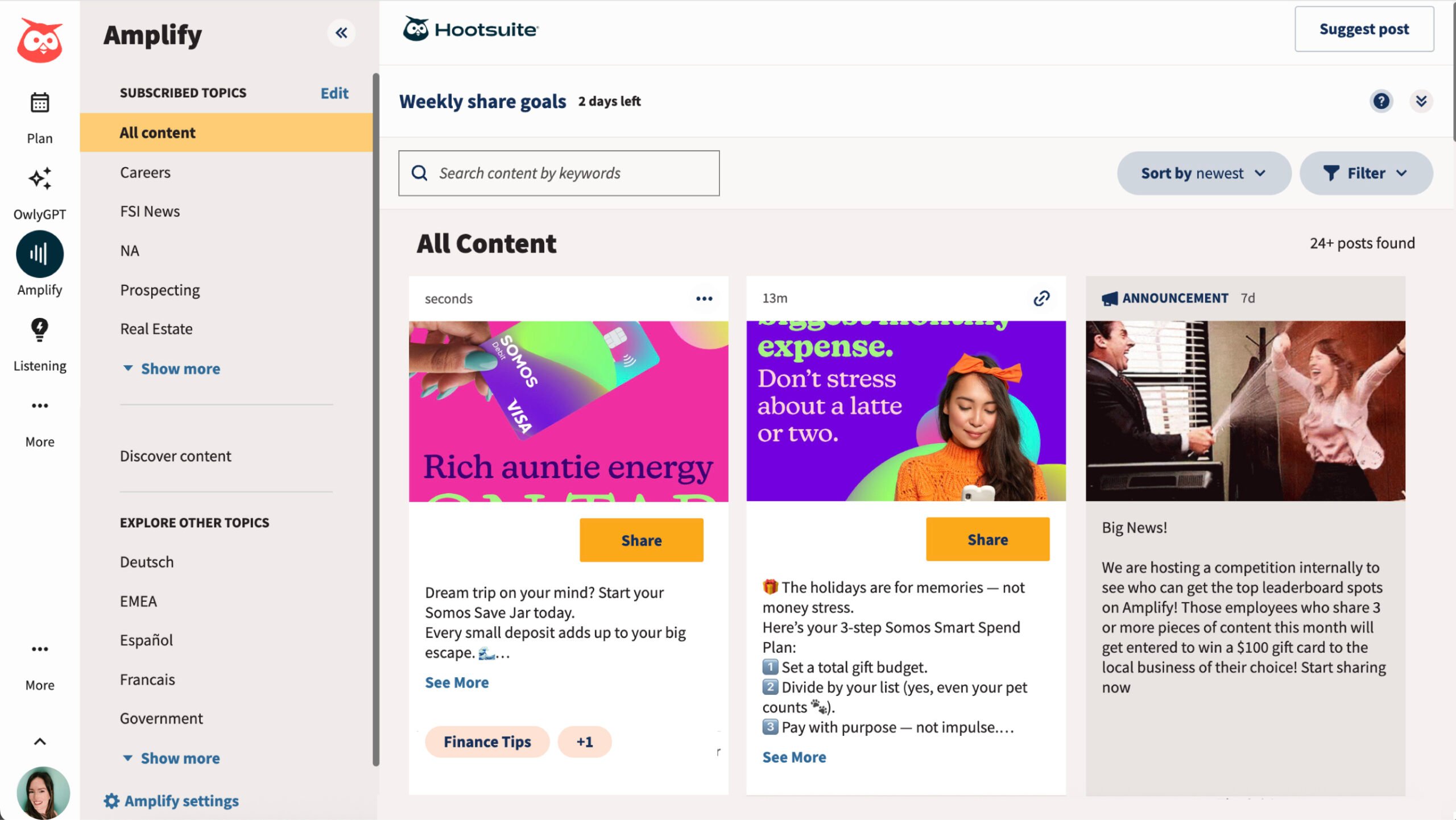
Hootsuite’s own internal program, powered by its Amplify platform, provides a blueprint for what success looks like in a modern enterprise. The data from the last year is telling:
- Active Participation: Between 40% and 50% of the entire workforce participates in the program.
- Consistency: The average employee shares 1.2 posts per week.
- Reach: An average post shared by an employee generates over 21,000 views.
- High Performance: Top-performing posts have reached over 207,000 users, proving that a single employee, when properly equipped, can become a media channel in their own right.
Strategic Implications: Beyond Simple Reach
The benefits of a robust advocacy program ripple across the entire organization, touching marketing, HR, and corporate culture.
1. Scaling Reach and Visibility
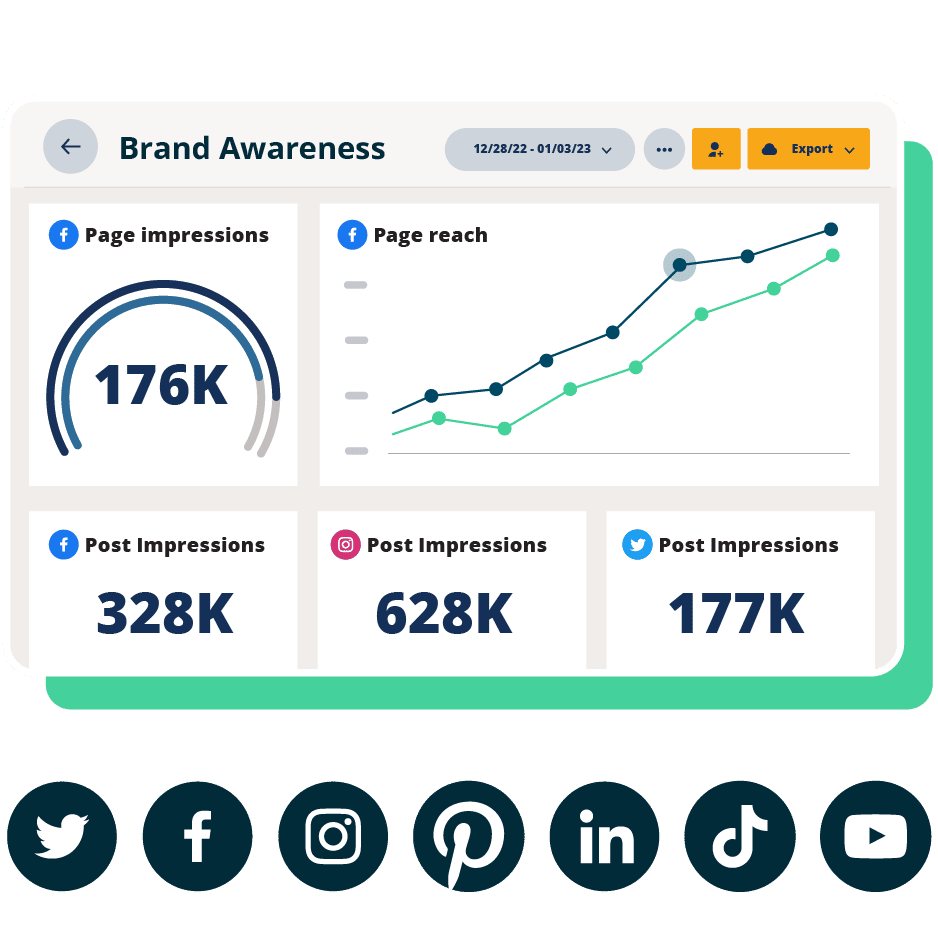
The math of advocacy is staggering. Because employee networks are, on average, ten times larger than a company’s collective follower base, activating a team provides an immediate "megaphone" effect. The IT provider Carahsoft serves as a primary case study; after deploying an advocacy program, they saw 8,700 new website visits and 35% of their total event registrations driven exclusively by employee-shared content.
2. The Trust Multiplier
Corporate messaging often feels sterile or overly promotional. When an employee shares a company update, it is perceived as a peer-to-peer recommendation rather than an ad. Athletico Physical Therapy leveraged this by empowering their staff to share personal stories during National Physical Therapy Month. By focusing on human connection, they achieved a 40% growth in organic reach, proving that authenticity is the ultimate currency.
3. Recruitment and Employer Branding
In the hyper-competitive talent market, the best candidates do not look at career pages; they look at the LinkedIn feeds of potential coworkers. Companies with socially engaged employees are 58% more likely to attract top-tier talent. By showcasing the day-to-day reality of work—the wins, the culture, and the professional growth—employees paint a picture that HR departments simply cannot replicate. DaVita, a global healthcare company, saw a 136% increase in career page traffic after shifting to an employee-led advocacy model.
Building the Program: A Step-by-Step Chronology
Launching an effective advocacy program requires more than just telling staff to "post more." It requires a structured, intentional rollout.
Phase 1: Leadership Buy-in (The Foundation)
You cannot sustain a program if it is viewed as a distraction. Leaders must view advocacy as a strategic priority, not a side project. By having executives lead by example, you set the tone that professional visibility is encouraged.
Phase 2: Identification and Pilot (The Champions)
Identify the "natural ambassadors"—those employees who are already active on social media and hold a genuine passion for the company. Start with a small, motivated group to test your content types and workflows. Use their feedback to refine the program before a company-wide rollout.
Phase 3: Content Curation (The Fuel)
Move away from "synergy" and "corporate-speak." Employees want to share content that makes them look smart, helpful, or proud. Mix brand news with industry trends, thought leadership, and, most importantly, authentic employee-generated stories.
Phase 4: Integration and Ease of Use
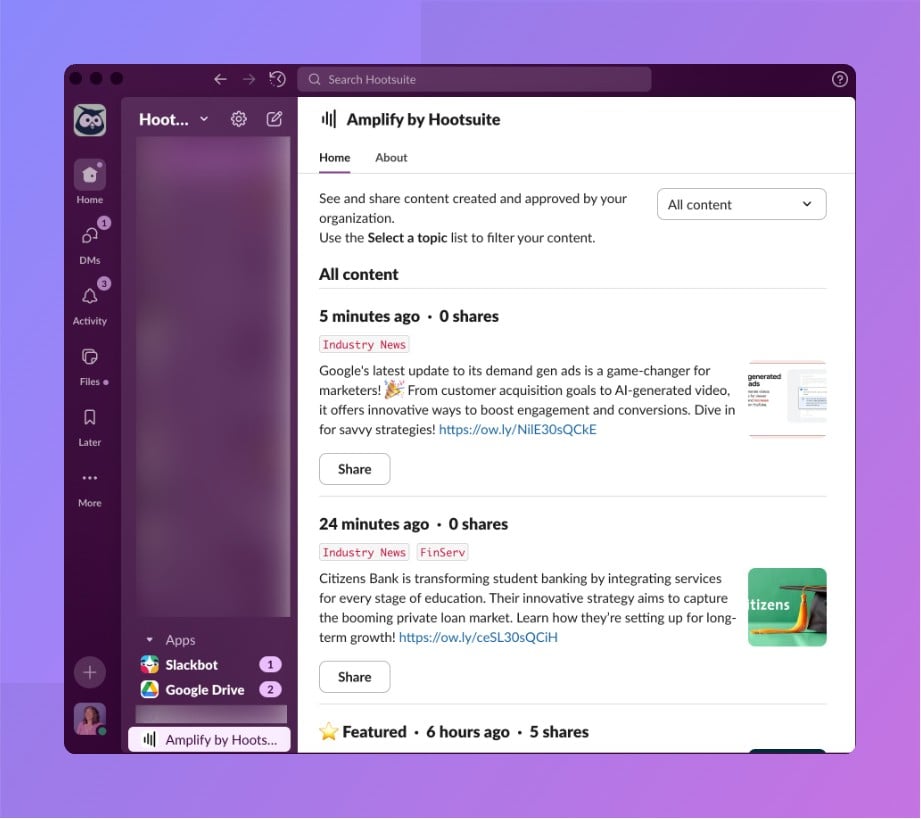
The biggest barrier to participation is time. If posting takes ten minutes, it won’t happen. Using platforms like Hootsuite Amplify, which integrates directly into Slack and Microsoft Teams, allows employees to share content in seconds without leaving their workflow.
Phase 5: Incentivization and Momentum
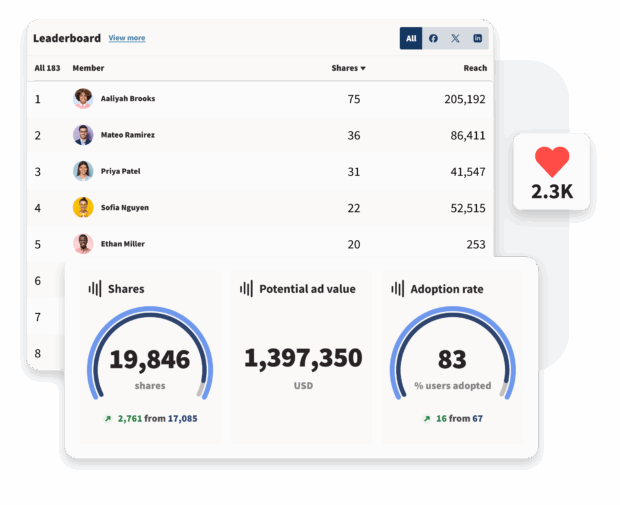
Gamification is a powerful tool. Leaderboards that track shares and engagement can spark friendly competition. Recognizing top contributors—not just by reach, but by the quality of their engagement—creates a culture where advocacy is rewarded and celebrated.
Guidelines for Authenticity and Compliance
As programs scale, the question of "what to post" arises. It is essential to provide clear, simple guidelines rather than restrictive mandates.

- The Do’s: Encourage personal commentary, disclose professional affiliations, and promote industry events.
- The Don’ts: Discourage the sharing of confidential information, avoid negative engagement, and steer clear of overly rigid, logo-heavy visuals.
The goal is to provide a "safety net" that allows employees to post with confidence. When they feel protected and supported by their organization, they are far more likely to contribute consistently.
Measuring Success: The ROI of Trust
Success in employee advocacy is not just about vanity metrics like "likes." It is about business impact. Organizations should track four core pillars of KPIs:

- Participation Metrics: Active user percentage and average shares per employee.
- Engagement Metrics: Comments, shares, and the quality of discussions sparked.
- Recruitment Metrics: Referral rates and career page traffic.
- Culture Metrics: Employee sentiment and internal pride.
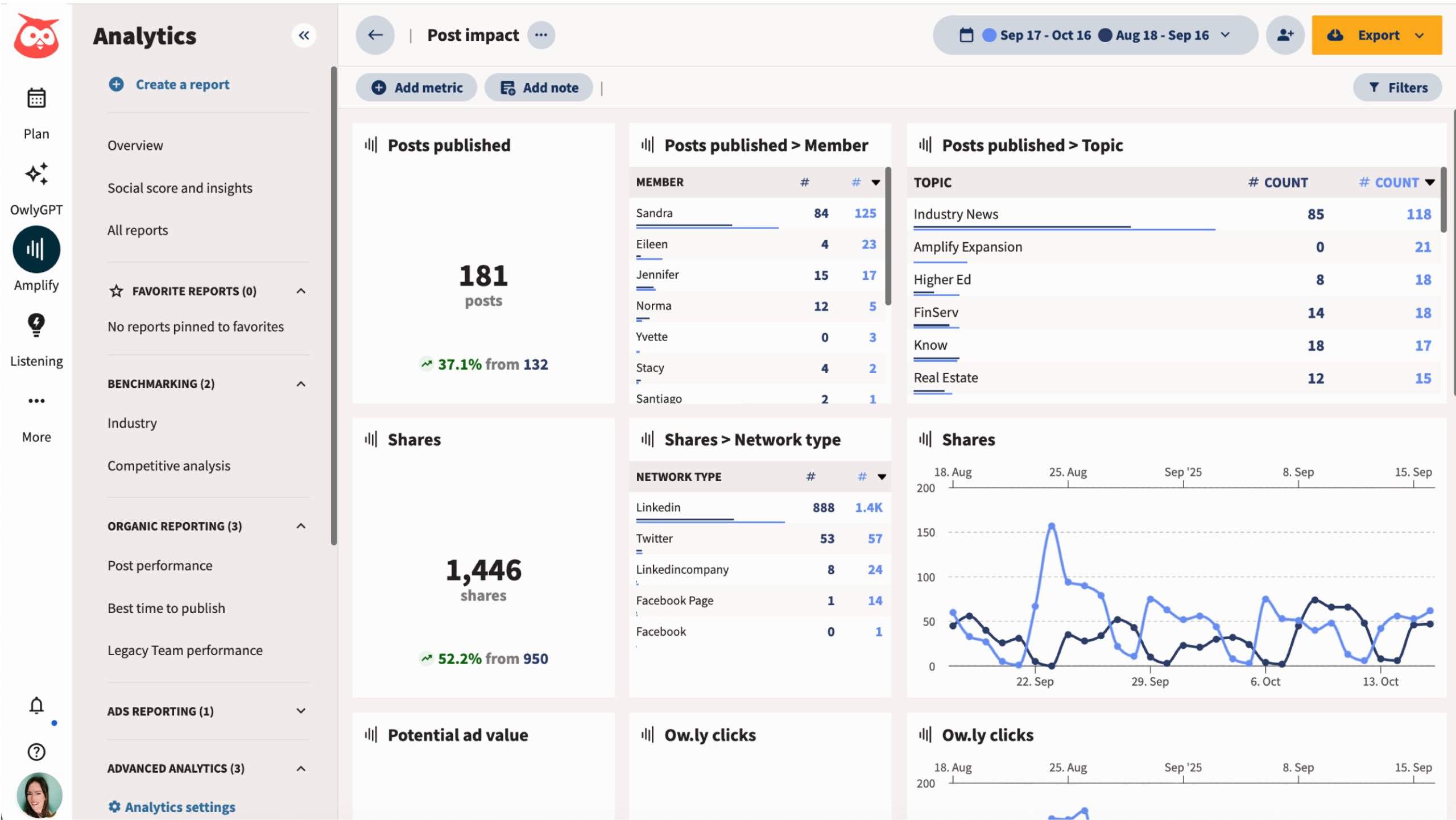
By utilizing an Employee Advocacy ROI Calculator, companies can translate these activities into "Earned Media Value" (EMV). This provides the board and finance teams with a tangible dollar figure that justifies the investment in the program.
Conclusion: The Humanization of Business
The data is clear: in an era of AI-generated content and mass-produced digital ads, the most valuable asset a company has is the genuine voice of its people. Employee advocacy is not merely a marketing tactic; it is a fundamental shift in how businesses relate to the world.

By empowering employees to become the face of the brand, companies can build a level of trust that no advertisement can buy. As we look toward the future, the brands that win will not be the ones with the largest budgets, but the ones with the most vocal, empowered, and authentic advocates. The megaphone is already in your team’s hands—it is time to help them use it.
 Reynand Wu
  Muslim
  Nila Kartika Wati