
 By Sagoh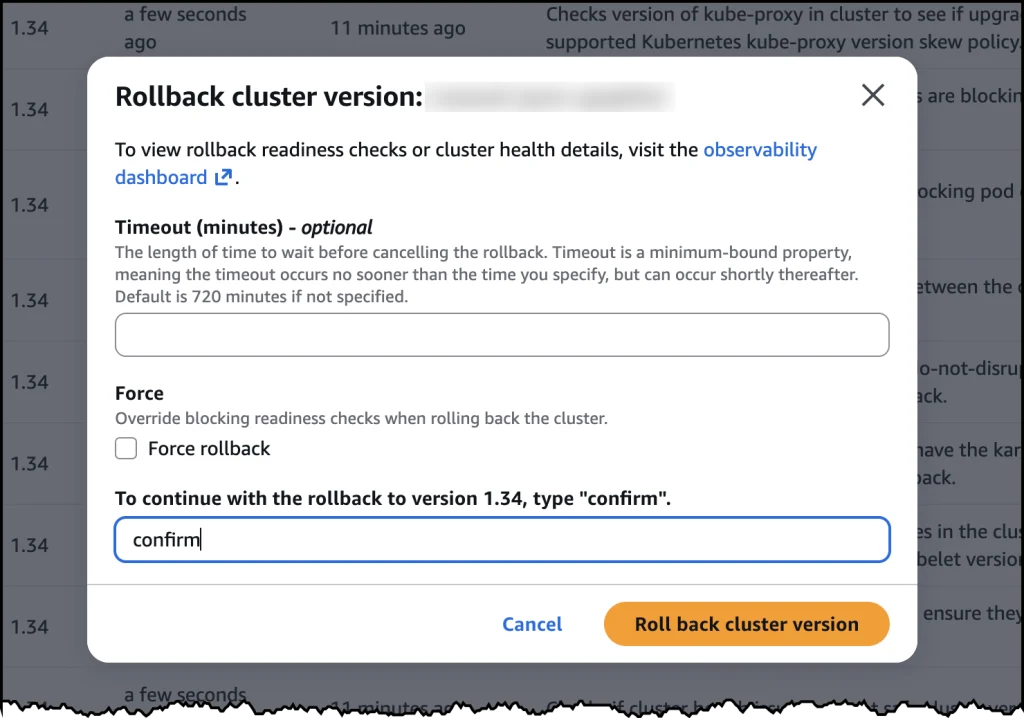
In the high-stakes world of cloud-native infrastructure, the Kubernetes upgrade process has long been viewed as a “one-way door”—a precarious maneuver that, once initiated, offered no path of return. For years, cluster administrators have operated under the looming pressure that a failed control plane upgrade could necessitate a total rebuild of their production environments. Today, Amazon Web Services (AWS) has fundamentally altered that calculus, announcing the general availability of native version rollbacks for Amazon Elastic Kubernetes Service (Amazon EKS).
This feature serves as a critical safety net for organizations managing containerized workloads, effectively acting as an “undo button” for Kubernetes version upgrades. By allowing administrators to revert to a previous, fully validated cluster version within a seven-day window, AWS is aiming to eliminate the "upgrade anxiety" that has historically led many enterprises to delay essential security patches and feature updates.
The "One-Way Door" Dilemma: Why Rollbacks Matter
To understand the significance of this announcement, one must look at the historical constraints of the Kubernetes ecosystem. Upstream, open-source Kubernetes does not natively support control plane rollbacks. While the community has explored solutions like "emulated versions" via KEP-4330, these often keep clusters in a transitional, sub-optimal state.
The Cost of Stagnation
For organizations—particularly those in highly regulated industries like finance, healthcare, and defense—the inability to safely roll back has created a culture of risk aversion. Teams frequently resort to:
- Months-long bake periods: Testing upgrades in staging environments for extended periods to ensure total compatibility.
- Staggered release groups: Implementing complex, multi-tiered deployment strategies to minimize blast radius.
- Delayed upgrades: Pushing off necessary maintenance to avoid potential downtime, eventually leading to clusters running on outdated versions that miss critical security patches and face the risk of hitting "Extended Support" deadlines.
AWS’s introduction of EKS version rollbacks addresses this technical debt head-on. By providing a reliable way to revert to a known-good configuration, AWS is empowering teams to move faster and update their clusters with greater confidence.
Chronology of the Development
The path to this release reflects a multi-year effort by the AWS EKS team to improve the operational experience for managed Kubernetes.
- The Pre-Rollback Era: For years, EKS users were limited to forward-only upgrades. Any incompatibility discovered post-upgrade required manual troubleshooting or, in worst-case scenarios, a complete re-provisioning of the cluster.
- The Shift Toward Resilience: Recognizing that "infrastructure-as-code" was not enough to mitigate the inherent volatility of Kubernetes upgrades, AWS began integrating features like Cluster Insights, which provided visibility into potential breaking changes before they occurred.
- The Beta and Internal Validation Phase: Before today’s launch, AWS rigorously tested the rollback mechanism across various cluster configurations, including those utilizing EKS Auto Mode, to ensure that state persistence and node-to-control-plane communication remained stable during the reversal process.
- General Availability: As of this week, the feature is live across all commercial AWS regions, integrated directly into the EKS console and available via API, allowing for immediate adoption by the global EKS user base.
Technical Deep Dive: How the Rollback Mechanism Functions
Unlike theoretical approaches that rely on emulation, EKS version rollbacks restore the cluster to a fully validated state that previously ran in production.
The Seven-Day Safety Window
The rollback window is set at seven days. This period is designed to allow teams enough time to perform "smoke tests" and verify application performance after an upgrade. If a subtle compatibility issue is discovered—perhaps a deprecated API call that wasn’t caught in staging—the administrator can initiate a rollback to the previous minor version without reconfiguring the entire cluster.

Ensuring Readiness with Cluster Insights
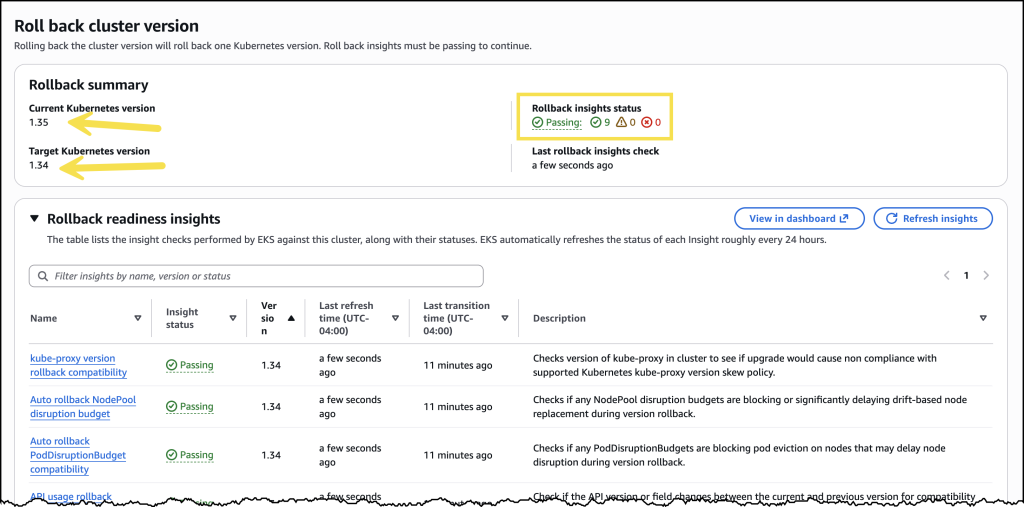
AWS has tied the rollback feature into its Cluster Insights ecosystem. Before a rollback is permitted, EKS automatically scans the cluster for potential blockers. This includes:
- Node version compatibility: Ensuring the underlying worker nodes are capable of communicating with the reverted control plane.
- Add-on dependencies: Verifying that critical plugins (such as VPC CNI or CoreDNS) are compatible with the previous version.
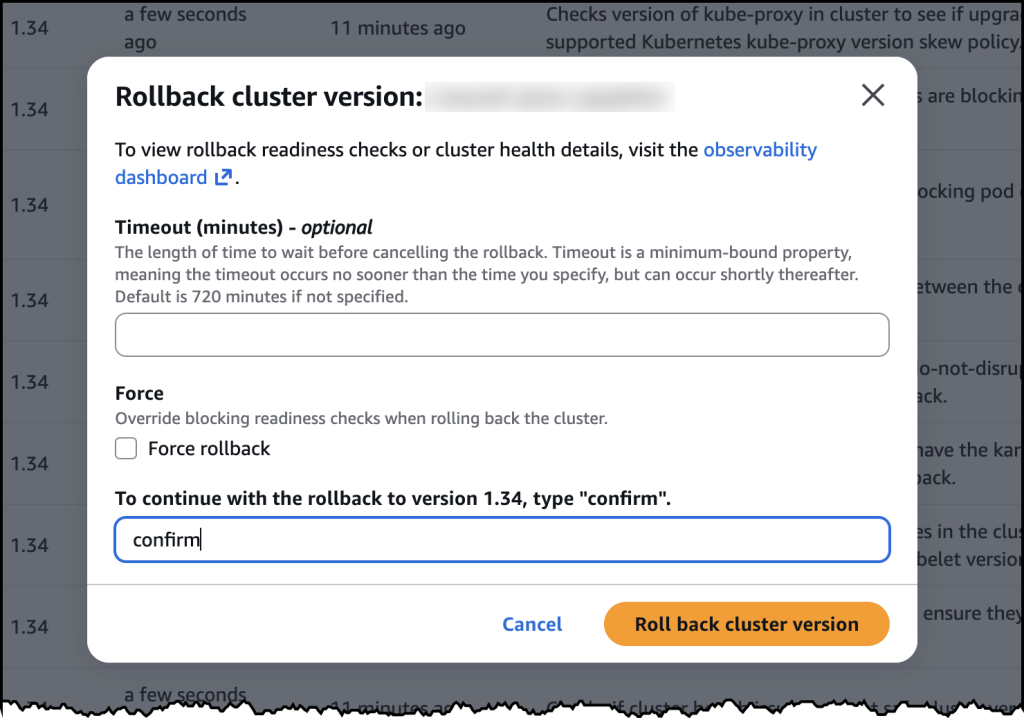
- Override capability: For teams that have done their own due diligence, the
--forceflag allows administrators to bypass these checks, though this is recommended only for power users.
EKS Auto Mode and the "Cancel" API
For users of EKS Auto Mode, the rollback process is more complex because it involves both the control plane and the managed worker nodes. Because the rollback must respect existing Pod Disruption Budgets (PDBs), it can be a time-intensive process.
To manage this, AWS has introduced a dedicated Cancel API. If an administrator determines that a rollback is taking too long or wishes to pivot to a different remediation strategy, they can halt the process at any point. This prevents the "trapped" state that often occurs during automated infrastructure operations.
Implications for Enterprise Operations
The introduction of this feature is expected to have a profound impact on how DevSecOps teams manage their Kubernetes lifecycle.
Improving Security Posture
By lowering the risk associated with upgrades, AWS is effectively accelerating the adoption of security patches. When upgrades are no longer a "do or die" operation, teams are far more likely to stay current with the latest minor versions of Kubernetes, thereby reducing the window of vulnerability to known exploits.
Reducing "Upgrade Anxiety"
The psychological shift for SRE (Site Reliability Engineering) teams cannot be overstated. The ability to "undo" an upgrade removes the pressure to achieve 100% perfection on the first attempt. This, in turn, can lead to more agile release cycles and a more streamlined CI/CD pipeline.
Operational Cost-Efficiency
While the feature itself is available at no additional cost, the indirect savings are significant. By reducing the time engineers spend on "firefighting" failed upgrades, organizations can reallocate human capital toward building features that drive business value rather than troubleshooting infrastructure.
Official Perspective and Implementation Guidance
According to AWS documentation and product leadership, the rollback capability is designed to maintain high availability throughout the process. During a control plane rollback—which typically takes around 20 minutes—the cluster remains functional.
For those looking to adopt this feature, the recommendation is to follow the standard upgrade path:
- Review Cluster Insights: Use the AWS console or CLI to identify potential issues before the upgrade.
- Execute the Upgrade: Perform the standard minor version upgrade.
- Monitor: Utilize the seven-day window to observe performance and application logs.
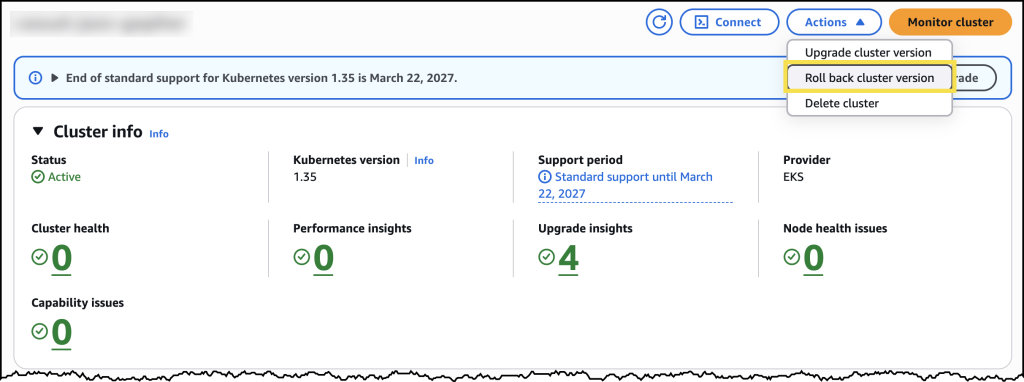
- Initiate Rollback (If Required): If anomalies are detected, navigate to the cluster configuration page in the EKS console and select "Initiate Rollback."
A Note on Compatibility
It is important to note that while version rollbacks support clusters running standard and extended support versions, the process is inherently bound by the underlying architecture of Kubernetes. AWS continues to emphasize that while this is a safety net, it does not replace the necessity of robust testing in non-production environments.
Conclusion: A New Standard for Managed Kubernetes
The introduction of EKS version rollbacks marks a maturation point for managed Kubernetes services. By solving one of the most persistent and painful bottlenecks in the Kubernetes lifecycle, AWS has provided a compelling reason for teams to standardize their workloads on EKS.
As containerized architectures continue to dominate the modern software landscape, the ability to operate with confidence and agility is the ultimate competitive advantage. With this update, AWS has effectively turned a high-risk operational hurdle into a manageable, reversible process—ensuring that the future of cloud-native infrastructure is not only faster but significantly safer.
For organizations currently managing large fleets of clusters, the message is clear: the era of the "one-way door" has officially closed. The path forward is now as flexible as the applications you run upon it.
 Neng Nana
  Suro Senen
  Lina Hope