
 By Siti Muinah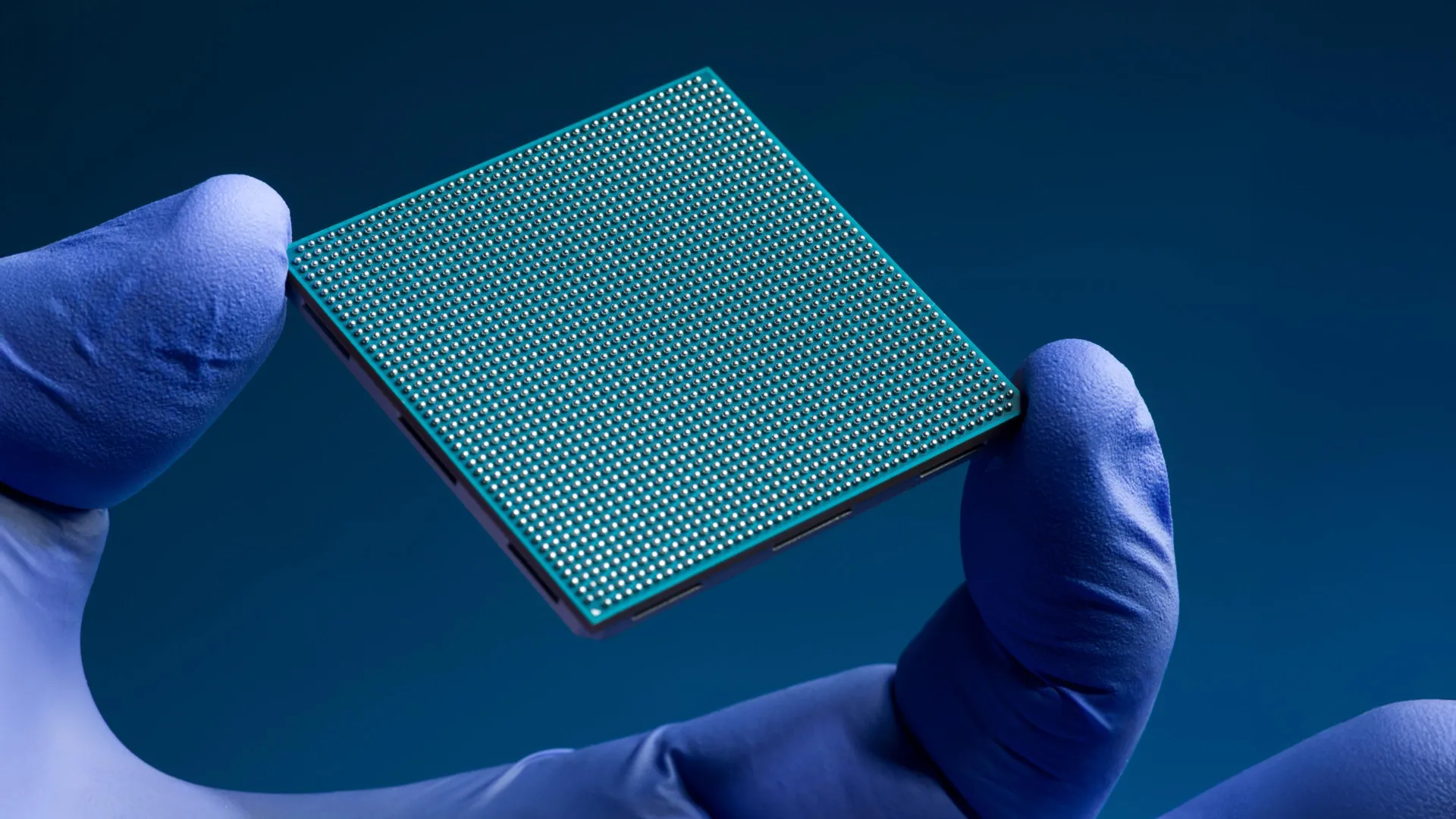
For decades, the backbone of human space exploration has been built on a foundation of reliability rather than raw processing speed. While the smartphones in our pockets boast multi-core processors capable of rendering complex 3D graphics and running sophisticated artificial intelligence, the spacecraft currently traversing the solar system often rely on computing architectures that would be considered relics by modern Earth-bound standards.
However, NASA is on the precipice of a technological paradigm shift. Through its High Performance Spaceflight Computing (HPSC) project, the agency is developing a next-generation, radiation-hardened system-on-a-chip (SoC) that promises to bridge the gap between terrestrial computing power and the unforgiving, high-radiation environment of deep space. This innovation is not merely an incremental upgrade; it is a fundamental redesign of how spacecraft "think," setting the stage for autonomous exploration of the Moon, Mars, and beyond.
The Bottleneck of Reliability: Why Space Needs a Compute Revolution
The primary challenge of space computing is the hostile nature of the environment. High-energy cosmic rays and solar particles can penetrate hardware, flipping bits in memory and triggering "single-event upsets." These errors, if not managed, can force a spacecraft into a protective "safe mode," halting scientific operations and potentially risking the mission.
To mitigate these risks, NASA has historically favored older, proven, radiation-hardened chips. These processors are robust and predictable, but they are also exceptionally slow. As mission requirements grow more complex—demanding real-time image processing, autonomous hazard avoidance during planetary landings, and complex scientific data analysis—these legacy systems have become a significant bottleneck.
NASA’s HPSC project aims to shatter this ceiling. By creating a multicore processor that maintains extreme durability while delivering a massive surge in computing power, the agency is preparing for a future where spacecraft can make life-or-death decisions without waiting for a signal to travel the millions of miles back to Earth.
A Chronology of Innovation: From Concept to "Hello Universe"
The journey to this breakthrough began with a strategic pivot in NASA’s technology development philosophy. Recognizing that internal development alone could not keep pace with the rapid advancements in the private sector, the agency sought a commercial partner.
- 2022: NASA’s Jet Propulsion Laboratory (JPL) officially selected Microchip Technology Inc., based in Chandler, Arizona, to lead the development of the HPSC processor. The partnership was structured as a collaboration where the company funded its own R&D, ensuring a shared investment in the project’s success.
- February 2024: Following the successful delivery of prototype hardware, JPL engineers initiated a comprehensive, months-long testing campaign.
- The "Hello Universe" Milestone: To mark the start of the functional testing phase, the team sent a symbolic "Hello Universe" command to the chip, a nod to the foundational "Hello World" code used by programmers for generations. This marked the transition from theoretical design to active evaluation.
- Current Status: The processor is currently undergoing rigorous "stress-testing," simulating the harsh electromagnetic and thermal cycles of the space environment. Initial data has been overwhelmingly positive, with the chip demonstrating performance levels 500 times higher than current state-of-the-art space processors.
Engineering the Impossible: The System-on-a-Chip Architecture
At the heart of the project is the System-on-a-Chip (SoC) design. In a traditional computer, various components—the CPU, memory, networking, and input/output interfaces—are spread across a motherboard. An SoC consolidates these essential components onto a single, compact unit.
While SoCs are the standard for smartphones and consumer electronics due to their energy efficiency and small footprint, creating one for deep space is an order-of-magnitude more difficult. NASA’s version must operate reliably for years, sometimes decades, without the possibility of manual repair or maintenance.
The new processor is engineered to be "fault-tolerant," meaning it can detect and correct errors in real-time. It features computational offloads that allow it to handle massive data streams, such as the high-fidelity sensor data required for autonomous landing on a celestial body. By moving this processing power directly onto the spacecraft, NASA is eliminating the latency inherent in human-in-the-loop control, a critical requirement for missions where the communication delay can last up to 20 minutes each way.
Official Perspectives: The Experts Speak
The significance of the HPSC project is not lost on the leadership at NASA’s Langley Research Center and JPL. Eugene Schwanbeck, program element manager in NASA’s Game Changing Development (GCD) program, views the chip as a testament to the power of collaboration.
"Building on the legacy of previous space processors, this new multicore system is fault-tolerant, flexible, and extremely high-performing," Schwanbeck noted. "NASA’s commitment to advancing spaceflight computing is a triumph of technical achievement and collaboration."
Jim Butler, the HPSC project manager at JPL, emphasizes that the testing phase is designed to be intentionally brutal. "We are putting these new chips through the wringer by carrying out radiation, thermal, and shock tests while also evaluating their performance through a rigorous functional test campaign," Butler said.
Butler highlights that the goal is not just to build a better chip, but to enable the "next giant leaps" in exploration. "To simulate real-world performance, we are using high-fidelity landing scenarios from real NASA missions that would typically require power-intensive hardware to process huge volumes of landing-sensor data," he added.
Implications: The Dawn of Autonomous Exploration
The implications of a 500-fold increase in processing power are vast.
1. True Autonomy
Future spacecraft will no longer be mere puppets controlled by ground stations. With onboard AI, a rover on Mars or a probe in the outer solar system could identify interesting geological formations, navigate around obstacles in real-time, and adapt to system failures without waiting for instructions from Earth.
2. Scientific Data Efficiency
Current missions often have to compress or delete scientific data due to limitations in onboard storage and processing. A more powerful chip allows for sophisticated "edge computing," where the spacecraft performs initial analysis on the data, transmitting only the most relevant findings back to Earth. This maximizes the scientific output of every bit of telemetry.
3. Crewed Missions to Mars
As NASA looks toward crewed missions to the Moon and Mars, the computing needs of the habitats and transport vehicles will skyrocket. The HPSC processor will provide the backbone for life-support monitoring, navigation, and medical diagnostic systems, ensuring that astronauts have the best possible technology to sustain them in the most extreme environment known to humanity.
4. Terrestrial Spinoffs
The benefits are not expected to stay in space. Microchip Technology Inc. plans to adapt the architecture for high-reliability industries on Earth, such as aviation and automotive manufacturing. The ability to function in extreme conditions—whether in the engine of a jet or the control systems of an autonomous car—makes this technology highly transferable.
Conclusion: A New Era of Computing
The development of this radiation-hardened SoC represents a critical inflection point in aerospace history. By blending the efficiency of modern SoC design with the uncompromising requirements of spaceflight, NASA and its partners are providing the computational foundation for the next century of discovery.
As the testing phase continues and the chip moves toward final certification, the aerospace community watches with anticipation. When these chips eventually launch, they will carry with them the potential to transform our silent, distant probes into intelligent explorers, capable of navigating the mysteries of the universe with unprecedented speed, reliability, and autonomy. The "Hello Universe" signal sent to the chip in February may have been symbolic, but it signals the dawn of a future where our technology is finally as capable as our ambitions.
 Sagoh
Sagoh  Asro
Asro 