
 By Ammar Sabilarrohman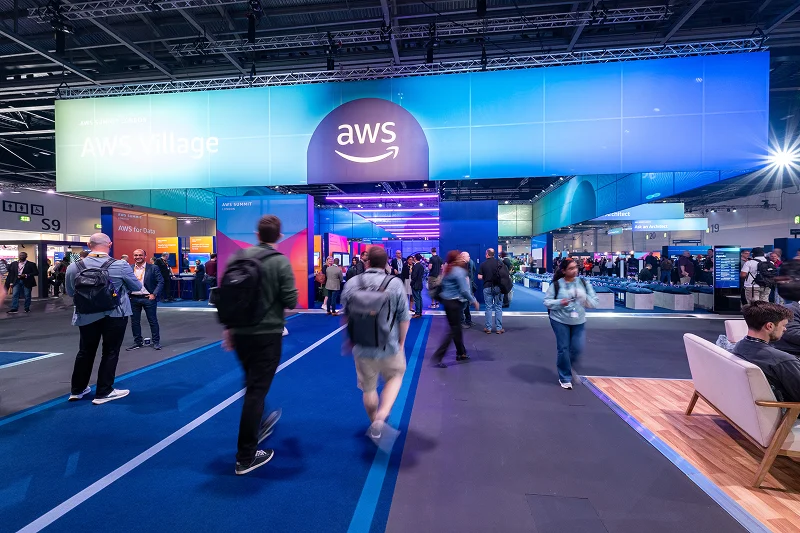
As the tech industry converges on the Javits Center for the annual AWS Summit in New York City, the atmosphere is defined by a singular focus: moving beyond the "hype" phase of Generative AI and into the era of industrial-scale implementation. While thousands of developers, architects, and enterprise leaders gather to trade insights on the future of cloud infrastructure, a parallel narrative is emerging from Amazon’s own internal engineering teams—a blueprint for what it means to be an "AI-native" organization.
This week’s updates from AWS, ranging from high-level architectural shifts in developer productivity to the introduction of autonomous FinOps agents, signal a maturation in how cloud services are being consumed and managed.
Main Facts: A New Paradigm for Development
The centerpiece of this week’s announcements is not a new hardware chip or a proprietary model, but a paradigm shift in software development methodology. Dr. Swami Sivasubramanian, VP of Agentic AI, released a comprehensive analysis of how Amazon’s internal engineering teams are utilizing AI to fundamentally rewrite the rules of productivity.
The core takeaway is clear: the integration of AI into the development lifecycle is no longer an optional performance booster; it is a structural necessity. By leveraging agentic workflows, Amazon teams have demonstrated that tasks previously requiring months of human labor can be compressed into weeks or even days, without sacrificing quality or security.
Chronology of the Week’s Developments
The week’s activities kicked off with the highly anticipated AWS Summit NYC, providing a venue for live demonstrations of the latest advancements in AI infrastructure and security.
- Monday, June 15: The AWS Summit officially opened at the Javits Center. While the physical event served as a hub for networking, a significant portion of the discourse occurred via digital channels for those unable to attend in person.
- Tuesday, June 16: The release of the "Frontier Teams" report provided a data-backed look at how Amazon has successfully integrated AI agents into the development of the Amazon Bedrock inference engine.
- Wednesday, June 17: The keynote livestream, featuring Dr. Swami Sivasubramanian and Chet Kapoor, VP of Security Services and Observability, addressed the intersection of developer tools, AI infrastructure, and the necessity of robust security in an agentic world.
- Thursday, June 18: The unveiling of the AWS FinOps Agent preview signaled a shift toward autonomous infrastructure management, allowing teams to delegate cost optimization and anomaly detection to intelligent agents.
Supporting Data: The "Frontier Team" Productivity Surge
The statistics emerging from Amazon’s internal experiments are nothing short of transformative. When analyzing teams that successfully adopted AI-native development, the results provided a stark contrast to traditional software development lifecycles.
Rebuilding the Bedrock Inference Engine
Perhaps the most compelling case study involves the Amazon Bedrock inference engine. Originally scoped as an 18-month project requiring a team of 30 developers, a small, "frontier" team of just six engineers successfully rebuilt the engine in a mere 76 days. This represents an efficiency gain that defies traditional industry benchmarks.
Normalized Deployment Velocity
Across various pilots within the Amazon Stores organization, the median productivity gain in deployment velocity reached 4.5x. In high-performing outlier teams, this figure eclipsed 10x. Real-world examples of this speed include:
- Perfect Order Experience: A feature cycle that previously took two weeks is now routinely shipped in a single afternoon.
- WW Grocery: The labor-intensive process of creating design documentation was slashed from five business days to just a few hours.
Official Responses and Strategic Framework
Dr. Swami Sivasubramanian’s report provides a five-point framework for teams looking to emulate these successes. These are not merely suggestions but represent a fundamental shift in engineering culture.
- Prioritize Agent Context: Developers must invest in building steering files, coding standards, and structured repositories before a single line of production code is written. The agent is only as effective as the context provided to it.
- Accept the "Integration Dip": Organizations must prepare for an initial slowdown as existing workflows are restructured. The long-term velocity gains are only realized after the initial transition phase is complete.
- Parallel Execution: Maintain a steady, well-scoped backlog. AI agents excel at parallel task execution, but they require clearly defined parameters to operate without constant human supervision.
- Intent-Based Specifications: Before code generation begins, intent must be made explicit through structured specifications. The goal is to move from "writing code" to "defining the architecture."
- Shift-Left Testing: Testing must be integrated into the earliest stages of the development lifecycle, allowing agents to self-correct long before the code reaches the deployment pipeline.
The Implications: Autonomous FinOps and Future Governance
Beyond development velocity, the introduction of the AWS FinOps Agent represents a crucial evolution in cloud governance. As organizations scale their AI and cloud infrastructure, the complexity of cost management has historically grown in tandem with the infrastructure itself.
The FinOps Agent changes this by moving from passive reporting to active management. The agent is capable of:
- Cost Anomaly Investigation: Automatically diagnosing the root cause of unexpected spend.
- Proactive Reporting: Generating specific, actionable cost reports for both finance and engineering stakeholders.
- Automated Remediation: Surfacing rightsizing recommendations and—crucially—opening Jira tickets or posting to Slack channels to ensure that optimization opportunities are addressed immediately.
The Human-Agent Balance
As Chet Kapoor noted during the summit discussions, these advancements raise significant questions regarding security and oversight. While the productivity gains of agentic AI are significant, they necessitate a new approach to "security operations." As agents take on more agency—such as modifying infrastructure or generating code—the "human-in-the-loop" model must evolve into a "human-on-the-loop" model.

The goal for the next phase of cloud evolution, as suggested by the week’s events, is the creation of a "closed-loop" system where security, cost-optimization, and feature development are all governed by agents, with humans serving as the architects of intent rather than the laborers of execution.
Looking Ahead: The Road to Re:Invent
While the AWS Summit NYC serves as a critical checkpoint, the industry is already looking toward the broader implications of these announcements for the upcoming Re:Invent season.
The transition to AI-native development is clearly in its early stages. As noted in the closing of the frontier team report, commit velocity is merely the tip of the iceberg. Future iterations of these tools will need to address the complexities of release management, long-term operations, and end-of-life (EOL) upgrades.
For developers and organizations attending the summit or following along from afar, the message is clear: the tools to rebuild your development infrastructure are here. The challenge for the coming year is not in the acquisition of AI tools, but in the organizational restructuring required to harness them effectively. As the industry moves forward, the "frontier" teams will be those that view AI not as a tool for automation, but as a core component of their engineering DNA.
For those interested in diving deeper into the technical architecture of these launches, the AWS Builder Center provides an extensive library of resources, solution patterns, and community-led sessions. As we move into the second half of 2026, the convergence of Agentic AI and autonomous operations remains the most significant shift in the cloud landscape.
 Suro Senen
  Asep Darmawan
  Lina Hope