
 By Azzam Bilal Chamdy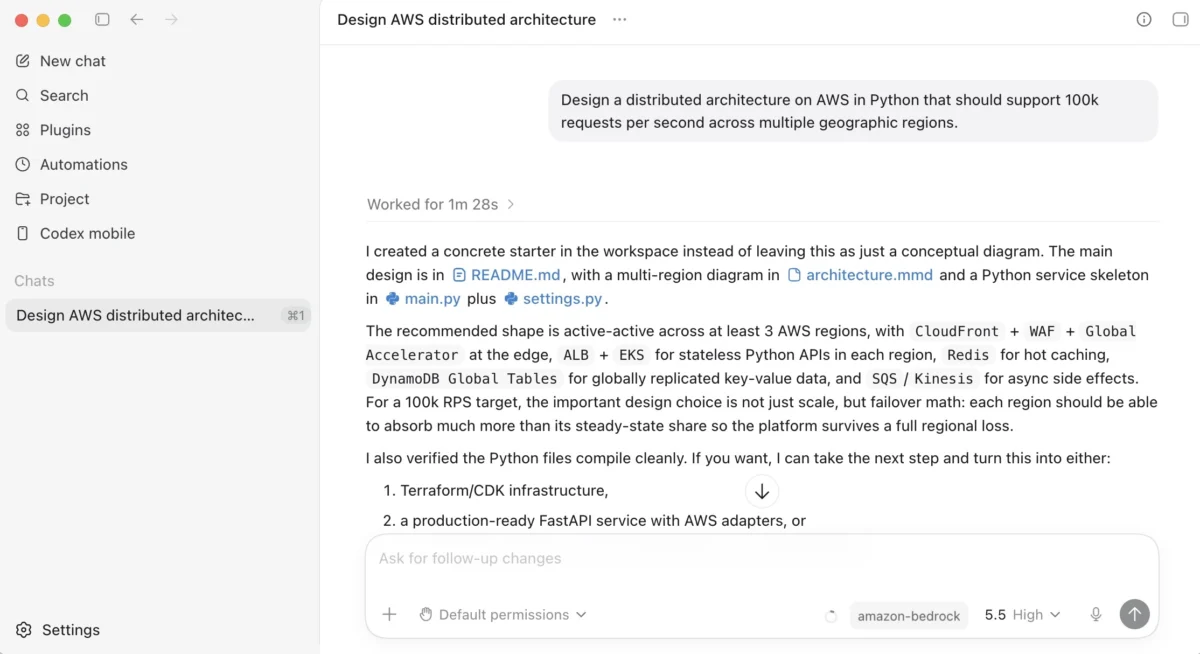
In a landmark development for the generative AI ecosystem, Amazon Web Services (AWS) has officially integrated OpenAI’s latest flagship models—GPT-5.5 and GPT-5.4—alongside the powerful Codex coding agent into Amazon Bedrock. This strategic move, first hinted at during the "What’s Next with AWS 2026" showcase, marks a significant expansion of Bedrock’s capabilities, providing enterprise developers with high-performance, secure, and scalable access to the industry’s most advanced artificial intelligence tools.
Main Facts: A New Frontier for Enterprise AI
The integration of OpenAI’s models into the Amazon Bedrock managed service ecosystem represents a paradigm shift in how businesses deploy large language models (LLMs). By routing inference through Bedrock’s next-generation engine, AWS is positioning itself as the primary infrastructure backbone for complex, agentic AI workflows.
The Models at a Glance
- GPT-5.5: Engineered for the most demanding enterprise workloads, this model serves as the premium offering for complex reasoning, multi-step problem solving, and high-stakes decision-making.
- GPT-5.4: Positioned as the optimal choice for organizations prioritizing a balance between high-level intelligence and cost-efficiency.
- Codex: An AI-powered software development assistant. According to OpenAI, over 4 million developers rely on Codex weekly for refactoring, debugging, and testing. Its integration into Bedrock enables a new class of long-horizon developer workflows.
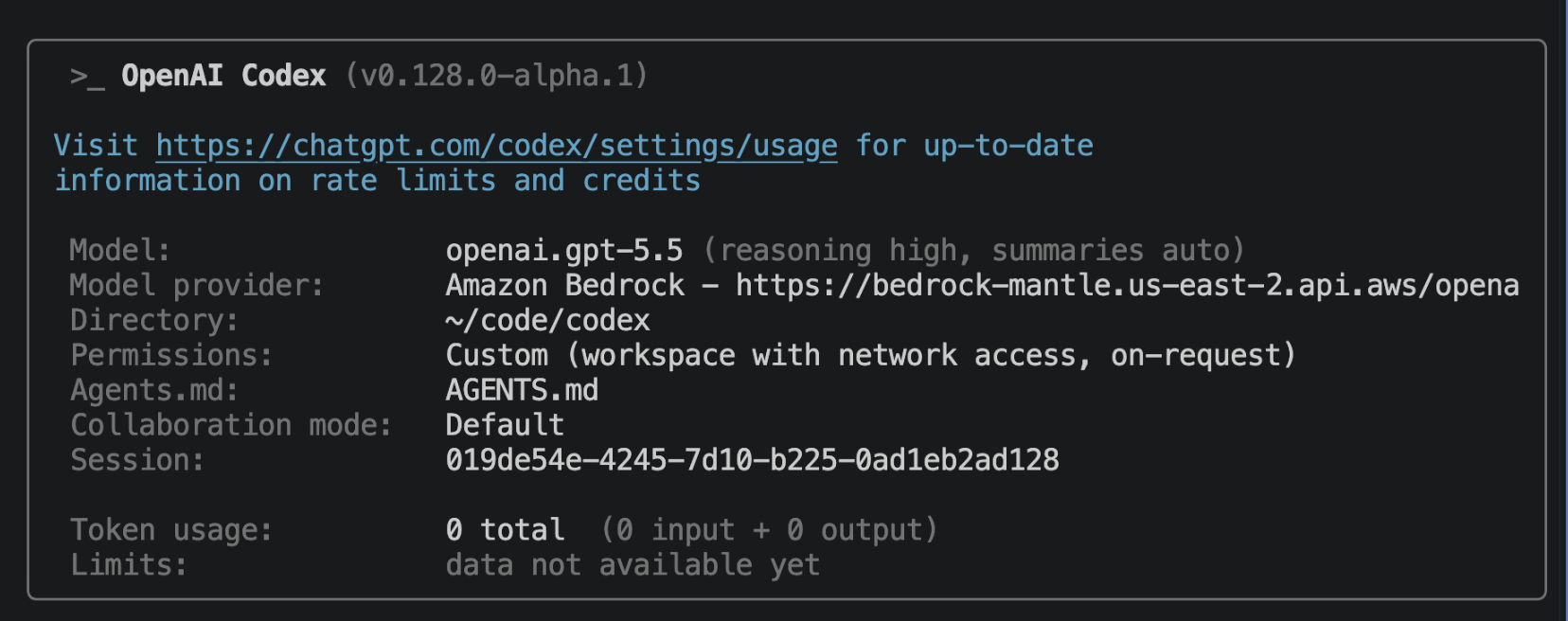
Key to this release is the use of the Responses API, which allows for robust, model-managed multi-turn states and sophisticated tool orchestration. This infrastructure is built with the security and compliance standards AWS customers expect, ensuring that data processing remains strictly within the chosen Bedrock Region—a vital feature for firms with strict data residency mandates.
Chronology: The Road to Integration
The rollout of these models has been rapid and iterative, reflecting the agile nature of modern AI deployment.
- May 24, 2026: AWS officially announces the preview of GPT-5.5, GPT-5.4, and Codex on Amazon Bedrock.
- June 1, 2026: Initial availability launches, with the
ResponsesAPI serving as the primary interface for developers. - June 3, 2026: AWS expands the footprint of GPT-5.4 by making it available in the AWS GovCloud (US-West) Region, signaling the model’s readiness for highly regulated government workloads.
- June 7, 2026: AWS updates the Amazon Bedrock console to include a new, optimized interface specifically designed to manage OpenAI-compatible APIs, streamlining the user experience.
Supporting Data: Performance and Accessibility
For organizations weighing the adoption of these models, the technical architecture provides clear advantages. The transition to the Responses API enables developers to offload complex background tasks to the model, which now manages state, hosted tools, and function orchestration natively.
Architectural Advantages
- Zero-Seat Licensing: AWS continues its trend of utility-based pricing. Customers pay strictly per token, eliminating the administrative overhead of seat licenses or rigid per-developer commitments.
- Standardized Integration: By utilizing the OpenAI SDK, developers can transition existing projects to Bedrock with minimal friction. The environment variable
OPENAI_BASE_URLpoints directly to thebedrock-mantleendpoints, allowing for a seamless shift from standard OpenAI API calls to the Bedrock-hosted environment. - Regional Sovereignty: The integration adheres to the core promise of Bedrock: data isolation. Whether a developer is in Ohio (us-east-2) or Oregon (us-west-2), the inference remains localized, addressing primary concerns regarding data sovereignty and GDPR compliance.
Developer Experience
The inclusion of Codex via VS Code, JetBrains, and Xcode integrations ensures that the power of GPT-5.5 is accessible directly within the IDE. By configuring the ~/.codex/config.toml file, developers can toggle between model versions (GPT-5.5, GPT-5.4, or open-source variants) with ease, allowing for rapid A/B testing of model performance against specific codebases.
Official Responses and Strategic Implications
Industry analysts view this partnership as a "force multiplier" for the cloud sector. By combining OpenAI’s algorithmic prowess with AWS’s global infrastructure, the two companies are effectively lowering the barrier to entry for building sophisticated AI agents.
The Agentic Workflow
The industry is moving beyond simple chatbot interfaces toward "agentic" workflows—where AI doesn’t just answer questions but executes tasks, manages files, and coordinates across disparate systems. With GPT-5.5, AWS is providing the reasoning engine necessary to power these agents. The Responses API is the technical manifestation of this shift, as it is specifically designed to handle the nuances of long-running, multi-step operations that define modern software development.

Enterprise Security
AWS representatives have emphasized that the integration is not merely a API wrapper but a deep-level engineering effort. By routing through Bedrock’s managed environment, enterprises gain access to the familiar AWS IAM (Identity and Access Management) and CloudTrail auditing capabilities, providing a level of governance that is often absent in third-party API implementations.
Implications for the Future of Software Development
The arrival of Codex on Bedrock suggests a future where the distinction between "developer" and "architect" becomes increasingly blurred. As these models become more adept at understanding massive, multi-file codebases, the role of the human engineer is evolving toward higher-level system design and oversight, while the mundane tasks of boilerplate generation, unit test writing, and bug hunting are relegated to the AI.
Challenges and Considerations
While the technical capability is immense, organizations must still grapple with the "black box" nature of these models. The ability to track reasoning and ensure consistent outputs remains a hurdle. AWS has attempted to mitigate this through the reasoning parameter in the API, which allows developers to define the level of effort the model should exert, thereby controlling both cost and output quality.
Moving Forward
As we look toward the remainder of 2026, the focus will likely shift from model availability to model optimization. With the new Bedrock console experience now live, the barrier for non-technical stakeholders to interact with these models is lowering. We expect to see a surge in "no-code" or "low-code" applications built atop these Bedrock-hosted models, potentially creating a new ecosystem of domain-specific AI tools.
Conclusion
The collaboration between AWS and OpenAI is a defining moment in the 2026 tech calendar. By providing stable, secure, and high-performance access to GPT-5.5 and Codex, Amazon is cementing Bedrock’s role as the premier destination for enterprise-grade generative AI. For developers and CTOs alike, the path forward is clear: the tools to build the next generation of intelligent, autonomous software are no longer just on the horizon—they are integrated into the very fabric of the cloud.
As always, the community is encouraged to contribute feedback via AWS re:Post and to monitor the official documentation for further regional expansions. Whether you are deploying a small-scale prototype or a globally distributed architecture, the integration of GPT-5.5 on Amazon Bedrock offers the reliability and intelligence necessary to scale in an increasingly automated world.
 Suro Senen
  Asep Darmawan
  Lina Hope