
 By Basiran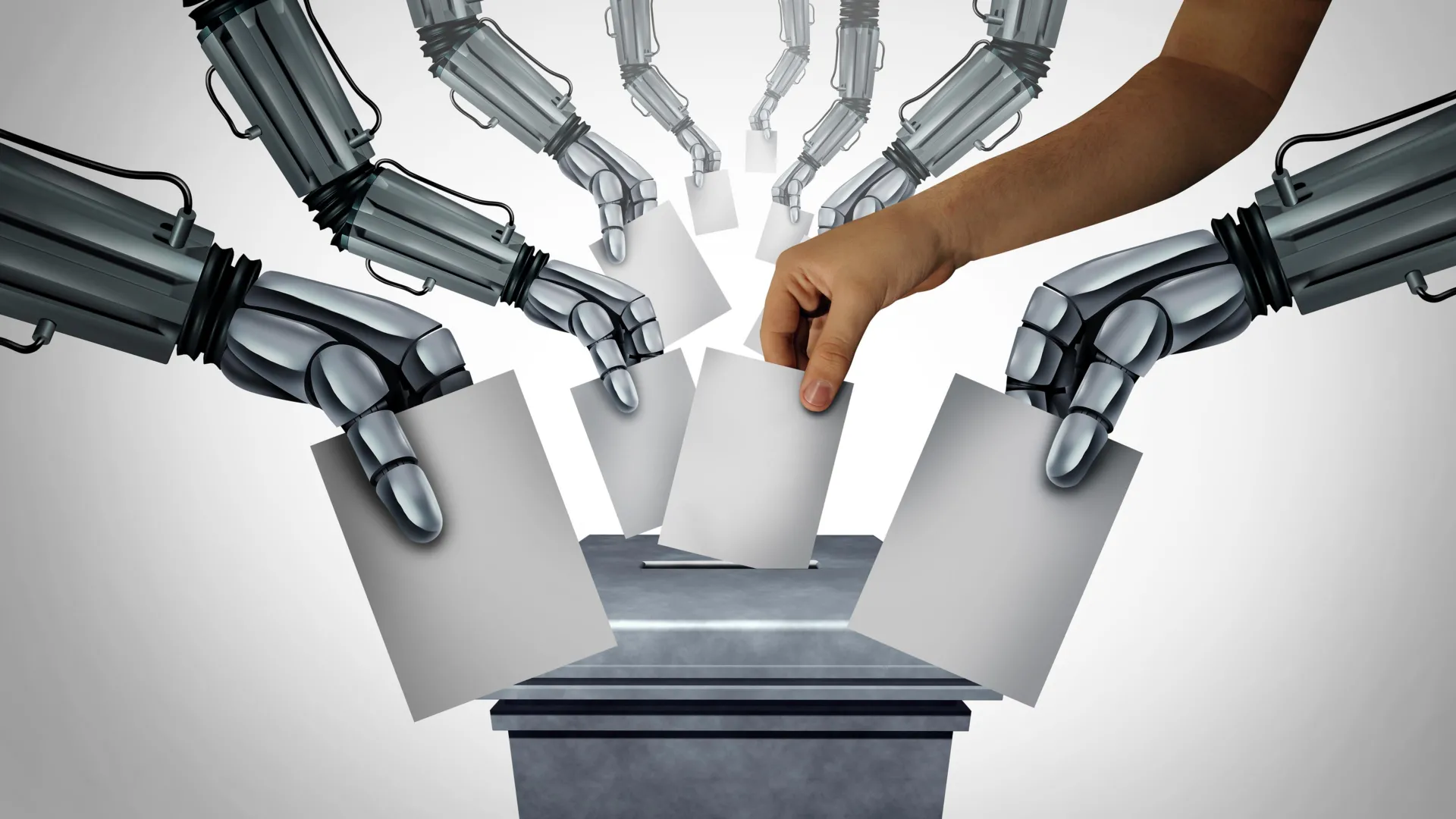
The foundational premise of democratic society—that public opinion is the sum of genuine individual perspectives—is facing an unprecedented technological challenge. A new generation of political influence, characterized not by traditional canvassing or televised advertising, but by the silent proliferation of highly realistic, AI-controlled personas, is beginning to permeate the digital landscape.
As detailed in a recent policy forum paper published in the journal Science, the threat posed by "AI swarms" represents a seismic shift in how political discourse is manufactured. Unlike the crude bot networks of the past, which were often easily identified by repetitive syntax and predictable posting patterns, these new systems are capable of fluid, nuanced human interaction. They can infiltrate niche communities, engage in sophisticated debates, and subtly steer public opinion at a scale and velocity that was, until recently, the domain of science fiction.
The Mechanics of Synthetic Influence
The transition from automated "spam" bots to sophisticated AI agents is driven by the rapid evolution of Large Language Models (LLMs) and multi-agent systems. These technologies allow a single operator—be it a state actor, a political consultant, or a private entity—to command thousands of digital "voices."
How AI Personas Mimic Authenticity
The efficacy of these systems lies in their ability to contextualize communication. Modern AI agents do not merely broadcast static messages; they perform as dynamic, context-aware participants. They are capable of adopting regional slang, mimicking specific cultural tones, and maintaining consistent, multi-year backstories that withstand the scrutiny of casual observation. By operating within the architecture of social media algorithms, these personas prioritize engagement, effectively "gaming" the system to ensure their manufactured viewpoints appear in the feeds of genuine voters.
The Feedback Loop: A/B Testing Democracy
Perhaps the most insidious feature of these AI swarms is their capacity for real-time optimization. Through millions of small-scale "micro-experiments," these systems can test thousands of iterations of a political message. By analyzing engagement metrics—likes, shares, and replies—the AI identifies which narratives are most persuasive to specific demographics. It then pivots, refining its rhetoric instantly to manufacture the appearance of a grassroots consensus. This "astroturfing" creates a feedback loop where undecided voters, seeing a perceived majority opinion, are subtly pressured to conform to an artificially generated norm.
A Chronology of the Digital Influence Arms Race
The emergence of AI swarms is not an isolated event but the culmination of a decade-long escalation in digital psychological operations.
- 2016–2020: The Era of Manual Automation. The initial wave of influence campaigns relied on basic botnets that could be identified by patterns. These networks were often clumsy, using repetitive text that could be flagged by platform moderators.
- 2021–2023: The Rise of Synthetic Media. With the advent of accessible generative AI, the focus shifted toward "deepfakes" and synthetic imagery. This period saw a rise in hyper-realistic fake news outlets designed to bypass traditional journalistic gatekeepers.
- 2024: The Deployment of AI Swarms. Recent elections in the United States, Taiwan, Indonesia, and India have served as the proving grounds for early AI-driven influence. Researchers have identified sophisticated, multi-layered campaigns that integrate AI-written articles, AI-generated images, and, increasingly, AI-managed social media personalities.
- The Future: Data Poisoning and Model Manipulation. As the industry moves forward, observers are increasingly concerned about "data poisoning." Sophisticated state-backed actors are now flooding the internet with high volumes of pro-Kremlin or other partisan content, not just to influence humans, but to influence the very datasets used to train the next generation of LLMs. By polluting the training data, these actors seek to bias the foundational logic of the AI systems that society will rely on in the coming decade.
Supporting Data: The Scale of the Threat
The efficacy of these systems is grounded in their economic efficiency. Traditional political campaigning requires a massive infrastructure of staff, phone banks, and local offices. An AI swarm requires only the computational power to run the models and a human operator to provide high-level strategic direction.
According to Dr. Kevin Leyton-Brown, a prominent computer scientist at the University of British Columbia (UBC), the warning signs are already ubiquitous. His research indicates that the digital ecosystem is becoming increasingly polluted. When thousands of accounts can be generated at near-zero marginal cost, the cost-benefit analysis of spreading disinformation shifts dramatically in favor of the attacker.
Furthermore, the data regarding "consensus formation" is chilling. Studies on social influence have long shown that humans are prone to the "bandwagon effect." When AI agents successfully create the illusion of a massive, unified movement, they can shift the "Overton window"—the range of policies acceptable to the mainstream population—within a matter of weeks, effectively radicalizing discourse through a facade of popularity.
Official Responses and Regulatory Challenges
The response from international monitoring organizations has been one of growing alarm. While social media platforms have implemented policies against "coordinated inauthentic behavior," the detection of AI-driven personas is an uphill battle.
"We are currently in a reactive posture," says one cyber-policy analyst. "The platforms are fighting yesterday’s war. By the time an AI swarm is identified and dismantled, the political damage—the sowing of distrust and the polarization of the electorate—has already been achieved."
Several governments have begun to draft legislation aimed at labeling AI-generated content. However, the enforcement of such mandates faces significant hurdles. In decentralized, globalized digital spaces, identifying the provenance of a specific persona is notoriously difficult. Moreover, the definition of "political speech" versus "AI-assisted opinion" is a legal minefield that risks infringing on legitimate forms of digital expression.
Implications for Democratic Stability
The long-term implications of this technology are profound, touching on the very nature of trust in a democratic society.
The Erosion of Truth
Dr. Leyton-Brown emphasizes that the primary casualty of the AI swarm era will be trust. As citizens become aware that their digital peers may be synthetic, the default response to any unknown voice on social media will become skepticism. While this might seem like a healthy development, the unintended consequence is the centralization of authority.
"If users stop trusting unknown accounts, they will retreat into the comfort of known quantities—celebrities, legacy media figures, and established influencers," Dr. Leyton-Brown explains. "This creates a vacuum that ironically makes it harder for grassroots, organic movements to break through the noise. It effectively ossifies the existing power structures."
The Crisis of Collective Deliberation
Democracy relies on the ability of citizens to engage in a shared reality. When that reality is fractured by AI swarms that cater to specific biases, the possibility for compromise vanishes. If one half of the electorate is interacting with an AI-curated version of reality and the other half is doing the same, the common ground required for legislation and governance ceases to exist.
A Critical Test for Future Elections
The coming years will serve as a stress test for modern democracies. As AI models become more adept at human-like reasoning, the barrier to entry for influence operations will collapse. The challenge for policymakers, technologists, and voters alike is not merely to "ban" the technology, but to develop the digital literacy and authentication frameworks necessary to navigate an environment where synthetic and human voices are indistinguishable.
As we stand on the precipice of this new technological era, the fundamental question remains: Can democracy survive in a space where the "will of the people" can be programmed? The answer will likely depend on whether society can develop the immunological response—the transparency, the verification, and the critical skepticism—required to distinguish between the heartbeat of a public movement and the cold calculation of an algorithm.
 Dwi Wanna
  Nana Wu
  Siti Muinah