
 By Ali Ikhwan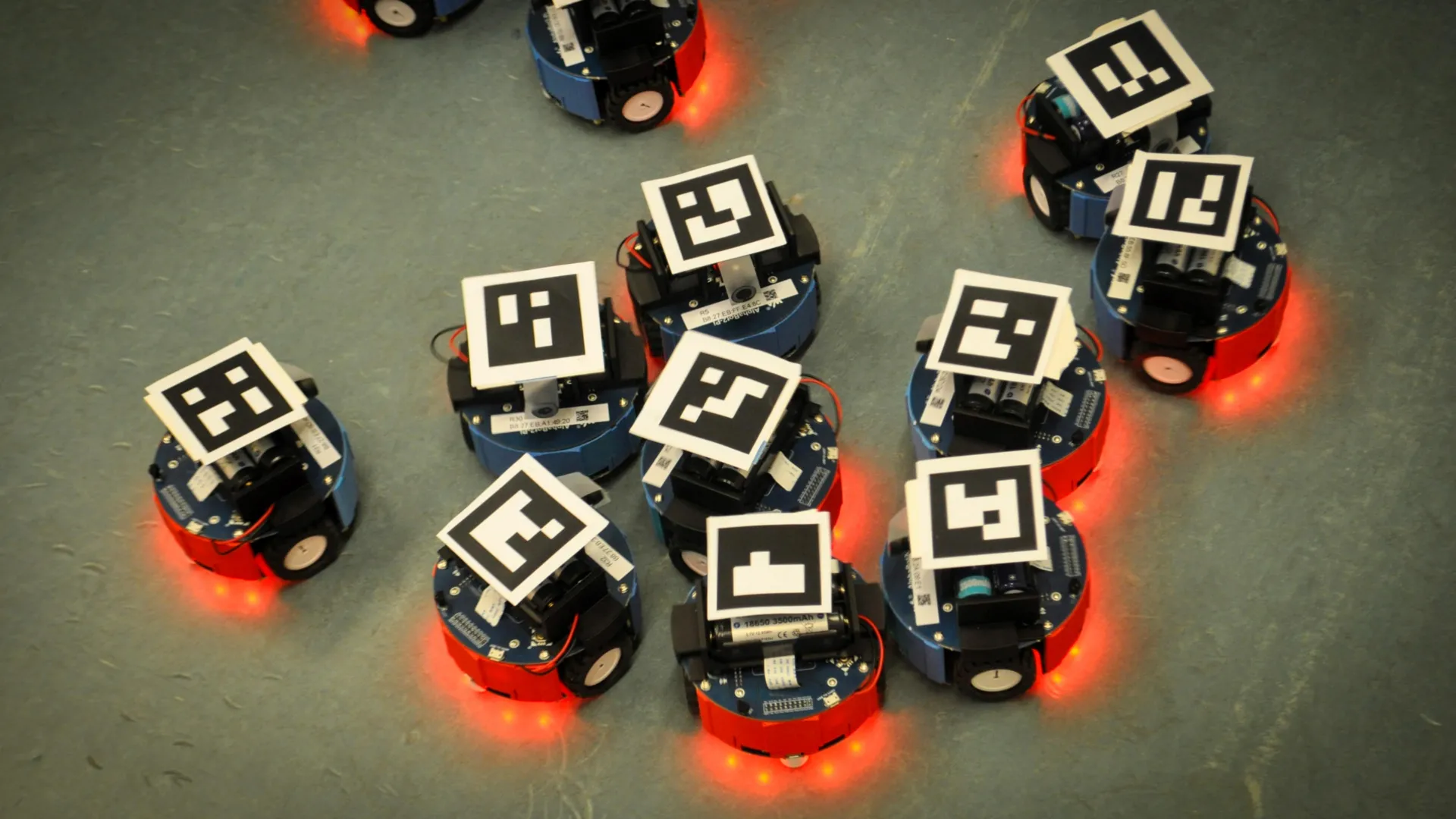
In the high-stakes world of autonomous robotics, bigger is often considered better. Whether it is a fleet of drones surveying a sprawling agricultural site, a swarm of underwater bots cleaning an oil spill, or an automated warehouse brigade assembling complex machinery, the promise of a "swarm" is the promise of efficiency. But as any urban commuter knows, the more vehicles you add to a road, the more likely you are to encounter gridlock.
In robotics, this phenomenon is known as the "congestion bottleneck." As robot density increases, the probability of collisions and interference rises exponentially, eventually causing the entire system to grind to a halt. For years, engineers have sought to solve this through increasingly complex, centralized algorithms—essentially building digital "traffic controllers" to manage every robot’s path.
However, a groundbreaking study from Harvard University’s John A. Paulson School of Engineering and Applied Sciences (SEAS) suggests that the solution to complex coordination might not be more intelligence, but rather a strategic injection of "noise." By introducing a controlled amount of randomness into how robots move, researchers have discovered a "Goldilocks zone" that keeps swarms moving fluidly, even in highly cramped environments.
The Chronology of Discovery: From Theory to Laboratory
The research, recently published in the Proceedings of the National Academy of Sciences, represents a multidisciplinary triumph. Led by applied mathematics Ph.D. student Lucy Liu, under the guidance of SEAS Senior Research Fellow Justin Werfel and the lab of L. Mahadevan—the Lola England de Valpine Professor of Applied Mathematics, Organismic and Evolutionary Biology, and Physics—the project unfolded in three distinct phases.
Phase I: Mathematical Modeling
The journey began with the realization that traditional models of robot movement were too rigid. When agents are programmed to take the shortest path between two points, they behave like commuters in a rush hour traffic jam, all funneling into the same lanes and obstructing one another. Liu and her team began by modeling each robot as an independent agent with a tunable "noise" parameter. They discovered that by introducing randomness, they could move away from unpredictable, chaotic individual interactions and toward a statistical average. "When you have a lot of randomness, it becomes possible to take averages—average distances, average times, average behaviors," Liu explained. "This makes it a lot easier to make predictions."
Phase II: Computer Simulations
Once the math was established, the team moved to computer simulations to test the "noise" theory. They created virtual arenas where "agents" were assigned random destinations. Once an agent reached its target, it was immediately reassigned, mimicking a continuous workflow. They found that in the absence of noise, robots formed dense, rigid clusters that led to total gridlock. At the other extreme, high noise led to erratic, inefficient wandering. The simulations allowed the researchers to map exactly how much movement variation was needed to prevent "jamming" without sacrificing the efficiency of the robots’ primary tasks.
Phase III: Real-World Validation
The final phase took the research from the digital realm into the physical lab. Collaborating with physicist Federico Toschi at the Eindhoven University of Technology, the team utilized small, wheeled robots equipped with QR codes. Using an overhead camera system to track movement and update destination data in real-time, the researchers observed the robots in a constrained physical space. Despite the friction, mechanical latency, and physical limitations inherent in real-world hardware, the robots mimicked the simulated behavior with remarkable accuracy. The "Goldilocks zone" of movement held true: a little bit of erratic behavior was, in fact, the key to systemic order.
Supporting Data: Finding the Sweet Spot
The research relies on the concept of "goal attainment rate"—a metric measuring how many tasks a swarm completes per unit of time. The data collected by the team reveals a non-linear relationship between robot density and productivity.
- Zero-Noise Scenarios: In simulations where robots were programmed with perfect, straight-line navigation, the "goal attainment rate" plummeted once the density reached a critical threshold. The robots became "locked" in clusters, unable to navigate around one another because their internal logic did not account for obstacle avoidance that deviated from the path.
- High-Noise Scenarios: Conversely, when robots were programmed with excessive randomness, the time required to travel between points increased so drastically that efficiency dropped. The robots were moving freely, but they were not moving effectively.
- The Optimal Range: The team identified a "sweet spot" where the noise parameter allowed for occasional, short-lived collisions. These collisions were not detrimental; rather, they acted as a mechanism for self-correction. By bumping into one another, the robots were effectively forced to deviate from their straight-line path, which allowed them to navigate around the cluster and regain forward momentum.
This data suggests that efficiency in a swarm is not about preventing all interactions, but about managing the nature of those interactions.
Official Responses and Theoretical Context
The findings have sent a ripple through the robotics and behavioral biology communities. L. Mahadevan, whose work often explores the intersection of physical and biological systems, emphasized the broader implications of the study.
"Understanding how active matter—whether it is a swarm of ants, a herd of animals, or a group of robots—becomes functional and executes tasks in crowded environments using the principles of self-organization, is relevant to many questions in behavioral ecology," Mahadevan noted.
By demonstrating that complex, emergent behavior can arise from simple, local rules, the Harvard team has challenged the necessity of centralized control. In many industrial applications, centralized control is a single point of failure; if the "brain" of the operation loses connection to a single bot, the whole system can falter. The Harvard study suggests that by empowering individual robots with simple, stochastic (randomized) movement rules, we can create systems that are not only more efficient but also more resilient and scalable.
Implications: A Future Beyond Robotics
The potential applications of this research extend far beyond the laboratory floor. As we move toward a future defined by autonomous vehicles, smart cities, and high-density logistics, the ability to manage "flow" becomes a critical infrastructure challenge.
Traffic and Urban Planning
Urban planners have long struggled with the "Braess’s Paradox," where adding a new road to a network can sometimes increase congestion. The Harvard study offers a different lens: if vehicles were programmed with a degree of "controlled variability," would traffic jams become a relic of the past? While human drivers are notoriously bad at behaving like "agents with tunable noise," the advent of autonomous, connected vehicles presents an opportunity to implement these mathematical strategies on a city-wide scale.
Warehouse and Supply Chain Logistics
In modern fulfillment centers, hundreds of robots navigate shelves and sorting bins simultaneously. Currently, these systems rely on centralized dispatching software that constantly calculates paths to avoid collision. Implementing the Harvard team’s findings could simplify the software requirements for these warehouses, allowing robots to function with more autonomy and less dependence on a central hub, thereby reducing the risk of system-wide downtime.
Crowd Management
The principles discovered by Liu and her team also apply to the movement of people in dense, emergency-prone environments. By understanding how "noise" impacts flow, architects and emergency responders could design better exits, hallways, and public spaces that prevent the dangerous "crushing" effects that occur when crowds panic and move in a highly synchronized, non-optimal manner.
Conclusion: The Wisdom of Uncertainty
The Harvard study serves as a poignant reminder that in nature, and by extension in engineering, simplicity is often the most sophisticated design choice. By accepting that absolute precision is not only impossible but potentially counterproductive in crowded systems, researchers have unlocked a path toward more efficient, adaptable, and resilient robotic fleets.
As Lucy Liu continues her research, the focus is shifting toward how these mathematical tools can be translated into policy and design. The era of the "smart" swarm may not be defined by robots that know everything, but by robots that know how to navigate the inherent messiness of the world with just enough chaos to stay moving.
Project Funding: This research was supported by the National Science Foundation Graduate Research Fellowship Program (Grant No. DGE 2140743), the Simons Foundation, and the Henri Seydoux Fund.
 Sagoh
Sagoh  Asro
Asro  Siti Muinah