
 By Asro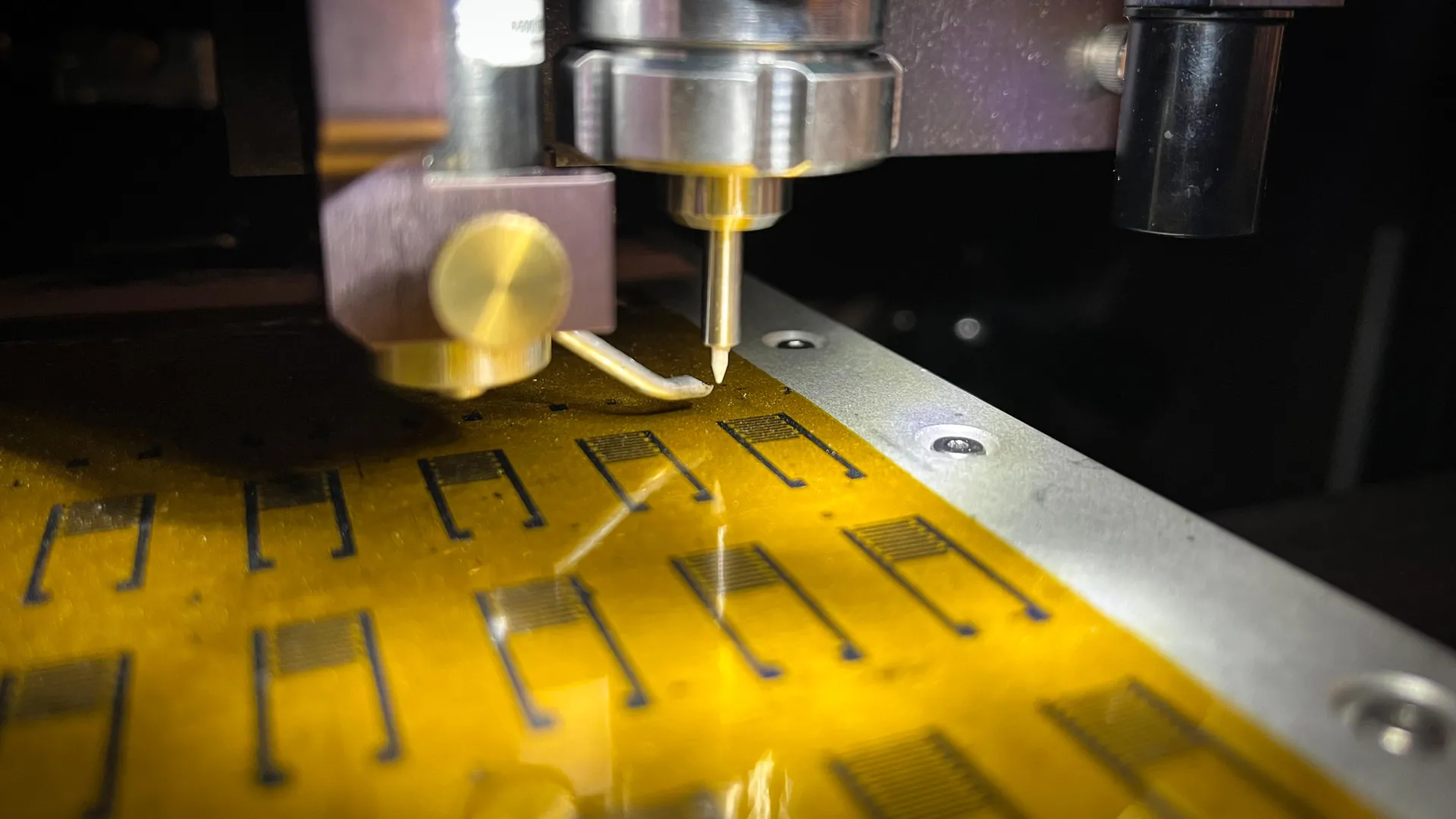
In a landmark achievement for the fields of materials science and neurobiology, researchers at Northwestern University have successfully developed printed artificial neurons that do not merely mimic the behavior of biological cells but actively interface with them. This breakthrough, detailed in the April 15 issue of the journal Nature Nanotechnology, represents a fundamental shift in how we approach the fusion of synthetic electronics and living neural tissue. By utilizing aerosol jet printing and innovative nanomaterials, the team has created flexible, energy-efficient devices that fire electrical signals with a fidelity previously unseen in synthetic systems.
The Dawn of "Bio-Electronic" Integration
For decades, the field of neuroprosthetics has been hampered by a fundamental incompatibility: the rigid, binary nature of silicon-based electronics versus the soft, electrochemical, and adaptive nature of the human brain. While modern computers are marvels of processing power, they are fundamentally "dumb" in their uniformity. They rely on billions of identical transistors, all operating on the same clock cycle, trapped within a flat, two-dimensional architecture.
The brain, by contrast, is a masterpiece of biological engineering. It is inherently three-dimensional, heterogeneous, and constantly evolving. Its neurons are not static components; they are dynamic, self-adjusting entities that reconfigure their connections in response to experience—a process known as neuroplasticity. The Northwestern team, led by Mark C. Hersam, the Walter P. Murphy Professor of Materials Science and Engineering, has bridged this gap by creating artificial neurons that replicate this complexity using "electronic inks" composed of molybdenum disulfide (MoS₂) and graphene.
Chronology of a Scientific Breakthrough
The path to this discovery began with a re-evaluation of traditional manufacturing techniques. Historically, researchers working with polymer-based electronic materials viewed the polymer residue left behind after printing as a defect—an obstacle to be removed to improve electrical conductivity.
- Reframing the Defect: The Northwestern team, including co-lead and research associate professor Vinod K. Sangwan, chose a different route. Instead of removing the polymer, they engineered a process to partially decompose it.
- Developing the "Ink": Utilizing aerosol jet printing, the researchers deposited these specialized inks onto flexible, polymer-based substrates.
- Filament Formation: By passing current through the device, the team induced a controlled, spatially inhomogeneous decomposition of the polymer. This resulted in the formation of a narrow, conductive filament that constricted the flow of electricity, effectively mimicking the "firing" mechanism of a biological axon.
- Validation via Mouse Cerebellum: Once the synthetic neurons were stabilized, the team collaborated with Indira M. Raman, the Bill and Gayle Cook Professor of Neurobiology. In a series of experiments using slices of mouse cerebellum, the artificial neurons were tasked with communicating with living brain tissue. The results confirmed that the synthetic spikes matched the exact temporal and structural properties of biological signals, successfully triggering natural neural circuits.
Technical Foundations: Why This Architecture Matters
The success of the Northwestern artificial neuron lies in its ability to produce complex, multi-order signals. Most previous iterations of artificial neurons were limited; they could only produce simple, uniform pulses, or they required massive, energy-draining arrays to simulate anything resembling a complex neural pattern.
The Hersam-Sangwan device changes this paradigm. By leveraging the physical properties of MoS₂ (a semiconductor) and graphene (a conductor), the device can modulate its firing patterns. It can produce single spikes, continuous firing, and complex "bursting" patterns—the same vocabulary used by the human brain to encode information.
"Other labs have tried to make artificial neurons with organic materials, and they spiked too slowly," Hersam explained. "Or they used metal oxides, which are too fast. We are within a temporal range that was not previously demonstrated for artificial neurons. You can see the living neurons respond to our artificial neuron. We’ve demonstrated signals that are not only the right timescale but also the right spike shape to interact directly with living neurons."
Official Perspectives: The Energy Crisis in AI
Beyond the immediate medical implications, this research addresses a looming environmental and economic crisis: the insatiable power demands of modern Artificial Intelligence. As AI models grow in size, they require exponentially more data and, consequently, more electricity.
"The world we live in today is dominated by AI," Hersam noted. "The way you make AI smarter is by training it on more and more data. This data-intensive training leads to a massive power-consumption problem. Therefore, we have to come up with more efficient hardware to handle big data and AI. Because the brain is five orders of magnitude more energy-efficient than a digital computer, it makes sense to look to the brain for inspiration."
The implications for data centers are stark. Currently, tech giants are building gigawatt-scale data centers that require dedicated power plants to remain operational. Furthermore, these facilities consume massive volumes of water for cooling, placing significant stress on local resources. Hersam’s work suggests that by shifting from traditional silicon architectures to brain-inspired, energy-efficient hardware, the industry could theoretically bypass the need for massive, environmentally taxing server farms.
Implications for the Future of Human Health and Computing
The successful interface between these printed neurons and living tissue opens several transformative avenues:
1. Advanced Neuroprosthetics
Current prosthetic technology often relies on clunky interfaces that struggle to translate high-speed neural intent into mechanical action. By using artificial neurons that "speak the language" of the brain, researchers could create implants that seamlessly integrate with the nervous system, potentially restoring lost hearing, vision, or motor functions with unprecedented accuracy.
2. Next-Generation Computing
The transition to brain-inspired hardware could usher in a new era of computing that moves away from the rigid, fixed nature of current silicon chips. By developing materials that are heterogeneous and dynamic, we could create hardware capable of "learning" in a way that parallels the human brain, allowing for complex decision-making processes with a fraction of the current energy footprint.
3. Sustainability in Technology
The additive printing process used by the Northwestern team is inherently more sustainable than traditional lithographic chip manufacturing. It places material only where it is needed, drastically reducing waste. As the tech industry faces increased scrutiny over its environmental footprint, this low-cost, high-efficiency manufacturing approach could become the new gold standard.
Conclusion: A New Frontier
The study, supported by the National Science Foundation, titled "Multi-order complexity spiking neurons enabled by printed MoS₂ memristive nanosheet networks," is more than just a technical success—it is a proof of concept for a future where technology and biology are no longer distinct, but deeply intertwined.
By looking to the brain as the ultimate model for efficient, complex computation, the Northwestern team has demonstrated that we do not necessarily need to build "bigger" machines to advance the state of AI or medicine. Instead, we need to build "smarter" machines—devices that respect the biological elegance of the neural networks they aim to serve. As the research moves toward potential clinical and commercial applications, the boundary between the artificial and the organic continues to blur, promising a future that is as sustainable as it is sophisticated.
 Dwi Wanna
  Nana Wu
  Siti Muinah