
 By Dwi Wanna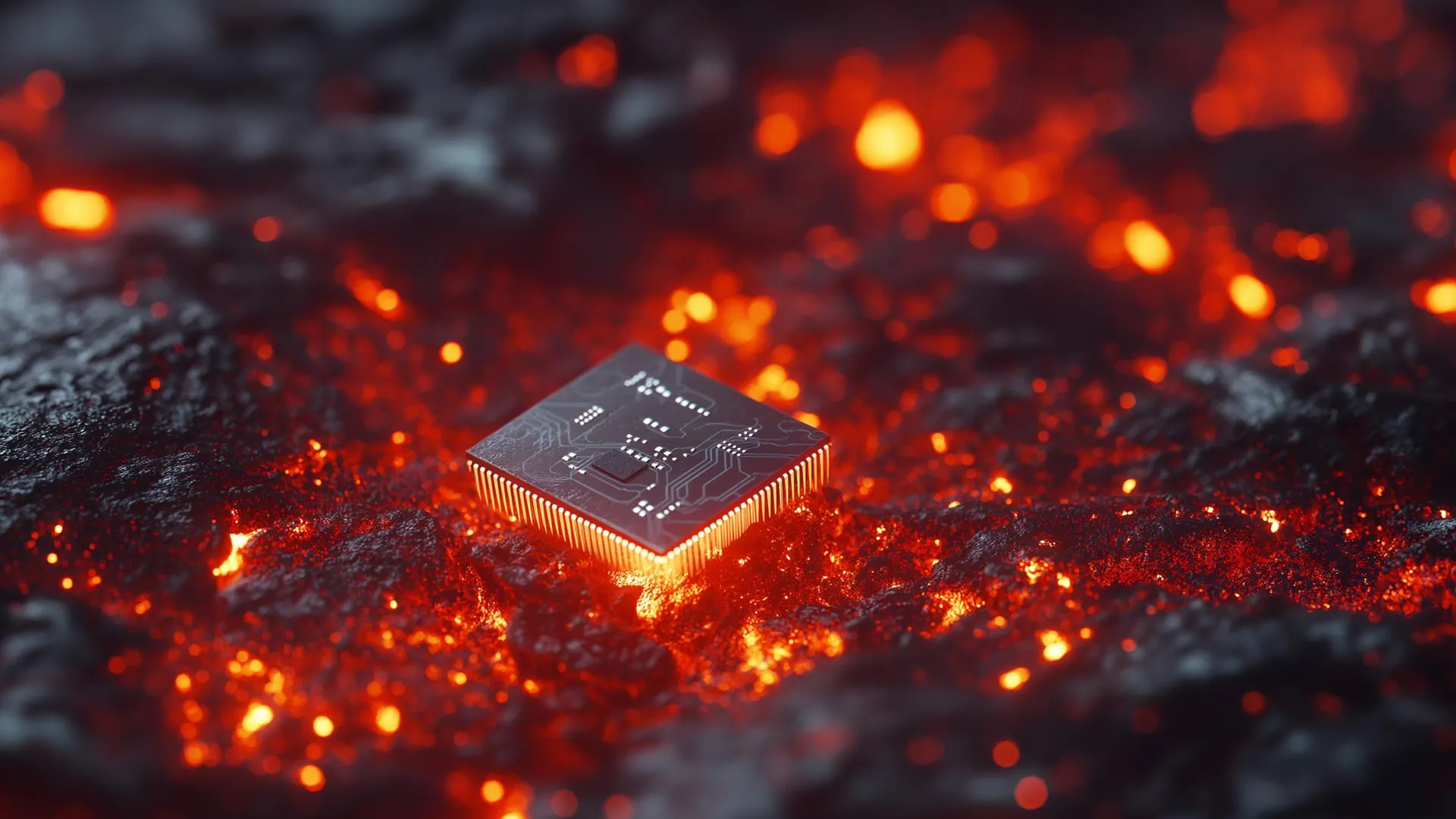
For decades, the advancement of modern electronics has been tethered to a rigid thermal leash. From the smartphone in your pocket to the complex avionics guiding deep-space probes, the silicon-based architecture that powers our world shares a universal weakness: heat. Once temperatures breach the 200-degree Celsius threshold, traditional electronic components begin to degrade, suffer from signal noise, and eventually succumb to catastrophic failure. This "thermal barrier" has long served as a physical wall, limiting where we can send machines and how efficiently we can process data in extreme environments.
However, a landmark study published on March 26, 2026, in the journal Science has fundamentally altered the physics of what is possible. A team of researchers from the University of Southern California (USC), led by Joshua Yang, the Arthur B. Freeman Chair Professor at the Ming Hsieh Department of Electrical and Computer Engineering, has unveiled a new class of memory device that remains fully functional at a blistering 700 degrees Celsius (~1300 degrees Fahrenheit).
This breakthrough does not merely nudge the limit of electronic resilience; it vaults past it. At 700 degrees Celsius—a temperature exceeding that of molten lava—the device showed zero signs of degradation. In fact, the researchers noted that 700 degrees was simply the upper limit of their testing equipment, leaving the true ceiling of this technology an open and tantalizing question.
The Anatomy of Resilience: A Memristor Built for the Abyss
At the heart of this achievement is the memristor, a nanoscale component that serves as a hybrid of memory storage and computational logic. Unlike traditional binary memory that requires constant power to maintain its state, the memristor operates through a sophisticated physical interaction at the atomic scale.
The device is constructed as a microscopic, layered sandwich. The architecture consists of a top electrode made of tungsten, a central layer of hafnium oxide ceramic, and a foundational layer of graphene. Each material was chosen with deliberate, albeit serendipitous, intent:
- Tungsten: Known to possess the highest melting point of any elemental metal, tungsten provides the structural integrity required to handle extreme thermal kinetic energy.
- Hafnium Oxide: A standard but highly stable semiconductor material used as the insulating barrier.
- Graphene: A single-atom-thick sheet of carbon, celebrated for its extraordinary mechanical strength and its unique ability to remain inert under extreme conditions.
The synergy of these materials is what prevents the "short-circuiting" that typically plagues high-temperature electronics. In conventional devices, heat acts as a catalyst for atomic migration. Metal atoms from the electrodes migrate through the insulating layer, eventually forming a permanent, conductive "bridge" that causes the device to fail. The USC team discovered that graphene acts as an impenetrable barrier to this migration. As Professor Yang described it, the interaction between tungsten and graphene is akin to "oil and water"—the tungsten atoms refuse to adhere to the graphene surface. Without a stable anchor point, the atoms cannot form a bridge, keeping the device operational even when the ambient environment is hot enough to melt lesser components.
Chronology of Discovery: From Failure to Paradigm Shift
The path to this discovery was not a linear trajectory of top-down planning, but rather a classic example of scientific serendipity. The team did not set out to build a 700-degree-resistant memory chip; they were, in fact, attempting to refine a different graphene-based device. When that initial project failed to produce the expected results, the team pivoted to analyze why the experimental structure was behaving so strangely.
"To be honest, it was by accident, as most discoveries are," Yang reflected. "If you can predict it, it’s usually not surprising, and probably not significant enough."
Following the initial observation, the research moved through a rigorous validation process:
- Initial Discovery (2025): Anomalous data during a failed experiment showed that the device maintained consistent switching characteristics at temperatures that should have destroyed it.
- Mechanistic Verification: Utilizing high-resolution electron microscopy and spectroscopy, the team visualized the atomic interface, confirming that the graphene layer was physically blocking the migration of tungsten atoms.
- Quantum Simulations: Collaborators at Kumamoto University in Japan performed complex simulations to prove that the "oil and water" repulsion observed at the interface was a stable, predictable physical property.
- Peer-Reviewed Validation (March 2026): The findings were published in Science, marking the official debut of this technology to the global engineering community.
Supporting Data: By the Numbers
The performance metrics of the device are as impressive as its resilience. In the trials conducted by the team, the memristor was subjected to extreme stress tests to verify its long-term viability:
- Thermal Endurance: Continuous operation at 700°C for over 50 hours without the need for a "refresh" cycle to maintain data integrity.
- Switching Reliability: The device endured over one billion switching cycles at 700°C, proving that its durability is not merely a static trait but one that survives active computational use.
- Energy Efficiency: The device operates at a lean 1.5 volts, with switching speeds measured in tens of nanoseconds.
- Scalability: The materials used—tungsten and hafnium oxide—are already staples in the semiconductor industry. Graphene, while more specialized, is currently moving toward wafer-scale production at major facilities like TSMC and Samsung, suggesting a viable path toward mass manufacturing.
Implications for AI and Extreme Environments
The implications of this breakthrough are bifurcated into two major fields: extreme-environment exploration and artificial intelligence.
The New Frontier of Exploration
For decades, space agencies have been hampered by the "Venus Problem." The surface of Venus, with its 460-degree Celsius atmosphere, is a graveyard for traditional electronics. Landers typically fail within hours, if not minutes. With a device now proven to survive 700 degrees, the possibility of long-duration autonomous exploration on Venus—or even within the harsh environments of geothermal wells or the core of nuclear reactors—has shifted from science fiction to an engineering feasibility.
The AI Advantage
Beyond mere durability, the memristor is a potent tool for the future of AI. Modern AI systems, such as Large Language Models (LLMs), are bottlenecked by the energy required to move data between memory and processing units.
"Over 92 percent of the computing in AI systems like ChatGPT is nothing but matrix multiplication," Yang noted.
By performing these calculations directly within the memory device using Ohm’s Law, the memristor bypasses the need for the traditional, energy-hungry "von Neumann" architecture of standard computers. This allows for massive, instantaneous computation at a fraction of the power cost. With this high-temperature variant, this efficient AI processing could be deployed at the "edge"—directly on sensors in jet engines, deep-sea probes, or autonomous industrial machinery.
Official Responses and Future Outlook
The project was conducted through the CONCRETE Center (Center of Neuromorphic Computing under Extreme Environments), a multi-university collaboration led by USC and supported by the Air Force Office of Scientific Research and the Air Force Research Laboratory (AFRL).
Dr. Sabyasachi Ganguli of the AFRL Materials Lab, who collaborated on the experimental testing, emphasized that this research represents a fundamental shift in materials science. By mastering the atomic interface, the team has provided a blueprint for future designers to create robust, heat-hardened components.
However, Professor Yang remains grounded regarding the timeline for commercialization. "This is the first step," he cautioned. "It’s still a long way to go. We have a memory device, but a full computing system requires logic circuits, power management, and integration. But logically, you can see: now it makes it possible. The missing component has been made."
Yang and his colleagues—Qiangfei Xia, Miao Hu, and Ning Ge—have already co-founded a company, TetraMem, to commercialize memristor-based AI chips. While their current focus is on room-temperature applications, the "high-temp" version of the technology has effectively expanded the company’s roadmap.
As the industry looks toward the next decade of computing, the work from the USC team stands as a testament to the power of fundamental research. By looking at a "failed" experiment through a new lens, the researchers have effectively rewritten the thermal limits of the digital age, clearing a path for a generation of machines capable of operating where no computer has dared to go before. As Yang concluded, "Space exploration has never been so real, so close, and at such a large scale. This paper represents a critical leap into a much larger, more exciting frontier."
 Ammar Sabilarrohman
  Ali Ikhwan
  Iffa Jayyana