
 By Nana Wu
For the modern entrepreneur, the digital storefront is the heartbeat of the business. However, the mechanism that allows that heartbeat to sustain itself—the payment processing system—is often treated as an afterthought. In 2025, the landscape of financial technology (FinTech) has shifted from being a mere utility to a competitive advantage. With global e-commerce projections continuing to climb, choosing the right payment gateway is no longer just about "taking money"; it is about optimizing conversion, ensuring ironclad security, and managing cash flow.
If you are a founder currently grappling with the decision of which platform to integrate, you are not alone. The sheer volume of choices can be paralyzing. To help you cut through the noise, we have conducted an extensive audit of the current market, stress-testing the industry leaders to bring you the top six payment systems for small businesses in 2025.
What Defines a Modern Payment System?
Before evaluating providers, it is essential to define the ecosystem. A payment system is the technological infrastructure—comprised of gateways, processors, and merchant accounts—that facilitates the secure transfer of funds between a buyer and a seller.
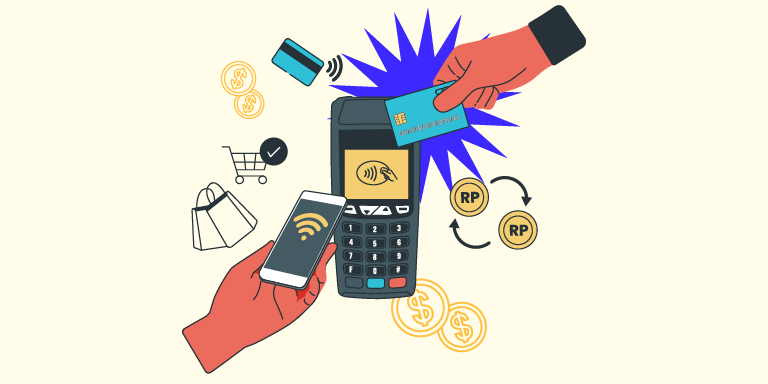
In the contemporary landscape, these systems serve as the connective tissue between your website and the global banking network. They verify that a customer has the funds, ensure the transaction is not fraudulent, and settle the money into your account. It is important to distinguish these systems from merchant accounts (which are the bank accounts that hold your funds) and shopping carts (which are the interface where customers select items). While some providers bundle these services, they remain distinct functions in the architecture of a sale.
Critical Factors for Decision Making
When we analyzed these six platforms, we focused on five key performance indicators (KPIs) that directly impact the bottom line of a small business:
- Payout Velocity: In a high-growth environment, cash flow is king. We prioritized solutions that offer rapid, predictable payout cycles.
- Conversion Optimization: A payment gateway that forces a user off your site or introduces friction during checkout is a liability. Ease of use for the customer is paramount.
- Global Accessibility: Can your system handle cross-border payments? The difference between a local shop and a global brand often lies in the payment gateway’s reach.
- Pricing Transparency: The industry is notorious for "hidden fees." We favored platforms with clear, scalable pricing models.
- Security and Compliance: PCI-DSS compliance is the non-negotiable floor. Any system that does not provide top-tier, enterprise-grade encryption was immediately disqualified.
The Top 6 Payment Systems for 2025
1. Stripe: The Developer’s Choice
Stripe has redefined the "API-first" approach to payments. It is widely considered the gold standard for businesses that prioritize a seamless, branded user experience.

- The Edge: Stripe keeps the customer on your website throughout the entire checkout flow. This reduction in friction is statistically proven to decrease cart abandonment rates.
- The Trade-off: While powerful, its advanced features require technical knowledge. If you are not a developer or do not have one on retainer, the initial setup can feel daunting.
- Best For: Tech-forward startups and e-commerce brands looking to scale globally.
2. PayPal: The Universal Trust Signal
Despite the rise of newer competitors, PayPal remains a titan for a simple reason: consumer trust. Millions of users have their information stored in PayPal, allowing for "one-click" purchases.
- The Edge: It is globally recognized and offers multi-currency support, making it an essential inclusion for businesses targeting international markets.
- The Trade-off: PayPal often redirects users to its own interface to complete the transaction, which can disrupt the flow of your carefully curated website design.
- Best For: Small businesses looking to build immediate trust with new, skeptical customers.
3. Authorize.net: The Legacy Powerhouse
As one of the oldest and most reliable players in the space, Authorize.net offers a robust, developer-friendly environment that feels more like a traditional merchant account than a modern app.
- The Edge: It offers some of the most sophisticated fraud-detection suites in the industry, which is a massive relief for businesses dealing with high-ticket items.
- The Trade-off: It is not the most "plug-and-play" solution on this list. It requires a bit more configuration compared to Stripe or Square.
- Best For: Mid-sized businesses that prioritize security and custom integration over simplicity.
4. Amazon Pay: Leveraging the Giant
Amazon Pay allows your customers to use the payment methods already stored in their Amazon accounts.
- The Edge: It brings the "Amazon experience" to your store. The convenience factor is massive; customers are much more likely to complete a purchase when they don’t have to manually input credit card details.
- The Trade-off: Fees can be higher, and you are essentially feeding into the Amazon ecosystem rather than building your own brand authority.
- Best For: Retail businesses that want to maximize conversion rates among existing Amazon users.
5. Square: The Brick-and-Mortar Champion
If your business operates primarily in a physical space—or a hybrid of online and offline—Square is the undisputed leader.
- The Edge: The ecosystem is unmatched. From their famous card readers to their virtual terminal, Square allows you to unify your inventory and sales across every channel.
- The Trade-off: It is primarily designed for high-volume, in-person transactions. While its online store functionality has improved, it is not as flexible as Stripe for custom web builds.
- Best For: Local shops, pop-up markets, and businesses with a physical storefront.
6. SecurePay: The Hidden Contender
SecurePay is a reliable, straightforward alternative that is often overlooked. It provides a balanced suite of tools for businesses that want a simple setup without the complexity of larger corporate platforms.
- The Edge: Excellent API integration and a user-friendly trial period that allows you to test the waters before committing.
- The Trade-off: Brand recognition. Customers may be less familiar with the name, which could lead to minor friction for first-time buyers who are unfamiliar with the processor.
- Best For: Startups that need an all-in-one, budget-friendly solution that doesn’t require a massive engineering team.
Chronology of the Modern Payment Shift
The shift toward these platforms has been rapid. Historically, small businesses were forced to rely on traditional merchant banks, which involved months of underwriting, high monthly fees, and cumbersome hardware.

The "FinTech Revolution" of the early 2010s introduced the concept of the Payment Service Provider (PSP)—a model where providers like Stripe aggregated merchant accounts under one umbrella. This shifted the industry from "high-friction, high-cost" to "instant-on, low-cost." By 2025, we have entered the "Integration Era," where payment systems are now natively built into every major website builder (like Shopify or WordPress), making it possible to launch a global business in an afternoon.
Supporting Data and Financial Implications
According to recent industry data, cart abandonment rates remain the single biggest threat to e-commerce profitability, with over 70% of users abandoning carts due to "complicated checkout processes."
- The Financial Impact: Switching to a processor that supports "express" checkouts (like Apple Pay or Amazon Pay) has been shown to increase conversion rates by as much as 15–20%.
- Security Costs: While some providers charge a higher percentage fee, the cost of a single data breach can bankrupt a small business. Investing in a PCI-compliant provider is not just a regulatory necessity; it is an insurance policy.
Official Perspectives: The Experts Weigh In
Industry analysts emphasize that there is no "best" provider, only the "best fit."
"Small business owners often make the mistake of picking a provider based solely on the lowest transaction fee," says Elena Rossi, a consultant in the digital payments space. "However, if that system doesn’t integrate with your accounting software or takes five days to settle funds, you are losing more in operational inefficiency than you are saving in fees. Look at the total cost of ownership—including your time."
Strategic Recommendations
As you move forward in 2025, follow this three-step strategy:
- Map Your Customer Journey: Does your customer prefer to pay via mobile? Do they trust known brands like PayPal, or are they tech-savvy enough to use a seamless Stripe integration?
- Audit Your Tech Stack: Ensure your payment system talks to your CRM and accounting software. Manual data entry is the enemy of growth.
- Future-Proof: Choose a provider that allows for global expansion. If you plan to sell in Europe or Asia, ensure your provider supports local payment methods (such as SEPA or AliPay) to avoid missing out on international revenue.
Conclusion
The infrastructure for your business is the foundation upon which all your marketing, design, and product efforts sit. By selecting a payment system that aligns with your specific needs—whether it is the developer-friendly power of Stripe, the ubiquitous trust of PayPal, or the physical-to-digital versatility of Square—you are setting the stage for sustainable growth.
Disclaimer: Pricing and service terms for the platforms mentioned are subject to change. Always consult the official documentation of each provider before finalizing your integration to ensure that the current rates and compliance standards align with your business requirements.
 Neng Nana
  Dwi Wanna
  Muslim