
 By Lina Hope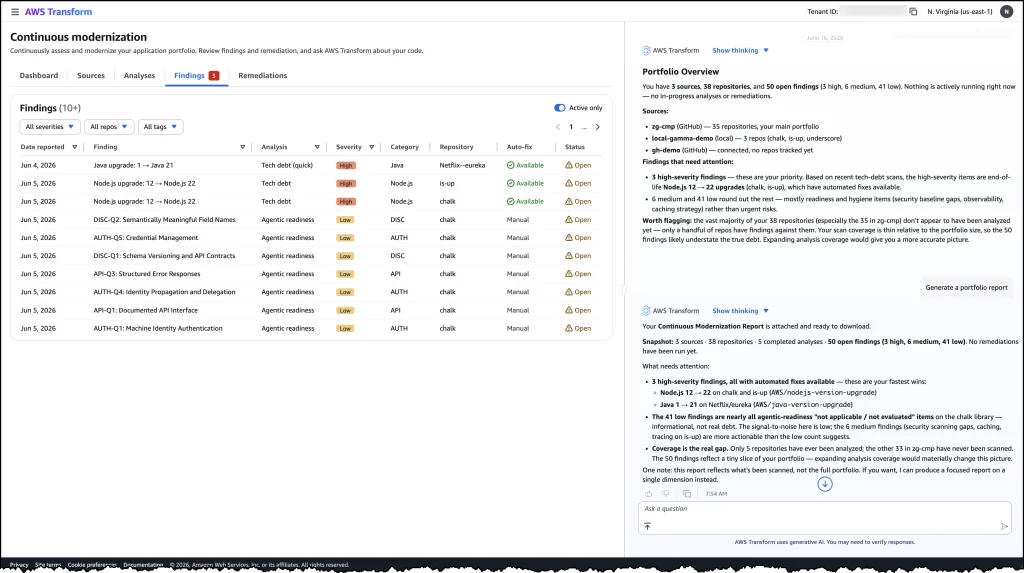
In a landmark announcement that promises to reshape the landscape of software engineering management, Amazon Web Services (AWS) has unveiled AWS Transform – Continuous Modernization (Preview). This innovative capability, integrated into the broader AWS Transform suite, is engineered to tackle one of the most persistent and expensive challenges in modern IT: the accumulation of technical debt. By offering autonomous, scalable analysis and automated remediation, AWS is positioning itself to shift the burden of software maintenance from manual human labor to intelligent, automated systems.
Main Facts: The End of Manual Tech Debt Management
Technical debt—the implied cost of additional rework caused by choosing an easy solution now instead of a better approach that would take longer—has long been the "silent killer" of engineering productivity. Organizations typically dedicate upwards of 30% of their IT budgets to the "undifferentiated heavy lifting" of software maintenance. This includes the tedious tasks of upgrading Java versions, replacing deprecated frameworks, and ensuring that AWS Lambda runtimes remain compliant before they reach their end-of-life.
Until now, the industry has relied on a patchwork of disconnected point tools: one for vulnerability scanning, another for code quality, and a third for dependency tracking. This fragmented approach forces engineering teams into a cycle of manual, application-by-application remediation that is not only slow but prone to human error and regression.
AWS Transform – Continuous Modernization changes this paradigm by providing:
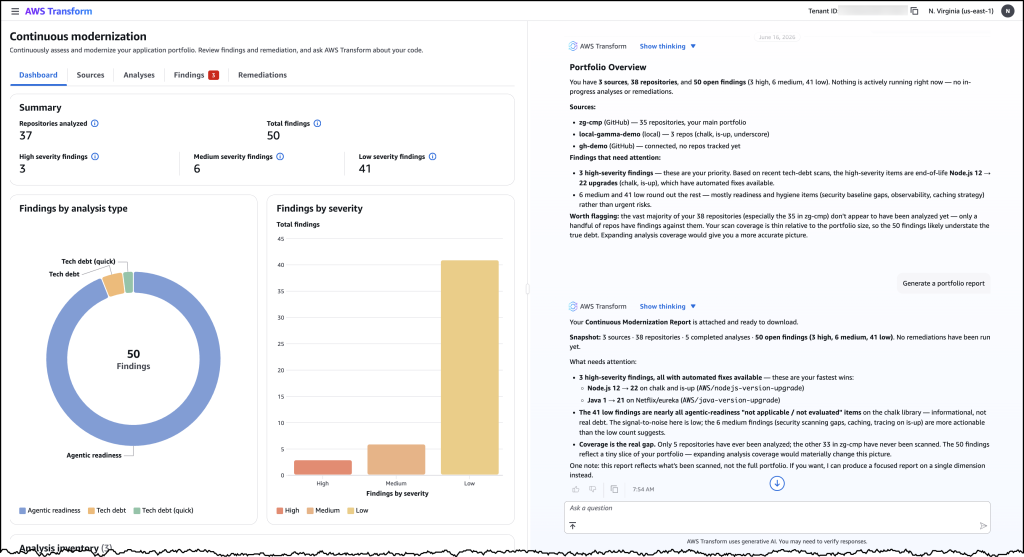
- Full Visibility: A centralized dashboard that provides a real-time, bird’s-eye view of an organization’s entire codebase across thousands of repositories.
- Continuous Analysis: Automated scanning of code repositories against configurable organizational baselines, delivering actionable findings in hours rather than weeks.
- Autonomous Remediation: The ability to automatically generate pull requests (PRs) that resolve identified issues, ranging from dependency updates to complex framework migrations.
- Policy-Driven Governance: Organizations can codify their own internal standards—such as approved libraries or preferred logging patterns—and enforce them continuously across their entire portfolio.
Chronology: The Evolution of AWS Transform
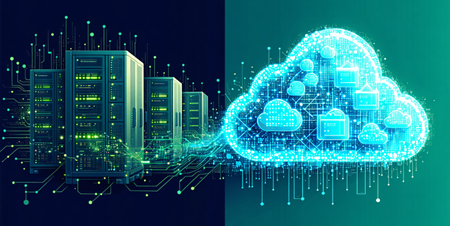
The release of this new capability marks a significant maturity point in the AWS Transform roadmap. AWS has spent years refining its tooling to assist enterprises in complex migrations—from data center exits to the modernization of legacy Windows and mainframe applications.
- The Foundation: AWS initially focused on large-scale, migration-heavy transformations, providing the primitives for moving workloads to the cloud.
- The Middleware Gap: As enterprises moved to the cloud, the focus shifted toward "day-to-day" operations. AWS recognized that while cloud infrastructure could be managed via code, the application layer remained trapped in legacy patterns.
- The AI Acceleration: With the advent of AI-assisted development agents, the speed of code production has increased dramatically. Paradoxically, this has accelerated the accumulation of technical debt, as agents churn out code faster than human teams can audit or modernize it.
- The Modernization Milestone: Recognizing that manual intervention was becoming a bottleneck, AWS developed the Continuous Modernization capability to provide a "ground truth" that keeps pace with AI-driven development.
Supporting Data: The Hidden Costs of Technical Debt
The economic impact of technical debt is often obscured in corporate balance sheets, but the underlying data suggests it is a primary driver of engineering burnout and stalled innovation.
The Productivity Gap
Current industry benchmarks indicate that engineering organizations spend nearly one-third of their total IT expenditure on maintenance. This "maintenance tax" is exacerbated by:
- Lagging Visibility: Leaders often rely on self-reported status updates from team leads, which frequently mask the true state of the codebase or hide critical regressions.
- The "Tool Fatigue" Problem: Large enterprises often utilize dozens of disparate tools, none of which communicate with each other. This creates "data silos" where a security vulnerability might be flagged, but the underlying framework dependency causing it remains unaddressed.
- Deployment Frequency: In an era of CI/CD, the inability to quickly update dependencies or runtimes acts as a barrier to shipping features, effectively slowing the entire product lifecycle.
By automating the identification and resolution of these issues, AWS Transform provides a quantifiable improvement in "Time to Compliance," moving from a manual cycle of weeks to an automated cycle of hours.

Official Responses and Strategic Vision
During the unveiling, AWS leadership emphasized that the tool is designed to empower platform teams rather than replace them. The philosophy behind the product is to automate the repetitive aspects of software maintenance, freeing human developers to focus on high-value business logic and innovation.
"Customers need a capability that detects, prioritizes, and remediates tech debt continuously, autonomously, and at scale," an AWS spokesperson noted. By integrating with the AWS Security Agent, the system ensures that security findings are not treated as a separate, isolated workflow but are folded into the same prioritized list as routine technical debt.
This holistic approach means that a security patch for a library is treated with the same operational rigor as an upgrade to a newer Java version. The result is a unified "health score" for the entire repository ecosystem, giving leadership confidence that the organization is not only shipping new features but is also maintaining a stable and secure foundation.
Implications: The Future of Platform Engineering
The release of AWS Transform – Continuous Modernization signals a shift in how large enterprises will manage their software assets in the coming decade.
1. Two Modes of Modernization
AWS is differentiating between two core workflows:
- Continuous Mode: Designed for the day-to-day "hygiene" of an organization. This ensures that as baselines evolve, repositories stay compliant without constant manual oversight.
- Campaign Mode: Targeted at major project-based shifts, such as large-scale framework migrations. This allows teams to launch a massive, coordinated effort across hundreds of applications, with AWS Transform managing the distribution of pull requests and tracking the progress of each repository in real time.
2. Integration with AI Ecosystems
Perhaps the most significant implication is how this tool interacts with the broader AI development ecosystem. As developers use coding agents (like Amazon Q or other third-party LLMs) to write code, those agents often rely on outdated libraries or deprecated patterns found in the training data. AWS Transform acts as a "guardrail" for these AI agents, continuously scanning their output and automatically generating the necessary fixes to keep the code aligned with modern standards.
3. The Shift to "Ground Truth"
For platform teams, the transition from manual status reports to an automated dashboard is transformative. By getting "ground truth" directly from the codebase, managers can see exactly which components are behind, by how much, and why. This removes the subjective nature of progress reporting, replacing it with hard, verifiable metrics.
Conclusion: Getting Started
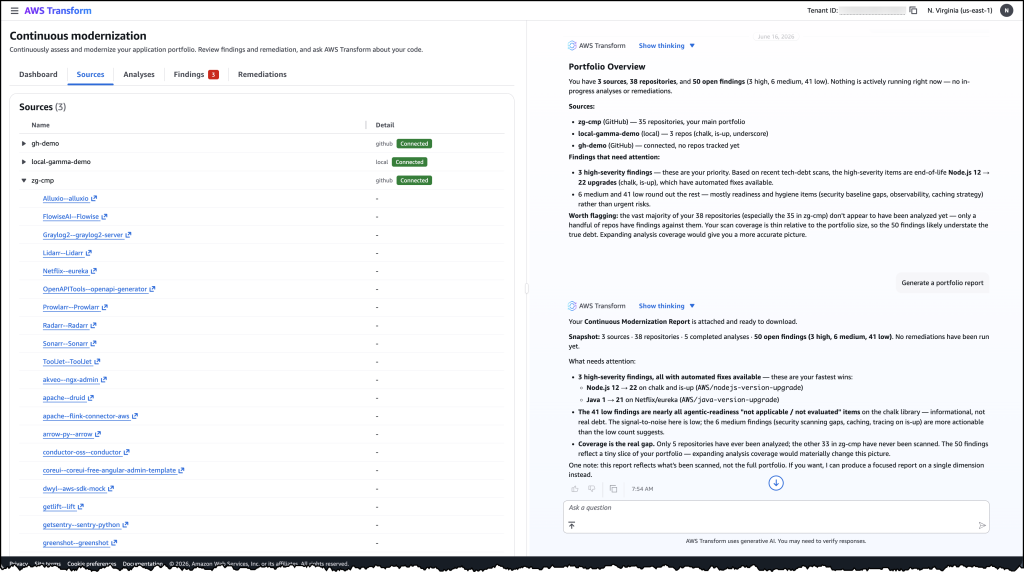
AWS Transform – Continuous Modernization is available in preview starting today. The integration process is designed to be low-friction: users connect their source control systems, define their baselines, and let the system scan their repositories. Once the findings are generated, platform teams can initiate "remediation campaigns," which create PRs that developers can review, test, and merge.
As the preview progresses, the community expects to see further integrations with popular CI/CD platforms and expanded support for more languages and framework patterns. By offloading the burden of technical debt, AWS is effectively enabling companies to scale their engineering efforts without the linear increase in "maintenance debt" that has plagued the industry for decades. For organizations struggling to balance the speed of development with the necessity of maintenance, this may well be the solution that finally levels the playing field.
 Dwi Wanna
  Lina Irawan
  Ammar Sabilarrohman