
 By Azzam Bilal Chamdy
For over a decade, social media was often relegated to the "fun" corner of the marketing department. It was the realm of viral memes, witty banter, and brand-building exercises that were notoriously difficult to quantify. While these elements still hold cultural currency, the landscape has undergone a seismic shift. In an era of tightening budgets and increased scrutiny on marketing spend, social media is no longer just a megaphone for brand awareness—it has matured into a critical, performance-driven channel for business growth.
To thrive in this new environment, organizations must pivot from chasing vanity metrics toward a strategy that treats every post, ad, and interaction as a contributor to the bottom line.

The Core Concept: What is Performance Marketing?
At its simplest, performance marketing is a results-oriented approach where the investment is directly tied to measurable actions—such as clicks, lead generation, or final sales. Unlike traditional branding campaigns, which can be nebulous and difficult to attribute to revenue, performance marketing demands accountability. Every dollar spent must be justified by a clear return on investment (ROI).
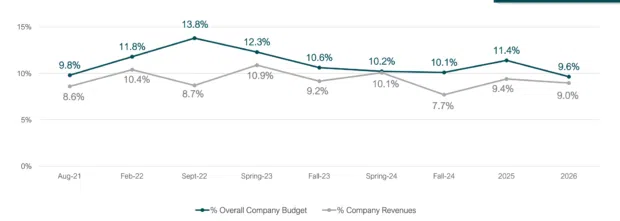
The urgency of this shift cannot be overstated. When corporate profits fluctuate, marketing budgets are historically the first to be pruned. According to The CMO Survey, marketing budgets dropped to 9.6% of overall company budgets in 2026, marking their lowest point since 2021. With financial resources shrinking, marketing teams are under immense pressure to prove that they are not a "cost center" but a "profit center." By adopting performance-based methodologies, social media managers can transform their channels into data-rich engines that actively lower customer acquisition costs (CAC) and drive scalable revenue.

A Chronology of the Social Media Shift
The evolution of social media from a creative sandbox to a professional performance channel has occurred in three distinct phases:
- The "Vanity" Era (2010–2016): Success was measured by "likes," "shares," and follower counts. While these metrics were indicators of community health, they rarely translated into direct sales or qualified leads.
- The "Paid-to-Play" Transition (2017–2022): As organic reach on platforms like Facebook and Instagram declined, businesses were forced to adopt paid advertising. This introduced the concept of tracking pixels and basic attribution, forcing marketers to look at conversion data.
- The "Full-Funnel" Integration (2023–Present): Today, social media is integrated into the entire customer lifecycle. From top-of-funnel discovery to bottom-of-funnel retargeting and customer retention, social is now a sophisticated ecosystem where attribution models track the user journey from the first "scroll" to the final purchase.
Data-Driven Foundations: Supporting Evidence
The move toward performance-based social media is not merely a trend; it is a necessity driven by cold, hard data. Modern marketing stacks now allow for granular tracking that was impossible a decade ago.
According to reports from industry analysts like Gartner, non-marketing executives often perceive the marketing department as having an "inflated view of its importance." This skepticism is precisely why documentation is key. By utilizing attribution models that track the customer journey across multiple touchpoints—rather than just the "last click"—marketers can prove that social media often serves as the initial spark that leads to a conversion weeks later.
When you align your social KPIs (Key Performance Indicators) with broader organizational OKRs (Objectives and Key Results), the conversation shifts. Instead of reporting on "engagement rate," you report on "cost-per-acquisition" and "customer lifetime value." This is the language of the boardroom, and it is the language that protects and secures budgets.

Seven Strategic Pillars for Performance-Driven Social
To successfully pivot your social media operations, you must move beyond the "post-and-pray" method. Here are seven strategies to ensure your social channels pull their weight.
1. Align Social Goals with Business Objectives
Your social strategy must be a mirror of your company’s financial goals. If the business is in a hyper-growth phase, your social KPIs should focus on lead generation and market penetration. If the company is focusing on profitability, your efforts should shift toward retention and upselling. Before drafting a single post, map out how your activities contribute to the company’s annual targets.

2. Implement Smart Data Tracking
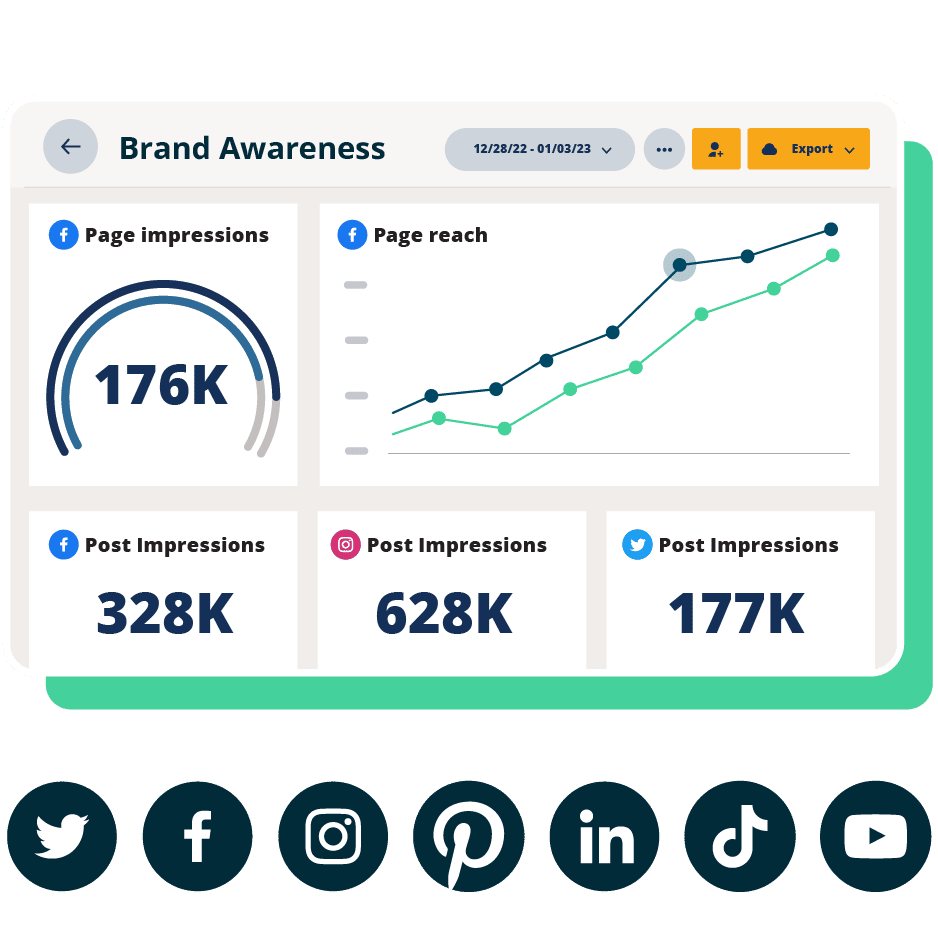
You cannot manage what you do not measure. Use tools like Google Analytics in tandem with social platform insights to create a unified dashboard. Your focus should be on "meaningful metrics":
- Conversion Rate: Percentage of users who take a desired action.
- Click-Through Rate (CTR): A primary indicator of ad/content relevance.
- Customer Acquisition Cost (CAC): The total spend required to gain one new paying customer.
3. Leverage Social Listening
Social listening is the practice of monitoring digital conversations to gain insights into customer sentiment and industry trends. By analyzing what your audience is saying, you can identify pain points that your product or service can solve, allowing for more precise targeting and better product positioning.

4. Utilize Advanced Attribution Models
Rarely does a customer click a link and buy immediately. They may see a TikTok video, visit your blog via a LinkedIn post, and eventually purchase after an email nudge. Attribution models ensure that social media gets the "credit" it deserves for the role it played in that multi-touch journey.
5. Standardize A/B Testing
Social media is the world’s largest, fastest focus group. By running A/B tests on creative elements—such as headline variations, call-to-action buttons, or video lengths—you can optimize performance in real-time. The rule of thumb is to test only one variable at a time to ensure statistical significance.

6. Document Success Stories
Data alone can be dry. Humanize your performance by documenting "wins" that illustrate the data. Did a specific influencer campaign lead to a 20% spike in direct website traffic? Did a LinkedIn thought-leadership post lead to a high-value B2B lead? Create case studies that show these correlations to build internal advocacy for your department.
7. Provide Strategic Recommendations
As a social media expert, you have access to data that other departments—like Sales or Product—often lack. Use your findings to make proactive recommendations. If your data shows a spike in interest regarding a specific feature, report this to the Product team. By moving from a "reporter of numbers" to a "strategic consultant," you cement your value to the organization.
Implications of the Performance-First Model
Transitioning to a performance-driven social model has profound implications for how teams operate.
For the Workforce: It requires a shift in skill sets. Social media managers must become "data-literate," comfortable with spreadsheets, CRM tools, and analytics dashboards. It is no longer enough to be a creative writer; one must also be an amateur analyst.

For Organizational Structure: Social media ceases to be a siloed department. Instead, it becomes a hub that interacts daily with sales, customer support, and product development. This cross-functional integration is the hallmark of a high-performing enterprise.
For Budgeting: The "performance-first" approach inherently justifies future spend. When a marketing leader can walk into a budget meeting and say, "For every dollar we invested in our social strategy last quarter, we generated three dollars in attributable revenue," the conversation about budget cuts disappears.

Official Industry Outlook and Conclusion
The consensus among industry leaders is clear: the era of "social-media-for-the-sake-of-social-media" is over. As platforms become more saturated and advertising costs rise, efficiency is the only path to sustainable growth.
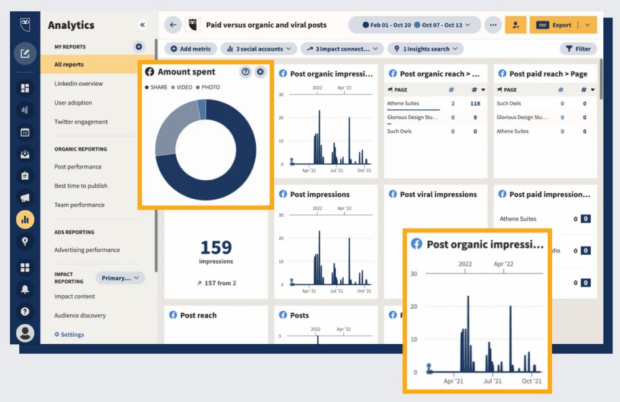
Tools like Hootsuite have evolved alongside these needs, offering features like advanced ROI analysis, competitive benchmarking, and AI-driven content optimization. By centralizing the management of analytics, listening, and advertising, platforms like this empower teams to spend less time on manual data entry and more time on strategic decision-making.
Ultimately, social media performance is not about abandoning the "fun" or the creativity that makes social channels unique. Rather, it is about grounding that creativity in a framework of accountability. When you align your social efforts with the core financial drivers of your business, you do more than just grow your follower count—you grow your revenue, your influence, and your long-term viability in an increasingly competitive digital marketplace.
The path forward is simple: track the right data, align with business goals, and never stop optimizing. The brands that master this performance-first mindset will be the ones that define the next decade of digital growth.
 Suro Senen
  Jia Lissa