
 By Ammar Sabilarrohman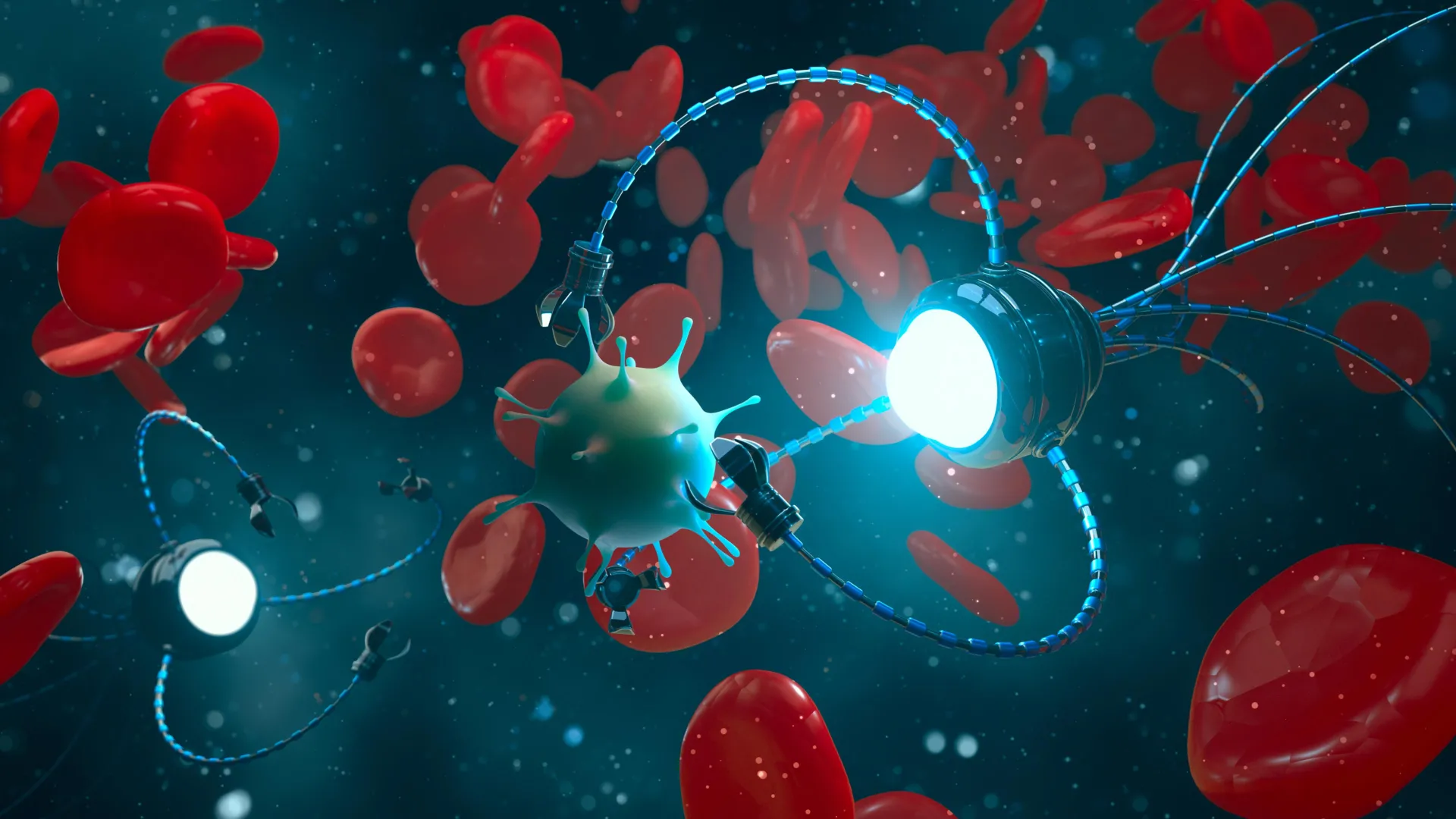
Imagine a fleet of autonomous machines, invisible to the naked eye, navigating the turbulent, high-speed currents of the human bloodstream. These machines are not forged from cold steel or silicon, but are woven from the very building blocks of life: DNA. By folding deoxyribonucleic acid into intricate, programmable architectures, scientists are moving closer to a paradigm shift that could redefine the boundaries between biology and engineering.
While currently confined to the sterile, controlled environments of research laboratories, the field of DNA nanorobotics is transitioning from abstract theory to tangible reality. These microscopic systems—capable of delivering targeted chemotherapy, capturing viral pathogens, and constructing molecular-scale computers—represent the next frontier in human technological mastery.
The Core Concept: Engineering Life’s Blueprint
At the heart of this innovation is "DNA origami," a technique that allows researchers to fold long, single strands of DNA into two- and three-dimensional shapes. By leveraging the predictable base-pairing rules of DNA—where adenine always pairs with thymine, and cytosine with guanine—scientists can program these strands to self-assemble into rigid joints, hinges, and complex chassis.
The inspiration for these designs is often drawn from macro-scale robotics. Just as a factory robot uses a compliant, flexible arm to handle delicate components, DNA robots utilize flexible linkages to perform tasks. By adapting mechanical engineering principles to the nanoscale, researchers have created machines that are not merely passive structures but active, functional systems capable of repeatable, controlled tasks.
Chronology of a Molecular Revolution
The evolution of DNA robotics is a testament to the rapid acceleration of synthetic biology over the past two decades.
- 2006: The Origami Breakthrough: Paul Rothemund introduced the concept of DNA origami, demonstrating that a long DNA scaffold could be folded into arbitrary shapes using short "staple" strands. This provided the foundational geometry for all future nanorobotics.
- 2010–2015: The Era of Motion: Researchers began integrating molecular "motors" and "switches" into these structures. By using DNA strand displacement—a process where one DNA strand is kicked out of a double helix by another—scientists successfully programmed the first walking, opening, and closing nanorobotic devices.
- 2016–2020: Proof-of-Concept Medical Applications: The field pivoted toward therapeutic utility. Notable experiments included DNA "nanoboxes" that remained closed until they encountered specific molecular markers on the surface of a cancer cell, at which point they opened to release their medicinal payload.
- 2021–Present: Scaling and Integration: The current focus has shifted toward autonomy. Research teams are now investigating how these robots can operate in complex environments, such as human serum, and how they can be controlled by external triggers like magnetic fields or light.
Supporting Data: Navigating the Molecular Landscape
The primary hurdle for any machine at the nanometer scale is the physical environment. At this size, the world is dominated by Brownian motion—the erratic, jittery movement of particles caused by collisions with fluid molecules. In a bloodstream, a nanorobot is essentially a tiny raft caught in a chaotic hurricane.
Biochemical and Physical Control Systems
To master this environment, researchers employ two primary control strategies:
- Biochemical Programming: Using "fuel" strands, scientists can trigger a sequence of chemical reactions that force the robot to change shape or move. This is highly specific; because the robot only responds to specific DNA sequences, it acts as a "smart" lock-and-key system, activating only in the presence of a target cell.
- External Signal Actuation: For environments where chemical fuel is inaccessible or slow, researchers use external energy sources. Magnetic fields can be used to steer magnetic-nanoparticle-loaded robots, while light-sensitive molecules integrated into the DNA structure allow researchers to "turn on" a robot’s function with a focused laser pulse.
Performance Metrics
While still experimental, current prototypes demonstrate impressive capabilities:
- Targeting Precision: Systems have shown the ability to identify specific cell-surface proteins with over 95% accuracy in controlled in vitro settings.
- Assembly Speed: Self-assembly of complex structures can now be achieved in minutes, with yields of up to 90% in standardized buffer solutions.
Implications: A New Era for Medicine and Technology
The Nano-Surgeon
In the medical field, the implications are profound. Traditional chemotherapy acts like a carpet bomb, destroying both cancerous and healthy cells. DNA nanorobots function as precision-guided missiles. They can circulate silently, ignore healthy tissues, and deploy their therapeutic payload exclusively upon docking with a diseased cell. Beyond cancer, there is significant interest in using these machines to "capture" viruses, such as SARS-CoV-2, by surrounding the pathogen with a DNA-based cage that renders it inert.
Molecular Manufacturing
The utility of these machines extends into the hardware of the future. By acting as programmable templates, DNA robots can position nanoparticles with sub-nanometer accuracy. This level of control is impossible with traditional lithography. This could lead to the creation of ultra-dense molecular data storage devices and highly efficient optical components, potentially enabling a new generation of high-speed, low-power computing.
Challenges: The Path to Practicality
Despite the promise, the journey from the laboratory bench to the patient bedside is fraught with systemic obstacles.
The "Isolation" Problem
Most current DNA robots are simple, "single-task" entities. In the real world, biological systems are complex and interconnected. Integrating these robots into the immune system without triggering an unwanted inflammatory response—or having the robot degraded by blood-borne enzymes—remains a significant hurdle.
The Knowledge Gap
There is a distinct lack of comprehensive "mechanical databases" for DNA structures. We do not yet fully understand how these structures behave under the high-shear forces of arterial blood flow. Furthermore, current simulation software struggles to bridge the gap between quantum-level molecular interactions and the fluid-dynamics-heavy environment of the human body.
Official Responses and Future Outlook
The scientific community is increasingly vocal about the need for a collaborative, standardized approach to move the field forward. Dr. Elena Vance, a lead researcher in synthetic nanobiology, emphasizes that the next decade of progress will depend on three key pillars:
- Standardized Parts Libraries: Just as electrical engineers use standard resistors and capacitors, biological engineers need a "catalog" of validated, reliable DNA components. This would allow researchers to build complex machines without having to "reinvent the wheel" for every new experiment.
- AI-Driven Design: The complexity of folding DNA into functional 3D structures is reaching the limits of human intuition. Artificial Intelligence is now being used to predict how DNA sequences will fold and behave in a variety of environments, dramatically shortening the design-build-test cycle.
- Bio-manufacturing Integration: Scaling up production is critical. We must move from artisanal "test-tube" synthesis to large-scale, automated manufacturing that can produce these robots by the billions.
The Vision
"The robots of tomorrow won’t just be made of metal and plastic," says the research team behind several recent advancements in the field. "They will be biological, programmable, and intelligent. They will be the tools that allow us to finally master the molecular world."
As we stand at this precipice, the transition from proof-of-concept to practical application seems not only likely but inevitable. The work currently being conducted in the world’s most advanced nanobiology labs is laying the groundwork for a future where disease is treated before it manifests, and where the materials that build our world are constructed one atom at a time. The era of the DNA robot has begun, and while it may be invisible, its impact on the future of humanity will be monumental.
Conclusion
The path forward for DNA robotics is challenging, requiring the convergence of molecular biology, computer science, and mechanical engineering. However, the progress made thus far provides a compelling roadmap. By standardizing components, leveraging the power of AI, and refining our ability to actuate these machines in vivo, we are moving toward a future where our tools are as sophisticated as the biological systems they are designed to interface with. The vision of "nano-surgeons" and molecular-scale manufacturing is no longer the stuff of science fiction; it is the next logical step in our technological evolution.
 Dwi Wanna
  rifanmuazin