
 By Neng Nana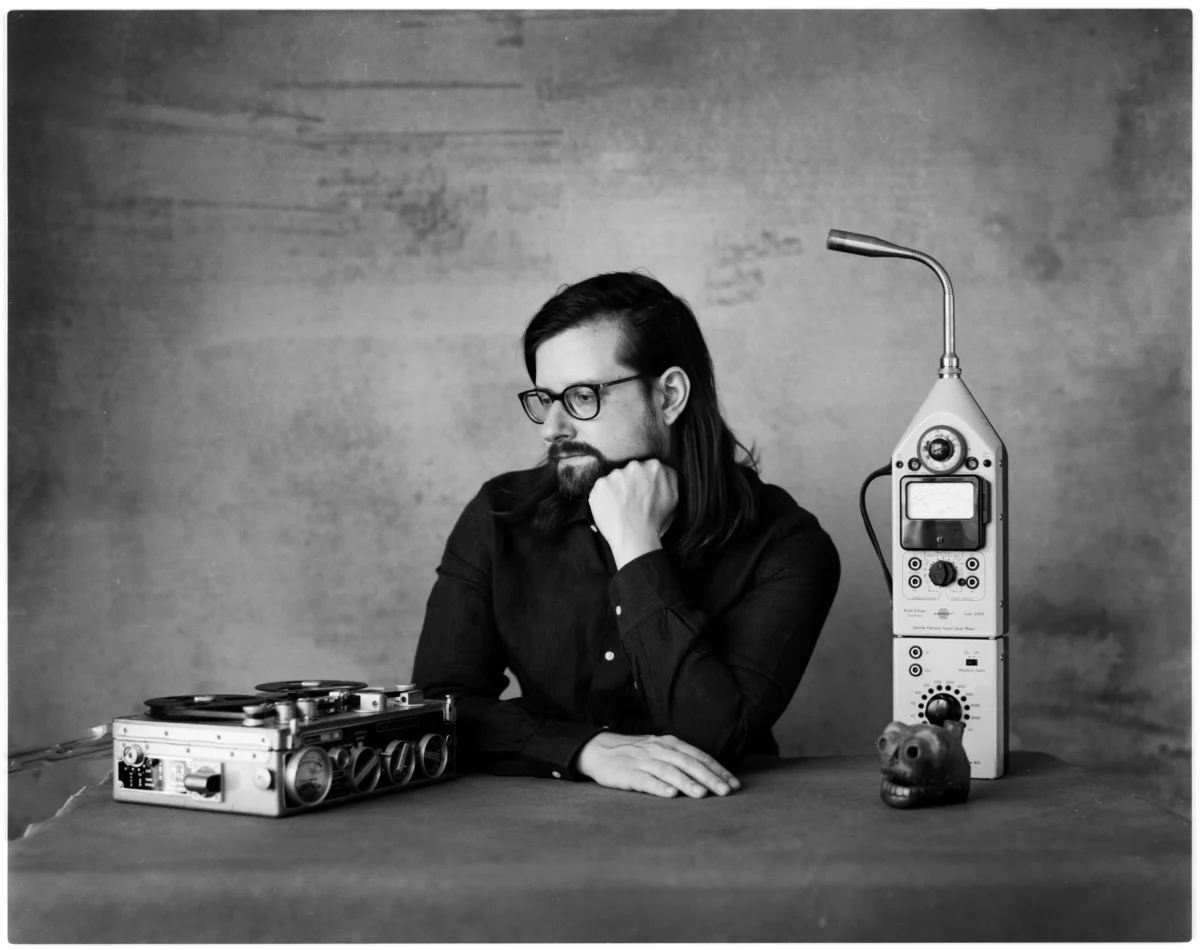
In the landscape of modern electronic music, few figures command the same level of intellectual and aesthetic curiosity as Stefan Paul Goetsch, professionally known as Hainbach. A German experimental composer, visual artist, and digital educator, Hainbach has carved out a unique niche by transforming the detritus of the 20th century—specifically decommissioned laboratory equipment and Cold War-era scientific instruments—into haunting, evocative soundscapes. To the uninitiated, his studio might resemble a scrapyard for nuclear engineers; to his devoted audience, it is a cathedral of sonic discovery.
Often referred to as the "Dark Souls of synthesis," Hainbach’s workflow is intentionally difficult, prioritizing tactile, unpredictable hardware over the sanitized perfection of modern software. Yet, his output remains staggering. In 2025 alone, he released six albums, a feat that defies the traditional pacing of experimental music production. His latest collaboration with Turkish composer Bașak Günak, known as Ah! Kosmos, titled Gentle Hum, serves as a masterclass in this philosophy, blending melancholic analog drones with the erratic "burble" of repurposed test equipment.
A Chronology of Obsession: From Radio Waves to Viral Fame
Hainbach’s journey into the avant-garde was not a sudden departure but a steady migration toward the obscure. His early career, rooted in traditional rock and electronic ensembles, was defined by a conventional approach to performance. However, a pivotal shift occurred when he began to view the instrument not as a tool for replication, but as a participant in a dialogue.
- The Early Years: Emerging from a background in traditional band structures, Goetsch spent years honing his craft within the constraints of standard instrumentation before realizing that the most expressive sounds were often those unintended by manufacturers.
- The Scientific Turn: The acquisition of telephone line testing gear and salvaged equipment from nuclear research facilities signaled the birth of "Hainbach." He began documenting the "voices" of these machines—oscillators designed for precision, now repurposed for texture and decay.
- The YouTube Era: Recognizing a lack of educational content regarding obscure, vintage electronics, Hainbach launched his YouTube channel. It quickly became a hub for synthesizer enthusiasts, covering everything from the Bastl Kalimba to the intricacies of tape loop mechanics.
- The Digital Bridge: Recognizing that not every musician has access to a Soviet-era wire recorder, Hainbach began collaborating with audio software developers like AudioThing. His goal: to capture the "soul" of his arcane hardware and package it within modern Digital Audio Workstations (DAWs), making the experimental accessible.
The Architecture of a Studio: Supporting Data and Tools
When asked about the "glue" holding his intimidating array of gear together, Hainbach is quick to point to the reliability of analog engineering. His most indispensable tool is not a computer, but a Nagra reel-to-reel tape recorder.
"A wonder of technology," he notes. "The absolute high-end of its time, and still sounding fantastic many decades later." This sentiment reflects his broader philosophy: that the best technology is that which maintains its integrity across generations.
Digital Workflow and the "Gauss" Philosophy
While his hardware is analog, his digital workflow is laser-focused. His preferred tool for capturing transient inspiration is the Gauss Field Recorder, an app he co-developed with Bram Bos. It addresses a common modern dilemma: the accumulation of thousands of unsorted voice memos that never see the light of day. Gauss allows him to turn fleeting field recordings into musical seeds, effectively bridging the gap between ambient noise and structured composition.
The Power of Community
Hainbach’s career is bolstered by a sustainable model of independent support. His Patreon community is, by his own admission, his "happy place" online. It provides the financial stability required to pursue high-risk, low-commercial-appeal projects, allowing him to bypass the traditional gatekeepers of the music industry.
Official Perspectives: The Philosophy of "Hard Mode"
Hainbach’s methodology is not merely a stylistic choice; it is a rigorous discipline. His approach to performance, influenced by the realization that his physical movements were once "unconscious habits" inherited from rock bands, has evolved into a curated, minimalist stage presence. "Stand still," he recounts as the best advice he ever received. By removing unnecessary physical exertion, he allows the music of the machines to take center stage.
On AI and the Future of Sound
Hainbach is a vocal critic of the current trend toward generative AI in music. He views AI sound generators as "slop machines for technocrats"—tools that strip the human element out of the creative process. For Hainbach, the "joy of getting good at something" is non-negotiable. He argues that the struggle to master a piece of equipment—to understand its quirks, its failure points, and its specific sonic character—is where the art is actually born.
The "Destruction Loops" Project
Perhaps his most profound contribution to contemporary art is the Destruction Loops series. This installation piece is designed to literally erase itself over time. It served as a therapeutic medium, an auditory "exorcism" for the vitriol found online, ranging from hate comments to remnants of far-right political rhetoric. By feeding this negativity into a loop that degrades until it becomes white noise, he transforms hate into entropy.
Implications: The Legacy of Analog Persistence
The implications of Hainbach’s work reach far beyond his own discography. By championing "dead" technology, he is preserving a history of acoustic and electrical engineering that would otherwise be lost to the landfill. His work suggests that progress in the music industry does not necessarily equate to the constant acquisition of the newest silicon chip. Sometimes, progress is looking backward at a 1960s-era bandpass filter and discovering a new way to manipulate frequency.
The Human Element
Despite his deep immersion in the mechanical, Hainbach remains profoundly human. His fondest memories are not of technical breakthroughs, but of playing The Legend of Zelda: Breath of the Wild with his children during the pandemic. He describes the experience of watching his daughter master the game’s mechanics—down to the frame-perfect weapon swapping—with a sense of wonder that mirrors his own curiosity about machines.
Looking Ahead
Hainbach’s current obsession with passive bandpass filters—specifically those salvaged from the Deutsche Reichsbahn (GDR train service)—points toward his next phase of exploration. He is constantly seeking the "ghosts" in the machines, looking for ways to extract beauty from industrial remnants.
As he notes, the secret to focus is not elaborate rituals, but the ability to "zone in" under pressure—a skill refined during his mandatory government service. When stuck, he goes for a walk, resetting his perspective before returning to his studio to perform what he calls the "killing of darlings." He is willing to discard tracks that do not serve the emotional core of his work, a brutal but necessary process for any artist seeking to create something that actually speaks to the listener.
Conclusion: The Biopic Tagline
If one were to summarize the career of Stefan Paul Goetsch, the proposed tagline Hainbach – Cold War Confidential feels entirely appropriate. He acts as a curator of history, a tinkerer, and a composer who treats the world as a giant, decaying instrument. He reminds us that even in an era of infinite digital possibilities, there is still something magical about the tactile, the analog, and the unpredictable. Whether he is soldering a circuit board or analyzing the decay of a tape loop, Hainbach continues to prove that the most profound sounds are often those that have survived the test of time.
For those looking to follow his work, the advice is simple: listen to the hum, study the gear, and, above all, don’t be afraid to take the hard road. As Hainbach himself puts it, he is still there, eight tabs open, waiting to see what new sound the next piece of discarded history might reveal.
 Raul Delapena Setiawan
  Siti Muinah
  Asro
Asro 