
 By Neng Nana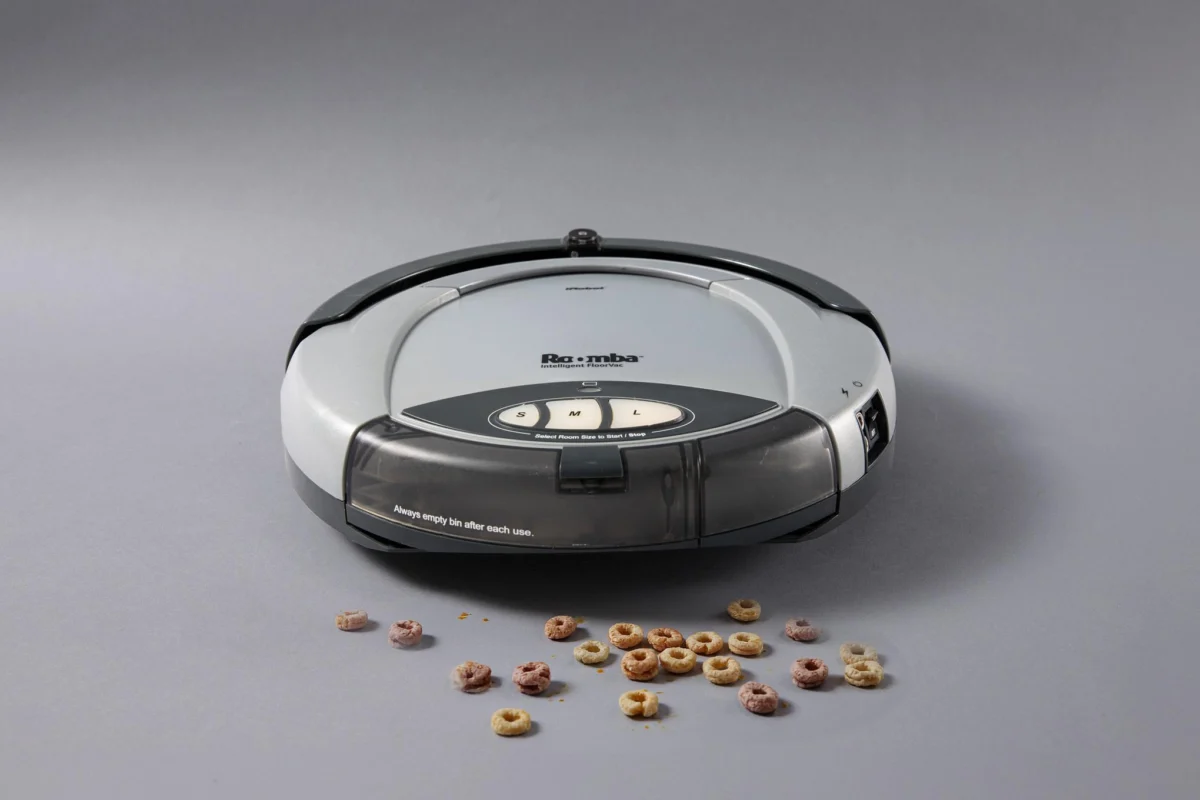
In the early 2000s, the concept of a household robot was largely relegated to the pages of science fiction—a Jetsons-style fantasy that seemed decades, if not centuries, away. Then came the Roomba. To the modern eye, those first-generation circular machines were arguably primitive. They were noisy, prone to getting stuck under sofa skirts, and possessed a navigation system that could best be described as "randomized chaos." Yet, consumers didn’t just tolerate these quirks; they embraced them. People gave their Roombas names, talked to them as if they were household pets, and heralded them as the first true assistants of the domestic sphere.
In the latest episode of Version History, The Verge’s David Pierce and Jennifer Pattison Tuohy peel back the curtain on the origins of the Roomba. Joined by iRobot co-founder and former CEO Colin Angle, the podcast explores the arduous journey of bringing a consumer robot to market—a process that nearly bankrupted the company and permanently altered the landscape of home automation.
The Genesis: A Business Searching for a Product
The story of the Roomba is not one of a sudden "eureka" moment, but rather a decade-long struggle of engineering persistence. Before the vacuum, iRobot was a company of engineers desperately searching for a viable business model. Founded in 1990 by MIT roboticists, the company’s early years were defined by a struggle to find a commercial application for robotics technology.
"We were a group of engineers trying to build a business out of robots. Any kind of robots," Colin Angle recalls. During the 1990s, the team explored a variety of robotic applications, from space exploration prototypes for NASA to specialized industrial machines. However, the market for high-end robotics remained elusive. The breakthrough came when the team pivoted toward the domestic sphere, realizing that while humans weren’t ready for a humanoid butler, they were very much ready for a solution to a tedious, recurring chore: vacuuming.
The development phase was grueling. The team had to shrink complex sensing technology into a form factor that was affordable for the average consumer. They faced hardware failures, software limitations, and the constant threat of insolvency. For nearly ten years, the dream of a domestic robot felt more like a sinking ship than a burgeoning industry.
Chronology of a Disruption
To understand the Roomba’s impact, one must look at the timeline of its evolution:
- 1990–2000: The "Foundational Years." iRobot experiments with various robotics concepts, securing government and industrial contracts while searching for a consumer-facing flagship product.
- 2002: The Launch. iRobot releases the original Roomba. It is a crude machine by today’s standards, utilizing a "bump and turn" navigation algorithm. Despite the technical limitations, it becomes a surprise cultural hit.
- 2004–2010: The Expansion. iRobot iterates on the design, introducing features like self-charging docks and scheduling. The Roomba becomes a household name, synonymous with the term "robot vacuum."
- 2015–2020: The Smart Home Era. The Roomba gains Wi-Fi connectivity, app integration, and "vSLAM" (visual Simultaneous Localization and Mapping) technology, allowing the robots to map entire floor plans.
- 2020–Present: The Maturity Phase. The industry becomes saturated. With competitors flooding the market, iRobot faces the challenge of staying ahead in an age where the "robot vacuum" is a commodity rather than a novelty.
Supporting Data: The Economics of Cleaning
The success of the Roomba was not merely a triumph of branding; it was a testament to the untapped demand for "chore-automation." According to industry reports, the global robotic vacuum cleaner market reached a valuation of approximately $4 billion in 2023, with projections suggesting it could nearly double by 2030.
The Roomba’s early success proved that consumers would pay a premium—initially around $200—to reclaim their time. However, as the patent landscape opened up and competitors like Ecovacs, Roborock, and Shark entered the fray, the market shifted. iRobot’s market share, once virtually unchallenged, began to face significant pressure from cheaper, highly capable alternatives that often mimicked the Roomba’s form factor while adding advanced features like LIDAR navigation and integrated mopping.

The Human Element: Why We Love Our Machines
One of the most fascinating aspects discussed in Version History is the psychological attachment users formed with their Roombas. Why would someone love a machine that constantly gets stuck on a rug?
The answer lies in "relatable imperfection." Because the early Roomba bumped into walls and spun in circles, it exhibited a "behavioral" pattern that humans interpreted as struggle. We projected personality onto these movements. By naming our vacuums and occasionally "rescuing" them from a cord-tangle, we moved the robot from the category of "appliance" to "pet." This emotional bond created a brand loyalty that arguably sustained iRobot through its leanest years.
Official Responses and Strategic Failures
In the podcast, Colin Angle is refreshingly candid about where iRobot missed the mark. While the company succeeded in inventing the category, it struggled to maintain its dominance in the "smart home" era. As vacuum cleaners transitioned from simple cleaning tools to connected IoT (Internet of Things) devices, the software experience became as important as the hardware.
iRobot faced significant criticism for its privacy policies and the complexity of its app ecosystem during its mid-life cycle. Furthermore, the company was often slow to integrate advanced navigation features like laser-based LIDAR, opting instead to stick with its proprietary camera-based navigation for longer than many analysts deemed wise. These strategic delays allowed competitors to catch up and, in many cases, leapfrog iRobot in terms of feature-to-price ratio.
Implications for the Future of Robotics
The story of the Roomba serves as a case study for the broader robotics industry. It illustrates the "First-Mover’s Dilemma": the difficulty of staying on top after having defined the market.
As we look toward the future, the lessons from the Roomba era are clear. The next generation of home robotics will not be judged by their ability to clean, but by their ability to "understand" the home environment. As AI integration grows, the robots of the future will be expected to identify objects, navigate around moving obstacles with precision, and integrate seamlessly into broader smart home ecosystems.
iRobot’s journey—from a group of engineers in a lab to a global household brand—is a reminder that technological innovation is never a straight line. It is a messy, iterative process defined by the willingness to fail, the necessity of patience, and the unique ability to turn a simple machine into a beloved member of the household.
For those interested in the full story, including the behind-the-scenes struggles that didn’t make the initial press releases, be sure to listen to the latest episode of Version History. You can catch up on previous episodes, including the deep dive into the Harmony universal remote, on all major podcast platforms. Verge subscribers can also access an ad-free version of the podcast through their account settings.
 Raul Delapena Setiawan
  Siti Muinah
  Asro
Asro 