
 By Muslim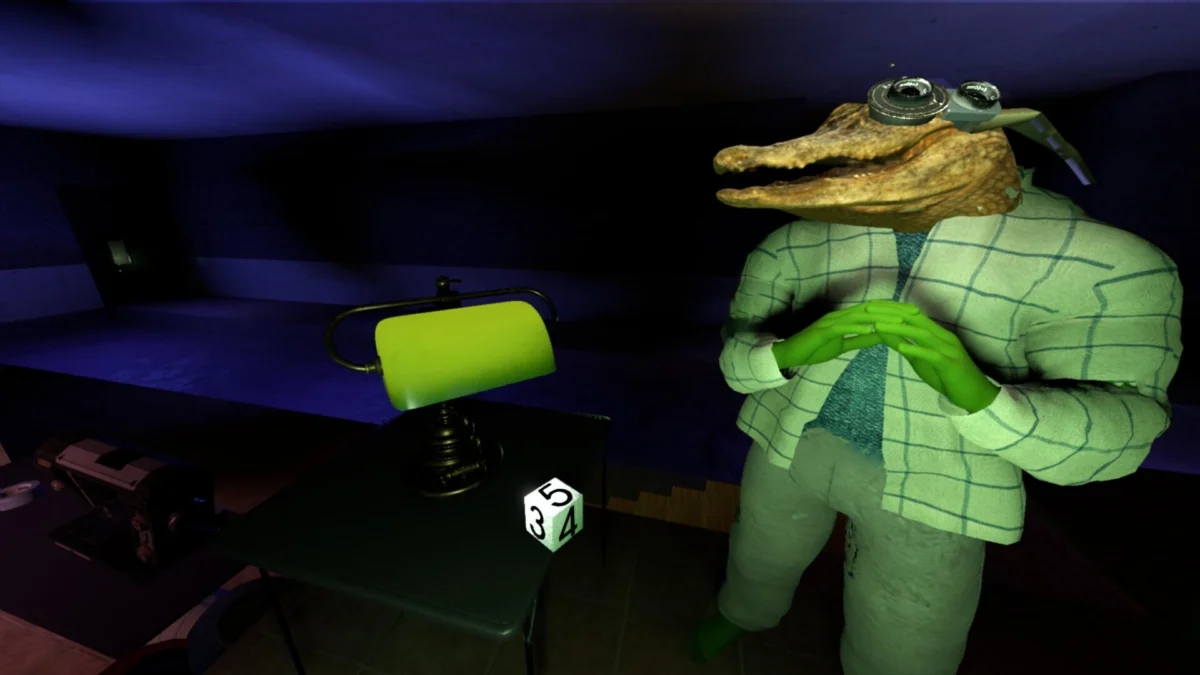
From the moment the opening credits roll on Moves of the Diamond Hand, the game makes its bargain with the player perfectly clear: you are here for a deluge of surreal dialogue and a relentless, high-stakes barrage of dice rolls. It is a proposition that demands immediate surrender, but for those willing to embrace its erratic rhythm, the reward is a roleplaying experience of startling creativity. While the game’s deepest mysteries are currently shrouded in a development timeline that stretches toward a 2027 completion, its early chapters already present a singular vision of a world governed by chance, art, and bureaucratic absurdity.
The Foundations of Off-Peak City: Main Facts
Moves of the Diamond Hand is the latest project from acclaimed musician and game designer Cosmo D. Currently available in Early Access on PC, macOS, and SteamOS—including a highly optimized experience on the Steam Deck—the game acts as a spiritual successor to the designer’s previous cult hit, Betrayal at Club Low.
Visually and tonally, the game evokes the haunting, low-fidelity charm of early 2000s immersive sims. Its environments are grimy, stark, and intentionally blocky, populated by characters with features stretched over heads that seem just a fraction too small for their frames. This aesthetic, paired with an eerie, pulsing soundtrack, establishes the world of "Off-Peak City": a neon-soaked, retro-futuristic metropolis defined by the clashing interests of corrupt politicians, sinister corporations, and the struggling artists who occupy its fringes.
The player arrives in this city via train, immediately reuniting with a disgraced mentor whose political fall from grace sets the stage for the narrative. Your goal is to infiltrate "Circus X," a clandestine arts institution that exerts a puppet-master influence over everything from local elections to the city’s sandwich supply chain. How you join this organization is entirely up to you: you might attempt to climb the ranks of the city council, master the art of the perfect sandwich, or navigate the city’s underground music scene.
A Chronology of Chaos: The Mechanics of Luck
The heart of Diamond Hand is its dice-based resolution system. Every action, from engaging in mundane small talk to picking a lock or operating heavy machinery, is mediated by a check against one of seven core statistics. These range from traditional RPG staples like Physique and Observation to the bizarrely specific Cooking and Music.
The Early Access Roadmap
The game’s release structure is deliberate, designed to build layers of complexity over time:
- Present Day (2026): The current Early Access build contains the first two of six planned chapters.
- Summer 2026: Scheduled release for the third chapter, expanding the narrative scope.
- Spring 2027: Anticipated full commercial launch, which will conclude the overarching mysteries of the Diamond Hand.
The core loop functions like a refined version of Betrayal at Club Low. When a challenge arises, the game rolls a die based on your attribute, and you must meet or exceed the target number. However, the system evolves quickly. As you progress, you unlock secondary mechanics—laundering disguises, mixing cocktails, or performing live music—each adding more dice to your inventory. Much like in a game of Yahtzee, players can choose to re-roll specific dice, introducing a layer of tactical risk management to every interaction.
Supporting Data: Why "Music" Is the Ultimate Stat
One of the most striking aspects of Diamond Hand is its subversion of traditional RPG power fantasies. While a player might expect Physique to be the most vital tool for survival, the game elevates niche skills to god-tier utility.
The Music statistic is perhaps the most powerful tool in the player’s arsenal. It is not merely used for performance; it is a key that unlocks the world’s logic. Players can use musical improvisation to operate complex machinery, whistle tunes to soothe aggressive animal-human hybrids, or utilize rhythmic mixology to craft items that alter the state of the game world.

This creates a "lizard-brain" appeal that turns every mundane task into a gamble. Even "safe" challenges carry weight; failing a roll might result in an unwelcome status effect or a penalty to your health. Because the game allows players to retry failed actions—albeit at a significantly higher difficulty level—it forces a constant, tense calculation: do you risk everything on a second attempt, or do you find a different path through the city’s bureaucracy?
Official Perspectives and Narrative Depth
Cosmo D’s writing avoids the trap of simple parody, instead using the surrealism of Off-Peak City to explore contemporary anxieties. The game’s central plot, which revolves around a local election involving a scandal-plagued technocrat, a former boy-band star, and a corporate-controlled clone of a deceased mayor, feels like a dark reflection of our own political climate.
The most poignant commentary arrives through the game’s treatment of artificial intelligence and creative autonomy. In Off-Peak City, corporations are replacing human artists with "corporate-guardrailed" clones that regurgitate old media. Yet, rather than stopping at a surface-level critique, the narrative delves into the consciousness of these clones, exploring their frustration with their own creative limitations.
"The game asks what happens when art is treated as a commodity, but it also asks what we lose when we stop caring about the craft," notes one early review. The meta-narrative extends to the game’s own design; players are rewarded with experience points for listening to NPCs drone on about their backstories. It is both a cheeky wink at the "infodumping" tropes of the RPG genre and a genuine endorsement of slow, character-driven storytelling.
The Implications of a World Defined by "The Diamond Hand"
What does it mean for a game to be "incomplete" yet feel entirely cohesive? The current state of Moves of the Diamond Hand suggests that the beauty of an RPG is not just in its ending, but in the texture of its world-building.
The decision to limit the initial release to two chapters creates a sense of scarcity that makes every discovery feel earned. Whether you are arguing about the finer points of jazz, harvesting lettuce in a neon-lit urban garden, or trying to understand the cryptic machinations of the mysterious "Diamond Hand," the game consistently rewards curiosity.
The Balancing Act
The game’s difficulty curve is a masterclass in engagement. By making every action—including the most trivial—a dice roll, the game eliminates the urge to skip over environmental flavor text. You have to pay attention to the world because the world is constantly throwing a challenge at you. The "ambient low-level risk" ensures that even a walk through a train station feels like a substantive, high-stakes encounter.
Conclusion: A Recipe for Obsession
Moves of the Diamond Hand is a bold, uncompromising, and deeply strange experience. It is an argument for the vitality of the RPG genre, suggesting that as long as there is a world to explore, a story to tell, and a set of dice to roll, there is room for innovation.
While we must wait until 2027 to see the full resolution of the election, the sentient Big Mouth Billy Bass, and the secret of the Diamond Hand, the current build is already essential playing. It is a work in progress that feels more "finished" in its artistic intent than many AAA titles that boast completion. If you are willing to embrace the absurdity, learn the rhythm of the city, and risk the occasional catastrophic failure, you will find yourself, like the rest of us, waiting with bated breath for the next roll of the dice.
 Raul Delapena Setiawan
  Siti Muinah
  Asro
Asro 