
 By Siti Muinah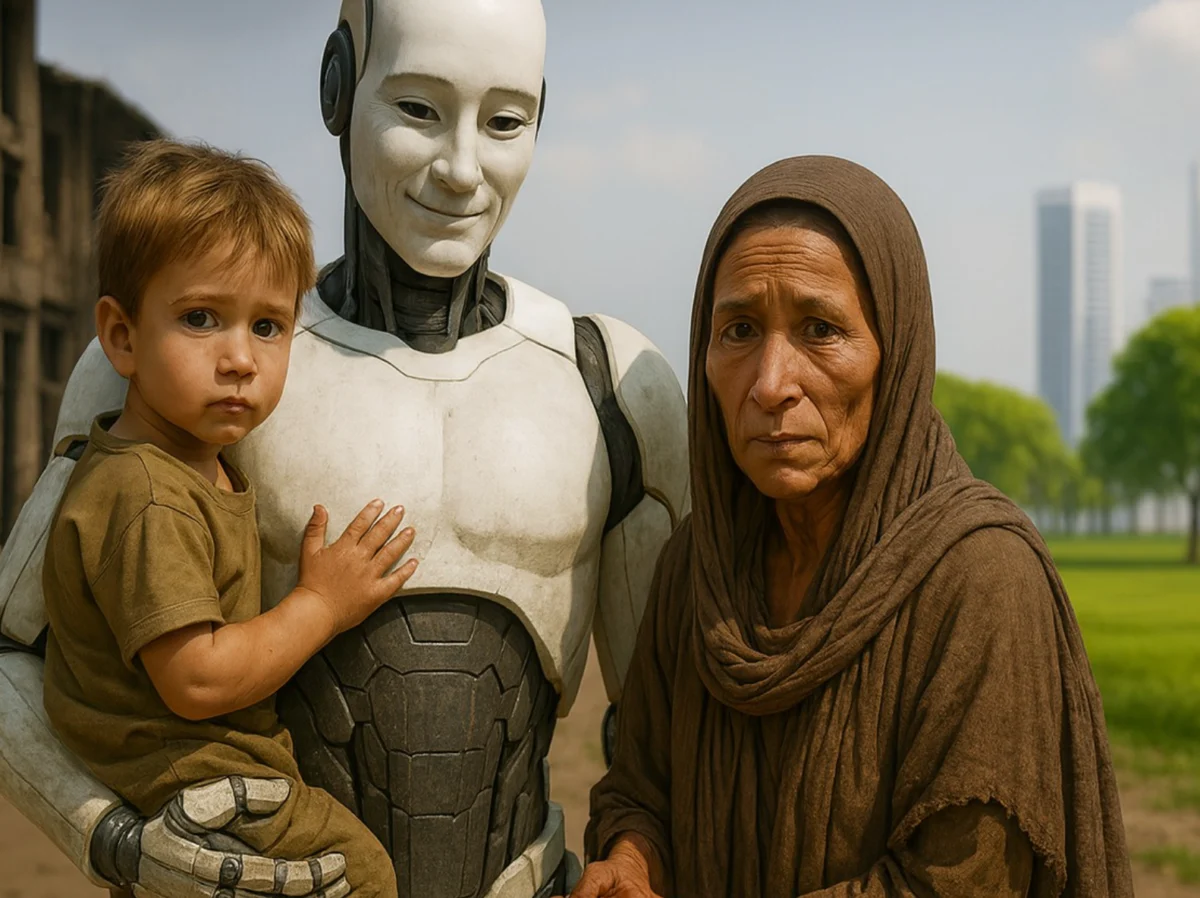
By [Your Name/Smashing Editorial]
The era of humanoid robots as mere public relations stunts has officially ended. For decades, the "android revolution" was a fixture of science fiction, a distant fantasy relegated to the silver screen. However, recent breakthroughs in artificial intelligence and electromechanical engineering have brought us to a precipice. As these machines become increasingly lifelike, society is beginning to confront profound social, psychological, and ethical challenges. When the boundary between human and machine becomes indistinguishable, the very fabric of our social, economic, and existential reality undergoes a seismic shift.
Main Facts: The Transition from Novelty to Necessity
The current state of robotics is defined by a rapid transition from laboratory demonstrations to active, physical deployment. Unlike the clunky, tethered prototypes of the late 20th century, modern humanoids are being designed for the "3D" jobs: those that are Dull, Dirty, or Dangerous.
Today, the industry is no longer satisfied with robots that can simply balance on two legs. The focus has shifted to "general-purpose" utility. Companies like Figure AI and Tesla are leading the charge, moving robots onto factory floors to handle complex tasks that previously required human dexterity. The Figure 02 model, for instance, recently completed a multi-month deployment at BMW’s Spartanburg plant, where it successfully manipulated sheet metal components to assist in the production of over 30,000 vehicles.
What separates this generation from its predecessors is the "digital brain." In previous decades, a robot required millions of lines of rigid, pre-programmed code to perform a single task. Modern humanoids, powered by AI architectures like NVIDIA’s GR00T or Figure’s Helix, utilize "imitation learning." They can watch a human perform a task—such as folding laundry or sorting automotive parts—and figure out how to replicate and optimize that action autonomously. This leap in cognitive capability means that the hardware is no longer the only limiting factor; the software is now capable of evolving in real-time.
Chronology: From ASIMO to the Age of Optimus
To understand the speed of this evolution, one must look at the timeline of bipedal robotics.

- 2000: The Toddler Phase. Honda introduced ASIMO (Advanced Step in Innovative Mobility). While it was a marvel of its time, ASIMO was largely a PR tool. It could walk up stairs and wave, but it required a highly controlled environment and lacked any true "understanding" of its surroundings.
- 2010–2018: The Dynamic Leap. Boston Dynamics’ Atlas began showcasing incredible athletic feats, from backflips to parkour. While these were triumphs of engineering, these robots were still largely "puppets" of complex programming rather than autonomous thinkers.
- 2021–2023: The AI Convergence. The explosion of Large Language Models (LLMs) and neural networks provided the "missing piece." Tesla announced the Optimus (Tesla Bot) program, signaling that the world’s most valuable car company viewed humanoids as a mass-market commodity.
- 2024–Present: Industrial Integration. Humanoids moved from the "demo" phase to the "deployment" phase. Figure AI’s partnership with BMW and Tesla’s integration of Optimus into its Gigafactories proved that these machines could provide a return on investment in real-world industrial settings.
Supporting Data: The Technical Landscape and Market Trajectory
The push toward lifelike humanoids is backed by massive capital investment and a convergence of three critical technologies: advanced materials, high-density power, and generative AI.
1. The Aesthetic of Realism
Scientists are currently perfecting artificial skin made from advanced silicone composites. These materials are designed to be flexible, warm to the touch, and embedded with sensors that mimic human touch sensitivity. To combat the "Uncanny Valley"—the sense of unease humans feel when a robot looks almost but not quite human—developers are installing micro-actuators in robot skulls. These allow for subtle facial expressions, such as blinking, furrowing brows, and even "breathing" motions, which make the machines feel less like appliances and more like companions.
2. Physical Limitations and Hurdles
Despite the progress, significant bottlenecks remain. Current battery technology typically allows for only two to four hours of high-intensity operation before a recharge is required. Furthermore, while a flat factory floor is easy to navigate, the "broken sidewalk" problem—navigating chaotic, unpredictable public spaces—remains a significant challenge for bipedal balance.

3. Economic Projections
Market analysts predict that the global humanoid robot market will transition from a niche research sector to a multi-billion-dollar industry by 2030. As manufacturing scales, the cost of these units—currently ranging from $100,000 to $250,000—is expected to drop to the price of a mid-sized sedan, making them accessible not just to corporations, but eventually to wealthy households.
Official Responses: Seeking Ethical Guardrails
As the technology outpaces legislation, international bodies and ethicists are beginning to voice concerns. The consensus among many experts is that the "Wild West" era of AI-driven robotics must end to prevent societal destabilization.
The Transparency Mandate:
Several European tech-governance groups have proposed that all humanoid robots must be legally required to identify themselves as machines. This "Right to Know" would prevent robots from being used to deceptively influence humans in sensitive settings, such as healthcare or political campaigning.

Economic Safety Nets:
With the potential for millions of "3D" and retail jobs to be automated, discussions regarding Universal Basic Income (UBI) and "Robot Taxes" have moved from the fringe to the mainstream. "If a robot replaces a human worker, the productivity gains should not only benefit the corporation but should help fund the transition for the displaced worker," noted one policy advisor during a recent summit on AI labor.
The "Right to Human" Experience:
Psychologists have begun calling for "digital-free zones" in elder care and childcare. While robots like Realbotix’s Aria or Hanson Robotics’ Sophia offer companionship, there is a growing movement to ensure that synthetic empathy does not replace genuine human connection in the most vulnerable stages of life.
Implications: The High Cost of a Frictionless Future
The integration of lifelike humanoids into society presents a dual-faced reality. While the benefits are immense, the negative implications could redefine the human experience in ways we are not yet prepared for.

The Economic Promise vs. The Wealth Gap
In a positive scenario, robot labor could usher in a post-scarcity economy. If the cost of building houses, growing food, and manufacturing goods plummets due to 24/7 robot labor, the cost of living could drop significantly. However, the immediate path to this "utopia" is fraught with peril. The rapid displacement of drivers, warehouse workers, and clerks could create a massive divide between those who own the robots and those whose labor has been rendered obsolete.
Psychological Isolation and the "Agreeable Companion" Trap
Perhaps the most insidious threat is the erosion of human social fabric. Human relationships are inherently difficult; they require compromise, vulnerability, and the navigation of conflict. A humanoid companion, programmed to be "perfectly agreeable," offers the path of least resistance. Ethicists warn that if people begin preferring the predictable kindness of a machine over the messy reality of a human friend, society could face an epidemic of isolation. When we surround ourselves with mirrors of our own desires, we lose the growth that comes from interacting with "the other."
Security and the Death of Authenticity
On a security level, hyper-realistic androids are the ultimate tool for deception. An indistinguishable robot could be used for high-level identity theft, corporate espionage, or state-sponsored misinformation. If a citizen cannot tell if the person speaking at a town hall or the person sitting on a bus is a human or a programmed entity, the fundamental "social trust" required for a functioning democracy begins to dissolve.

The Preservation of Humanity
In the final analysis, the arrival of lifelike humanoid robots acts as a mirror for our own species. For centuries, humanity has defined itself by its ability to think, use tools, and express emotion. As machines achieve these milestones, we are forced to look deeper for what truly makes us unique.
The goal of the robot revolution should not be the replacement of the human spirit, but the liberation of it. By handing over the dull and dangerous tasks to our synthetic counterparts, we have a rare opportunity to refocus on art, philosophy, family, and the genuine connections that a machine—no matter how lifelike—can never truly possess. Our task now is to build the ethical and legal boundaries that ensure these machines remain our servants, rather than our substitutes. As we step into this new era, we must remember that the most important part of the "android revolution" isn’t the machine—it’s the humanity we choose to preserve in its presence.
 Nana Wu
  Nana
Nana 