
 By rifanmuazin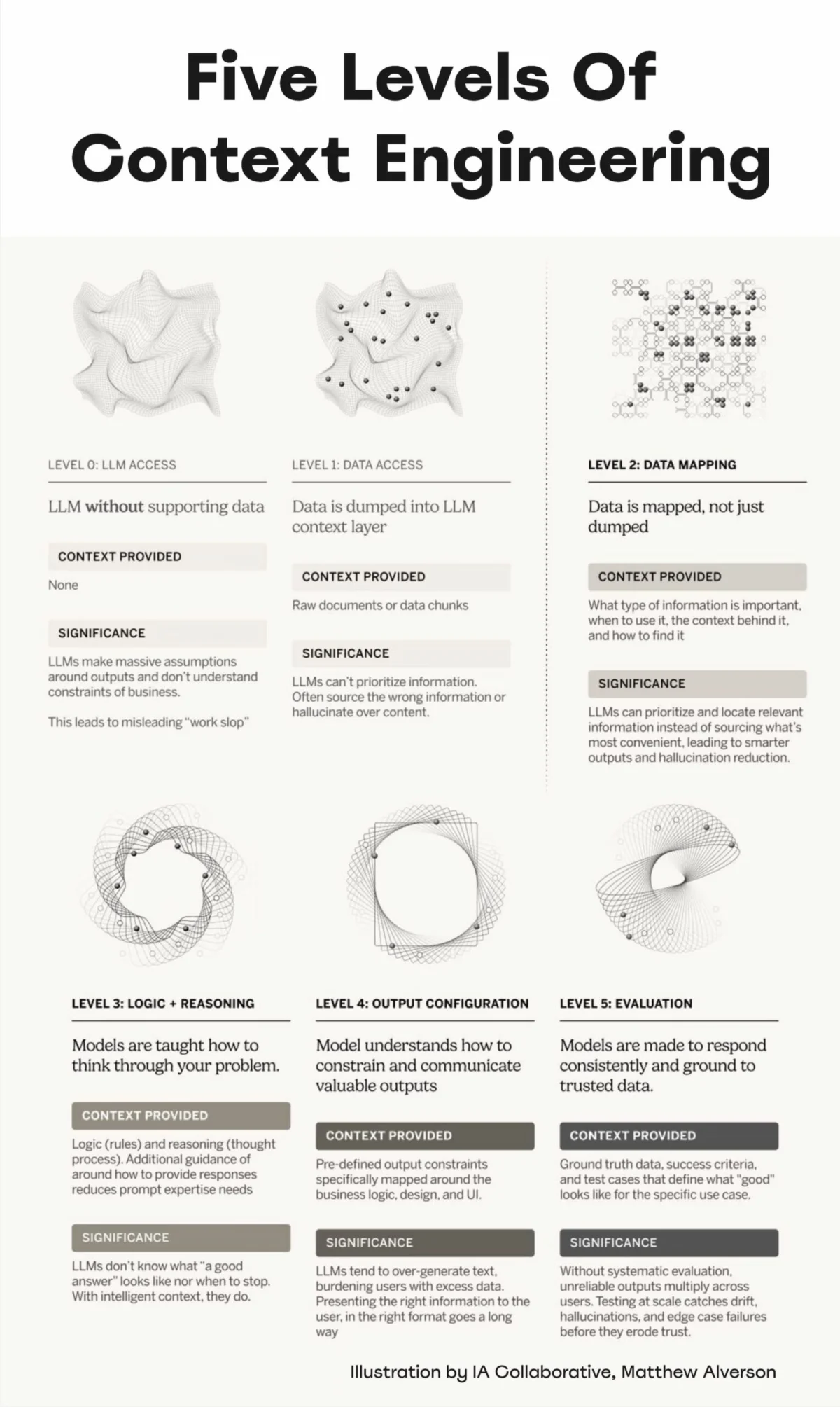
In the rapidly evolving landscape of digital product design, the promise of Artificial Intelligence has often outpaced its practical application. While Large Language Models (LLMs) like GPT-4 and Claude have demonstrated an uncanny ability to generate functional code and aesthetic layouts, a persistent problem remains: the "drift." When AI is tasked with generating prototypes based on existing design systems, the results are frequently marred by inconsistencies, detached components, and a fundamental misunderstanding of brand-specific logic.
Recent industry insights, spearheaded by experts such as Hardik Pandya of Atlassian and Vitaly Friedman of Smashing Magazine, suggest that the fault lies not necessarily with the AI’s cognitive abilities, but with the "infrastructure" of the design systems themselves. To move toward a future of seamless, AI-driven prototyping, the industry is seeing a strategic shift from traditional, human-centric design systems to "AI-ready" or "LLM-readable" frameworks.
Main Facts: Why AI Fails at Design (And How to Fix It)
The core challenge in AI-generated design is the reliance on visual pattern matching rather than logical adherence to a system. When an AI "looks" at a mock-up, it makes assumptions. It might see a button and guess its padding, color value, and hover state. However, in a professional design environment, these values are rarely arbitrary; they are governed by a complex web of design tokens, accessibility standards, and documented principles.
The current state of AI prototyping suffers from three primary issues:
- Inconsistency Drift: Tiny discrepancies in a Figma file—such as a hard-coded hex value instead of a token—are magnified by AI, leading to "hallucinated" styles.
- Lack of Context: AI models often lack the "why" behind a design decision. Without knowing that a specific red is reserved only for critical errors, the AI might use it for a "Delete" button in a low-stakes context.
- Technical Debt: Undocumented decisions and "messy" design files act as noise, preventing the AI from identifying the "source of truth."
The solution, as outlined in recent practical guides for the industry, involves a three-pronged approach: treating design decisions as infrastructure, utilizing automated auditing tools like FigmaLint, and implementing a layered architecture consisting of spec files, token layers, and audit scripts.
Chronology: The Evolution of Design Systems
To understand where we are going, we must look at how design documentation has evolved over the last two decades.

- The Era of Static Style Guides (2000s–2010s): Documentation was primarily PDF-based or hosted on static internal wikis. These were meant for human consumption only and quickly became outdated as the code evolved.
- The Component Revolution (2010s–2015): Influenced by Brad Frost’s "Atomic Design," systems moved toward reusable components. Tools like Sketch and early Figma allowed designers to build libraries, but the connection between design and code remained manual.
- The Tokenization Phase (2016–2022): The industry adopted "Design Tokens"—platform-agnostic variables (like
color-primary-600) that sync design and code. This was the first step toward making design systems machine-readable. - The AI-Ready Shift (2023–Present): With the explosion of Generative AI, the focus has shifted to "Context Engineering." Design systems are no longer just libraries; they are being rebuilt as structured data environments (Markdown, JSON) that LLMs can ingest to understand the logic, not just the look, of a product.
Supporting Data: The Three-Layer Architecture
The transition to an AI-ready system requires a fundamental restructuring of how design data is stored and accessed. Hardik Pandya’s framework identifies three critical layers that ensure AI remains within the "guardrails" of a brand.
1. The Spec File Layer (The "Brain")
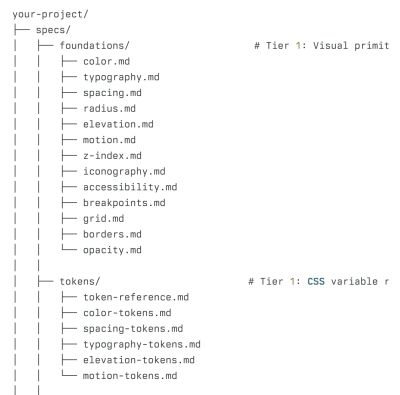
Instead of forcing an AI to scan a complex Figma file, designers are now encouraged to create "Spec Files." These are structured Markdown files that act as the instruction manual for the LLM.
- What they contain: Spacing rules, accessibility requirements, component usage guidelines (Do’s and Don’ts), and priority hierarchies.
- Why it works: Text is significantly cheaper and more accurate for an LLM to process than visual pixels. By reading a
.mdfile, the AI understands that a "Primary Button" must always have a 16px border radius, regardless of what it thinks it sees in a screenshot.
2. The Token Layer (The "DNA")
The token layer ensures that the AI never "invents" a value. By providing the AI with a closed set of named variables, the designer limits the AI’s choices.

- Mechanism: When the AI generates a prototype, it is instructed to only use values from the
tokens.jsonortokens.cssfile. - Result: This eliminates hard-coded hex codes and ensures that if the brand color changes in the future, the AI-generated prototypes will update automatically.
3. The Auditing Layer (The "Safety Net")
Even with perfect instructions, AI can make mistakes. The auditing layer uses software to catch these errors before they reach production.
- Tooling: Tools like FigmaLint (a free Figma plugin) have become essential. FigmaLint audits tokens, states, and accessibility, detecting detached instances or missing interactive states.
- Automation: In a mature workflow, an automated script scans the AI’s output. If the script finds a hard-coded value or a component used outside of its defined "Spec," it flags the error and sends it back to the AI for correction.
Official Responses and Expert Insights: Context is Everything
Vitaly Friedman, a leading voice in UX design and founder of Smashing Magazine, emphasizes that "Context Engineering" is the new frontier for designers. In his recent explorations of AI interfaces, Friedman highlights that AI cannot magically resolve technical debt.
"The more deliberate and precise designers are in guiding AI, the better the overall outcomes will be," Friedman notes. He argues that the role of the designer is shifting from "pixel pusher" to "systems architect." This sentiment is echoed by Matthew Alverson’s "Five Levels of Context Engineering," which suggests that the quality of AI output is directly proportional to the depth of the data provided—ranging from simple prompts (Level 1) to fully integrated, real-time data ecosystems (Level 5).
Hardik Pandya’s guide reinforces this, stating that design decisions must be treated as "infrastructure." This means that every time a team decides to change a font-weight or a padding rule, that decision must find its way into the Markdown spec file. If the documentation is not updated, the AI "worker" is effectively operating on an outdated blueprint.
Implications: The Changing Landscape of Design Work
The move toward AI-ready design systems has profound implications for the design profession and the tech industry at large.
1. The End of the "Manual Prototype"
As these systems mature, the time spent manually drawing frames in Figma will likely decrease. Designers will focus on defining the logic and the "Spec," while AI handles the assembly of high-fidelity prototypes. This allows for rapid A/B testing and a significantly faster "time-to-market" for new features.

2. The Rise of the Design Engineer
The boundary between design and engineering is blurring. To build an AI-ready system, designers must understand structured data, version control (Git), and basic automation scripts. The "Design Engineer" role—someone who can bridge the gap between aesthetic intent and machine-readable execution—will become one of the most sought-after positions in tech.
3. Cleaning Up the Debt
Perhaps the most immediate benefit of this movement is the forced "cleaning" of design systems. To make a system readable for an AI, humans must first make it consistent for themselves. The process of preparing for AI requires teams to audit their libraries, remove detached instances, and document previously "tribal" knowledge. This reduces technical debt across the entire organization.
4. Accessibility by Default
By including accessibility guidelines (like WCAG contrast ratios and touch target sizes) in the Spec File layer, organizations can ensure that AI-generated designs are inclusive by design. The AI doesn’t need to "remember" to check for contrast; the system simply won’t allow it to choose a non-compliant color combination.

Conclusion: A Future Built on Precision
The integration of AI into the design workflow is not a "set it and forget it" solution. As the industry moves toward LLM-readable design systems, it is clear that the human element remains more critical than ever. Designers are not being replaced; rather, they are being promoted to the role of "System Governors."
The success of AI-generated prototypes depends on the quality of the "infrastructure" they inhabit. By moving away from ambiguous mock-ups and toward structured, documented, and audited spec files, design teams can finally harness the speed of AI without sacrificing the precision of their brand. As Vitaly Friedman aptly puts it, "We’ll be busy for years to come"—not just building designs, but building the systems that allow AI to design alongside us.
Resources for the Transition
For teams looking to begin this transition, the following tools and frameworks are recommended:
- FigmaLint: For auditing and preparing design documentation.
- Design Patterns for AI Interfaces: Vitaly Friedman’s comprehensive course on UX for the AI era.
- Atlassian’s LLM-Design Guide: Hardik Pandya’s practical roadmap for building AI-ready systems.
- Markdown-based Spec Folders: A low-cost, high-impact way to begin documenting design logic for machine consumption.
 Nana Wu
  Nana
Nana 