
 By Nana Muazin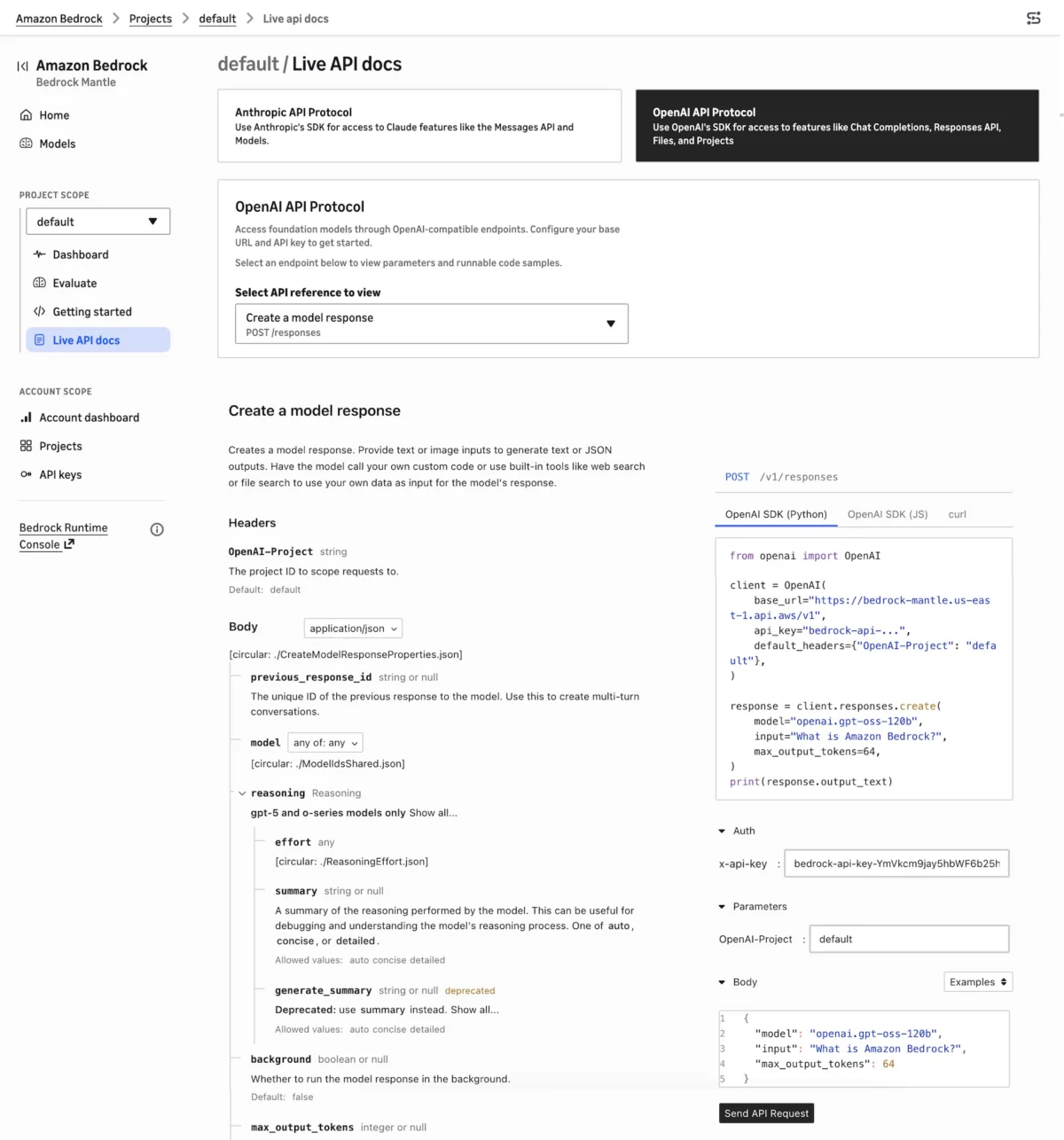
In a significant leap forward for cloud-based artificial intelligence, Amazon Web Services (AWS) has announced the launch of a refreshed console experience for Amazon Bedrock. Designed to streamline the development lifecycle of generative AI applications, this new interface introduces the bedrock-mantle inference engine—a high-performance, secure, and reliable backbone built to support the industry’s most advanced models, including the latest iterations of GPT, Claude, and various open-weight architectures.
By introducing a workflow optimized for compatibility with industry-standard protocols like the OpenAI Responses API, OpenAI Chat Completions API, and the Anthropic Messages API, AWS is signaling a shift toward greater interoperability and ease of adoption for developers entrenched in existing AI ecosystems.
Core Developments: The Mantle Engine and Refreshed Console
The centerpiece of this announcement is the bedrock-mantle endpoint. While Amazon Bedrock has long served as a premier service for building generative AI applications using foundation models (FMs), the new console specifically targets the "experiment, iterate, and scale" phases of the development pipeline.
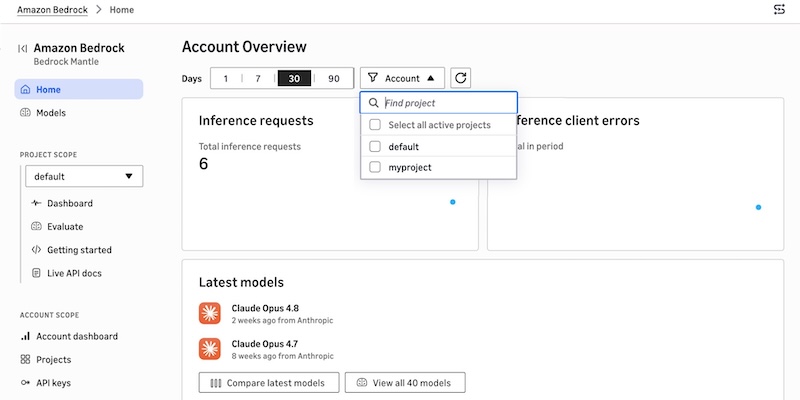
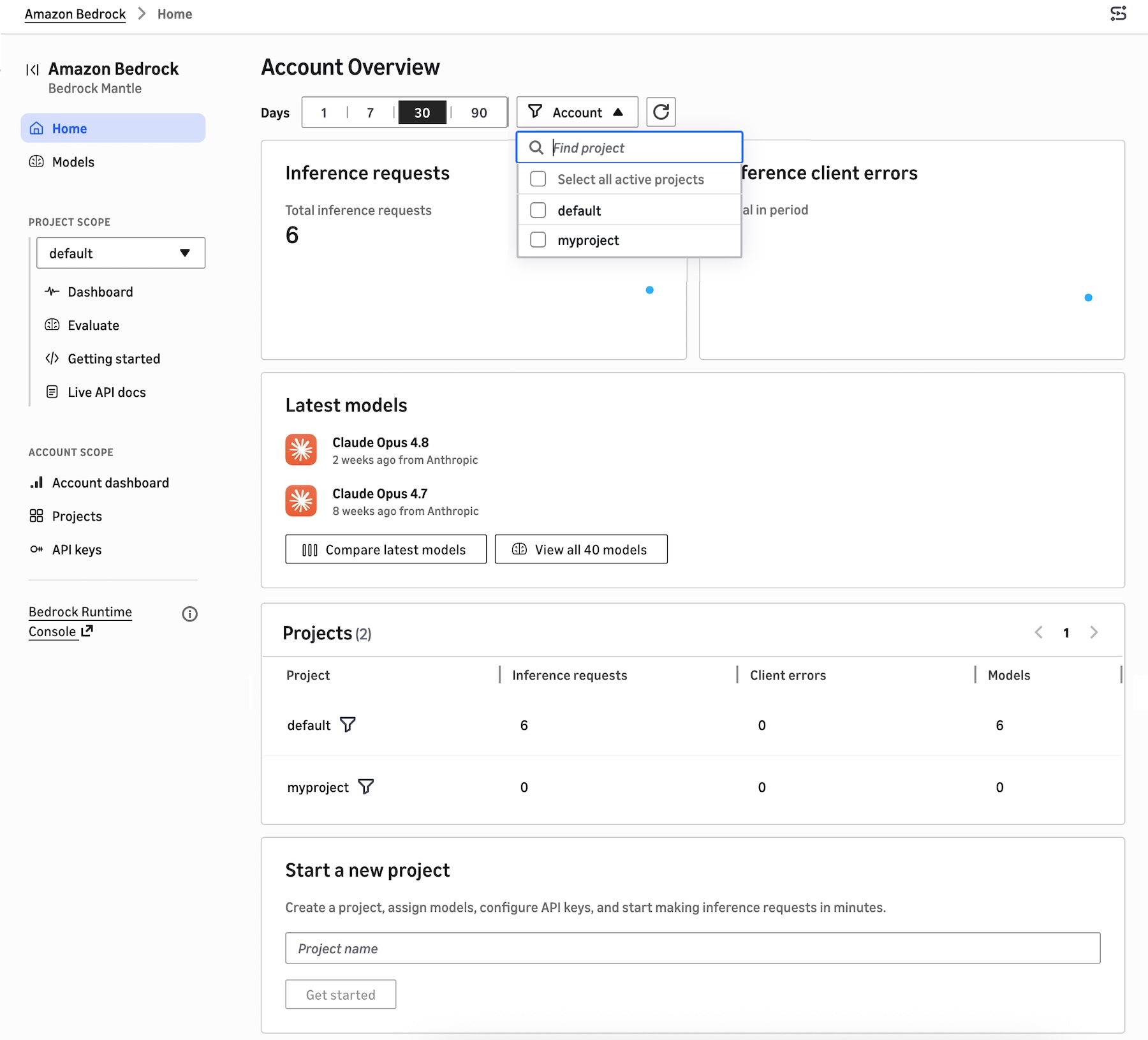
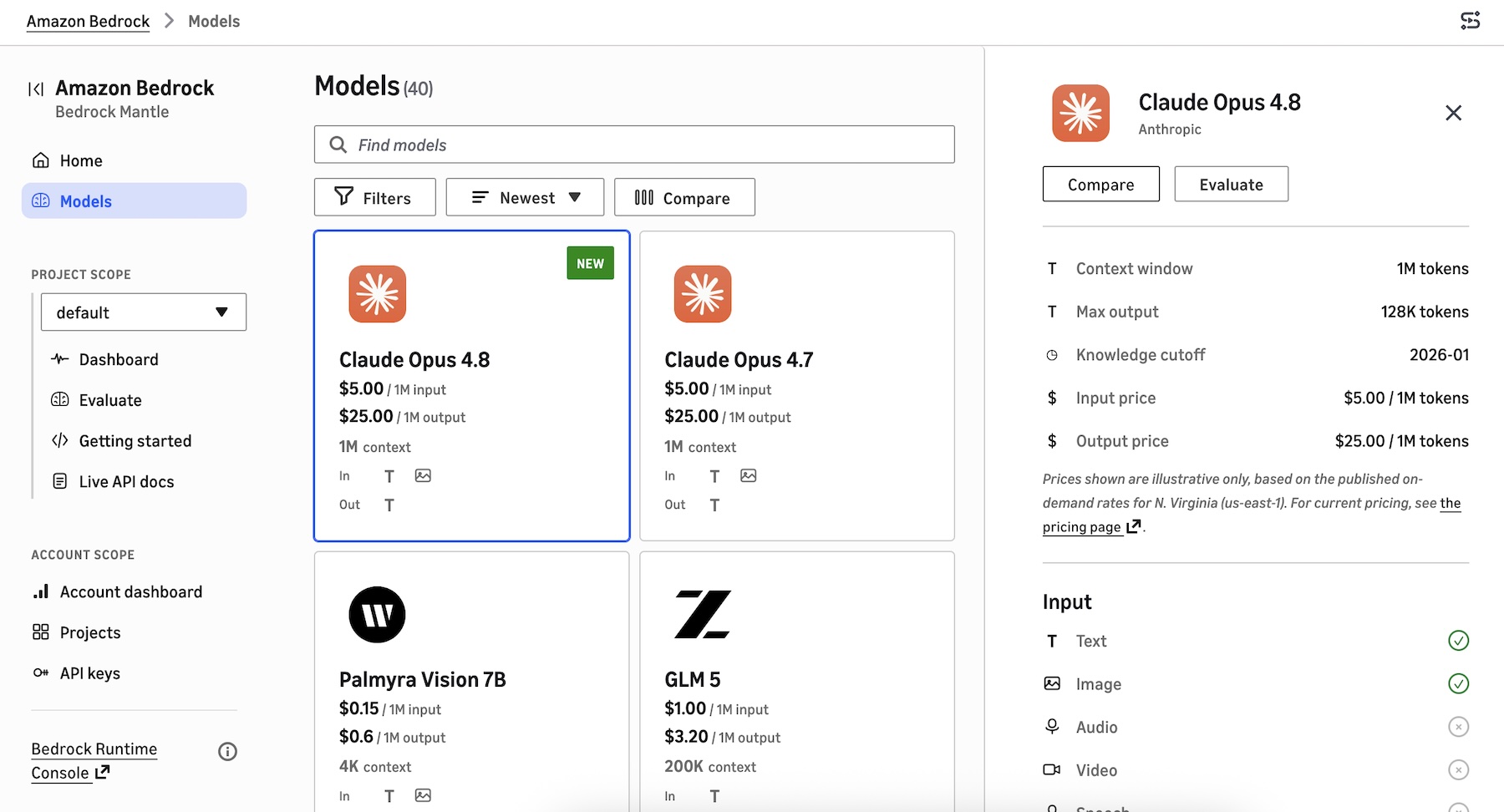
The new dashboard is project-centric. Rather than navigating broad, service-wide settings, developers can now organize their work into discrete projects. Each project allows for granular control: users can assign specific models, configure unique API keys, and monitor inference requests with pinpoint accuracy. This shift reflects AWS’s commitment to providing a "production-ready" environment that doesn’t sacrifice the agility required during the prototyping phase.

Key Features of the New Console:
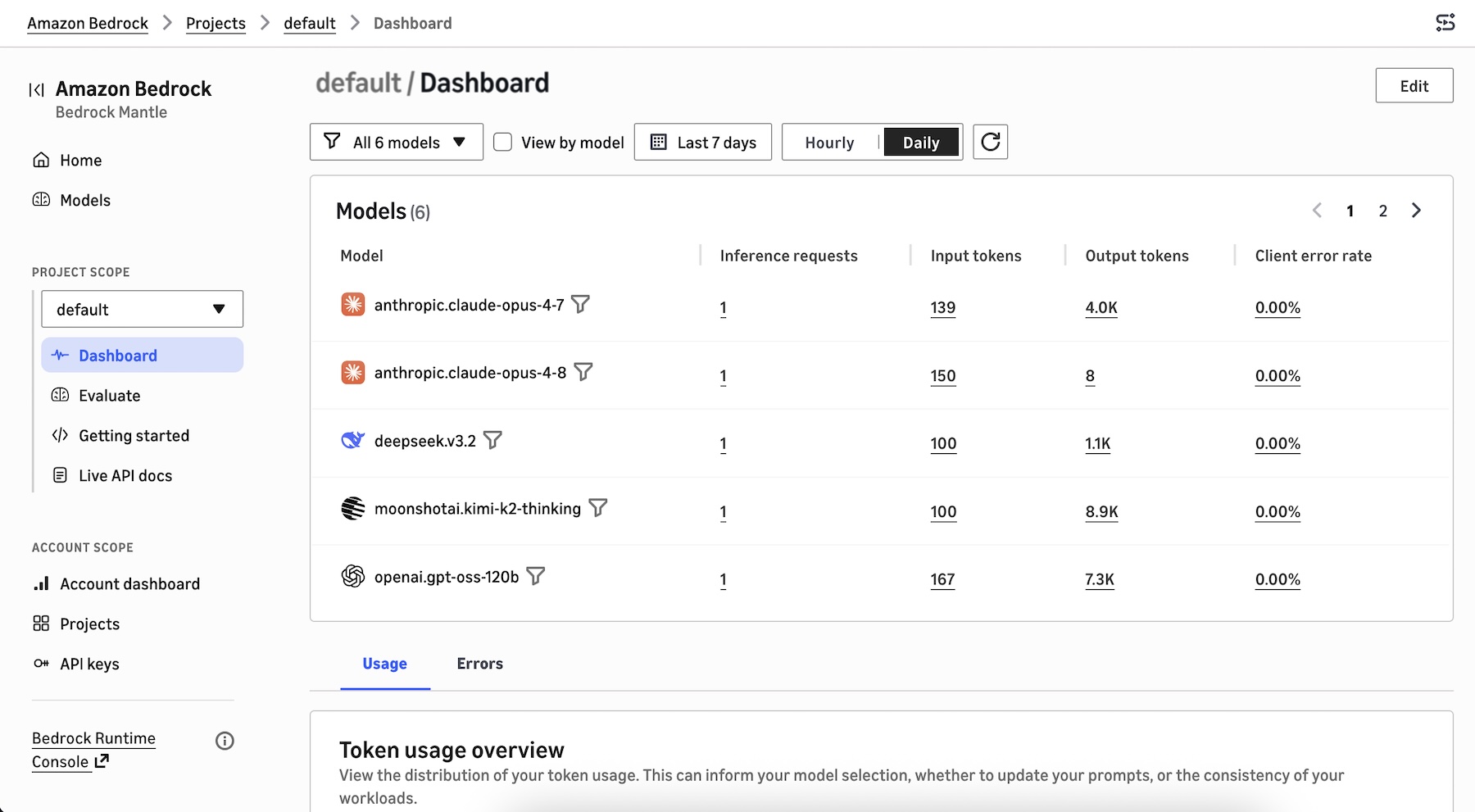
- Centralized Project Dashboard: A bird’s-eye view of inference requests, error rates, and model distribution across timeframes.
- Enhanced Model Catalog: A comprehensive resource for browsing the latest GPT, Claude, and open-weight models. It includes detailed metadata on features, token limits, and pricing models.
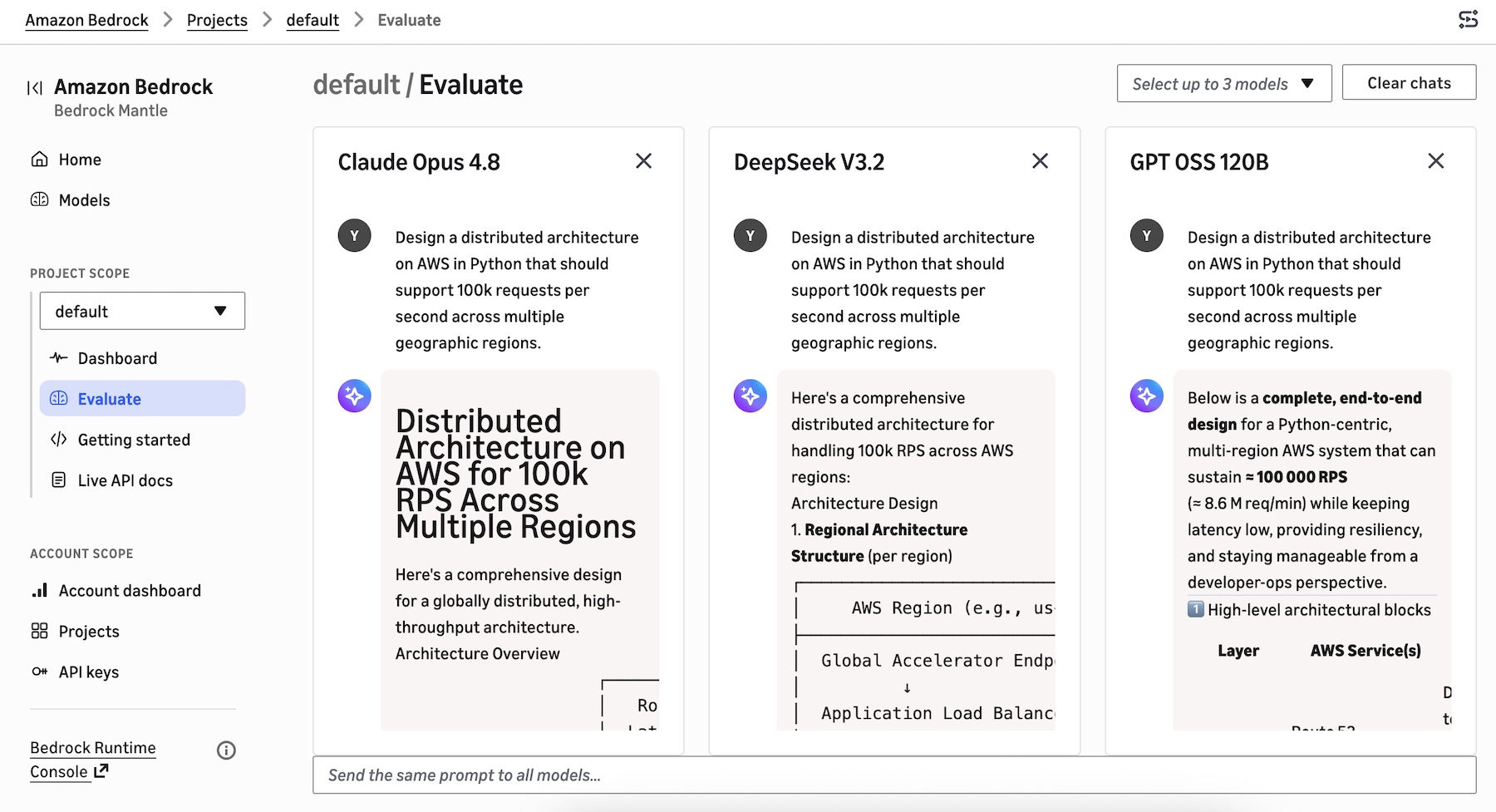
- Comparative Analysis Tools: Developers can now compare up to three models side-by-side using the same prompt, drastically reducing the time required for model selection and optimization.
- Streamlined Integration: Pre-configured API references that update in real-time as developers switch between models or adjust environment settings.
Chronology: The Evolution of Bedrock
To understand the magnitude of this update, one must look at the trajectory of Amazon Bedrock since its inception.
- Early Days: Bedrock began as a specialized service aimed at democratizing access to FMs via an API-first approach, focusing heavily on enterprise security and the "Converse" API.
- Mid-Cycle Evolution: AWS introduced "Agents," "Knowledge Bases," and "Guardrails" to address the growing need for RAG (Retrieval-Augmented Generation) and brand-safe AI deployments.
- The Current Phase: The launch of the
bedrock-mantleconsole represents a pivot toward developer experience (DX). By supporting industry-standard APIs (OpenAI/Anthropic), AWS is acknowledging that developers want to migrate existing applications to the secure, private environment of Bedrock with minimal refactoring.
Supporting Data: Why "Mantle" Matters for Performance
The bedrock-mantle engine is not merely a UI change; it is a fundamental shift in how inference requests are routed and handled. According to internal metrics provided by AWS, the engine is specifically engineered for high-throughput scenarios.
Token Usage and Workload Optimization
The new project dashboard provides deep insights into token consumption. Developers can track:
- Total Token Usage: Aggregated data for cost projection.
- Tokens per Minute (TPM): Essential for identifying bottlenecks in auto-scaling configurations.
- Inference Requests per Minute: Used to gauge system stress and latency.
- Efficiency Metrics: Tracking "tokens per inference request" allows teams to optimize their prompts to ensure the most cost-effective and performant interactions with the models.
By surfacing this data, AWS enables engineering teams to make data-driven decisions regarding which models to deploy. For example, if a project shows high latency but low token density, developers can quickly switch to a more efficient, smaller-parameter model via the catalog without leaving the console.
Official Responses and Strategic Implications
The introduction of the new console was spearheaded by AWS evangelist Channy Yun, who emphasized the importance of a frictionless path from evaluation to production.
"The goal is to eliminate the friction that exists between ‘I have an idea’ and ‘this is live in production,’" stated internal project leads. By allowing developers to connect AI coding agents—such as Claude Code, Cline, Cursor, or OpenCode—directly to the bedrock-mantle engine, AWS is effectively positioning itself as the "infrastructure layer" for the next generation of AI-native software development.
Implications for the Developer Ecosystem
- The Death of "Vendor Lock-in" Fears: By supporting the OpenAI API protocol, AWS is making it trivial for developers to swap an OpenAI backend for a Bedrock-hosted model. This provides enterprises with the regulatory and security benefits of AWS while retaining the familiarity of standard SDKs.
- Accelerated R&D: The ability to compare three models side-by-side in the console is a massive time-saver. Previously, this would have required custom-built scripts or manual data entry into spreadsheets.
- Standardization: As more models are added to the
bedrock-mantlecatalog, the industry moves closer to a standardized "model-as-a-service" interface, where the underlying complexity of the model is abstracted away behind a unified API protocol.
How to Get Started: A Practical Guide
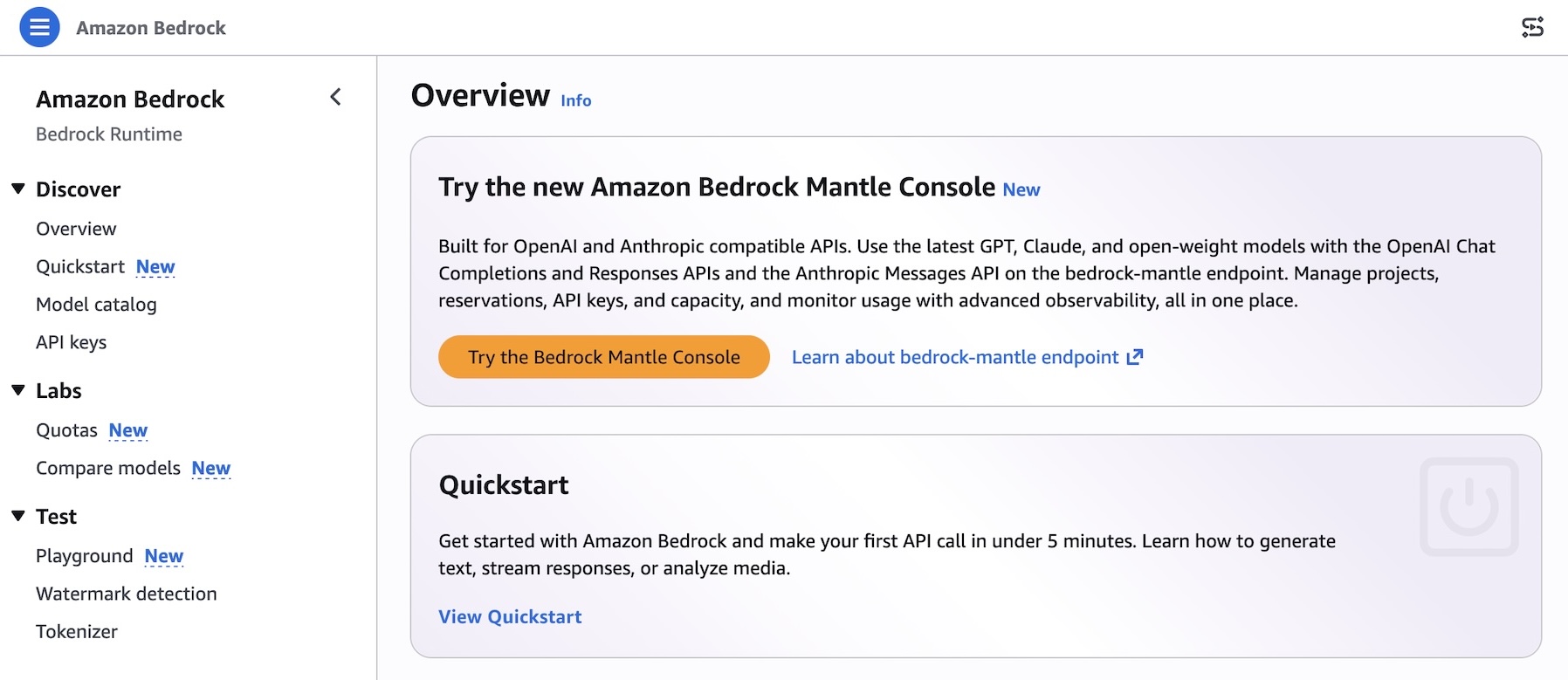
AWS has ensured that the migration or initial setup process is remarkably simple. Developers can access the new interface by navigating to the standard Amazon Bedrock console and selecting the "Try the Bedrock Mantle Console" banner.
The Workflow
- Step 1: Project Initialization: Create a new project within the Mantle console.
- Step 2: Configuration: Assign specific models and generate API keys.
- Step 3: Integration: Choose the "Getting Started" tab. Here, users can download sample code snippets tailored for their preferred language (Python, TypeScript, Go, etc.) and SDK (Anthropic or OpenAI).
- Step 4: Live Documentation: Use the "Live API Docs" to test requests. The documentation is dynamic—meaning if you change your model in the console, the code snippets on the documentation page update automatically to reflect the correct model ID and endpoint.
- Step 5: Agent Connection: For those using AI coding assistants, the "Clients" section provides step-by-step instructions for routing agent requests through AWS IAM credentials.
Geographic Availability and Future Outlook
As of the current release, the bedrock-mantle engine is available across a broad spectrum of global regions. This includes:
- North America: US East (N. Virginia, Ohio), US West (Oregon).
- Asia Pacific: Jakarta, Mumbai, Sydney, Tokyo.
- Europe: Frankfurt, Ireland, London, Milan, Stockholm.
- South America: São Paulo.
AWS has promised that this is only the beginning. The company has directed users to monitor the official AWS documentation for regional compatibility updates.
Conclusion
The release of the bedrock-mantle console is a landmark moment for AWS. It demonstrates that the company is listening to the developer community’s call for more modular, observable, and standards-compliant tools. By providing a professional-grade environment for managing the lifecycle of AI models, AWS is not only simplifying the life of the individual developer but is also providing a robust framework for enterprises to confidently integrate generative AI into their mission-critical applications.
For those ready to transition, the new console is live and available now. AWS encourages feedback through the re:Post community, ensuring that the next iteration of the Bedrock platform continues to align with the evolving needs of the global engineering community. As the AI landscape continues to shift at a breakneck pace, tools like the new Bedrock console provide the stability and clarity necessary to build the future of technology on a solid, scalable foundation.
 Neng Nana
  Suro Senen
  Lina Hope