
 By Muslim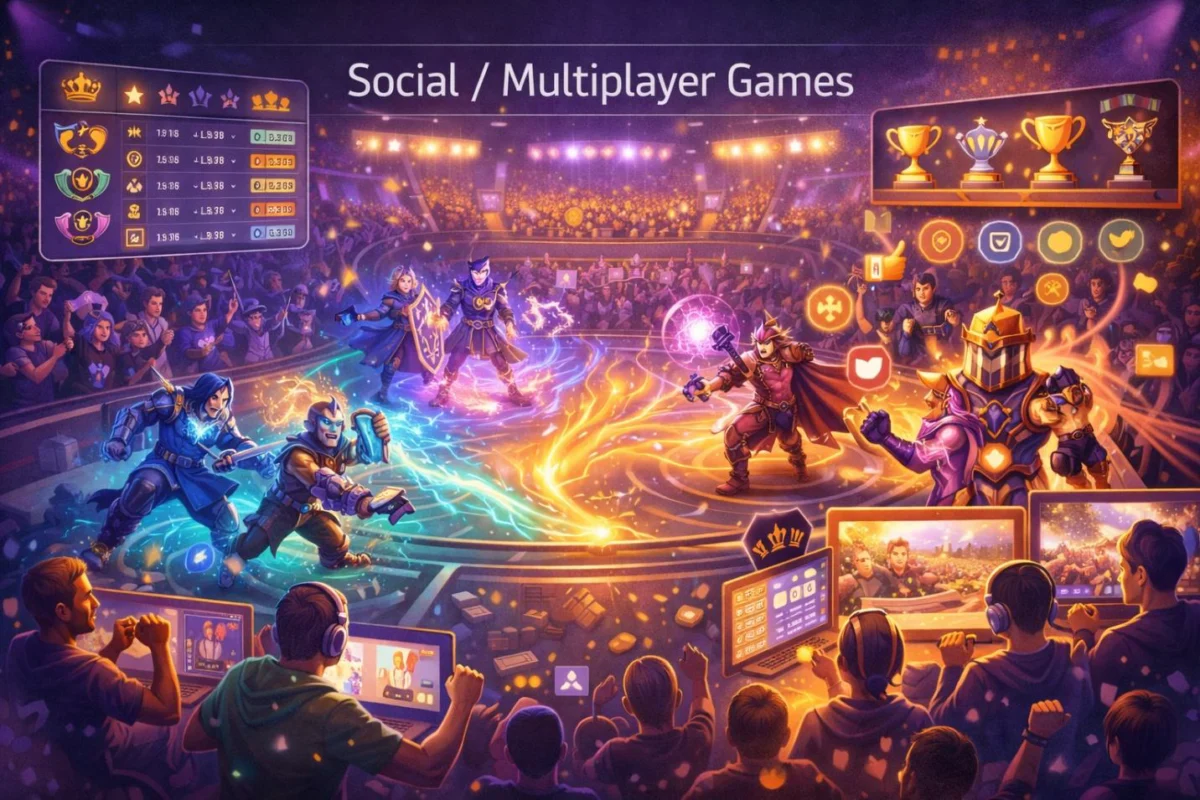
In the modern digital landscape, "gamification" has become a boardroom buzzword—a universal bandage applied to engagement woes. When a product team declares, "Let’s add gamification," they are committing a fundamental design error. They are treating human psychology as a monolith, assuming that a progress bar or a badge will trigger the same dopamine response in every user.
This is the equivalent of a musician saying, "Let’s add music," without specifying whether they intend to play Jazz, Heavy Metal, or Classical. Each genre attracts distinct audiences through vastly different emotional and psychological mechanisms. To evolve into "Gamification 2.0," designers must abandon the one-size-fits-all approach and embrace an intentional, genre-based framework.
The Core Philosophy: Moving Beyond Superficial Mechanics
The current state of gamification is often reduced to "pointsification"—a shallow layer of leaderboards and streaks that rarely fosters genuine long-term engagement. True game design works because it aligns mechanics with specific psychological hooks. An RPG player seeks narrative growth; a puzzle player craves elegant, intellectual problem-solving; a strategy player desires systemic mastery.
To succeed, product developers must identify which "genre" their application naturally inhabits. Are you building a journey of self-actualization? A sandbox for creation? A competitive arena? The framework for Gamification 2.0 requires choosing your genre intentionally, studying the psychological pillars of that genre, and designing accordingly.
Chronology of the Shift: From Points to Purpose
For the last decade, gamification was dominated by the "Skinner Box" model—rewarding repetitive behavior with variable reinforcements. This era gave us the ubiquitous, yet often hollow, streak counter. However, as users have become more sophisticated, the "compulsion loop" is showing signs of fatigue.
The industry is now transitioning toward a more holistic view. We are seeing a shift from extrinsic rewards (badges, points) to intrinsic engagement. Leading platforms like Duolingo, Notion, and Roblox have moved away from simple task-completion rewards and toward systems that emphasize identity, community, and agency. This is the progression from Gamification 1.0 (behavior modification) to Gamification 2.0 (experience design).
Deep Dive: The Six Pillars of Genre-Driven Design
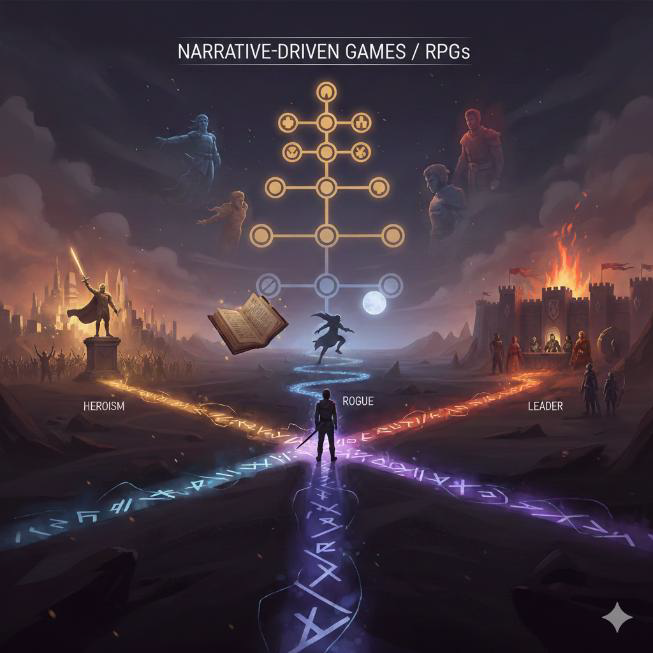
1. Narrative-Driven Games (RPGs)
Examples: The Last of Us, Mass Effect
- The Psychological Hook: Identity and narrative meaning.
- Implications: Users do not want to be "users"; they want to be protagonists. Instead of showing a generic progress bar, frame milestones as narrative beats.
- Actionable Insight: If your app involves skill acquisition, frame it as a character arc. Don’t tell a user they have reached "Level 5"; tell them they have mastered a specific capability that allows them to navigate a new domain of knowledge.
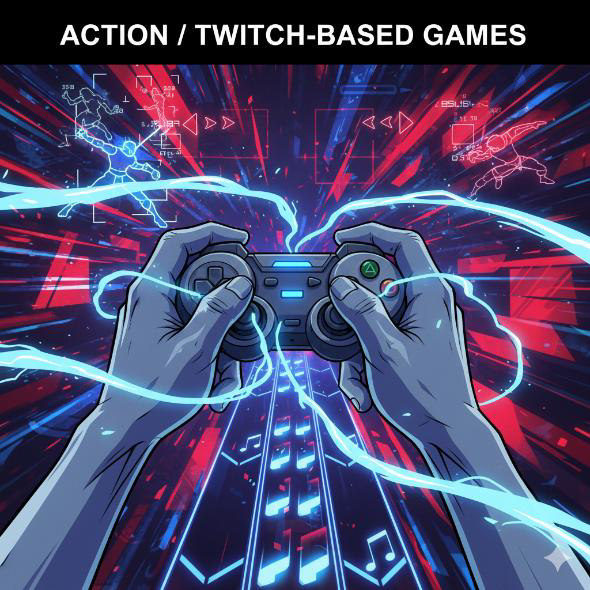
2. Action/Twitch-Based Games
Examples: Street Fighter, Call of Duty, Guitar Hero
- The Psychological Hook: Motor mastery and immediate sensory feedback.
- Implications: Productivity apps often fail here by making the "work" a chore to get to the "reward." In action games, the action is the reward.
- Actionable Insight: Focus on "juice"—satisfying animations, haptic feedback, and responsive UI. The act of logging a task should feel as fluid and satisfying as landing a combo in a fighting game.
3. Strategy & 4X Games
Examples: Civilization, Whiteout Survival, Starcraft
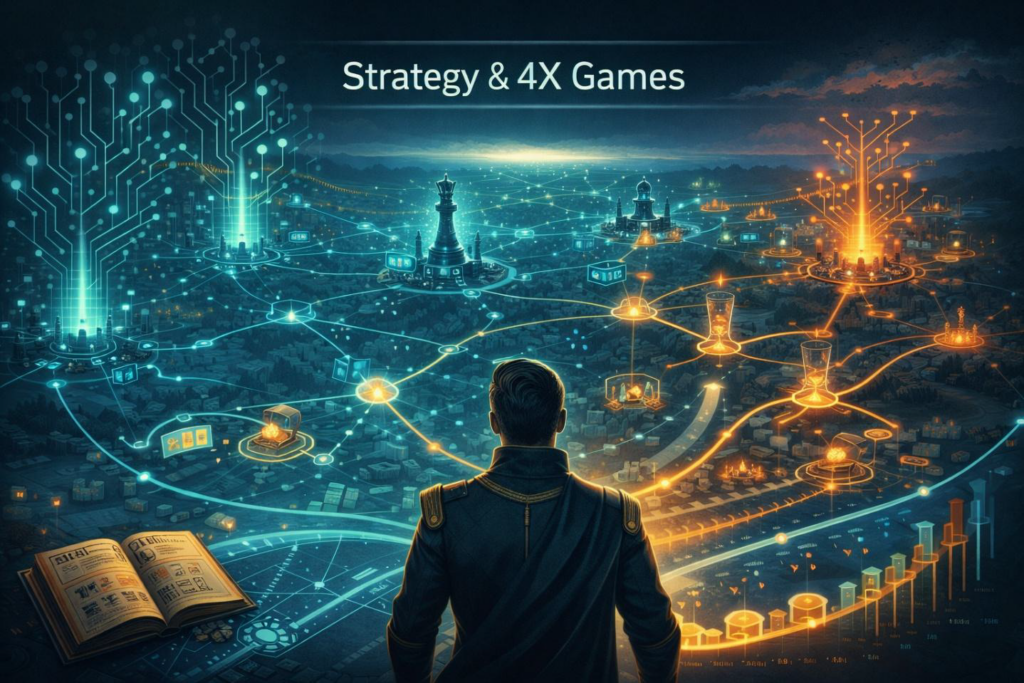
- The Psychological Hook: Long-term planning, systemic complexity, and social interdependency.
- Implications: These games prove that users will engage for years if they can make meaningful, compounding choices.
- Actionable Insight: Replace leaderboards with "Alliance" systems. Encourage cooperation over competition. Allow users to see the ripple effects of their decisions—visualize how a small choice today compounds into a strategic advantage six months from now.
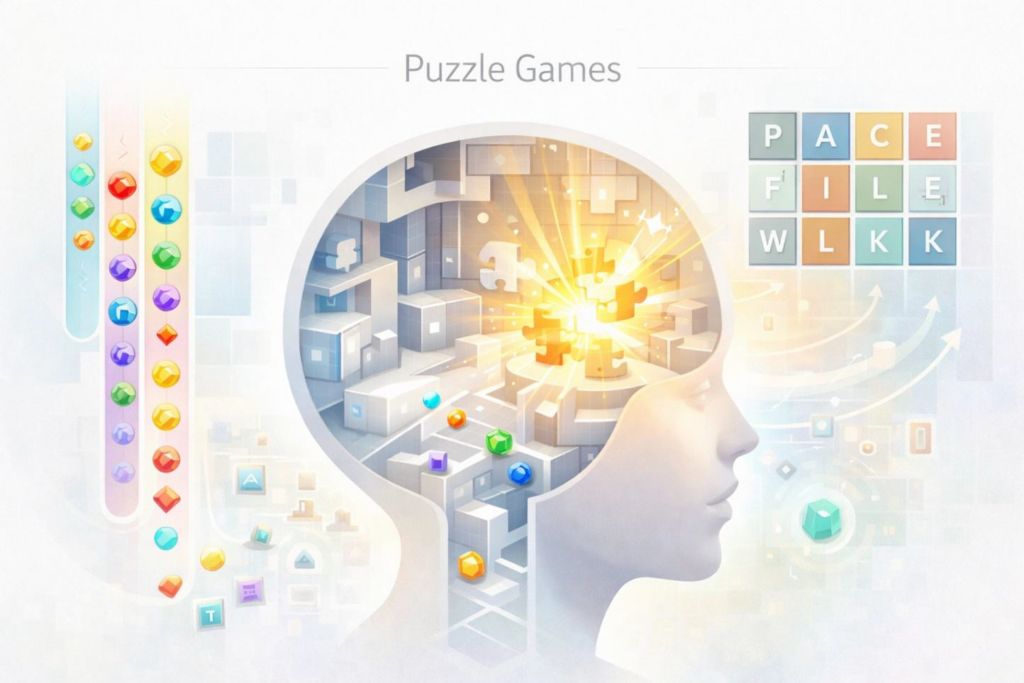
4. Puzzle Games
Examples: Portal, Royal Match, Wordle
- The Psychological Hook: The "Aha!" moment and elegant problem-solving.
- Implications: Complex, feature-heavy onboarding often frustrates users. Puzzle games thrive on simplicity and the joy of discovery.
- Actionable Insight: Shift onboarding from "manuals" to "play." Present complex concepts as puzzles to be solved rather than facts to be memorized. Let the user deduce the logic, which leads to deeper retention.
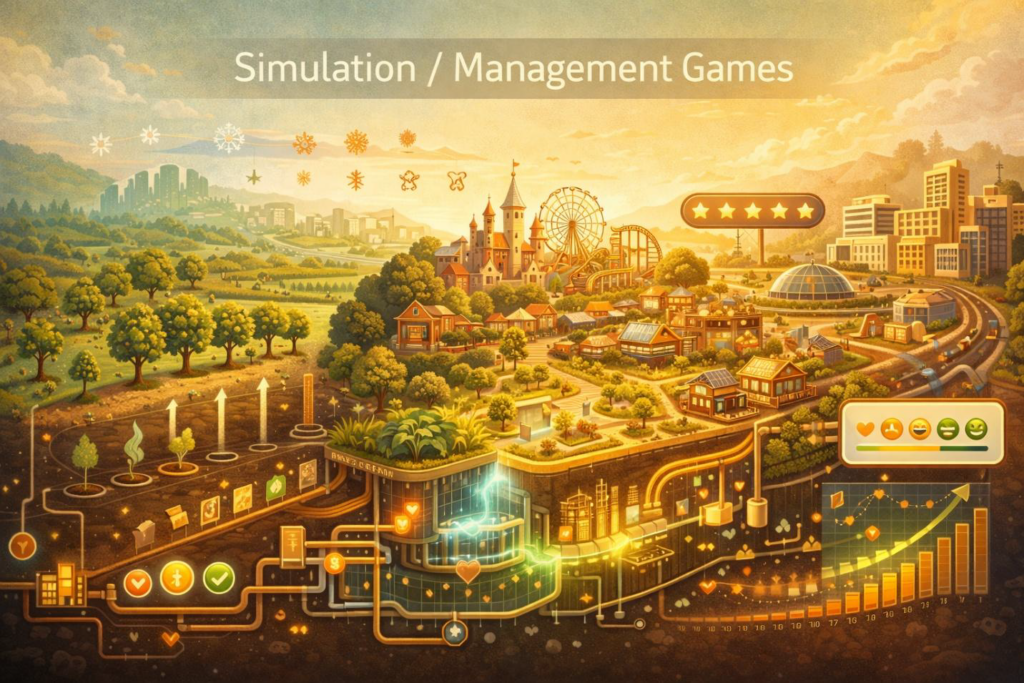
5. Simulation/Management Games
Examples: The Sims, Cities: Skylines, Stardew Valley
- The Psychological Hook: Creation, optimization, and the pride of ownership.
- Implications: Users value the ability to build and personalize. When they build a system themselves, they are less likely to churn.
- Actionable Insight: Provide building blocks, not just templates. Whether it’s a CRM or a budget tracker, allow users to construct a system that reflects their unique workflow. Let them "grow" their data as if they were tending a garden.
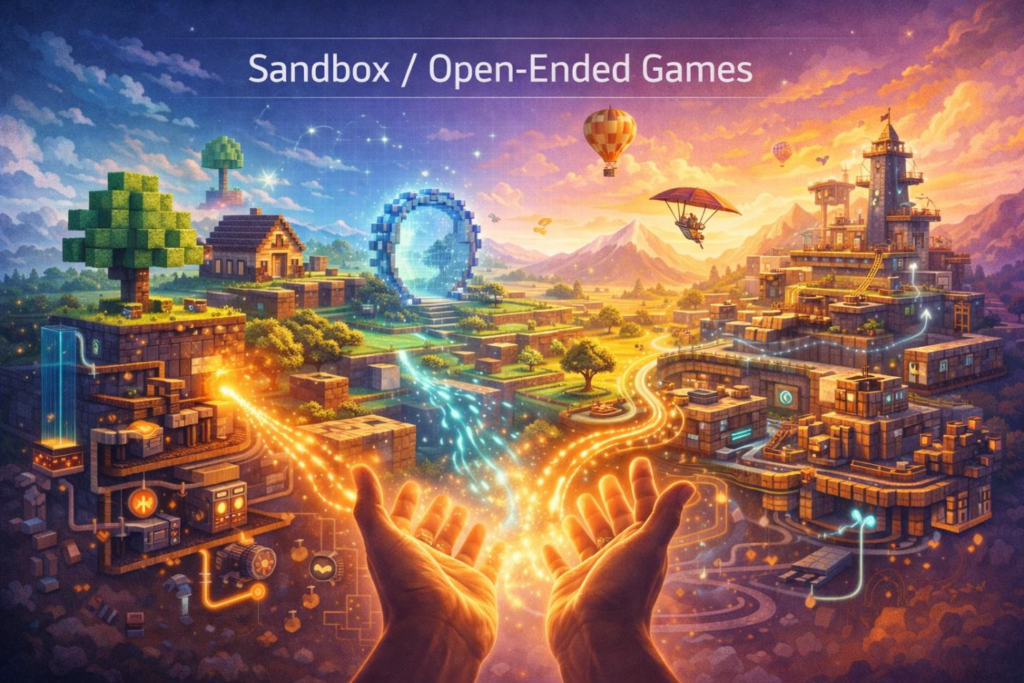
6. Sandbox/Open-Ended Games
Examples: Minecraft, Breath of the Wild
- The Psychological Hook: Autonomy and agency.
- Implications: The most engaged users are often those who find creative uses for your tools that you never intended.
- Actionable Insight: Resist the urge to force linear paths. Provide high-quality tools and allow users to define their own success metrics. This is why tools like Notion have become so powerful—they are sandboxes for professional life.
Supporting Data: Why Strategy and Agency Drive Revenue
The financial evidence supporting this shift is overwhelming. Mobile strategy games like Whiteout Survival and Last War: Survival generate hundreds of millions in annual revenue, not through simple daily rewards, but by fostering deep-seated ownership and social responsibility.
Similarly, the Roblox ecosystem proves that the ultimate form of engagement is creation. By allowing users to move from "consumer" to "architect," platforms tap into a level of investment that points-based systems cannot replicate. The data shows that when users feel like stakeholders in a system, their Lifetime Value (LTV) increases exponentially compared to users driven by short-term streaks.
Official Perspective: The Expert Consensus
Industry analysts and behavioral designers are increasingly vocal about the "Gamification 2.0" movement. Dr. Arinze N., a lead researcher in user experience psychology, notes: "We have spent a decade teaching users to chase points. We are now entering an era where we must teach them to chase mastery and meaning. The most successful products of the next decade will be those that provide a sense of agency, not just a sense of progress."
Product leads at major tech firms are beginning to mirror this sentiment, pivoting their roadmaps away from "engagement hacks" and toward "empowerment loops." The consensus is clear: the era of the generic gamified app is ending.
Implications for the Future of Development
The transition to genre-driven design has profound implications for developers:
- The Death of the "Feature Checklist": Designers must stop copying features from successful apps and start analyzing the psychological intent behind those features.
- Increased Focus on Onboarding: If your app is a puzzle, the onboarding must be a tutorial level. If it’s an RPG, the onboarding must be the prologue.
- Social Architecture: Moving from leaderboard-based competition to team-based cooperation will be the single most effective way to improve retention in professional and fitness applications.
- The Rise of the "Architect" User: Empowering users to modify their experience (the sandbox approach) will become a competitive requirement for SaaS and productivity tools.
Conclusion
Gamification is not dead, but its infancy is over. We can no longer hide behind the excuse that "gamification doesn’t work" when the problem is actually that we are applying the wrong "music" to the wrong audience.
By choosing a genre, respecting the psychological hooks inherent to that genre, and prioritizing agency over compulsion, developers can build products that are not just used—they are inhabited. The future of product design belongs to those who understand that users are not just players looking for a score; they are people looking for a meaningful, challenging, and social journey.
The next time you open your design software to "add gamification," stop. Ask yourself: What kind of game are we actually playing? Then, design for that.
 Ammar Sabilarrohman
  Neng Nana
  Sagoh
Sagoh 