
 By Suro Senen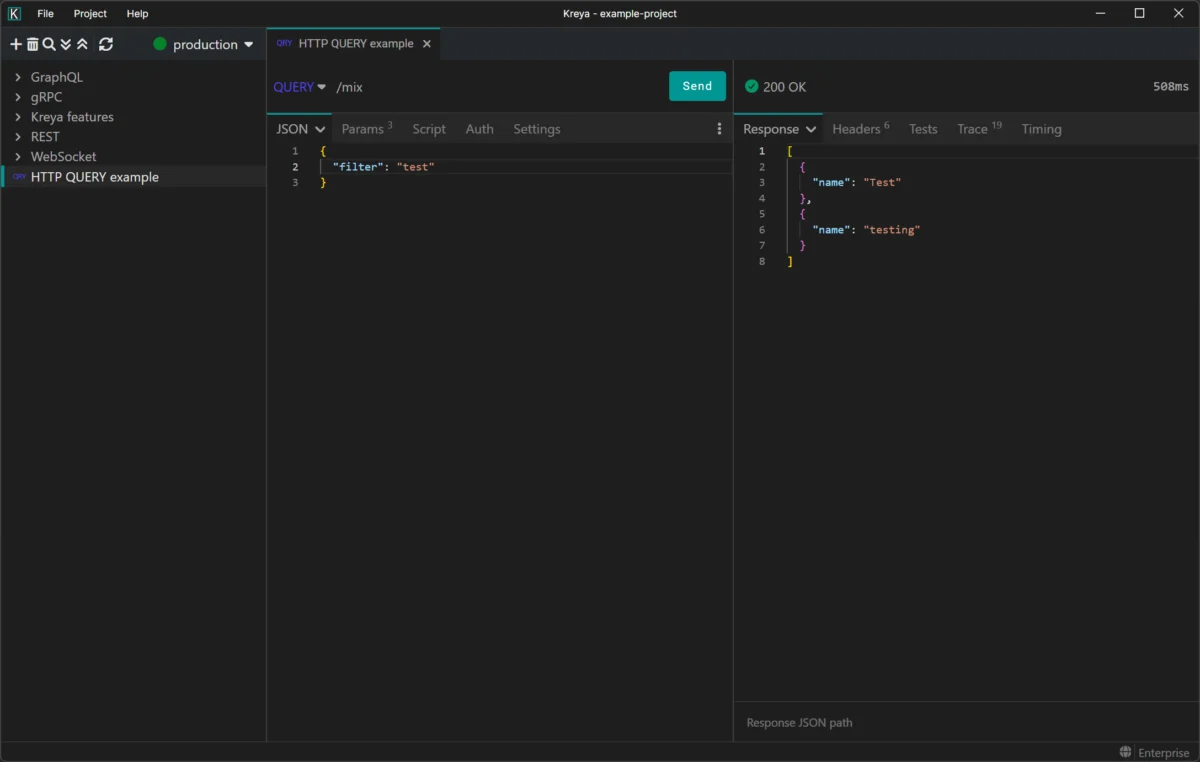
In the meticulously ordered world of RESTful APIs, developers have long operated under a rigid architectural contract. For decades, the HTTP method—whether it be GET, POST, PUT, or DELETE—has served as the definitive declaration of intent. It tells the server exactly what the client desires: fetch this resource, create that entity, or update this record. However, as web applications have grown in complexity, the limitations of these legacy methods have become increasingly apparent.
The recent publication of RFC 10008 marks a significant milestone in web architecture, formally introducing the QUERY method to the HTTP standard. This development is not merely a technical adjustment; it is a response to years of architectural friction, "hacky" workarounds, and the increasing demand for expressive, read-only search operations that go beyond the capabilities of traditional URL parameters.
The Chronology of an Architectural Dilemma
To understand why the industry requires a new HTTP method, one must look at the historical evolution of API design.
In the early days of the web, GET was designed for simple document retrieval. If you wanted to filter data, you appended parameters to the URL—a practice that served the web well for simple queries like /api/v1/users?role=admin. However, as modern applications moved toward complex data models, the limitations of this approach became glaring.
The Rise of Complex Queries
Developers began to face a "query explosion." Complex relational requests, deep nesting of objects, and sophisticated filtering logic could no longer be expressed cleanly in a URL. This led to several critical failure points:
- Character Limits: Browsers and servers often impose strict limits on URL lengths, causing long, complex queries to be truncated or rejected.
- Readability and Security: Sensitive data or verbose query structures encoded into URLs often end up in server logs, browser history, or referer headers, presenting significant privacy and security risks.
- Parsing Overhead: Constructing and deconstructing complex query strings on the client and server sides became an error-prone, labor-intensive process.
The "Body-less" GET Debate
For years, a segment of the developer community argued for a simple solution: allow GET requests to carry a JSON request body. Technically, the HTTP specification never explicitly forbade a body in a GET request, but it historically cautioned against it. The result was a fragmented ecosystem. Some proxies, firewalls, and server implementations would drop the body entirely, while others would interpret it. This inconsistency rendered the approach unreliable for production-grade APIs.
The POST Workaround
The industry eventually settled on a widespread, yet semantically flawed, workaround: using POST for complex queries. By sending a POST request with a JSON body to a search endpoint, developers bypassed the character limits and security issues associated with GET. However, this came at the cost of RESTful purity. POST is defined as non-idempotent and is intended for state-changing operations. Treating a search as a POST request forces developers to sacrifice the benefits of safe, idempotent operations, such as automatic retries and transparent caching.
Supporting Data: Why the Status Quo Failed
The necessity for QUERY is underscored by the failure of existing methods to handle modern caching and safety requirements.
Idempotency and Safety
In REST theory, a "safe" method is one that does not change the state of the server. GET is safe and idempotent; if you request a resource ten times, the result should theoretically be the same, and no side effects should occur. POST, by contrast, is neither.
When developers use POST to perform a search, they inadvertently signal to middleware, load balancers, and caching layers that the request might be modifying data. This prevents:

- Automated Caching: Because
POSTis considered unsafe, most intermediaries refuse to cache the response, leading to unnecessary load on the origin server. - Safe Retries: Client-side libraries cannot safely retry a failed
POSTrequest, as they cannot guarantee that the server didn’t process the initial request before the connection failed.
The "Middleware" Problem
Many modern web architectures rely on specialized middle-layers—such as CDNs, WAFs (Web Application Firewalls), and API Gateways—to optimize traffic. These layers are hard-coded to recognize standard methods. When a search query is disguised as a POST request, these tools treat it as a potential write operation, often logging it differently, applying stricter security policies, or ignoring it for cache-invalidation purposes. This adds latent complexity to the entire infrastructure stack.
Official Responses and the Standardization Process
The creation of RFC 10008 was not an overnight decision. It was the culmination of years of debate within the IETF (Internet Engineering Task Force) and the broader HTTP working groups.
The primary contention during the standardization process was the "breakage" argument. Critics argued that introducing a new method would force every proxy, server, and firewall in existence to be updated. However, the official response from the IETF working group was that the current workarounds—specifically the abuse of POST—had created a "hidden" form of technical debt that was far more dangerous than the effort required to update software stacks.
"The QUERY method is designed to be the semantic sibling of GET," noted representatives from the working group during the drafting phase. "It is a read-only request that happens to carry a payload. By formalizing this, we allow infrastructure to treat search operations with the safety and predictability that GET offers, without the constraints of the URL line."
Implications for Modern Development
The introduction of QUERY represents a paradigm shift for API design, but it brings with it several implications that developers must navigate.
Implementation Challenges
Adopting QUERY is not a "drop-in" solution. Before shifting all search-related endpoints, engineering teams must consider the following:
- Compatibility: Legacy middleware and older versions of web servers may not recognize the
QUERYverb and may return a405 Method Not Allowederror. - Cache Key Integrity: Unlike
GETrequests, where the cache key is typically just the URL, aQUERYrequest requires the request body to be part of the cache key. This necessitates more sophisticated caching logic on both the server and the CDN level. - Client-side Support: Many popular HTTP client libraries will need updates to explicitly support the
QUERYmethod. Until these libraries are updated, developers may have to manually force the method, which can lead to unexpected behavior in certain language runtimes.
Future-Proofing APIs
Despite the challenges, the adoption of QUERY offers a cleaner, more robust architecture. It allows for:
- Expressive Searches: Developers can utilize complex query languages (like GraphQL-style filtering or JSON-based search criteria) without worrying about URL length constraints.
- Standardized Security: Since
QUERYis explicitly defined as safe, security tools can be configured to treat it with the same policies asGET, reducing the risk of accidental exposure or misclassification. - Improved Performance: By enabling intermediaries to safely cache search results based on the request body, organizations can significantly reduce server load and latency for data-heavy applications.
Conclusion: The Road Ahead
The publication of RFC 10008 and the formalization of the QUERY method signal a mature phase in the lifecycle of RESTful APIs. It is a tacit acknowledgment that the rules written for the web of the 1990s and early 2000s are no longer sufficient for the high-data, high-complexity demands of today’s distributed systems.
While it will take time for the QUERY method to reach universal adoption—and developers should remain cautious about the potential for broken middleware in legacy environments—it is an essential evolution. As we look to the future, the transition from "hacky" POST workarounds to the explicit, semantically correct QUERY method will be a hallmark of well-engineered, resilient API design. Developers are encouraged to begin testing this method in non-production environments, ensuring their infrastructure is ready for a more standardized, efficient, and expressive era of web communication.
 rifanmuazin
  Layla Zulfa
  Evan Lee Salim