
 By rifanmuazin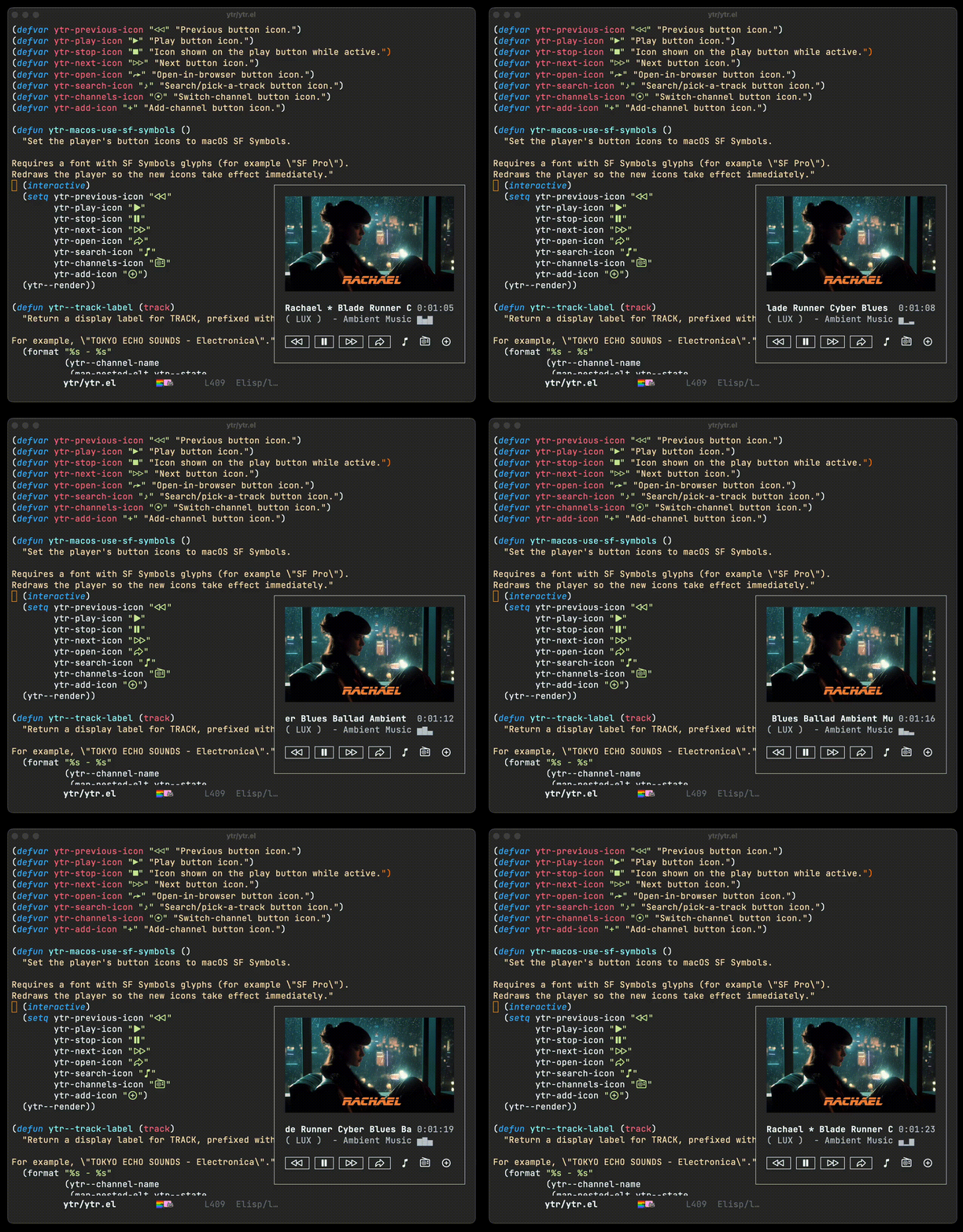
June 23, 2026 — For the dedicated Emacs power user, the text editor is not merely a tool for writing code or prose; it is an operating system, a window manager, and, increasingly, a multimedia hub. This week, developer and long-time Emacs enthusiast Xenodium announced the release of ytr, a new experimental package designed to bring YouTube radio streaming directly into the Emacs environment. The release marks a significant departure from previous audio-handling philosophies within the editor, signaling a move toward more dynamic, widget-based user interfaces.
Main Facts: Introducing ‘ytr’
At its core, ytr is an Emacs-based YouTube radio client. It allows users to input YouTube channel URLs, automatically fetch metadata, and stream audio directly within the editor. While existing solutions often rely on complex file-system abstractions—specifically the Dired (Directory Editor) paradigm—ytr approaches the problem from a different angle: the interactive widget.
The package leverages two industry-standard powerhouses for its backend: mpv, the versatile command-line media player, and yt-dlp, the robust command-line utility for media extraction. By bridging these tools with the Emacs Lisp (Elisp) ecosystem, ytr offers a streamlined experience that avoids the overhead of traditional browser-based streaming.
The package is currently in its nascent stages, described by its creator as "fairly experimental" and driven by immediate, functional needs. It features a child-frame-based interface and, notably, introduces visual animations that evoke the nostalgic aesthetic of the late-90s Winamp era—a design choice that necessitates running Emacs in a GUI environment rather than a terminal emulator.
Chronology: From ‘ready-player’ to a New Paradigm
The inception of ytr is rooted in the success of its predecessor, ready-player. For some time, ready-player has served as the primary music-listening interface for the developer, offering a mature, feature-complete experience for offline media management.
The Dired Limitation
ready-player was built upon a "file-driven" philosophy, using Emacs’ dired—the built-in file manager—as its core abstraction. This worked exceptionally well for local libraries, where music files are organized into directories and tags. However, the streaming model presents a fundamentally different challenge. YouTube is not a directory; it is a stream of metadata and transient data packets.
The Pivot
As the developer sought to incorporate YouTube audio into their daily workflow, they faced a choice: attempt a major, potentially disruptive refactoring of the ready-player codebase to accommodate streaming, or strike out in a new direction. The decision to build ytr as a standalone package was strategic. It allowed for the exploration of a "widget-first" UX without the technical debt or structural constraints imposed by the file-system-centric ready-player.
Supporting Data: Technical Architecture
The technical foundation of ytr is a study in efficient integration. By delegating the heavy lifting to established external binaries, the package remains lightweight and performant.
The Powerhouses: mpv and yt-dlp
- yt-dlp: This tool is the engine for metadata extraction. When a user provides a channel URL, yt-dlp queries YouTube’s API to pull titles, durations, and streaming URLs.
- mpv: The streaming workhorse. Once the metadata is parsed, mpv handles the decoding and playback of the audio stream. Because mpv is controlled via IPC (Inter-Process Communication), the Emacs interface can send commands—such as play, pause, or seek—with sub-millisecond latency.
The UI Component: Child Frames
One of the most notable features of ytr is its use of child frames. In Emacs, a child frame is a top-level window that lives inside a parent frame, allowing for pop-up windows that are not restricted by the standard tiling layout of the editor. This allows the YouTube radio interface to overlay the workspace gracefully, providing a "widget-like" feel that distinguishes it from traditional text-buffer-based interactions.

Aesthetic Considerations
The inclusion of animations—a rarity in a text-based editor—is a direct homage to the multimedia golden age of the late 1990s. Winamp was famous for its visualizers and customizable skins; ytr attempts to capture a slice of that joy. However, these features come with a caveat: the GUI-only requirement. Users operating Emacs in a terminal (TUI) will be unable to leverage the graphical flourishes that define the ytr experience.
Official Responses and Developer Perspective
In a candid disclosure accompanying the release, the creator emphasized the iterative nature of the project. "I’m currently driving its development purely on current needs," the developer stated. This "needs-driven development" model is common in the open-source community, where the software evolves alongside the user’s daily requirements.
The developer has explicitly requested feedback from the community. Given that the package has currently been tested primarily on macOS, there is a clear interest in seeing how the package behaves across various Linux distributions and window managers (such as EXWM or i3). The invitation to contribute and the inclusion of a sponsorship link via GitHub Sponsors highlight a desire to see the project grow from a personal tool into a community-supported utility.
Implications: The Future of Multimedia in Emacs
The release of ytr suggests a subtle shift in the Emacs community’s attitude toward multimedia. For years, the "text-only" ethos of the editor discouraged heavy graphical integration. However, the popularity of packages like ytr and ready-player indicates that users are increasingly viewing the editor as a "command center" that should handle all forms of data, including audio and video streams.
Redefining the Editor’s Role
If an editor can provide a superior streaming experience compared to a web browser—which is often resource-heavy and subject to intrusive advertising—it reinforces the case for Emacs as an all-encompassing environment. By moving away from the dired abstraction, ytr opens the door for other "dynamic" content to be integrated into Emacs, such as live dashboards, real-time social feeds, or interactive media widgets.
The Challenges Ahead
Despite the enthusiasm, ytr faces significant hurdles. First, the dependency on yt-dlp means the package is susceptible to YouTube’s frequent changes to its front-end and API. The developers of yt-dlp have historically been excellent at keeping up with these changes, but ytr will remain inherently dependent on that stability.
Second, the "widget" approach introduces complexity in UX design. As features are added—playlists, search, subscription management—the interface will need to balance its "minimalist widget" appeal with the practical necessity of navigation.
Conclusion
ytr represents a bold, if early-stage, experiment in bringing the web’s most popular streaming platform into the text-focused sanctuary of Emacs. It challenges the existing paradigms of media consumption within the editor and invites users to rethink how they interact with their digital environment. Whether it remains a niche tool for the creator’s own playlist or grows into a foundational package for Emacs multimedia, ytr is a clear reminder that in the world of open-source software, the only limit is the developer’s imagination—and perhaps the patience of the community as they wait for the next iteration.
For those interested in the future of ytr, the project is actively hosted on GitHub, with the developer encouraging testing and feedback to refine the experience. As the project evolves, the community will be watching to see if this "Winamp for Emacs" becomes a permanent fixture in the modern power user’s workflow.
 Layla Zulfa
  Evan Lee Salim