
 By Nana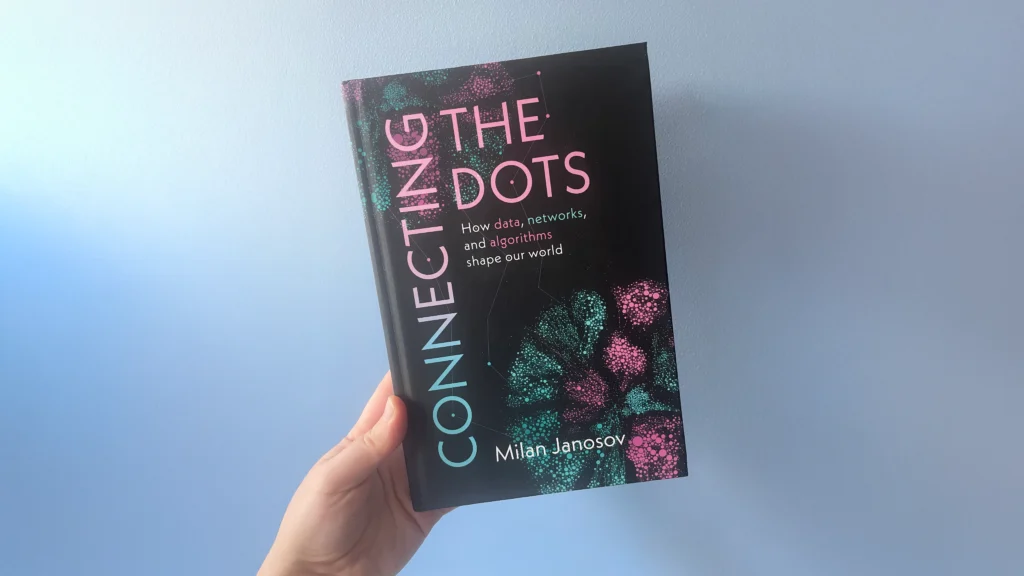
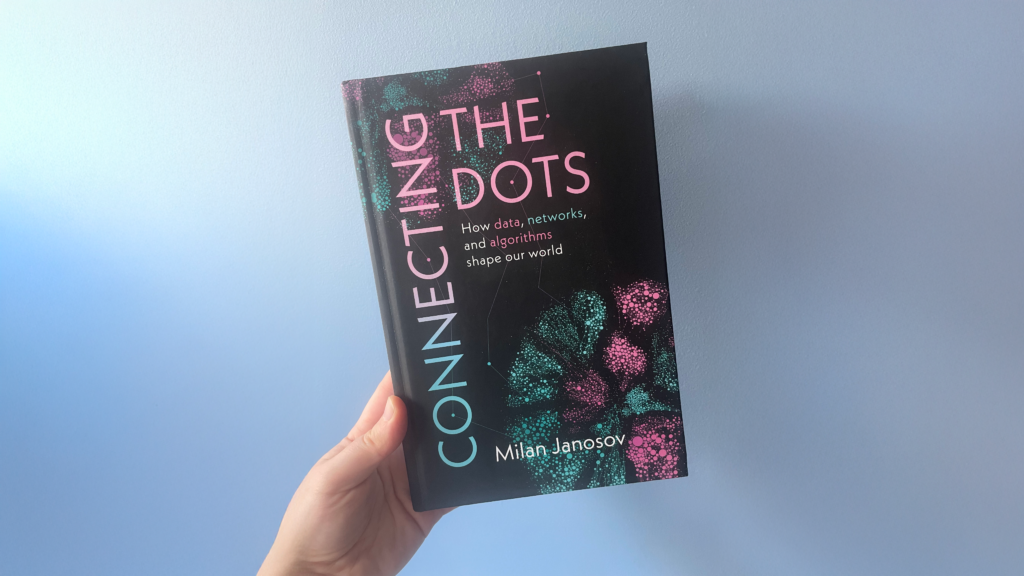
In an era defined by hyper-connectivity, where our digital footprints stretch across continents and our social interactions are increasingly mediated by algorithms, understanding the architecture of our world has never been more vital. Milan Janosov’s Connecting the Dots: How data, networks, and algorithms shape our world arrives as a much-needed guide to this invisible infrastructure. By stripping away the dense, impenetrable jargon typically associated with network science, Janosov offers a lucid, engaging, and culturally resonant exploration of how connections—between people, data points, and machines—actually function.
For the layperson, the study of network science can feel like peering into a black box. Janosov, however, serves as a patient and witty guide, assuming no prior mathematical expertise. Instead, he breathes life into abstract concepts, utilizing familiar touchpoints—from the sprawling political machinations of Game of Thrones to the volatile dynamics of the NFT art market—to illustrate the complex anatomy of the networks that govern our daily existence.
The Architecture of the Invisible: Main Facts and Premise
At its core, Connecting the Dots is a foundational text for the modern digital citizen. Janosov posits that we are living in a "networked" reality, one where traditional hierarchies are being replaced by web-like structures that dictate everything from how information spreads to how consumer goods are marketed to us.
The book is structured into three distinct, progressive pillars:
- "Our Data Selves": An exploration of individual datafication.
- "Networks Coming to Life": A breakdown of the anatomy, growth, and collapse of networks.
- "Hitting the Big Time, Network Style": A practical application of network theory to real-world problems.
Janosov’s thesis is simple yet profound: everything is a network. By understanding the nodes (the entities) and the links (the relationships) that bind them, we gain a superpower of sorts—the ability to predict outcomes, understand influence, and navigate the increasingly algorithmic environments we occupy.
A Chronology of Discovery: From Profiles to Predictions
To truly understand how we got here, Janosov leads the reader on a chronological journey through the "datafication" of the individual.
Phase 1: The Datafied Self
The journey begins with the individual online profile. Janosov meticulously deconstructs how our presence on social media and e-commerce platforms is not merely a collection of posts or purchases, but a rich, layered data set. He explores how platforms store data both statically (a static record of a purchase) and dynamically (the shifting patterns of our browsing habits). Crucially, he reveals the "invisible" data collection—how algorithms infer preferences and habits even when we remain silent, using aggregated data from millions of other users to create a shadow profile of our future behavior.
Phase 2: The Emergence of Network Dynamics
Once the individual is understood, the book expands the lens to examine how these profiles interact to form complex networks. This is where Janosov’s unique pedagogical style flourishes. By analyzing the popularity of electronic music DJs or the character arcs in pop culture phenomena, he explains the life cycle of networks. He introduces the reader to "preferential attachment"—the "rich-get-richer" phenomenon where popular nodes become exponentially more popular—and explains why some networks thrive while others implode.
Phase 3: Applied Network Theory
The final stage of the journey is the application. Janosov moves from theory to utility, demonstrating how network analysis is being used today to solve critical challenges. Whether it is predicting the path of a viral outbreak, restructuring corporate workflows to maximize productivity, or reverse-engineering the success of a viral marketing campaign, Janosov shows that these mathematical concepts have real-world stakes. The book culminates with an insightful look at Artificial Intelligence, framing it as the ultimate expression of networked data processing.
Supporting Data: Why the Methodology Matters
One of the most compelling aspects of Connecting the Dots is its "experimentation-forward" approach. Janosov does not just present findings; he invites the reader into the lab. He details the initial spark of an idea, the methodology of his data collection, and the trials and errors of his analysis.
For instance, when discussing how networks collapse, he provides the reader with the logic behind his research, explaining the variables he chose and why they matter. This transparency is crucial. It demystifies the data science process, showing that behind every "big data" insight is a human decision-maker making choices about what to measure and how to interpret the results.
Furthermore, while the book lacks printed diagrams, Janosov provides extensive digital links to his original projects. This makes the text an interactive experience—a "network of information" in its own right. The inclusion of a comprehensive, chapter-by-chapter reference list ensures that the book serves as a starting point for further inquiry rather than a closed-loop conclusion.
Implications for the Modern World: The AI Frontier
The most poignant section of the book is its concluding engagement with Artificial Intelligence. In our current climate, where AI is often treated with a mix of mysticism and fear, Janosov provides a grounding, structural perspective. By pulling back the curtain on how AI models are essentially built on massive, interconnected networks of data, he makes the technology feel less like magic and more like a tool—a powerful, complex, but ultimately understandable tool.
The implication for the reader is clear: we are not helpless subjects of these algorithms. By learning the mechanics of network theory, we are better equipped to challenge the systems that govern us, understand the bias inherent in data collection, and navigate the digital landscape with a sense of agency.
Professional Assessment: A New Standard for Accessible Science
In reviewing Connecting the Dots, one cannot ignore the accessibility of the prose. Network theory is notoriously dry, often confined to academic papers or dense textbooks. Janosov’s voice is light, conversational, and peppered with humor, which serves to lower the "barrier to entry." When he discusses "weighted and directional relationships," he doesn’t lose the reader in a fog of definitions; he grounds the concept in an example that makes the math intuitive.
Strengths:
- Narrative Clarity: Janosov excels at translating high-level concepts into relatable, real-world examples.
- Experimental Transparency: The book reads like a series of case studies, making the science feel active and applied.
- Cultural Relevance: Using Game of Thrones or contemporary electronic music to explain complex connectivity keeps the reader engaged.
Areas for Improvement:
- Visual Integration: While the links to digital projects are helpful, the absence of in-page diagrams can occasionally make the more complex network topologies difficult to visualize without leaving the book to check a screen.
Conclusion: A Must-Read for the Networked Age
Connecting the Dots is an essential addition to the library of anyone interested in the intersection of technology, sociology, and data science. Whether you are a student of computer science looking to understand the human element of networks, or a curious reader trying to make sense of the targeted ads following you across the web, this book provides the necessary tools to navigate our interconnected reality.
By the time the reader closes the final chapter, the "dots" are indeed connected. The world no longer appears as a chaotic, fragmented mess of digital noise, but as a structured, albeit complex, system of relationships. Milan Janosov has done a service to the general public by making the invisible visible, providing a map for an era that is becoming increasingly difficult to navigate.
Connecting the Dots is more than just a book; it is a primer for living in the 21st century. It encourages a shift in mindset: from seeing ourselves as isolated nodes to recognizing the intricate, powerful, and deeply human web of connections that define who we are and where we are going.
About the Author
Emilia Ruzicka is a data journalist, researcher, and editor with an M.A. in Media, Culture, and Technology. Their work focuses on the intersection of data visualization, social infrastructure, and the stories hidden within numbers. For more, visit emiliaruzicka.com.
 Lina Irawan
  Nila Kartika Wati