
 By Siti Muinah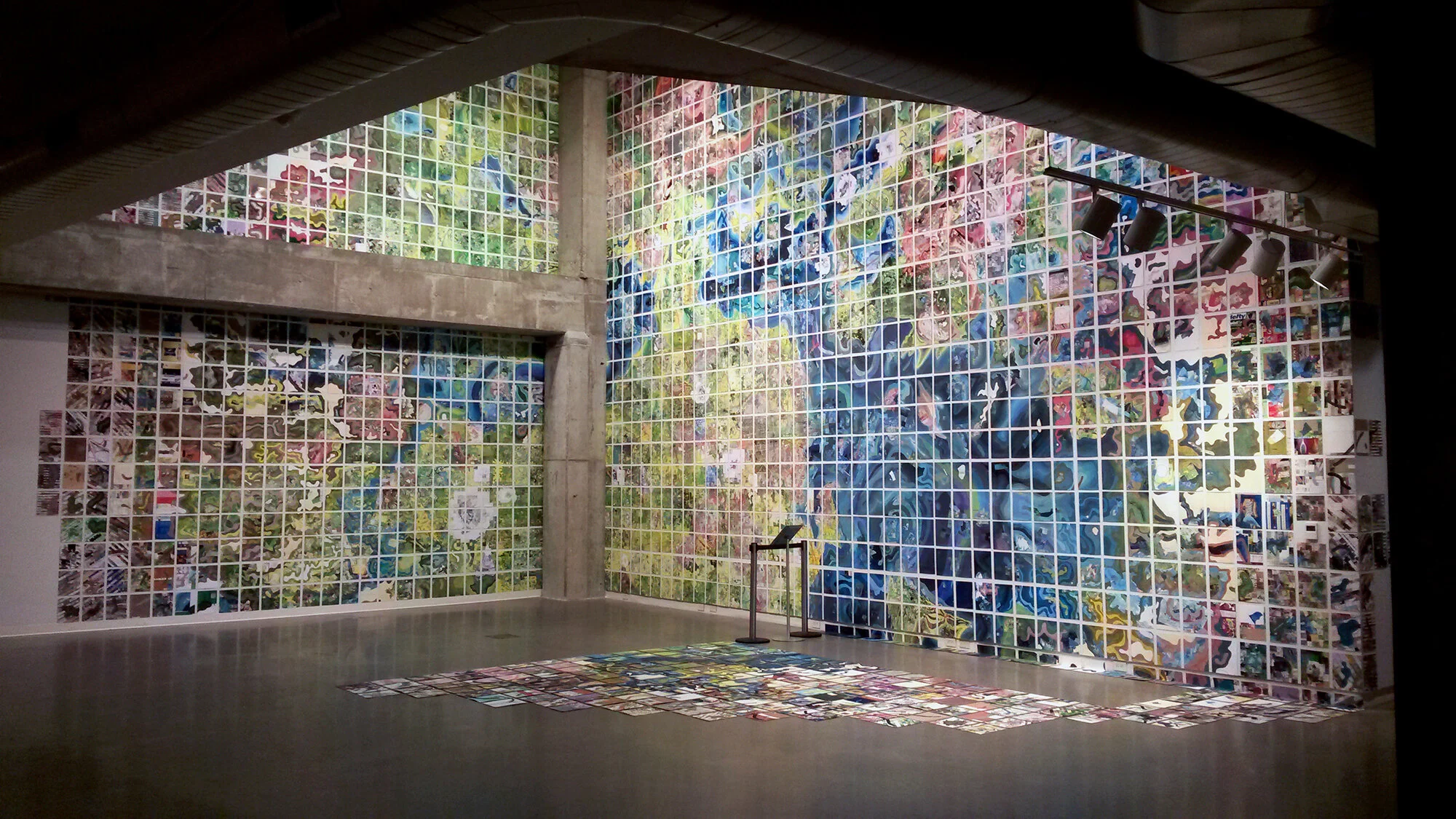
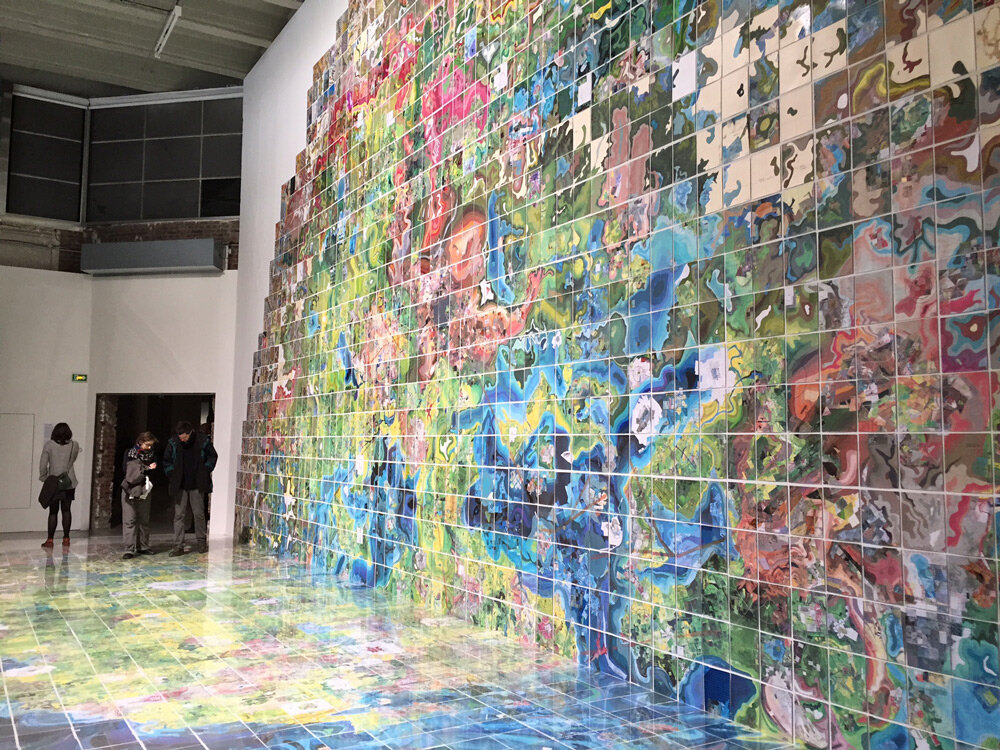
In the quiet town of Cold Spring, New York, resides a project that defies the traditional boundaries of both art and geography. For over six decades, Jerry Gretzinger has been meticulously crafting a "virtual world"—a sprawling, ever-evolving cartographic masterpiece known simply as Jerry’s Map. What began as a mundane doodle to pass the time in 1963 has transformed into a colossal, multi-layered, and rule-bound artistic endeavor comprised of over 4,000 individual eight-by-ten-inch panels.
Jerry’s Map is not merely a drawing; it is a living system. It functions as a two-dimensional world that grows, decays, floods, and renews itself according to an elaborate, self-imposed set of laws. By utilizing a custom deck of playing cards to dictate the creative process, Gretzinger has effectively removed himself from the role of the sole "author," positioning himself instead as an observer and executor of a process that feels increasingly autonomous.
The Genesis: From Attic Dust to Global Interest
The story of the map is one of serendipity and persistence. In the summer of 1963, while working a job he found tedious, Gretzinger began sketching an imaginary city. He continued to expand this vision for two decades, documenting populations, football scores, and transportation infrastructure in a logbook. By 1983, the map had become a significant, albeit static, part of his life. He set it aside, and for twenty years, the thousands of panels lay dormant in his attic, gathering dust and potential.

The turning point occurred when his son, Henry, discovered the collection. Curious about the strange, intricate artwork, Henry brought the panels down, sparking a dormant fire in his father. Jerry dusted off the project, and in doing so, he did not just resume where he left off—he reinvented the process. This marked the transition from a hobbyist’s doodle to a systematic, high-concept art installation that has since captured the imagination of thousands, including a dedicated community on the subreddit r/jerrymapping.
The Mechanics of Creation: The Card Deck
The most distinctive feature of Jerry’s Map is the mechanism that drives its evolution: a custom deck of approximately 100 cards. In the early days, Gretzinger simply used a standard deck of playing cards as a random number generator to determine which part of the map to work on next. As the project grew, however, the need for complexity led to the creation of a bespoke deck.
Each cycle of work begins with the drawing of a card. This card provides specific instructions—dictating what color to use, what shape to cut, or how many "work units" (the number of one-inch squares to be covered) must be completed. A single session might take a few minutes, or it might span several days.
Gretzinger describes this process with a sense of wonder, noting that he often feels like an observer watching the map’s future unfold. "There’s a message in those cards," he has remarked. "There’s no big man with a beard who has ordered the cards, but I’m very interested in seeing what comes out of it. It’s the map’s future predictor, and as it is always changing, it’s alive."
A Chronology of Evolution
The transformation of the map over the last 60 years can be divided into two distinct eras. The first era (1963–1983) was defined by manual, linear progress. Panels were stacked chronologically, and work was done on the top panel before moving it to the bottom of the stack. During this time, the map was rooted in a sense of physical realism; colors represented topography, and the work followed standard cartographic logic.
After a twenty-year hiatus, the second era (2003–present) introduced the "System." The map became more abstract. The use of a complex spreadsheet now tracks administrative data, population shifts, and inventory for exhibition sets, while the physical execution now relies on a sophisticated layering process.

The Layers of Existence
The map is not a static surface but a series of successive iterations. Every panel goes through a life cycle:
- The Base Layer: A blank page is covered in bands of color, which are then replaced by one-inch squares of paper collage.
- The City Squares: These are added in shades of green, red, grey, and black, each denoting increasing population densities.
- The Void: A period of destruction, where the map is covered in white, then black-and-white collage, eventually returning to shades of city-grey and black.
- The Red Dimension and Black Ness: These layers involve bold, abstract shapes that supercede previous work.
- The Ziggurat Phase, The Flood, and Re-Birth: These represent the final, more conceptual stages of the cycle, after which the process resets with new paint bands.
Supporting Data and Systematic Rigor
The rigor applied to the map is akin to that of a bureaucrat or a scientist. In the current era, the map is organized by a precise coordinate system originating from the center of the circular assembly. Unlike the first era, where the map was a single master set, the current process allows for "guest artists" to contribute panels, which are then integrated into the stack of blanks.
The use of color-coded card instructions—black cards dictating clockwise movement and red cards dictating counter-clockwise movement—ensures that the map grows in all directions simultaneously, maintaining its approximate circular shape. The evolution is captured in time-lapse videos, showing the frantic, organic growth of city blocks over decades.
Implications: The Map as a Living Organism
The implications of Jerry’s Map are profound for the study of generative art. By introducing a "random" factor that dictates human labor, Gretzinger has created a feedback loop between the creator and the creation. He is no longer the sole author; he is a participant in a dialogue with his own ruleset.
The project raises questions about the nature of time and memory. Because each layer replaces the one before it, the "history" of the map is literally buried beneath the current state. Yet, the map persists, and the sheer volume of work—thousands of panels—stands as a testament to the idea that a project, when treated with sufficient dedication, can transcend the life of the individual who started it.
Official Perspectives and Artistic Legacy
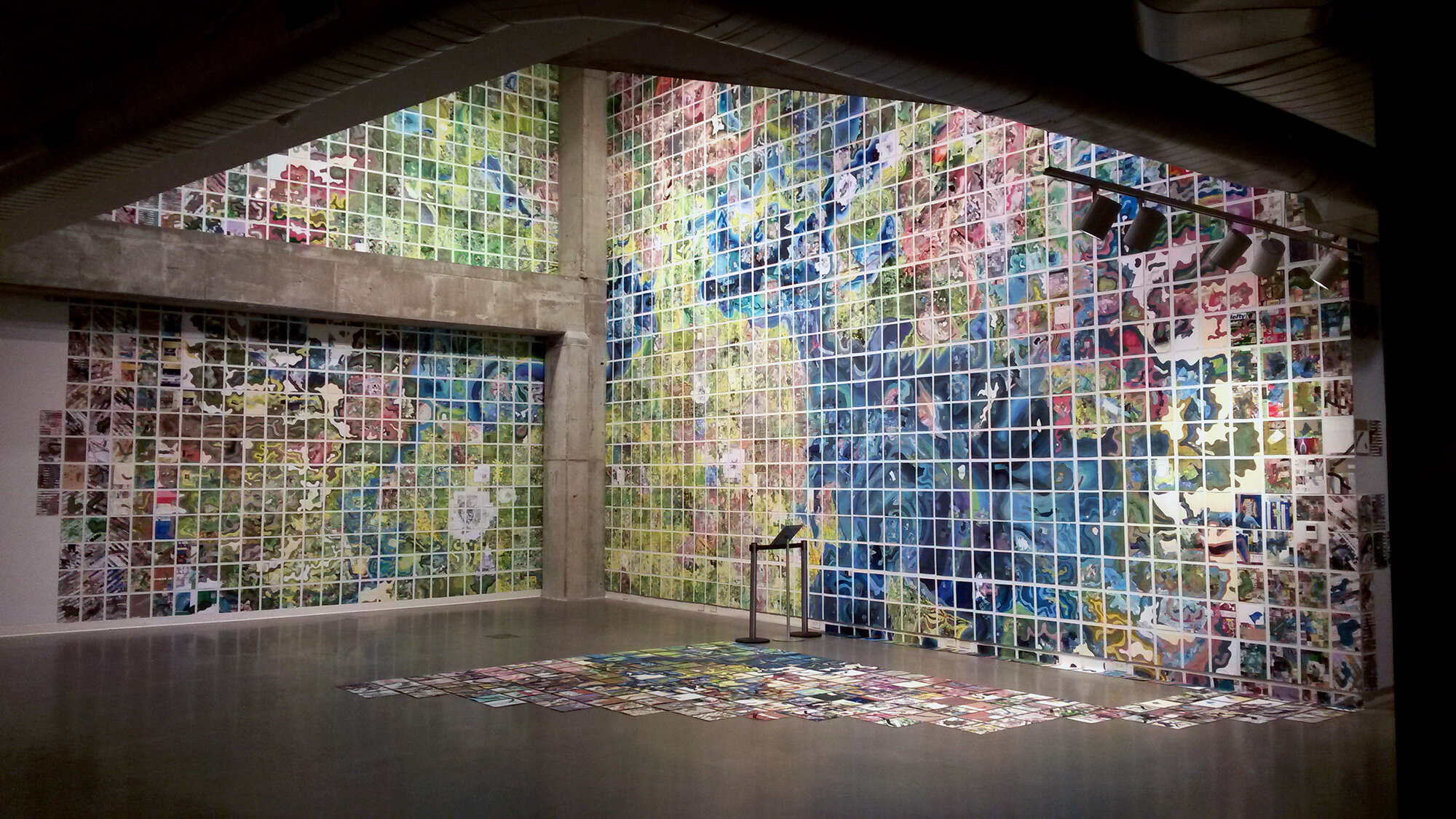
Though Jerry Gretzinger has ceased active blogging, his work remains a focal point for those interested in obsessive, long-form creative projects. The map has been exhibited in museums across the country, often displaying the original base map alongside its newer, more abstract iterations.

Critics and scholars have noted that Jerry’s Map serves as an unofficial archive of the artist’s life. While the football scores and specific logistical data of the 1960s have been replaced by the more abstract, system-driven art of the 2020s, the underlying DNA of the project remains the same: a desire to map the unknown, to find order in chaos, and to embrace the role of the observer in one’s own life.
Conclusion
Jerry’s Map is a monumental achievement in human patience and artistic inquiry. It serves as a reminder that the creative process is not always about the finished product, but about the rules we set for ourselves and our willingness to follow where those rules lead. Whether the map ever truly reaches a "final" state is irrelevant; for Jerry Gretzinger, the map is not a destination. It is a world that continues to breathe, shift, and expand, one card draw at a time.
For those wishing to explore this vast, imaginary topography, the records remain open. The archived blog posts on Blogger provide a window into the evolution of the system, and the active community on r/jerrymapping continues to analyze, admire, and replicate the unique logic that governs this extraordinary, circular universe. As the map moves toward its next phase of "Re-Birth," it continues to exist as a testament to the power of the human imagination to construct reality from the simplest of materials.
 rifanmuazin
  Layla Zulfa
  Evan Lee Salim