
 By Dwi Wanna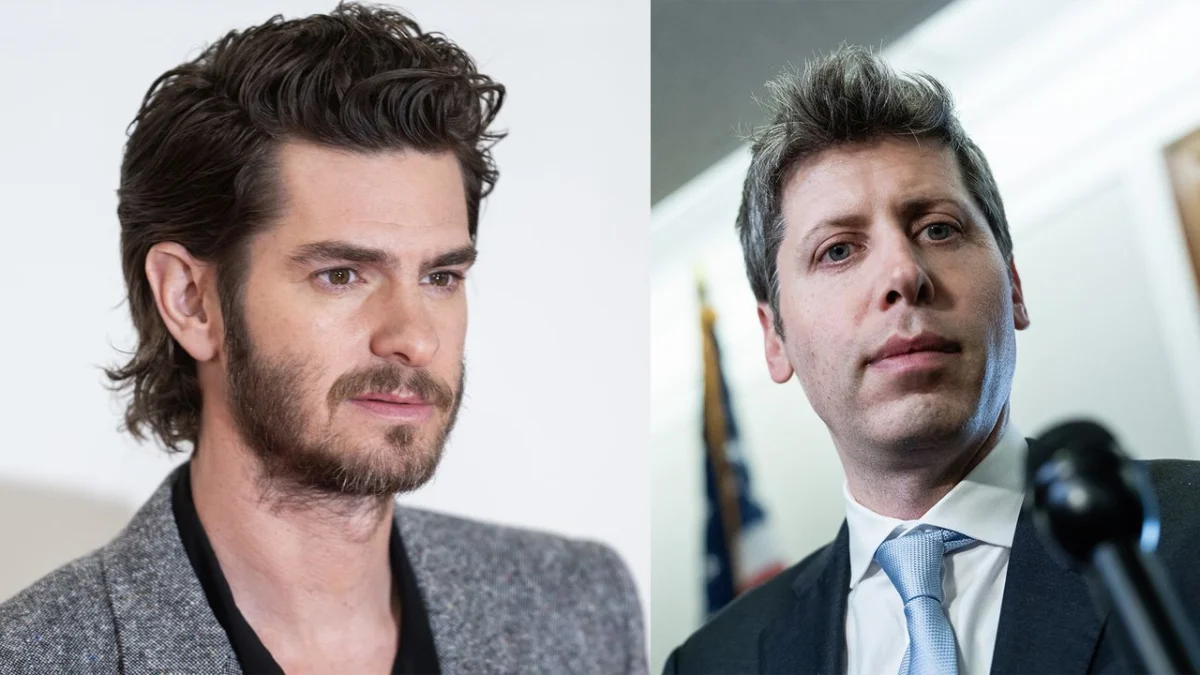
London, UK – [Current Date] – In a development that has sent ripples through both Hollywood and the burgeoning artificial intelligence sector, Amazon has unexpectedly shelved "Artificial," a highly anticipated film chronicling the tumultuous events surrounding OpenAI CEO Sam Altman. The movie, helmed by acclaimed director Luca Guadagnino ("Call Me By Your Name," "Challengers") and starring Andrew Garfield as the controversial tech figure, was reportedly nearing completion and slated for a 2025 release. Amazon’s decision has ignited a fervent debate, with many speculating that the move is directly linked to the tech giant’s recently forged multi-billion-dollar strategic partnership with OpenAI.
The abrupt withdrawal of "Artificial" from Amazon’s distribution slate comes as a surprise, given the pedigree of its creators and the timely relevance of its subject matter. The film was set to delve into the dramatic firing and subsequent rehiring of Sam Altman from OpenAI in November 2023, a saga that captivated global attention and underscored the high stakes of the AI revolution. While Amazon has publicly cited a desire for the film to find a "new home," the timing of its announcement, juxtaposed with its deepening financial ties to OpenAI, has fueled a wave of conspiracy theories across social media and within industry circles.
The High-Profile Production: A Cinematic Look at AI’s Front Lines
The news of "Artificial" first emerged with considerable excitement, largely due to the formidable talent attached to the project. Luca Guadagnino, renowned for his visually distinctive and emotionally complex narratives, seemed an intriguing choice to navigate the intricate world of Silicon Valley power dynamics and AI ethics. His previous works, characterized by their intimate character studies and often sun-drenched European backdrops, promised a unique lens through which to view the often opaque world of tech leadership. The prospect of Guadagnino applying his nuanced storytelling to a contemporary corporate thriller about one of the most influential figures in modern technology was, for many, a compelling proposition.
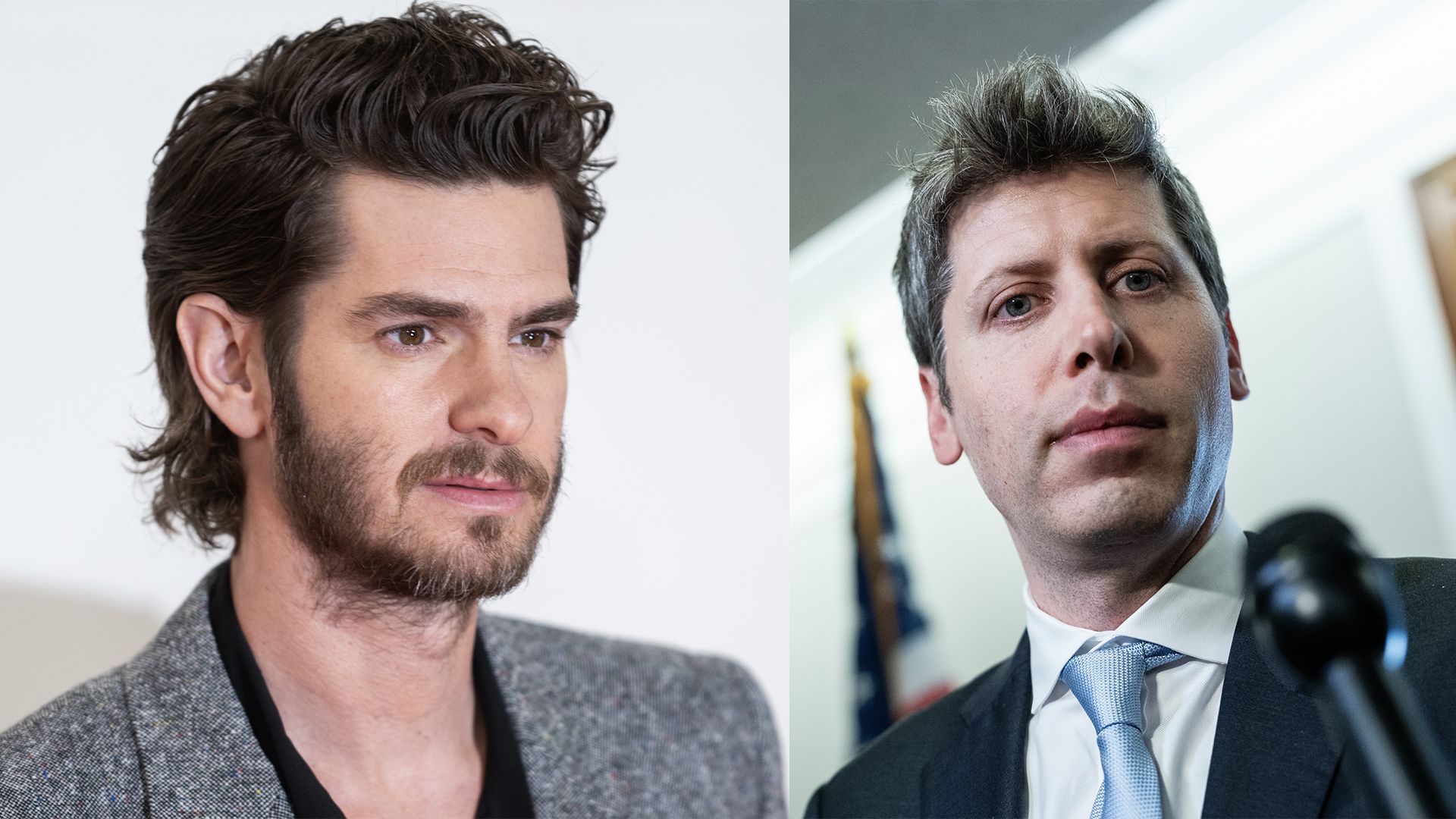
Further amplifying the film’s profile was the casting of Andrew Garfield as Sam Altman. Garfield, an actor celebrated for his intense performances and ability to embody complex psychological states, from his Oscar-nominated turn in "Hacksaw Ridge" to his portrayal of Jonathan Larson in "tick, tick…BOOM!", brought considerable gravitas to the role. Initial images, allegedly from the set and circulated online, hinted at a transformative performance, capturing the distinctive, often understated, demeanor of the OpenAI CEO. The combination of Guadagnino’s directorial vision and Garfield’s acting prowess suggested a film poised for critical acclaim and significant cultural impact. It was not merely a biopic but a potential examination of the human ambition, ethical quandaries, and corporate machinations at the heart of the artificial intelligence boom.
Chronology of a Corporate Conundrum
To understand the current predicament of "Artificial," it’s crucial to trace the interwoven timelines of the film’s production, Sam Altman’s dramatic corporate saga, and Amazon’s evolving relationship with OpenAI.
The Genesis of "Artificial"
Details surrounding the film’s initial development were somewhat under wraps, but reports indicated that production had progressed significantly, with sources suggesting it was "almost finished." The rapid turnaround time for such a high-profile project underscored the urgency and topicality of the subject matter. The narrative was designed to focus specifically on the November 2023 events at OpenAI, aiming to capture the immediate aftermath and the underlying tensions that led to Altman’s brief ouster. This timely approach would have positioned "Artificial" as one of the first major cinematic explorations of the internal workings and power struggles within a leading AI firm, offering audiences a rare glimpse into the personalities driving a technology set to redefine human existence.
The November 2023 OpenAI Saga: A Detailed Recall
The dramatic events of November 2023 at OpenAI form the core subject matter of "Artificial." On Friday, November 17, 2023, OpenAI’s board of directors, comprising Chief Scientist Ilya Sutskever, independent directors Adam D’Angelo, Tasha McCauley, and Helen Toner, announced that Sam Altman was being removed as CEO. Their public statement cited a lack of candor in his communications with the board as the primary reason, stating they no longer had confidence in his ability to lead the company. This abrupt decision sent shockwaves through Silicon Valley and the global tech community.
The fallout was immediate and intense. Greg Brockman, OpenAI’s co-founder and president, resigned in protest. Within days, hundreds of OpenAI employees, reportedly over 700 of the company’s 770-strong workforce, signed a letter threatening to resign en masse and join Altman at Microsoft if the board did not reinstate him and resign themselves. This unprecedented display of employee solidarity highlighted Altman’s indispensable role and the deep divisions within the company’s leadership.
Microsoft, a major investor in OpenAI, quickly moved to offer Altman and Brockman leadership roles in a new advanced AI research team, signaling its intent to absorb key talent if the crisis at OpenAI persisted. Satya Nadella, Microsoft’s CEO, played a pivotal role behind the scenes, mediating discussions and expressing confidence in Altman. The pressure mounted relentlessly on the OpenAI board, which faced a potential exodus of its workforce, a collapse of investor confidence, and severe reputational damage.
After a weekend of intense negotiations and public speculation, the crisis reached a resolution. On November 21, 2023, OpenAI announced that Sam Altman would return as CEO, with a significantly restructured board. The new interim board included Bret Taylor (Chair), Larry Summers, and Adam D’Angelo. Ilya Sutskever, who had initially supported Altman’s removal, later expressed regret and signed the employee letter, though he ultimately did not rejoin the new board. This entire episode was a real-life corporate thriller, ripe for cinematic adaptation, exploring themes of power, governance, employee loyalty, and the rapid, often chaotic, evolution of groundbreaking technology.
The Amazon-OpenAI Strategic Alliance: A $50 Billion Question Mark
Earlier this year, Amazon and OpenAI announced a "strategic partnership" designed to "bring OpenAI’s most advanced enterprise platform to AWS customers." This collaboration signifies a major alignment between two tech giants, with OpenAI leveraging Amazon Web Services (AWS) for its intensive AI workloads, and AWS customers gaining access to OpenAI’s cutting-edge models.
While the exact financial terms of the partnership beyond the AWS credit arrangements are often proprietary, the original article explicitly stated that "Amazon is investing $50 billion in OpenAI." This figure, if accurate, represents an astonishing commitment, far exceeding previously publicised investments and potentially dwarfing Amazon’s investments in other AI ventures like Anthropic. While the official OpenAI announcement focused on the operational and customer benefits of the AWS partnership, the reported scale of Amazon’s financial stake, as cited in the initial news, underscores the immense strategic importance of this relationship. This colossal financial and operational entanglement between Amazon and OpenAI now serves as the primary lens through which the decision to drop "Artificial" is being viewed.
Amazon’s Decision to Drop "Artificial"
The announcement that Amazon, through its distribution arm, was dropping "Artificial" emerged recently, just as the film was reportedly nearing completion. This late-stage decision is highly unusual and costly in the film industry, often indicating significant underlying issues beyond typical creative differences or market viability concerns. The stated rationale from an Amazon spokesperson, as reported by Variety, was diplomatic: "We have the utmost respect and admiration for Luca Guadagnino as an award-winning filmmaker – not to mention a longstanding relationship that we hope to continue. We believe that ‘Artificial’ will be better served if it were released by a different studio and are working closely with the filmmaking team to find the film a new home." While outwardly supportive, this statement offers little concrete explanation for pulling a film with such high artistic credentials and topical relevance, particularly one that was so far along in production.
Supporting Data: The Allegations and the Business Calculus
The swift emergence of "conspiracy theories" following Amazon’s decision is not without basis, drawing on industry insights and the broader context of corporate influence in entertainment.
The Film’s Content: An Unflattering Portrait?
Crucial to the prevailing theories is the alleged content of "Artificial." According to a report by Page Six, insiders who had seen the script described it as painting "a not-so-sympathetic portrait of Altman." This detail is perhaps the most significant piece of supporting evidence for those speculating about corporate interference. If the film indeed offered a critical or unflattering portrayal of Sam Altman – a figure now inextricably linked to Amazon’s strategic interests – it could be perceived as detrimental to the burgeoning partnership.
In the cutthroat world of big tech, maintaining positive relationships with key partners and influential figures is paramount. A film distributed by Amazon that depicted the CEO of a $50 billion investment partner (as reported) in a negative light could easily be seen as undermining trust, creating awkward public relations challenges, and potentially jeopardizing future collaborations. The notion that Amazon would prioritize its commercial alliance over the artistic independence of a film, especially one nearing completion, speaks volumes about the perceived sensitivity of Altman’s public image and the value of the OpenAI partnership.
The Precedent: Amazon’s Melania Trump Documentary
The "Artificial" controversy is not an isolated incident. The original article also draws a parallel to another instance where Amazon’s content decisions appeared to be influenced by external, non-artistic factors. It references "similar theories about Amazon’s Melania documentary existing solely as a $35M gift from Amazon to Trump." While the specifics of this alleged documentary and its purpose remain largely speculative, the anecdote highlights a recurring suspicion: that Amazon’s vast business interests, extending far beyond entertainment, can directly impact which projects are greenlit, distributed, or even quietly shelved.
These instances raise uncomfortable questions about the integrity of content creation within mega-corporations that operate in diverse sectors. When a company like Amazon, with its e-commerce, cloud computing, logistics, and media divisions, becomes deeply entangled in multiple industries, conflicts of interest can arise. The entertainment arm, Amazon MGM Studios, might find itself in a delicate position, potentially forced to weigh artistic merit against the commercial and political implications for its parent company’s broader empire.
Official Responses and the Unheard Voices
Amazon’s official statement remains the only public comment from a primary stakeholder directly involved in the decision. The carefully worded press release emphasizes respect for Guadagnino and the desire to find a new home for the film, sidestepping any direct acknowledgment of the underlying reasons for the sudden withdrawal. This standard corporate response, while polite, does little to quell the swirling rumors, instead often intensifying speculation due to its lack of transparency.
Notably absent from the public discourse are statements from Luca Guadagnino, Andrew Garfield, or representatives for Sam Altman or OpenAI. Filmmakers and actors often express disappointment when projects are dropped, especially at such an advanced stage. Their silence could be interpreted in various ways: perhaps they are bound by non-disclosure agreements, perhaps they are actively working behind the scenes to secure a new distributor, or perhaps they too are navigating the complex web of corporate power that has ensnared their artistic endeavor. The lack of direct comment from the creative team, in particular, adds another layer of intrigue to an already enigmatic situation, leaving the public to rely on secondhand reports and informed conjecture.
Implications: Art, Commerce, and the Expanding Shadow of Big Tech
The shelving of "Artificial" carries significant implications for the film industry, corporate ethics, and the delicate balance between artistic freedom and commercial interests.
The Future of "Artificial": A Difficult Search for a New Home
For the filmmaking team, the immediate future involves a challenging search for a new distributor. While Guadagnino’s reputation and Garfield’s star power are undeniable assets, finding a studio willing to pick up a film that has already been dropped by a major player like Amazon presents hurdles. Potential distributors will undoubtedly scrutinize the reasons behind Amazon’s decision, and the whispers of a "not-so-sympathetic portrait" of Sam Altman could deter others who fear similar corporate blowback or reputational risk. Furthermore, the financial outlay already made on a largely completed film would need to be considered, making it a complex acquisition. Despite these challenges, the film’s topicality and the prestige of its creators might still attract an independent distributor or another streaming service looking for a high-impact project, particularly one that has already generated significant buzz (and controversy).
Corporate Ethics and Artistic Freedom: A Chilling Effect?
The most profound implication of this incident lies in the broader debate about corporate influence on artistic expression. If Amazon’s decision was indeed motivated by its strategic partnership with OpenAI, it sets a troubling precedent. It suggests that creative works, even those nearing completion, can be censored or suppressed if they threaten the financial or political interests of the parent corporation. This raises critical questions about the independence of studio divisions operating under vast conglomerates.
Filmmakers and screenwriters might increasingly feel a "chilling effect," where they self-censor or avoid tackling sensitive subjects involving powerful contemporary figures, particularly those connected to the conglomerates that might distribute their work. This erosion of artistic freedom could lead to a homogenizing of narratives, where critical examinations of power, wealth, and influence are sidelined in favor of safer, more palatable content that doesn’t ruffle corporate feathers. In an era where tech giants wield unprecedented power and influence, the ability to produce independent and critical artistic commentary becomes more vital than ever.
The Expanding Shadow of Big Tech
The "Artificial" saga serves as a stark reminder of the ever-growing intersection between big tech, finance, and the entertainment industry. Companies like Amazon, Google (YouTube), Apple (Apple TV+), and Meta are not just technology providers; they are increasingly becoming major players in content creation and distribution. This expansion creates an inherent tension. While these companies bring vast resources and reach to the creative landscape, their primary business objectives often lie outside of pure artistic pursuit.
When a company’s cloud computing division (AWS) forms a critical partnership with an AI leader (OpenAI), and its entertainment division (Amazon MGM Studios) simultaneously produces a film about that AI leader, the potential for conflicts of interest becomes undeniable. The incident underscores the challenge of maintaining journalistic integrity and artistic independence when the gatekeepers of distribution are also deeply invested in the very subjects being portrayed. It forces a re-evaluation of how biopics, especially those featuring contemporary figures still active in powerful positions, can truly offer an unvarnished perspective in an environment where corporate interests are paramount.
Conclusion: The Unseen Battle for Narrative Control
The abrupt cancellation of Luca Guadagnino’s "Artificial" by Amazon is more than just a footnote in Hollywood’s production woes; it is a potent symbol of the complex and often fraught relationship between art, commerce, and power in the 21st century. While Amazon maintains its decision is for the film’s best interest, the widespread suspicion points to a deeper calculus – one where a multi-billion-dollar strategic partnership with OpenAI took precedence over the completion and distribution of a prestige film.
As "Artificial" now seeks a new home, its journey will be watched closely, not just by film enthusiasts, but by those concerned about the integrity of creative expression in an age dominated by colossal corporate entities. The questions raised by this incident – about censorship, corporate influence, and the very possibility of critical artistic commentary on powerful contemporary figures – will resonate far beyond the silver screen, echoing in the ongoing dialogue about who controls the narratives that shape our understanding of the world. The unseen script of corporate maneuvering may, in this instance, prove even more compelling than the one Guadagnino and Garfield brought to life.
 Evan Lee Salim
  Nana
Nana  Ammar Sabilarrohman