
 By rifanmuazin
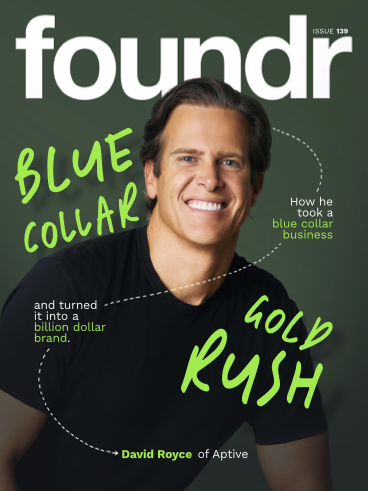
In the high-stakes world of entrepreneurship, success is often mythologized as a pursuit of the latest tech trends, AI breakthroughs, or disruptive SaaS platforms. However, David Royce, the founder and chairman of Aptive Environmental, has quietly rewritten the playbook by thriving where his peers wouldn’t dare to look.
Royce, who built Aptive into the third-largest residential pest control service in North America, operates on a simple but radical premise: true wealth isn’t found in the industry you choose, but in your willingness to perform the work others deem beneath them. His journey from a student who doubted his own intelligence to a titan of industry offers a masterclass in grit, cash flow management, and the power of human-centric leadership.
The Formative Years: From Academic Doubt to Sales Mastery
The narrative of David Royce’s success begins in an unlikely place: a sixth-grade classroom. As a child, Royce struggled with undiagnosed ADHD, a condition that left him feeling perpetually behind his peers. He wasn’t failing because he lacked ability; he was failing because he lacked engagement.
"I struggled in school because I couldn’t focus unless I cared deeply," Royce recalls. "When you’re a kid, you don’t say, ‘I might have undiagnosed ADHD.’ You say, ‘I guess I’m not smart.’"

The trajectory of his life shifted when a teacher named Mrs. Luft saw past his behavioral struggles and recognized his potential. That validation served as the catalyst for a work ethic that would define his professional life. Years later, when he discovered his ADHD diagnosis as an adult, he reframed it not as a disability, but as a "superpower"—one that allowed him to hyper-focus on the high-stakes, high-energy environment of direct sales.
Chronology of an Empire
Royce’s entry into pest control was purely accidental, sparked by a friend’s success stories. However, his initial foray into the industry was anything but triumphant.
The Trial by Fire (The Early Days)
During his first college summer, Royce attempted door-to-door sales in Sacramento. For his first five days, he sold nothing. While his peers were closing deals, he was effectively doing "free cardio." Rather than quitting, Royce spent his weekends studying sales psychology, consuming half a dozen books, and scheduling 90 minutes of daily practice. By the end of the summer, he was the top sales rookie in a company of 200, proving his mantra: Persistence is genius in disguise.
The Pivot from Investment Banking
In his final year of college, with a finance degree in hand, Royce was set on a path toward investment banking. His mentor, who had just sold his own pest control startup for $10 million, challenged him: "Why would you go work 80 to 100-hour weeks for someone else when you could start your own company?"
Despite his initial hesitation—fearing that pest control lacked the prestige of a corporate career—Royce chose the opportunity over the image. He used $300,000 in savings to launch his first venture, adopting the same "unsexy" business model that had served his mentor.
The Scaling Phase and the Cash Flow Crisis
In his first year in Los Angeles, the company grew too fast. Royce’s team signed up 7,500 new customers, nearly double his projection. Because the business model required paying commissions before the recurring revenue arrived, the company nearly went bankrupt. This "timing issue" became a defining lesson: "Revenues are vanity. Profits are sanity. But cash flow is reality."
This lesson allowed him to successfully launch and exit three companies to the same strategic buyer, ultimately building Aptive into a $500 million-plus revenue machine.
Supporting Data: Why "Boring" Businesses Win
The data supports Royce’s contrarian approach. According to The Wall Street Journal, roughly 43% of the top 0.1% of earners in the United States—those making $2.3 million or more annually—operate in "unsexy" blue-collar industries.

These industries, which range from pest control to waste management, offer distinct advantages:
- Essential Demand: Recessions may impact luxury goods, but as Royce notes, "bugs don’t read The Wall Street Journal."
- High Barriers to Automation: While AI is revolutionizing white-collar work, it cannot unclog a drain, climb a roof, or physically apply treatments to a home.
- Fragmented Markets: With over 20,000 competitors, there is ample room for a company that can leverage superior sales training, software, and operational efficiency to capture market share.
Official Strategies: Codifying Success
Royce’s ability to scale seven to ten times faster than his competitors wasn’t accidental. It was the result of a deliberate, three-pronged strategy:
- A Sales Machine: Royce treated sales as a science. He codified training, focusing on "option closes" (e.g., "Would you prefer 3:00 or 5:00?"), body language, and the "RAC" method: Resolve doubt, provide an "Ace" (a compelling fact), and Close.
- Tech-Enabled Operations: Long before it was standard, Aptive implemented custom software to gamify the sales process, allowing for nationwide tournaments that increased productivity by up to 30%.
- Ownership-Driven Culture: Rather than offering superficial perks, Royce focused on meaningful incentives. He gave away 25% of the company to employees, ensuring that when the business exited, his team members walked away with life-changing, six- or seven-figure payouts.
Implications: The Shift from Hero to Architect
Perhaps the most challenging transition for any founder is the move from "hero" to "architect." Royce experienced this firsthand when he stepped aside as CEO of Aptive, handing the reins to a protégé he had mentored for a decade.
"When you replace yourself, you realize very quickly whether you built a company or a dependency," Royce explains. He learned the hard way that leadership at scale requires the discipline to stay out of the day-to-day operations, even when mistakes occur. His failed attempt to bring in an outside CFO from the tech sector served as a harsh reminder that "resumes don’t run companies; people do."
The Legacy of Leadership
Today, Royce’s philosophy is rooted in the belief that the true metric of a leader is not the size of the valuation, but the number of leaders they have mentored. His exit from the CEO seat was not an end, but a testament to his belief that entrepreneurship is a vehicle for personal growth.
"If you don’t enjoy the climb, the summit is going to disappoint you," he says. For Royce, the "summit" was never just the money. It was the process of building a system that empowered others to pay off their mortgages, support their families, and become the next generation of business leaders.
Conclusion: Lessons for the Modern Entrepreneur
David Royce’s story is a vital reminder that the most significant opportunities are often hiding in plain sight, tucked away in the industries that others ignore. By rejecting the vanity of "impressive" career paths and embracing the grind of essential services, he built more than just a business—he built a legacy of wealth and development.
For aspiring entrepreneurs, the message is clear: Stop looking for the next "big thing" and start looking for the "hard thing." If you are willing to do the work that others won’t, and if you are disciplined enough to master the fundamentals of cash flow, culture, and training, you too can find success in the most unlikely of places.
 Dwi Wanna
  Asep Darmawan