
 By rifanmuazin
In the rapidly evolving digital economy of 2025, the barrier to entry for starting a business has never been lower, but the complexity of the "back-end" infrastructure has never been higher. For the modern entrepreneur, selecting a payment system is no longer just about accepting credit cards; it is about building a seamless, secure, and global financial ecosystem that can scale alongside your brand.
Whether you are a solopreneur launching your first Shopify store or a growing enterprise managing brick-and-mortar locations, your payment gateway acts as the heartbeat of your revenue stream. In this guide, we analyze the top six payment systems for 2025, evaluating them against the rigorous standards of security, user experience, and financial efficiency.
What Is a Payment System?
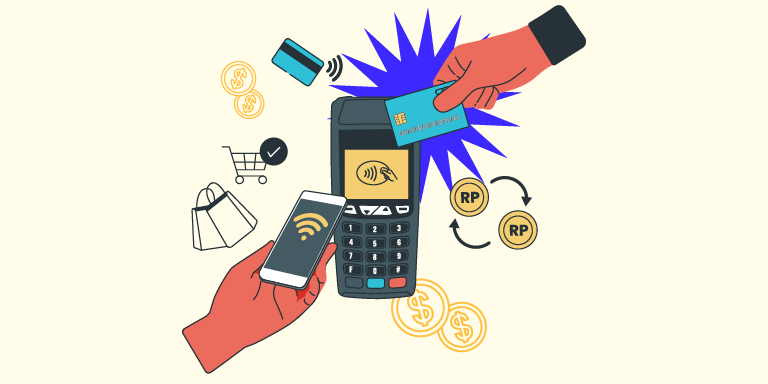
At its core, a payment system is a sophisticated digital bridge—a platform or network that facilitates the secure transfer of funds from a customer’s bank account to yours. In the digital age, this process involves an intricate dance between the customer’s browser, a payment gateway (which encrypts the data), the payment processor (which verifies the transaction), and the merchant’s bank.
It is important to distinguish between the tools of the trade. A payment system is not a bank account, nor is it a simple accounting software. It is the connective tissue that ensures that when a customer clicks "Buy Now," the transaction is authorized, funds are captured, and the risk of fraud is minimized.
Critical Factors for Selection in 2025
Before settling on a provider, founders must weigh five primary metrics. My research into the 2025 landscape suggests that these are the "make or break" variables for small businesses.
1. Payout Velocity
Cash flow is the lifeblood of any startup. Some providers hold funds for 5–7 business days, while others offer "instant payout" features for a small fee. For businesses with tight margins, the speed at which you gain access to your revenue can determine whether you can restock inventory or pay staff on time.
2. Frictionless User Experience (UX)
The "bounce rate" at checkout is the silent killer of eCommerce profits. If a customer is redirected to a third-party site or forced to go through a cumbersome, multi-step verification process, they are statistically more likely to abandon their cart.
3. Global Accessibility
Is your business confined to your local region, or are you selling to a global audience? Not all gateways support multi-currency settlements or international card networks. Choosing a system that understands cross-border taxation and currency conversion is essential for scaling.

4. Transparent Price Structures
The industry is notorious for "hidden" fees. Beyond the standard per-transaction percentage (usually around 2.9% + $0.30), you must look for monthly subscription costs, hardware fees, chargeback fees, and international processing surcharges.
5. Security and Compliance
PCI-DSS (Payment Card Industry Data Security Standard) compliance is non-negotiable. In 2025, the threat of cyber-fraud has reached an all-time high; therefore, choosing a provider with robust, AI-driven fraud detection is a mandatory insurance policy for your brand reputation.
6 Payment Systems to Consider in 2025
1. Stripe: The Developer’s Gold Standard
Stripe remains the industry leader for a reason. Its API-first approach allows for near-infinite customization, making it the top choice for businesses that want a bespoke checkout experience.
- Pros: Seamless integration; stays on-site to reduce bounce rates; world-class documentation.
- Drawback: Requires technical expertise to unlock its full potential.
- Pricing: Standard 2.9% + $0.30 per successful card charge.
2. PayPal: The Trusted Household Name
Despite the rise of newer fintech players, PayPal’s ubiquity makes it an essential "secondary" option for many merchants. Consumers trust the brand, which often leads to higher conversion rates for smaller, lesser-known websites.
- Pros: Instant brand recognition; supports a vast range of global currencies.
- Drawback: Higher transaction fees; often redirects users away from your site.
- Pricing: Competitive, but varies significantly by region and volume.
3. Authorize.net: The Secure Veteran
Owned by Visa, Authorize.net is one of the oldest and most reliable gateways. It is designed for businesses that prioritize heavy-duty security and enterprise-grade fraud protection.
- Pros: Advanced fraud detection suite; high compatibility with traditional merchant banks.
- Drawback: Can feel "dated" compared to modern, streamlined interfaces.
- Pricing: Often involves a monthly gateway fee plus transaction costs.
4. Amazon Pay: The "One-Click" Converter
Amazon Pay allows your customers to use the payment and shipping information already stored in their Amazon accounts. This removes the need for them to manually enter credit card details on your site.
- Pros: Extremely high trust factor; rapid checkout speed; excellent mobile integration.
- Drawback: Limited to users who have an active Amazon account.
- Pricing: Variable based on the size of the business and transaction volume.
5. Square: The Omni-Channel Powerhouse
If your business is split between a physical storefront and an online presence, Square is unrivaled. Their ecosystem of hardware (card readers, registers) syncs perfectly with their online dashboard.
- Pros: Best-in-class POS hardware; user-friendly virtual terminal for remote payments.
- Drawback: Can be more expensive for high-volume, online-only businesses.
- Pricing: Flat-rate fees make it highly predictable for small retailers.
6. SecurePay: The Emerging Alternative
SecurePay is a strong contender for startups that need an all-in-one solution without the bloat of major corporate providers. It is particularly popular for businesses operating outside of the Shopify ecosystem.
- Pros: Excellent API flexibility; offers a trial period to test integration.
- Drawback: Lack of name recognition can occasionally lead to customer hesitation.
- Pricing: Highly competitive, with options tailored to smaller, lower-volume startups.
Chronology of Modern Payment Evolution
To understand why we have these options, we must look at the timeline of digital payments:
- Pre-2010: Merchants relied on clunky, bank-issued "Merchant IDs" and expensive, proprietary hardware.
- 2010–2015: The "Fintech Revolution" led by Stripe and Square democratized payments, allowing anyone with a website to accept credit cards in minutes.
- 2015–2020: Mobile wallets (Apple Pay, Google Pay) became standard, forcing gateways to prioritize NFC and mobile-first UX.
- 2020–Present: The focus has shifted toward "Invisible Payments," where the transaction happens in the background, supported by AI-driven fraud mitigation.
Implications for Your Business Strategy
The selection of a payment gateway is a strategic business decision, not just a technical one. If you choose a system that does not support your target market’s preferred payment method—such as a specific digital wallet or local bank transfer protocol—you are effectively choosing to leave revenue on the table.
Furthermore, as your business scales, your needs will change. A startup might prioritize low monthly fees, while a scaling enterprise will prioritize lower per-transaction rates and sophisticated API reporting tools. Always review your payment stack annually to ensure your current rates remain competitive in the face of quarterly industry shifts.
Frequently Asked Questions (FAQ)
Q: What is the best payment processing software for a brand-new business?
A: For most startups, Stripe or Square are the top choices. They offer the lowest barrier to entry, intuitive dashboards, and the ability to grow from a side-hustle to a full-scale operation without changing providers.
Q: How do mobile and contactless payments impact my bottom line?
A: Significantly. By enabling Apple Pay or Google Pay, you reduce the time it takes for a customer to complete a purchase. Studies consistently show that faster checkout times result in lower abandonment rates and higher overall conversion.
Q: Do I need a separate merchant account?
A: Most modern Payment Service Providers (PSPs) like those listed above act as an "aggregator," meaning they provide the merchant account services as part of their package. This is a massive relief for small businesses, as it removes the need for complex negotiations with traditional banks.
Q: Are there hidden monthly fees?
A: Always read the fine print. Some providers offer "zero" monthly fees but charge a higher per-transaction rate. Others charge a monthly subscription fee (e.g., $29/mo) but offer a lower percentage fee. If you have low monthly volume, avoid monthly subscription fees; if you have high volume, look for a provider that allows you to negotiate a lower percentage rate.
Disclaimer: Pricing information is current as of early 2025. Payment processors frequently adjust their fee structures. Before committing to a long-term contract, verify the latest rates on the provider’s official website or consult with their support team to discuss your specific business volume.
 Dwi Wanna
  Asep Darmawan