
 By Suro Senen
In the rapidly evolving landscape of digital marketing, the convergence of entertainment and retail—often termed "social commerce"—has transitioned from a niche trend to a dominant economic force. Nowhere is this more apparent than in Asia, where the seamless integration of creator-led discovery and in-app purchasing has fundamentally altered consumer behavior. A groundbreaking case study from PropellerAds, detailing a successful affiliate campaign from Q1 2026, highlights the immense potential for marketers who can bridge the gap between alternative traffic sources and the TikTok Shop ecosystem.
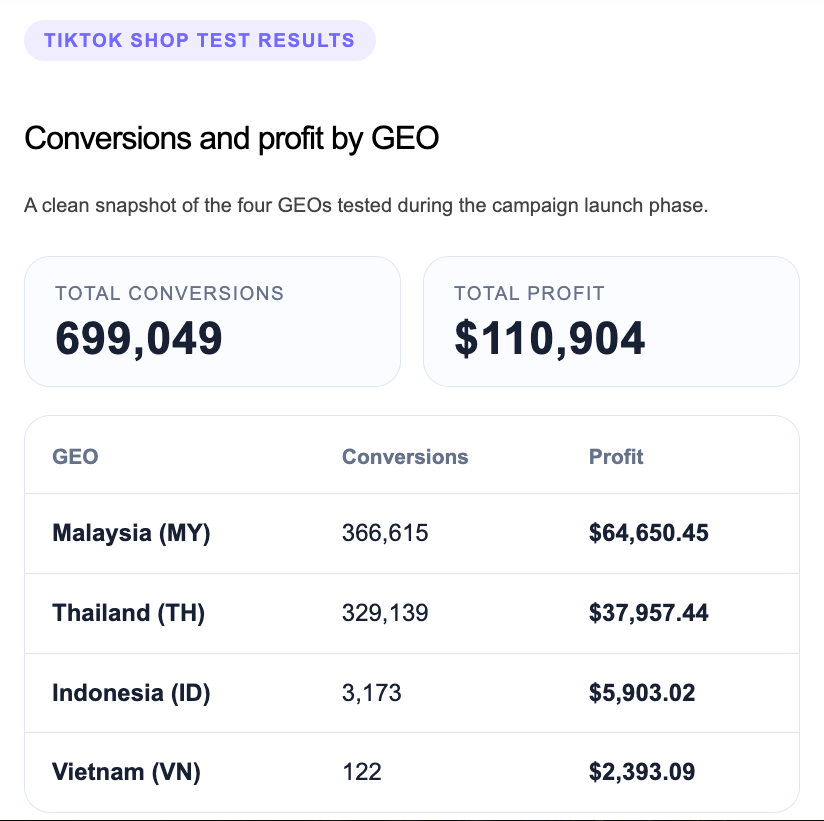
The campaign in question generated over 699,000 conversions and netted more than $110,000 in profit, offering a masterclass in modern affiliate strategy. This report explores the mechanisms behind that success and what it signals for the future of ecommerce marketing.
The Mechanics of the Campaign: A Multi-GEO Approach
The success of the 2026 campaign was not accidental; it was the result of a calculated, data-driven methodology that utilized PropellerAds’ diverse traffic inventory. The advertiser targeted four specific Asian markets—Malaysia, Thailand, Indonesia, and Vietnam—each presenting unique consumer profiles and purchasing behaviors.
Strategic Traffic and Bidding Methods
To capture a high volume of intent, the advertiser deployed a sophisticated mix of ad formats. By utilizing Popunder traffic, they were able to secure broad visibility while maintaining a cost-effective reach. To ensure budget efficiency, the strategy incorporated:
- CPA Goal: Allowing the system to optimize bids automatically toward a specific cost-per-acquisition target.
- SmartCPM: Leveraging algorithmic bidding to secure the most valuable impressions within the budget.
- High-Intent CPM: Focusing ad spend on users showing stronger signals of purchase readiness.
The Power of Broad Testing
The campaign’s most significant takeaway was its reliance on "Run-On-Network" (RON) testing during the initial phase. Rather than jumping into hyper-segmented targeting, the advertiser allowed the network to collect conversion data across a variety of devices, GEOs, and traffic sources. This broad-net approach provided the raw data necessary to identify which segments were yielding the highest ROI, effectively turning "noise" into actionable intelligence.
Chronology: From Launch to Optimization
Understanding the life cycle of this campaign is essential for affiliates looking to replicate these results.
Phase 1: The Discovery Period (Early Q1 2026)
The campaign launched as a wide-scale test. During the first two weeks, the focus was entirely on data collection. The advertiser did not aim for immediate profitability; instead, they sought to map out the conversion landscape. By testing different creative assets against varied Asian demographics, they established a baseline for what constituted a "winning" offer in the TikTok Shop environment.

Phase 2: Data Synthesis and Filtering
Once the RON campaigns gathered sufficient volume, the strategy shifted to aggressive optimization. The advertiser began pruning the underperforming traffic sources and narrowing the focus to high-performing devices and specific times of day. This phase focused on "High Intent" traffic, effectively cutting out the passive browsers to focus on users ready to complete a transaction.
Phase 3: Scaling and Profit Maximization
By mid-quarter, the advertiser had solidified their focus on Malaysia and Thailand, where the cost per acquisition (CPA) was exceptionally favorable, ranging between $0.04 and $0.20. With conversion rates hitting peaks of 10%, the campaign moved into a scaling phase, increasing daily budgets on the winning segments while maintaining the refined targeting parameters.
Supporting Data: Why Malaysia and Thailand Led the Pack
The performance disparity between the GEOs underscored the importance of localized strategy. Malaysia and Thailand emerged as the "sweet spots," largely due to the high density of TikTok Shop users who are already accustomed to purchasing via social media influencers.
Key Metrics Table
| GEO | Primary Traffic Method | Conversion Performance |
|---|---|---|
| Malaysia | Popunder / CPA Goal | High |
| Thailand | SmartCPM / Popunder | Very High |
| Indonesia | Broad / High-Intent | Moderate |
| Vietnam | Broad / High-Intent | Moderate |
The data indicates that when affiliate offers are paired with the native friction-less checkout experience of TikTok Shop, the "impulse buy" factor is amplified. In these regions, the time between seeing an ad and completing a purchase was significantly shorter than in Western markets, suggesting that the "discovery-to-purchase" funnel is optimized for mobile-first, social-savvy audiences.
The Role of Alternative Traffic Sources
One of the most compelling aspects of this case study is the reliance on Popunder and Push notification traffic—formats often dismissed as "legacy" by some digital marketers. This campaign proved that when paired with a high-conversion destination like TikTok Shop, these formats remain remarkably potent.
For many affiliates, the standard "walled gardens" of Meta or Google are becoming prohibitively expensive or restrictive due to evolving privacy regulations. Alternative traffic sources like PropellerAds offer a viable "blue ocean" strategy. By driving traffic to a TikTok Shop page, the advertiser bypassed the need to build and optimize complex landing pages, as the TikTok platform itself handled the conversion, payment processing, and trust-building components.
Implications for Future Ecommerce Affiliates
The success of this campaign offers several critical lessons for those looking to enter or scale in the social commerce space.
1. Frictionless Checkout is King
TikTok Shop’s primary advantage is the elimination of the "exit" phase. Users do not need to navigate away from the content they are consuming. For affiliates, this means their landing page optimization efforts can be shifted toward pre-selling or high-impact creative, as the platform takes over at the final stage of the funnel.
2. The Return of Broad Testing
In an era of hyper-AI-driven targeting, there is a temptation to let the algorithm decide everything from day one. This case study suggests that manual, broad testing followed by data-backed pruning is still the most reliable way to find profitable niches that algorithms might miss.
3. Geographic Arbitrage
The focus on Southeast Asia highlights a growing trend: the shift of high-growth ecommerce activity to emerging markets. Affiliates who can successfully navigate the cultural nuances and local payment preferences of these regions are finding profit margins that are increasingly difficult to secure in saturated North American or European markets.
4. The Ecosystem Approach
The most successful marketers are no longer thinking in terms of "ads" but in terms of "ecosystems." By leveraging the massive user base and inherent trust of TikTok, combined with the volume-driving capabilities of ad networks, affiliates can create a synergistic effect that lowers costs and increases trust.
Conclusion: Adapting to the New Reality
The PropellerAds case study serves as a blueprint for the future of performance marketing. As social platforms continue to integrate shopping features directly into their interfaces, the role of the affiliate is evolving from a "bridge-builder" (sending traffic to a store) to a "content-trigger" (creating the initial intent that leads to an in-app purchase).
For affiliates looking to replicate this success, the path forward involves a blend of technical discipline—using advanced bidding models like CPA Goal and SmartCPM—and a strategic mindset that prioritizes broad testing before aggressive scaling. As demonstrated, the opportunities in markets like Malaysia and Thailand are not just theoretical; they represent a significant, untapped gold mine for those willing to experiment with alternative traffic and lean into the social commerce revolution.
As we look toward the remainder of the year, the message is clear: those who master the art of the social-to-shop transition will be the ones who define the next generation of digital retail success.
 Dwi Wanna
  Lina Irawan
  Basiran