
 By Evan Lee Salim
In the hyper-competitive landscape of digital commerce, there is a dangerous trap that many entrepreneurs fall into: the "set it and forget it" mentality. Whether it is an email marketing sequence, a landing page, or a paid social advertisement, the assumption that a campaign will perform as well tomorrow as it did yesterday is the silent killer of growth.
In the world of digital marketing, stagnation is synonymous with regression. As consumer attention spans contract and inbox saturation reaches an all-time high, the intuition of a founder is no longer a reliable compass. To build a sustainable, scalable business, entrepreneurs must shift from making guesses to making data-driven decisions. This is the mandate of A/B testing—a process that has evolved from a "nice-to-have" experiment into a fundamental pillar of business intelligence.
Main Facts: The Reality of Conversion Optimization
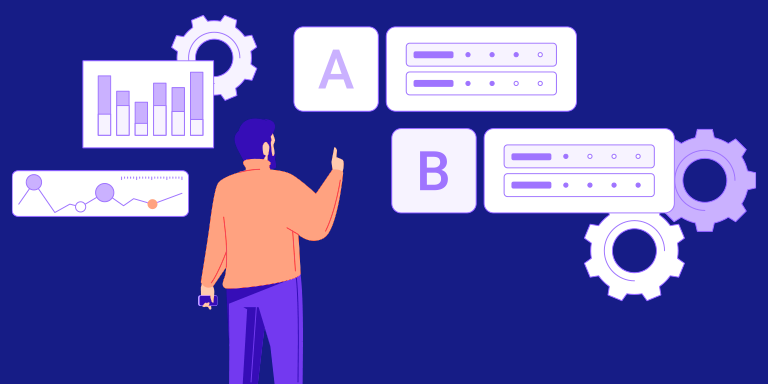
At its core, A/B testing—or split testing—is the practice of comparing two versions of a digital asset to determine which one performs better. By showing two variants to similar segments of an audience at the same time, businesses can measure the impact of specific changes on key performance indicators (KPIs) like open rates, click-through rates (CTR), and conversion rates.
The objective is simple: to remove the guesswork from marketing. When an entrepreneur changes a subject line, swaps a button color, or modifies a call-to-action (CTA), they are no longer operating on opinion. They are participating in a scientific process that reveals exactly what drives their audience to act.
The most successful brands are those that treat every communication as a data-collection opportunity. By continuously testing, these companies create a feedback loop that compounds over time. A 5% lift in an open rate here, combined with a 10% bump in click-throughs there, creates a ripple effect that can result in a 30% increase in revenue—all without spending a single additional dollar on lead acquisition.
Chronology of Optimization: From Basic Sends to Automated Intelligence
The evolution of A/B testing has followed the trajectory of digital maturity.
Phase 1: The Manual Era (Early 2000s)
In the early days of email marketing, testing was a laborious, manual process. Marketers would segment their lists by hand, send two distinct emails to small groups, wait for the results, and then manually calculate the winner before sending the "final" version to the remainder of the list.
Phase 2: The Integrated Era (2010–2020)
As platforms like Omnisend and other automation suites matured, A/B testing became baked into the software. This allowed for real-time testing, where the platform automatically handles the split and distributes the winning version to the rest of the list based on statistical significance.
Phase 3: The Predictive Era (2020–Present)
Today, we are in the era of AI-driven optimization. Advanced algorithms now suggest subject lines, predict optimal send times based on individual user behavior, and automatically segment audiences. Modern testing is no longer just about A vs. B; it is about "always-on" optimization where the system is constantly learning and iterating in the background.
Supporting Data: The Quantitative Case for Testing
The argument for A/B testing is not merely philosophical; it is grounded in overwhelming empirical evidence. According to recent market analysis, brands that prioritize systematic testing see significantly higher returns on their marketing efforts.
Recent data from Omnisend’s analysis of billions of emails illustrates this clearly:
- Open Rate Growth: Average open rates for merchants rose from 22.9% in 2022 to 25.1% in 2023, a direct result of more sophisticated segmentation and testing.
- Engagement Spikes: Automated emails, which are the primary beneficiaries of constant A/B testing, saw 52% higher open rates and a staggering 332% higher click rate compared to standard, non-automated campaigns.
- Conversion Power: Perhaps most impressively, automated flows optimized through testing achieved a 2,361% better conversion rate than generic, "batch-and-blast" email campaigns.
The data confirms that the "abandoned cart" flow or the "welcome series" is not a static asset. It is a living, breathing sales engine. When optimized, these flows move from being a simple automated convenience to being a high-conversion revenue machine, often generating thousands of dollars in incremental monthly sales for lean ecommerce teams.
Official Perspectives: The Founder’s Mindset
Industry leaders emphasize that the value of A/B testing lies not just in the immediate conversion, but in the institutional knowledge it builds. When a brand discovers that their audience responds better to "curiosity-based" subject lines than "benefit-driven" ones, that insight doesn’t just improve one email—it informs the brand’s entire content strategy.
"Testing builds intelligence," says a senior strategist at a leading ecommerce consultancy. "When you test, you aren’t just trying to win a click; you are building a proprietary library of what makes your specific customer base tick. That is a competitive advantage that money cannot buy."
The consensus among successful founders is that if you aren’t testing, you are effectively leaving money on the table. Every email sent without a test is a missed opportunity to learn more about the psychology of your customer.
The High-Impact Testing Checklist
For those looking to implement a robust testing framework, it is vital to know where the "levers of leverage" are located.
1. Subject Lines (The Gatekeeper)
The subject line is the most important element of any email. With 43% of recipients deciding to open based solely on the subject line, and nearly 70% marking an email as spam based on a poor first impression, this is the first priority. Test curiosity vs. clarity, short vs. long, and the inclusion of emojis or personalization.
2. The Call-to-Action (The Pivot Point)
The CTA is where intent becomes action. Test the copy itself ("Get My 20% Off" vs. "Claim Your Discount"), the placement, and the visual design of the button.
3. Sender Identity
Surprisingly, the "From" name can drastically impact trust. Does your audience prefer the brand name, or do they respond better to a person’s name (e.g., "Sarah from [Company]")? Testing this can lead to massive jumps in engagement.
4. Send Time and Frequency
Even the most compelling offer will fail if it arrives at 3:00 AM. Testing the day of the week and the time of day is crucial for maximizing visibility, especially across different global time zones.
Implications for Future Growth
The implication of this data is clear: the future belongs to the "agile optimizer." As privacy regulations (like iOS email privacy protections) make it harder to rely on traditional tracking, the importance of first-party data and direct engagement becomes paramount.
A/B testing is the most effective way to cultivate that first-party intelligence. It allows brands to stay in sync with their audience as their preferences shift due to economic conditions, seasonality, or competitive pressures. A strategy that worked in the Q4 holiday rush will almost certainly be ineffective during the slower summer months; constant testing provides the real-time data necessary to pivot accordingly.
A Framework for Success: The 5-Step Loop
To avoid the "guesswork" trap, founders should adopt this repeatable framework:
- Formulate a Hypothesis: Do not test for the sake of testing. Ask: "I believe changing X will result in Y because of Z."
- Isolate Variables: Only change one thing at a time. If you change the subject line and the button color simultaneously, you will never know which one drove the result.
- Choose the Right Metric: Ensure your success metric matches the goal (e.g., use "Open Rate" for subject line tests, "CTR" for CTA tests).
- Achieve Statistical Significance: Ensure you are testing with a large enough sample size—typically at least 1,000 recipients—to avoid false positives.
- Document and Scale: Create a "Testing Log." Record every result, even the failures. The knowledge gained from a failed test is often just as valuable as the knowledge gained from a win.
Conclusion: The Path Forward
A/B testing is not a task to be checked off a list; it is a philosophy of excellence. By committing to constant, intentional experimentation, founders can transform their marketing from a series of expensive guesses into a high-precision instrument for growth.
Tools like Omnisend have democratized this process, allowing even the smallest startups to run sophisticated, automated, and segmented tests that were once the sole domain of enterprise-level corporations. By automating the technical heavy lifting, these platforms empower entrepreneurs to focus on what really matters: crafting the right message for the right person at the right time.
The data is undeniable, the tools are accessible, and the competitive advantage is waiting for those who choose to start. Don’t wait for the market to dictate your success—test, learn, and build your way to the top.
 Nana Muazin
  Ammar Sabilarrohman
  Azzam Bilal Chamdy