
 By Siti Muinah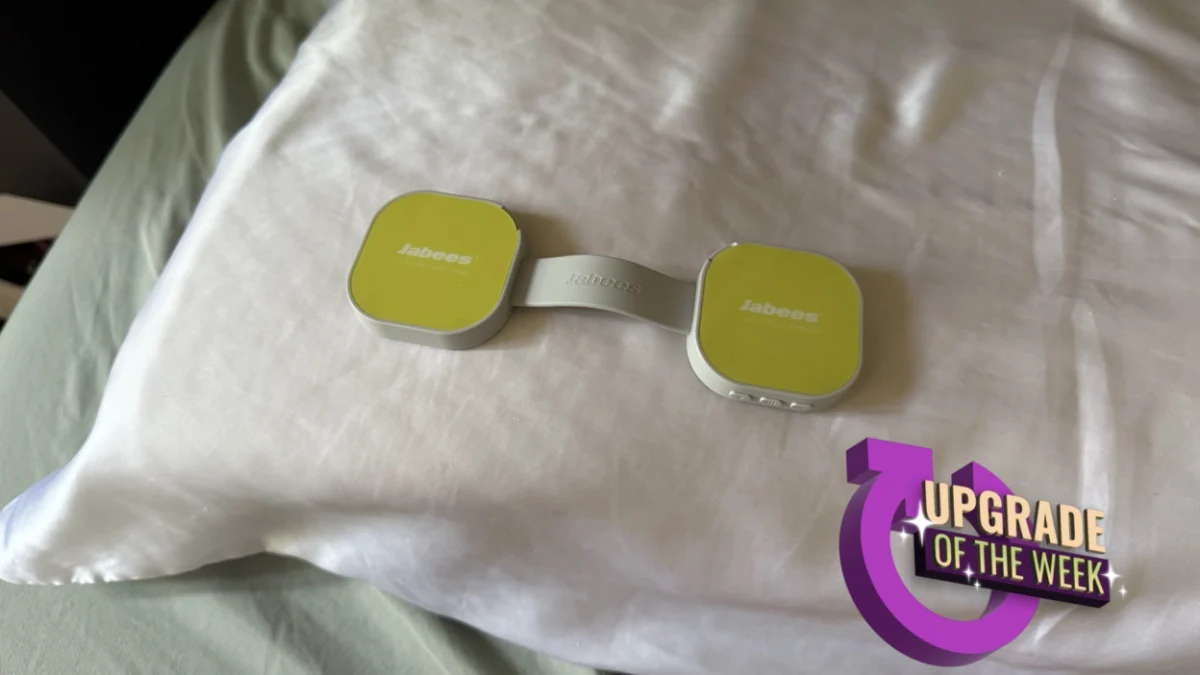
By Meredith Dietz
Senior Staff Writer, Lifehacker
Published: September 15, 2026
Main Facts
For millions of people worldwide, drifting off to sleep requires an auditory anchor. Whether it is the hypnotic, droning cadence of a long-form podcast, a specialized white-noise generator, or a curated 528 Hz frequency playlist on streaming services, nighttime audio has become a modern remedy for insomnia, anxiety, and a restless mind.
However, traditional listening methods present a persistent physical paradox, particularly for side sleepers. Standard in-ear monitors or wireless earbuds frequently dig into the ear canal or skull when the user rolls over, causing discomfort or outright pain. Conversely, playing audio aloud via a smartphone or bedside speaker is rarely an option for individuals who share a bed with a partner.
Enter the newest wave of personal sleep technology: specialized, under-pillow audio devices. Leading this category is the Jabees Peace Duo sleep speaker, a product designed to bridge the gap between private listening and physical comfort. Utilizing modified acoustic transmission methods reminiscent of bone conduction technology, these flat, pillow-tucked units project audio directly into the user’s immediate personal space. The result is a setup that eliminates the need for hardware inside or over the ears, features a dual-speaker stereo layout, and boasts a 10-hour battery life capable of lasting through an entire night’s rest.
Chronology
The journey toward comfortable, private sleep audio has evolved significantly over the past decade, driven by consumer demand for better wellness tech and sleep hygiene optimization.
- Early 2010s: The Rise of Sleep Audio and Earbud Struggles
As sleep-aid podcasts and ambient soundscapes gained mainstream popularity on platforms like Spotify and Apple Podcasts, consumers increasingly relied on wired and early wireless earbuds to listen in bed. Complaints regarding tangled cords, lost earbuds in bedsheets, and inner-ear soreness surged across consumer forums. - Mid-to-Late 2010s: The Inception of Headbands and Mask Tech
To combat the physical pain of traditional earbuds, manufacturers introduced fleece sleep headbands and Bluetooth-integrated sleep masks equipped with flat speakers. While these solutions improved side-sleeping comfort, many users found the fabric too warm for nightly wear, prone to shifting, or structurally delicate. - The 2020s: Bone Conduction and Specialized Tech Integration
As bone conduction technology matured—gaining popularity in the fitness and open-ear headphone markets—manufacturers began exploring its application for domestic and nighttime use. Engineers realized that similar vibrational audio transmission principles could be adapted for soft surfaces, giving birth to the modern under-pillow speaker. - September 2026: The Jabees Peace Duo Launch and Mainstream Adoption
Devices like the Jabees Peace Duo enter the market as refined iterations of early under-pillow experiments. Featuring improved dual-speaker left-and-right channel separation, extended battery life, and reliable wireless connectivity, these products signal a maturing market segment aimed specifically at optimizing sleep ergonomics.
Supporting Data
The commercial viability of sleep technology is underpinned by extensive wellness and consumer data highlighting a global reliance on sleep aids:

- Insomnia and Sleep Aid Prevalence: According to public health data, roughly 30% to 35% of adults experience brief symptoms of insomnia, with millions turning to ambient sound, white noise, and guided meditations to bridge the gap to REM sleep.
- The Side-Sleeper Majority: Ergonomic studies indicate that the vast majority of the human population—approximately 60% to 75%—sleep primarily on their sides. This makes traditional hard-shell earbuds fundamentally ergonomically mismatched for a large portion of nightly listeners.
- Battery Endurance Metrics: The Jabees Peace Duo and comparable modern sleep speakers are built around a minimum 10-hour continuous playback threshold. This ensures that even users who require sound throughout an entire eight-to-nine-hour sleep cycle—plus buffer time for falling asleep—do not experience mid-night power interruptions or low-battery alert tones.
- Acoustic Mitigation: Under-pillow speakers are engineered to restrict sound propagation. While standard phone speakers can measure between 60 to 75 decibels across an entire bedroom, under-pillow configurations typically confine the audible footprint to a radius of less than two feet, preventing disturbance to adjacent partners.
Official Responses and Expert Perspectives
While manufacturers heavily market these devices as ergonomic breakthroughs, audio engineers and sleep specialists offer a nuanced view of what consumers should realistically expect.
The Manufacturer’s Perspective
Makers of under-pillow sleep systems emphasize that comfort and safety are the primary design pillars. By removing physical objects from the ear canal, these devices eliminate risks associated with prolonged pressure, moisture buildup, and accidental displacement of lithium-ion batteries inside bedding.
"Our objective was to solve the fundamental friction point of nighttime listening," states product development commentary surrounding sleep-specific audio gear. "When you remove the physical burden of hardware resting against the head, you allow the user to focus entirely on relaxation."
The Sleep Specialist and Audiophile Viewpoint
Sleep researchers generally approve of devices that promote sleep hygiene without introducing safety hazards, provided the audio levels are kept low. However, audiophiles note an inevitable technological trade-off:
"You are essentially listening through a layer of foam, batting, and fabric," explains consumer tech and fitness analysts. "That slightly muffled quality isn’t always a downside—it softens harsh treble notes and makes spoken-word podcasts or white noise feel more ambient and dreamlike. However, if you are looking for high-fidelity music reproduction with crisp high-end frequencies, an under-pillow speaker is not built for that environment."
Implications
The widespread adoption of under-pillow audio technology carries several broader implications for personal wellness, consumer electronics design, and daily habit formation:

1. Shift Toward Ergonomic-First Wellness Tech
For years, fitness and sleep trackers focused strictly on measuring rest (heart rate, sleep stages, tossing and turning). The modern hardware wave focuses on actively curating the sleep environment itself. By prioritizing comfort over raw technical specs—such as trading acoustic fidelity for pillow-soft usability—manufacturers are acknowledging that wellness tech must adapt to the human body, rather than expecting the body to adapt to the hardware.
2. Reducing Nighttime Electronic Hazards
Falling asleep with expensive wireless earbuds inside a bed introduces real-world risks: crushed charging cases, lost components swallowed up by heavy duvets, and potential skin irritation from prolonged direct contact. Dedicated bedside or under-pillow hardware centralizes the listening setup to a stationary location, protecting personal electronics investments.
3. Psychological Impact of "Soft Audio"
Beyond physical comfort, the distinct acoustic profile of a pillow-filtered speaker changes how the brain processes night sounds. The natural muffling effect removes sharp audio transients, turning jarring voice tones into a soothing, atmospheric wash. For individuals dealing with racing thoughts at bedtime, this sensory cocoon serves as a reliable psychological bridge into deep rest, proving that sometimes, technological limitation can be intentionally harnessed as a feature rather than a bug.
The Bottom Line
The evolution of sleep audio highlights a simple truth: technology works best when it gets out of your way. For side sleepers and chronic audio-dependent dreamers, the transition away from intrusive earbuds toward comfortable, dedicated solutions like the Jabees Peace Duo represents a quiet victory for bedtime ergonomics. While users must be willing to trade a degree of high-definition audio crispness for unmatched physical comfort, the payoff is a better, safer, and far more peaceful night’s sleep.
 Lina Irawan
  Nana
Nana 