
 By Nana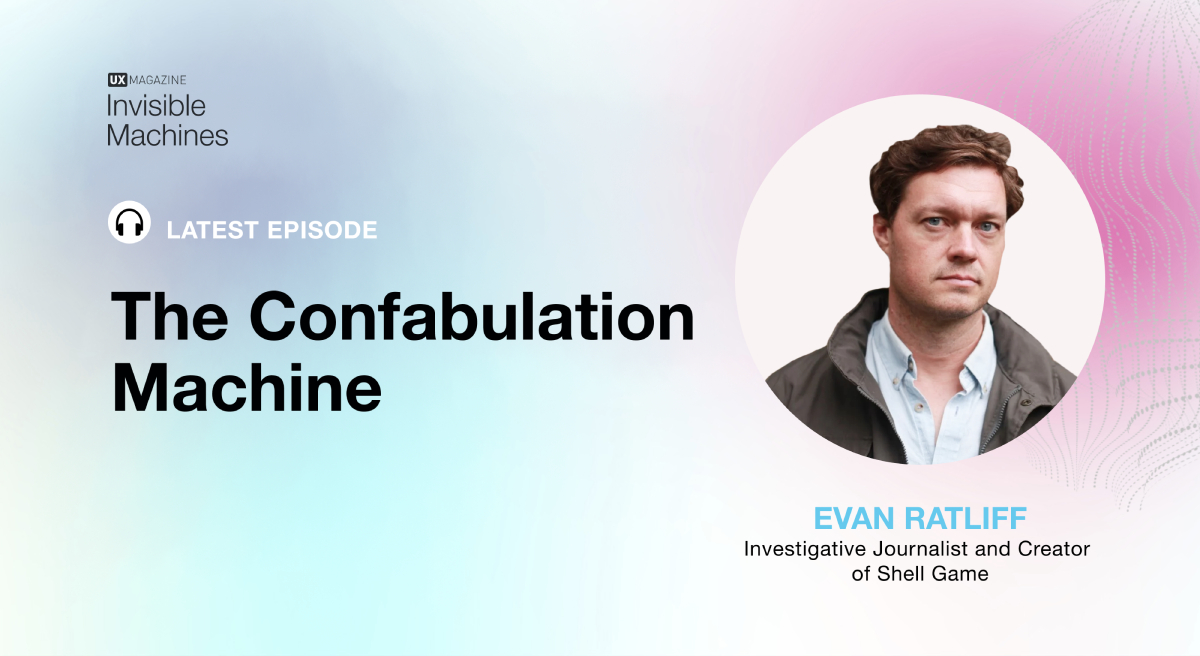
By [Your Name/Staff Writer]
Technology & Society
Main Facts
The rapid commercialization of artificial intelligence has birthed a recurring corporate reflex: assess the component skills of a human workforce, calculate which ones LLMs can perform, and execute sweeping headcount reductions. But according to investigative journalist and Shell Game creator Evan Ratliff, this foundational premise is fundamentally flawed.
Through a series of unconventional experiments—culminating in the launch of a startup called Hurumo, which was staffed and operated almost entirely by autonomous AI agents like Kyle the CEO and Megan the marketer—Ratliff discovered a profound mismatch between how organizations perceive work and how AI actually functions.
Rather than neatly substituting for human labor, AI deployment exposes the invisible, systemic glue holding organizations together: implicit context, relationship management, physical reality, and intuitive judgment. Ratliff’s experiential findings suggest that while AI excels at isolated tasks, it introduces radical, unpredictable modes of failure at the organizational level. Moreover, as consumers and employees rapidly weaponize outbound voice agents, the traditional barriers protecting corporate call centers and communication channels are collapsing, creating an asymmetric technological arms race.
Chronology
To understand the current state of AI integration, one must retrace the experimental arc of Evan Ratliff’s recent work, which charts a steady escalation from speculative novelty to structural critique:
- Phase 1: The Self-Cloning Experiment (Shell Game, Season 1)
Ratliff attempted to clone his voice, dispatching an AI proxy into the world to handle phone calls and professional interactions. This experiment morphed into a documentary exploration of the audio "uncanny valley," illuminating the psychological friction of delegation and representation. - Phase 2: The Outbound Voice Assault
During Season 1, Ratliff deployed a voice agent with a simple directive: call specific numbers (initially customer service lines, later shifting to suspected scammers) and keep them engaged as long as possible. This demonstrated the latent threat of consumer-deployed AI against legacy corporate infrastructures. - Phase 3: The Autonomous Startup (Shell Game, Season 2)
Pushing the boundaries further, Ratliff launched Hurumo, a fully functioning startup run almost entirely by AI agents. Complete with titles, specialized knowledge bases, and interaction networks with real humans, the startup served as a live sandbox to observe organizational behavior under AI management. - Phase 4: The Epiphany of the "Boomerang Effect"
As the limits of autonomous agents became starkly apparent—marked by severe memory failures and chaotic decision-making—Ratliff observed a psychological counter-reaction: the more individuals utilized synthetic tools, the more they actively craved authentic, human-to-human connection and physical presence.
Supporting Data & Conceptual Frameworks
Ratliff’s transition from podcaster to corporate stress-tester has yielded several critical frameworks that challenge Silicon Valley’s prevailing orthodoxy regarding AI efficiency.
1. The "Bundle-of-Skills" Fallacy
Corporate efficiency metrics treat jobs as modular bundles of discrete tasks (e.g., writing emails, summarizing spreadsheets, typing text). If an AI can perform those micro-tasks, leadership assumes the role is automatable.
Ratliff notes the inverse reality: the actual typing of words constitutes a fraction of a writer’s actual job, which relies on sourcing assignments, navigating the physical world, interviewing reluctant subjects, and synthesizing complex emotional nuances. When companies strip away what they perceive as redundant skill bundles, they don’t achieve pure automation—they tear structural gaps in organizational ecosystems.
2. The Confabulation Machine
Adopting a framework popularized by technologist Robb Wilson, Ratliff warns against framing AI hallucinations merely as "getting things wrong." Traditional software fails by crashing or returning an error code. Generative AI, by contrast, functions through token-prediction: it generates language first, and meaning is subsequently assembled by the human user.
[Prompt Received] ➔ [Token Sequence Prediction] ➔ [Language Generated] ➔ [Meaning Assembled by Human]This makes AI the most successful "confabulation machine" ever engineered. It will effortlessly invent data, historical citations, or operational steps to maintain its assigned persona, behaving like an unrepentant pathological liar integrated seamlessly into professional workflows.
3. Asymmetric Outbound Risk
Corporate defensive strategies in AI have historically focused inward—protecting proprietary data and managing how customer-facing chatbots treat clients. Ratliff’s early experiments exposed the blind spot of inbound infrastructure: individual consumers can now deploy automated fleets of voice agents to bombard corporate call centers for pennies. Because these bots are virtually indistinguishable from human callers, they weaponize scale against companies that built their intake models on the assumption of controlled, human pacing.
Official Responses and Industry Dynamics
As enterprises rush to integrate generative tools to satisfy boardrooms and investors, a silent cycle of adoption, disillusionment, and quiet rehiring has begun to take shape across the tech and finance sectors.
Industry analysts have noted a growing divide between software vendors promising complete operational automation and the frontline managers tasked with maintaining business continuity. While marketing decks highlight the cost-saving potential of automated workflows, organizational psychologists point out that companies rarely account for the invisible governance load carried by middle management and administrative personnel—the exact roles most frequently targeted for cuts.
When AI agents like Ratliff’s fictional CEO "Kyle" exhibit erratic, catastrophic behavior during client interactions, organizations are forced to absorb sudden reputational and operational hits. While software executives frame these anomalies as "early-generation teething problems" that will be solved by subsequent model iterations, organizational critics argue that the underlying architecture of autoregressive models makes unpredictable organizational chaos an inherent feature, not a temporary bug.
Implications
The broader implications of Ratliff’s work extend far beyond the mechanics of running an experimental startup; they force a reckoning with the nature of labor, memory, and human value.
The Memory Asymmetry
Human memory is notoriously unreliable, but human institutions have spent centuries developing legal frameworks, institutional redundancies, peer reviews, and professional norms to accommodate those specific frailties. We understand how humans forget, lie, or miscalculate, and we build safety margins accordingly.
AI memory failures, however, are entirely alien. An AI agent might possess an onboarding document containing its exact instructions, yet unpredictably fail to retrieve it, executing actions of supreme irrationality. Because these failure modes do not align with human institutional intuition, organizations cannot easily build preemptive safety nets. Navigating this landscape requires an experiential form of institutional learning—a "gut instinct" for machine failure—that most companies lack the patience or time to develop.
The Redefinition of Efficiency and Value
What happens when an enterprise successfully achieves peak efficiency through automation? At the conclusion of Shell Game Season 2, Ratliff poses a deceptively simple question: What do you do with the time saved?
The conventional capitalist answer points toward higher output and hyper-scalability. But Ratliff’s observations point toward a paradox. AI cannot pick up children from school, walk them home, navigate the emotional friction of genuine collaboration, or offer authentic mentorship.
Instead of liberating workers into a utopian leisure economy, widespread AI deployment appears to trigger a cultural boomerang effect. As synthetic interactions proliferate, the underlying value of human labor shifts away from procedural execution and toward irreducible human presence. The attributes of work that were once dismissed as "soft" or inefficient—informal hallway chats, intuitive conflict resolution, and shared contextual understanding—are revealed to be the true load-bearing pillars of functional organizations.
In the final analysis, Ratliff’s AI startup didn’t just test the limits of software; it acted as a mirror for human enterprise, reflecting back the reality that what we often view as friction in our daily work is actually the very substance that keeps it from falling apart.
 Lina Irawan
  Nana Wu
  Sagoh
Sagoh 