
 By Nana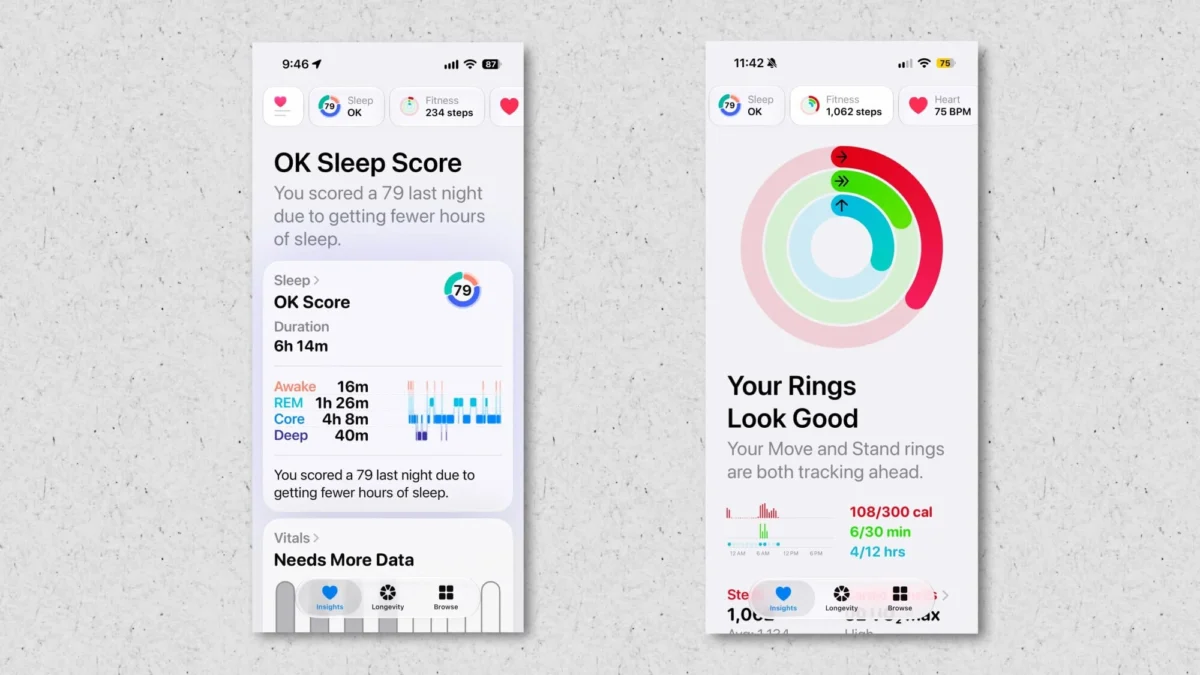
By Health and Technology Desk
Published: September 17, 2026
Main Facts
Apple is preparing a massive overhaul of its native iOS Health application, shifting its ecosystem from a passive repository of health numbers into an active, analytical wellness dashboard. Historically, while competing fitness platforms and third-party wearables have long provided integrated dashboards, actionable insights, and behavioral advice, Apple’s Health app remained a silent vault of disparate data points. Users had to dig deep into hidden menus to piece together trends regarding their physical well-being.
The upcoming redesigned application aims to bridge this gap by introducing centralized insights, intuitive home screen placement for basic metrics like daily step counts and fitness rings, a new "Longevity" tab, automated "Health Age" calculations, and an array of camera-based fitness and mobility assessments.
However, users eager to test these new features will face a hurdle: the complete redesign is not natively packaged with the initial release of iOS or the newly launched Apple Watch iterations. Instead, accessing these capabilities requires diving into early-stage developer software builds.

Chronology: The Rollout and Beta Realities
The Missing Update
When Apple rolled out its public releases for current-generation mobile operating systems and hardware flagships—including the Series 12 and Ultra 4 Apple Watches—many users anticipated an immediate interface upgrade to the Health application. Instead, millions of users updated their devices only to find the standard, legacy Health interface staring back at them. Apple confirmed quietly that the comprehensive redesign is slated to arrive broadly "later this year."
Navigating the Developer Beta Ecosystem
For early adopters, health tech journalists, and power users determined to evaluate the interface ahead of schedule, the primary pathway involves accessing the developer beta ecosystem.
- Free Developer Registration: While Apple maintains a paid enterprise and advanced developer tier costing $99 annually, standard Apple ID registration for developer status is free of charge and open to the public.
- Over-the-Air Activation: Once a user registers via Apple’s developer portal, the path to the beta software opens directly within device settings. By navigating to Settings > General > Software Update > Beta Updates, users can toggle onto specific developer builds—such as iOS 27.2 developer betas—where the redesigned health architecture currently resides.
Supporting Data & Feature Breakdown: What the Redesign Entails
Once inside the updated beta environment, the true scale of Apple’s software pivot becomes apparent. The architecture shifts away from manual tracking toward synthesized, predictive wellness indicators.
+-----------------------------------------------------------------+
|                    APPLE HEALTH APP REDESIGN                    |
+-------------------------+---------------------------------------+
| Core Dashboard          | • Integrated step counts at top       |
|                         | • Prominent Fitness ring visibility   |
+-------------------------+---------------------------------------+
| Longevity & Metrics     | • Multi-factor "Longevity" graphic    |
|                         | • Weekly "Health Age" recalculations  |
+-------------------------+---------------------------------------+
| Assessments             | • 16 clinical/fitness screeners       |
|                         | • 4 camera-based movement tests       |
+-------------------------+---------------------------------------+
1. Unified Dashboard Visibility (Steps and Rings)
For years, Apple maintained a strict silo between the Apple Watch Fitness app—famous for its closed red, green, and blue activity rings—and the broader Health database. Furthermore, while newer watch models introduced advanced step-counting complications, older hardware often required third-party utilities or navigation to secondary apps to track simple progress.

The new Health app layout places a diagnostic "Insight" card right at the top of the home interface. Daily step counts are instantly visible alongside status readouts for active Fitness rings. While the standalone Fitness application remains operational for legacy purposes, this integration signals a long-term consolidation of Apple’s fitness software strategy.
2. The Longevity Tab and Data Demands
Perhaps the most ambitious addition to the platform is the Longevity tab. Represented visually by a multi-petaled graphic designed to reflect various pillars of long-term health, the tab evaluates overall physiological outlook.
- Filling the Graphic: To illuminate the graphic, users are prompted to supply a significant amount of underlying biometric data. While certain categories—such as heart health—can register as "excellent" based primarily on resting heart rate and cardio fitness (even in the absence of comprehensive blood panels, cholesterol labs, or glucose testing), other categories require direct data input.
- The Data Burden: Initial testers have noted a psychological friction point: the application encourages users to feed it an immense volume of clinical, biometric, and questionnaire data. Without clear signposting regarding the minimum data required to generate baseline scores, users may feel pressured to perform unnecessary body measurements or upload complex lab results simply to satisfy the application’s completeness metrics.
3. Infinite Questionnaires and Assessments
Directly beneath the longevity overview sits an expanded suite of clinical and lifestyle assessments. Out of 16 potential assessments embedded in the app—ranging from nutritional intake tracking and body composition waist-to-hip measurements to standard anxiety and depression screenings (such as GAD-7 and PHQ-9 formats)—users are often greeted with low completion metrics upon first login.
Navigating these assessments feels akin to sitting in a perpetual medical waiting room. While they provide deep contextual data that feeds back into personal wellness adjustments, the sheer volume of digital paperwork can induce user fatigue.

4. Health Age Mechanics
The application introduces a Health Age metric, recalculated dynamically every Monday morning.
- The Vanity Metric Factor: Health aging algorithms across the technology sector often subtract years from a user’s chronological age as a positive reinforcement mechanism for maintaining healthy habits like proper sleep hygiene, structured exercise, and optimized cardiovascular fitness.
- Actionable Insights: Beyond the psychological gratification of seeing a lower "Health Age," the interface successfully connects the metric to practical behavioral levers. Scrolling down the Health Age screen reveals precise factor breakdowns. For instance, poor sleep scores might be flagged as aging factors, while strong heart rate variability (HRV), robust cardio fitness, and elevated step counts act as mitigating factors, complete with targeted suggestions for improvement.
5. Camera-Based Fitness and Mobility Assessments
One of the most technically demanding additions to the platform is its expanded suite of computer-vision fitness assessments. Moving beyond simple step counting, the app utilizes device cameras to analyze movement patterns, physical strength, and mobility.
The software includes four distinct camera-based testing modules designed for users across diverse physical spectra:
- VO2 Max and Aerobic Capacity Tests: Requiring a heart rate-monitoring peripheral like an Apple Watch, these tests gauge maximum oxygen uptake during exertion.
- Strength and Functional Mobility Tests: Utilizing standard household items—such as a chair for unassisted sit-to-stand evaluations—these tests measure lower-body power and core stability.
- Adaptability and Modifications: Recognizing that not all users possess equal physical capabilities, the assessments feature built-in modifications, allowing individuals to skip specific components they cannot safely perform.
Note on Stability: Because these features are currently bound to early developer testing environments, technical hurdles remain prevalent. Early hands-on testing revealed that initiating the camera-tracking sequence—where users prop their phones against walls and step back to follow video prompts—frequently resulted in application crashes. A polished, stable consumer rollout will be necessary before these computer-vision features can be reliably utilized by the general public.

Official Responses and Industry Context
While Apple has not issued an exhaustive press release detailing the exact public rollout date beyond its vague "later this year" window, statements accompanying the initial hardware announcements for the Series 12 and Ultra 4 watches emphasized a broader corporate focus on preventative care, longevity metrics, and software-hardware synergy.
Industry analysts point out that Apple’s pivot mirrors a wider industry trend: standalone activity tracking is no longer enough to retain consumer interest in wearables. Companies are increasingly forced to provide actionable health intelligence, clinical risk modeling, and preventative guidance to compete with specialized medical platforms and dedicated health ecosystems like Oura, Whoop, and integrated clinical software suites.
Implications
The structural transformation of Apple’s Health app carries profound implications for personal health management, data privacy, and the medical community:
- Consumer Health Literacy vs. Anxiety: By packaging complex longevity modeling and clinical-grade assessments into consumer-friendly mobile interfaces, Apple is empowering individuals to take charge of their preventative health. However, the presence of clinical scoring systems, continuous "Health Age" grading, and endless assessment questionnaires risks inducing health anxiety or creating a gamified obsession with numerical metrics.
- The Medical Waiting Room Convergence: As consumer tech platforms pull in deeper lifestyle, nutritional, and physical assessment data, the boundary between consumer wellness apps and electronic health records (EHRs) continues to blur. Physicians may soon see patients walking into clinical consultations armed with proprietary "Longevity scores" and camera-assessed mobility profiles generated entirely by their smartphones.
- Privacy and Data Stewardship: Asking users to input extensive personal metrics—ranging from mental health screeners and nutritional logs to precise body composition and laboratory biomarkers—places an enormous responsibility on Apple regarding data privacy. Maintaining rigorous end-to-end encryption and local-device processing will remain paramount as users scale up their biometric data contributions within the ecosystem.
As the developer beta matures and Apple prepares for its official public release, the ultimate success of the redesigned Health app will rest not on the complexity of its underlying algorithms, but on its ability to translate infinite digital paperwork into sustainable, stress-free human wellness habits.
 Layla Zulfa
  Asep Darmawan