
 By Asep Darmawan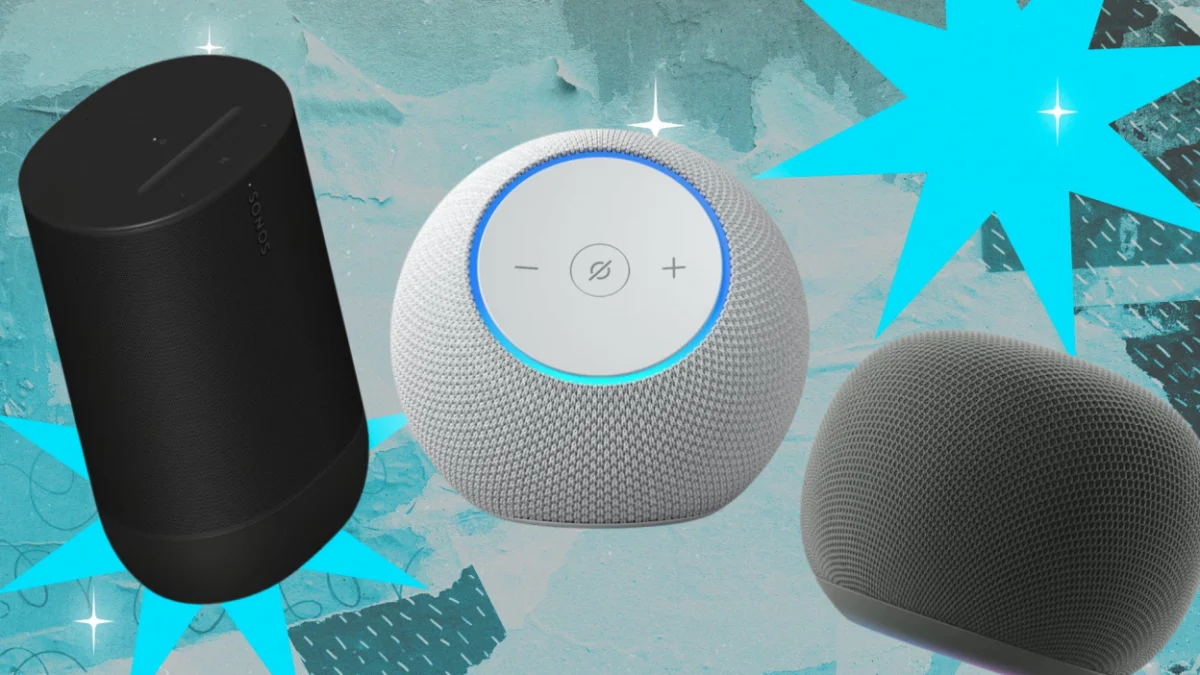
By Jake Peterson | Senior Technology Editor
Updated: September 16, 2026
Smart speakers have evolved far beyond simple novelty gadgets that read you the morning weather or tell you a joke. Today, they serve as the foundational bedrock of the modern smart home. They act as versatile media centers for music and podcasts, reliable voice assistants for daily organization, and critical smart home hubs that bridge everything from intelligent lighting to advanced security systems.
Choosing the right smart speaker depends heavily on the ecosystem you lean toward and the existing hardware you own. However, navigating the landscape of modern audio technology requires a closer look at audio fidelity, assistant processing power, cross-platform compatibility, and price points. Here is a comprehensive breakdown of the best smart speakers on the market, categorized by user needs and tech ecosystems.
Main Facts: The Current Landscape of Smart Speakers
The smart speaker market in 2026 is defined by a shift toward ambient computing, advanced local processing, and deep integration with generative artificial intelligence. While traditional bluetooth speakers remain popular for casual, on-the-go listening, smart speakers offer persistent connectivity to your home network, enabling seamless automation.
- Ecosystem Fragmentation: Major tech giants continue to anchor their hardware to specific software ecosystems (Amazon Alexa, Google Gemini, and Apple Siri), though standards like Matter and Thread have made cross-platform device control easier than ever.
- AI Integration: Voice assistants are no longer rigid rule-followers. The integration of advanced language models allows for contextual, conversational commands, multi-step requests, and deeper integration with smart home automation.
- Audio Engineering: Form factor no longer dictates poor sound quality. Advances in "computational audio" and custom-tuned acoustic drivers mean even compact devices like the HomePod mini or entry-level smart hubs can fill modest rooms with rich, balanced sound.
- Portability vs. Persistence: While most smart speakers remain tethered to wall outlets to maintain constant assistant readiness, battery-powered iterations with rugged designs are expanding smart audio into outdoor spaces.
Chronology of Smart Speaker Evolution
To understand how we arrived at the current line of smart speakers, it is helpful to look at how the technology has matured over the past decade:
- 2014–2016 (The Dawn of Voice Control): Amazon introduces the original Echo, popularizing voice-activated personal assistants in the home. Google follows shortly after with Google Home, initiating the smart speaker race.
- 2018–2020 (Ecosystem Expansion and Mini Devices): Apple enters the market with the high-end HomePod, later supplemented by the budget-friendly HomePod mini. Competitors focus on shrinking hardware footprints, leading to the proliferation of inexpensive "Dot" and "Mini" variants.
- 2021–2024 (The Matter Standard and Smart Hubs): The smart home industry struggles with fragmentation until the launch of the Matter connectivity standard, designed to unify devices across Apple, Google, and Amazon ecosystems. Portable smart speakers like the original Sonos Move prove that consumers want high-end sound outside the living room.
- 2025–2026 (The Generative AI Era): Smart speakers undergo a massive software transformation. Legacy rule-based voice assistants are replaced or augmented by conversational AI models like Amazon’s Alexa+ and Google’s Gemini, turning smart speakers into deeply contextual household partners.
Supporting Data and Detailed Hardware Breakdown
Best Smart Speaker for Most People: Amazon Echo Dot Max
The best smart speaker for the average consumer must be broadly accessible, platform-agnostic, and affordable. Amazon’s Echo line has long dominated this category due to its sheer flexibility, and the Echo Dot Max represents the pinnacle of this philosophy.

- Audio Performance: According to reviews from PCMag, the Echo Dot Max easily "fills a modestly sized room with sound" and offers a "nicely balanced" acoustic profile tailored for casual listening. While it lacks the directional sound staging of dedicated stereo units, its output punches well above its weight class.
- Connectivity and Features: Equipped with Alexa (including Amazon’s advanced Alexa+ AI features), the device supports Wi-Fi 6E, Bluetooth 5.3, and LE Audio. Crucially, it embraces open standards like Matter, Thread, and Zigbee.
- Built-in Sensors: The Echo Dot Max integrates temperature, ultrasonic, Wi-Fi radar, and ambient light sensors. This makes it an exceptional smart home hub that can trigger automations based on real-time environmental data, regardless of whether your phone is an iPhone or an Android device, or whether your PC runs Windows or macOS.
Best Smart Speaker for Google Users: Google Home
For households heavily invested in the Google ecosystem, the company’s flagship Google Home speaker—marking its first major smart speaker refresh since the Nest Mini in 2019—is the definitive choice.
- Design and Integration: The new Google Home fuses the aesthetic language of the Nest Mini and the Apple HomePod mini, resulting in a modern, fabric-wrapped design that blends effortlessly into contemporary home decor.
- The Gemini Advantage: Operating on Google’s advanced Gemini AI architecture, the speaker handles complex, contextual commands with ease. Users can string multiple requests together or make real-time corrections mid-sentence. For example, you can ask about the weather for your favorite sports team’s next game without explicitly naming the team, provided you have previously set those preferences. (Note: Access to the most robust Gemini features requires a Google subscription tier).
- Audio Engineering: CNET notes that the Google Home speaker offers some of the "best audio for a $100 speaker," utilizing a robust 58mm internal driver that delivers vastly improved bass and overall acoustic fidelity compared to older iterations.
Best Smart Speaker for Apple Users: HomePod mini
Apple enthusiasts heavily embedded in the iOS, macOS, and iCloud ecosystem will find the HomePod mini to be the most seamless addition to their homes.
- Ecosystem Synergy: The HomePod mini natively integrates with Siri, letting you interact directly with Apple Reminders (for grocery lists), iMessage, the Find My network, and the Apple Home app.
- Voice Recognition and Intercom: The device can distinguish between up to six different family members’ voices, tailoring responses accordingly. Furthermore, multiple units enable a whole-home intercom system to broadcast messages across rooms.
- Audio and Continuity: Utilizing "computational audio," the HomePod mini simulates the acoustic properties of a much larger speaker. Transferring audio is frictionless: simply bringing an iPhone close to the top of the speaker hands off music playback instantly via proximity sensors.
Best Portable Smart Speaker: Sonos Move 2
While most smart speakers are anchored to kitchen counters or nightstands, the Sonos Move 2 is engineered for mobility without compromising on acoustic fidelity.
- Durability: Featuring an IP56 dust and water resistance rating, the Move 2 is built to withstand outdoor environments, from backyard patios to beach days.
- Sound Quality: PCMag highlights that the Sonos Move 2 "produces powerful stereo sound" with dual left- and right-channel tweeters. It delivers a rich, deep bass profile even at moderate listening volumes.
- Ecosystem Versatility: The Move 2 supports Sonos Voice Control alongside Amazon Alexa, Wi-Fi 6, and Apple AirPlay 2, making it one of the most adaptable high-end speakers available, albeit at a notably higher price point than stationary competitors.
Official Responses and Industry Perspective
Industry analysts and tech reviewers emphasize that the battleground for smart speakers has shifted entirely from hardware specs to software intelligence.
Representatives from consumer technology testing boards note that consumers are increasingly fatigued by walled gardens. Hardware manufacturers are responding by adopting universal protocols like Matter, allowing consumers to mix and match smart bulbs, security cameras, and thermostats without fearing platform lock-in. However, the monetization of AI features—such as Google’s tiered access for advanced Gemini capabilities—has drawn mixed reactions from consumers who expect continuous software improvements to be included with the initial hardware purchase.
Implications for the Future of the Smart Home
The maturation of smart speakers as AI-driven household hubs has profound implications for consumer privacy, home automation, and media consumption:
- Heightened Data Privacy Concerns: With smart speakers featuring advanced microphones, ambient sensors, and continuous AI listening capabilities (such as Wi-Fi radar and ultrasonic presence detection), consumer data privacy remains a critical discussion point. Users must navigate how much personal data is processed locally versus on cloud servers.
- Simplified Home Automation: The widespread adoption of Matter and Thread means that setting up complex smart home routines is no longer an engineering feat. Even novice users can seamlessly link cross-brand products through a single smart speaker hub.
- The Rise of Ambient AI: As conversational AI replaces rigid voice commands, smart speakers are transitioning from reactive tools to proactive assistants capable of predicting household needs, managing energy consumption, and elevating domestic efficiency.
 Nana
Nana  Lina Hope
  Ammar Sabilarrohman