
 By Basiran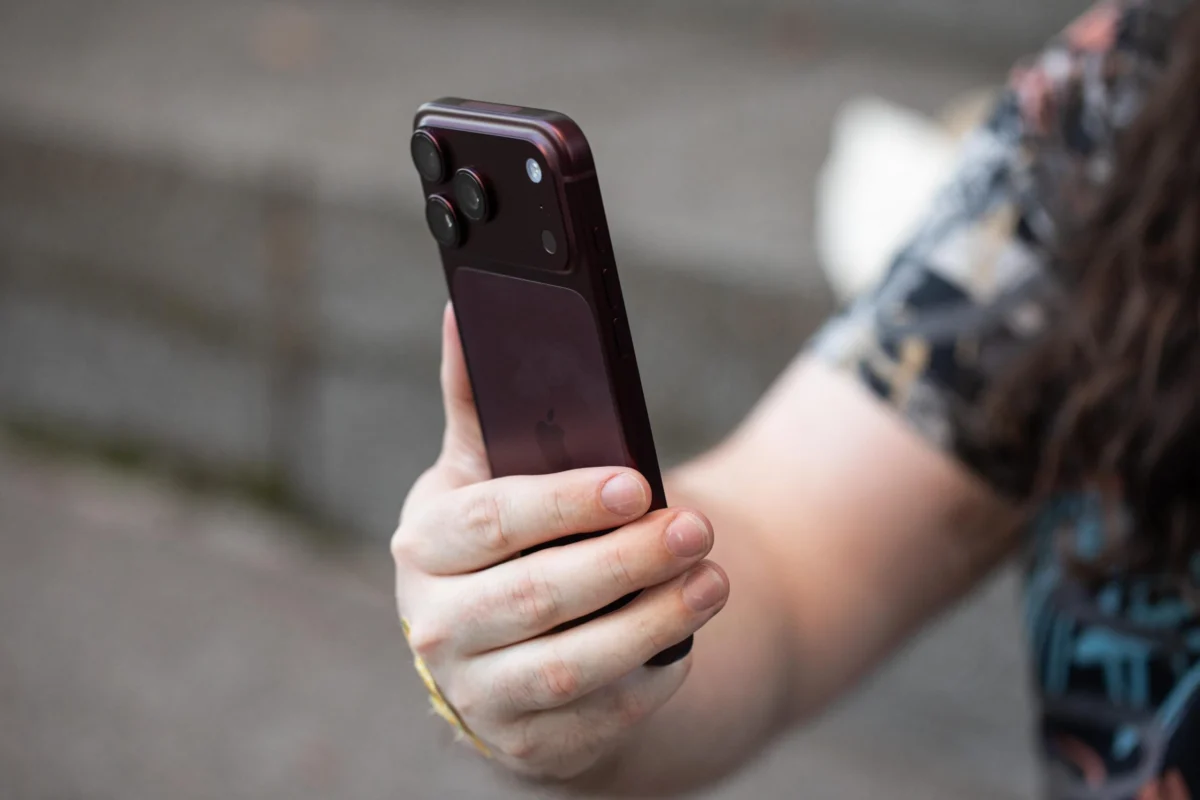
By Jess Weatherbed
Specialized in Creative Industries, Computing, and Internet Culture
Main Facts
In a clever engineering maneuver, Apple has devised a sophisticated software-based workaround to bypass stringent international shipping regulations governing high-capacity lithium-ion batteries. The upcoming iPhone 18 Pro Max features an innovative "battery-firmware solution" designed to keep the device’s operational energy capacity strictly below the legal threshold of 20Wh for single-cell batteries during transit.
Crucially, this limitation is temporary. The firmware lock automatically and permanently disengages the moment the end-user boots up the device for the very first time. Following initial setup and activation, the iPhone 18 Pro Max restores its full, intended design capacity—clocking in at roughly 21.75Wh for US eSIM-only variants and 21.06Wh for European models that accommodate physical SIM trays.
Furthermore, Apple has introduced a user-facing tool dubbed "Prepare to Ship." Located deep within the iOS settings menu, this feature allows consumers and enterprise partners to manually reapply a protective charging and capacity restriction (capping the battery level at 80 percent for up to 14 days) should the device ever need to be mailed back for repairs, trade-ins, or secondary resale.
This development marks a significant milestone in mobile hardware engineering. As smartphone manufacturers globally race to squeeze longer runtimes out of increasingly slender industrial designs, Apple’s firmware approach provides a streamlined, highly cost-effective alternative to the complex physical hardware redesigns historically required to navigate global logistics laws.
Chronology
To fully understand how the tech giant arrived at this software-first logistics solution, it is helpful to trace the evolution of smartphone power requirements and the regulatory hurdles that precipitated them.
The Escalating Battery Dilemma (2018–2022)
For the better part of a decade, smartphone manufacturers faced a compounding design conflict. Consumers consistently demanded all-day (and multi-day) battery life, while simultaneously demanding sleeker, lighter devices with massive, high-refresh-rate OLED displays and power-hungry processors.
Concurrently, international regulatory bodies—most notably the International Air Transport Association (IATA), the International Civil Aviation Organization (ICAO), and various national departments of transportation—tightened rules surrounding the bulk commercial air freight of lithium-ion energy cells. Under standardized dangerous goods regulations, single-cell lithium batteries exceeding 20 watt-hours (Wh) face rigorous classification, specialized packaging mandates, extensive documentation, and outright carrier bans on passenger aircraft.
The Android Pivot to Dual-Cell Architectures (2022–2024)
To circumvent these limits, major Android manufacturers in regions outside Asia (such as Samsung, Google, and OnePlus) largely abandoned single-cell designs for their flagship devices. Instead, they adopted dual-cell battery architectures. By splitting a 5,000mAh battery into two physical 2,500mAh cells wired in parallel, manufacturers successfully kept individual cell capacity well below the 20Wh ceiling while preserving total system capacity.
However, dual-cell configurations introduced notable engineering compromises:
- They increased manufacturing and component costs.
- They consumed valuable internal volume (z-height and footprint), which could otherwise be allocated to larger camera sensors, cooling vapor chambers, or taptic engines.
- They introduced more complex power management integrated circuits (PMICs).
Apple’s Software Breakthrough (2025–Present)
Rather than following the hardware-heavy path of its competitors, Apple opted to address the problem at the intersection of firmware and logistics. Recognizing that the 20Wh restriction applies strictly to the state of the battery during transport, Apple engineers realized that temporary, immutable software locks could satisfy regulatory compliance without permanently castrating the hardware.
Prototypes utilizing the battery-firmware lockdown underwent rigorous regulatory testing throughout late 2024 and 2025. With the finalization of the iPhone 18 Pro Max production lines, the system has been integrated globally, transforming how heavy consumer electronics move from assembly hubs in Asia to storefronts and doorsteps worldwide.
Supporting Data
A closer examination of the electrical metrics and structural specifications reveals the sheer balancing act Apple has performed with the iPhone 18 Pro Max power delivery system.
| Specification Region | Form Factor / Connectivity | Rated Operational Capacity | Shipping / Transit Capacity Lock | Regulatory Threshold |
|---|---|---|---|---|
| United States | eSIM-Only | ~21.75Wh (~5,300mAh equivalent) | Restricted to <20Wh via pre-boot firmware | 20.00Wh (Max for single-cell air freight) |
| Europe & Global | Physical SIM + eSIM | ~21.06Wh (~5,150mAh equivalent) | Restricted to <20Wh via pre-boot firmware | 20.00Wh (Max for single-cell air freight) |
Analyzing the "Prepare to Ship" Utility
When a user decides to sell, trade in, or service their iPhone 18 Pro Max, they must navigate to:
Settings > General > Transfer or Reset iPhone > Prepare to Ship

According to internal technical documentation released alongside the feature:
- Thermal Management: Apple explicitly warns users that the battery "might need to discharge for Prepare to Ship to complete." Because lithium-ion chemistry behaves differently when transitioning state-of-charge under enforced limits, the phone may experience a temporary, mild elevation in temperature during the initial hour of activation.
- Duration Constraints: The shipping cap restricts maximum charging capacity to 80 percent and enforces lower voltage throughput for a maximum duration of 14 days. If the device remains in its box past this window without being shipped or booted, the firmware safety timer resets or prompts for re-verification, ensuring safety standards are continually met.
- Reversibility: The process is entirely non-destructive. If a user changes their mind and cancels the return or resale process, disabling "Prepare to Ship" in the settings instantly restores standard, unrestricted charging parameters without requiring a factory data reset.
Official Responses and Documentation
Apple’s official support pages and regulatory filings shed light on how the company communicates this unprecedented feature to consumers, customs authorities, and logistics carriers.
In an updated support article (Apple Support ID: 127848), the company outlines the compliance measures built into the iPhone 18 Pro Max:
"To comply with international hazardous materials and dangerous goods shipping regulations for commercial air transit, the iPhone 18 Pro Max is manufactured with an active pre-boot battery-firmware limitation. This limitation maintains the cell’s energy capacity below the statutory 20Wh limit. Upon initial device activation by the end user, this firmware lock is permanently disengaged, restoring the battery to its full rated operational capacity."
Logistics partners—including FedEx, UPS, and DHL—have expressed tacit approval of the mechanism. Because compliance is verified at the hardware-firmware interface before the device has ever been powered on by a human, customs agents and air freight inspectors can rely on standardized compliance certs without needing to manually test individual consumer units.
Consumer advocacy groups have also weighed in, praising Apple for maintaining hardware parity across regions. Unlike past generations where regional safety or telecommunication mandates forced physical variations in chassis sizes, the iPhone 18 Pro Max maintains an identical physical shell globally, utilizing pure software states to handle regional regulatory variances.
Implications
The introduction of Apple’s temporary battery-firmware lockdown carries massive ramifications for the broader consumer electronics industry, global supply chains, and environmental sustainability initiatives.
1. Disruption in the Android Ecosystem
For years, Android original equipment manufacturers (OEMs) have absorbed the financial and volumetric penalties associated with dual-cell battery designs. Now that Apple has proven a software-locked single-cell architecture can clear international customs and safety inspections seamlessly, competitive pressure will mount.
Industry analysts predict that competitors—including Samsung, Xiaomi, and Oppo—will likely develop their own proprietary firmware locks to return to single-cell battery designs. Doing so will free up precious internal millimeters within future smartphone chassis, allowing for larger camera modules, better thermal management, or thinner physical profiles without sacrificing battery longevity.
2. Streamlining Global Reverse Logistics
The secondary market for smartphones—comprising trade-ins, refurbishments, and insurance replacements—moves tens of millions of devices across international borders every single year. Previously, shipping used or refurbished phones containing large single-cell batteries was a legal minefield, frequently resulting in rejected packages, exorbitant hazmat shipping fees, or outright shipment confiscations.
The inclusion of the "Prepare to Ship" feature democratizes safe transit for everyday consumers. Anyone can now safely mail back a high-capacity flagship device without violating postal regulations or risking thermal runaway events during turbulent cargo flights.
3. Environmental and Safety Footprint
Lithium-ion battery fires remain one of the most terrifying hazards in modern aviation. By introducing an automated, fail-safe mechanism that drops energy states into a chemically stable window before transit, Apple has effectively raised the safety baseline for global consumer electronics shipping.
Furthermore, by avoiding the resource-heavy manufacturing demands of dual-cell configurations (which require double the protective circuitry, wiring harnesses, and management chips), the single-cell approach paired with firmware controls represents a leaner, more resource-efficient manufacturing paradigm.
Looking Ahead
As smartphones continue to evolve into indispensable daily tools requiring ever-greater electrical output, the tension between raw power and physical logistics laws will only intensify. Apple’s clever integration of transient firmware caps on the iPhone 18 Pro Max proves that the solution to physical hardware limitations doesn’t always require swinging a hammer—sometimes, all it takes is a line of code.
 Nana Wu
  Nana Muazin