
 By Neng Nana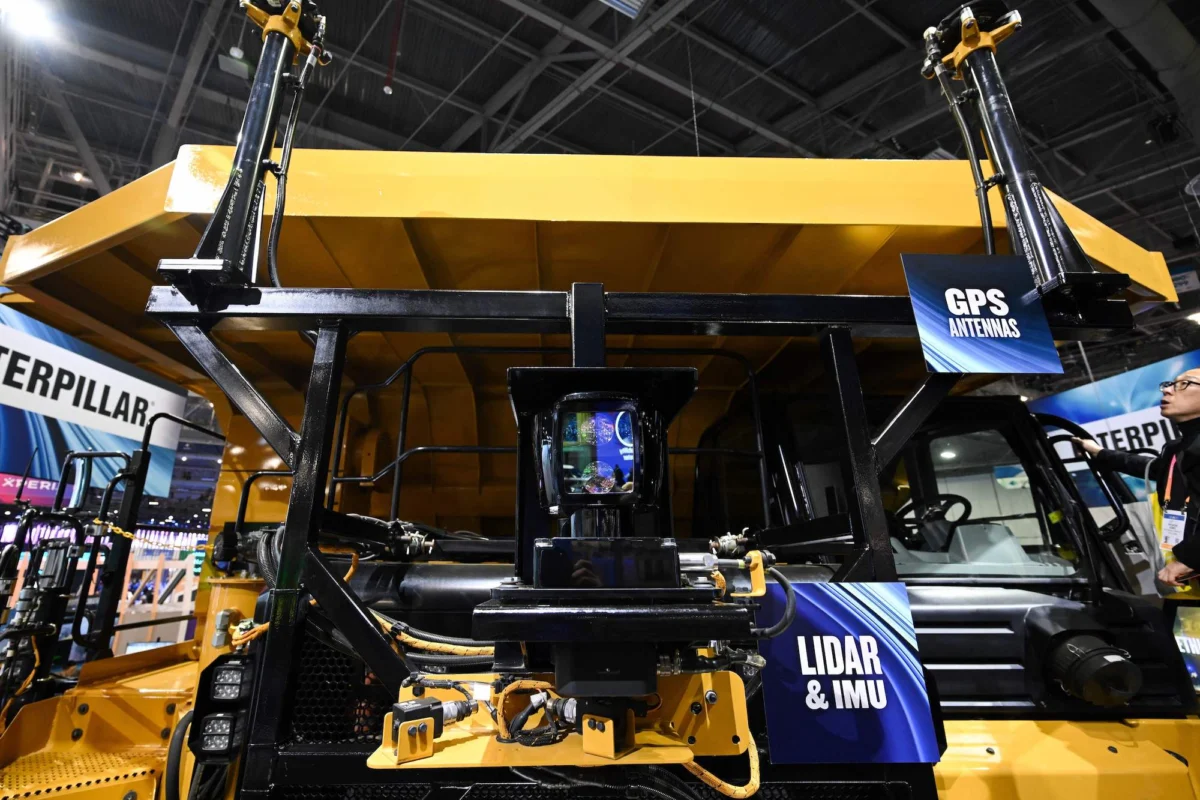
The industrial sector has long been characterized by grit, heavy machinery, and the physical reality of the jobsite. However, a quiet revolution is underway at Caterpillar, the world’s leading manufacturer of construction and mining equipment. As companies across the globe struggle to bridge the gap between AI theory and operational reality, Caterpillar is leveraging decades of industrial expertise to pioneer a transition that merges the physical world with the digital one.
By scaling its autonomous capabilities from isolated mining operations to dynamic construction sites, the company is positioning itself not just as a provider of iron, but as a critical node in the global AI infrastructure.
The Core Challenge: Moving Beyond the "Proof of Concept"
For many organizations, the deployment of artificial intelligence remains stuck in the laboratory or the pilot phase. Integrating complex software into legacy workflows is notoriously difficult, particularly in sectors where failure carries high stakes. Caterpillar, however, has spent decades navigating this terrain, treating the “problem of integration” as a fundamental engineering challenge rather than an insurmountable hurdle.
Caterpillar’s journey into autonomy began in the mining industry—a sector defined by labor shortages, hazardous environmental conditions, and the need for extreme precision. By mastering automated haul trucks, drilling rigs, and underground loaders, the company developed the foundational architecture for what is now being deployed across the broader construction and quarrying industries.
A Chronology of Industrial Evolution
Caterpillar’s evolution into a high-tech powerhouse did not happen overnight. It is the result of a systematic, decades-long strategy:
- The Foundation (The Mining Era): Initially, Caterpillar focused on solving safety and efficiency problems in mines. Automation here was a necessity, not a luxury. The success of these deployments provided the company with massive proprietary datasets, enabling it to train AI models on real-world movement, terrain navigation, and equipment wear.
- The Connected Fleet: As hardware became digitized, Caterpillar began equipping its global fleet with sensors. Today, that network comprises approximately 1.6 million connected assets, generating over 16 petabytes of structured, high-fidelity data. This data serves as the "fuel" for the company’s current AI initiatives.
- Expansion into Digital Infrastructure: Recognizing that AI requires massive amounts of power, Caterpillar pivoted to support the data center boom. Its power-generation division has seen explosive growth, with sales surging 72% to $3.10 billion in recent quarters, as the company provides the backup power systems essential for hyperscale cloud computing.
- The Generative AI Pivot: With the rise of Large Language Models (LLMs), the company shifted focus to internal optimization, using AI agents to modernize legacy code, generate software, and automate repair procedures for field technicians.
Data as a Competitive Moat: Supporting the Evidence
The scale of Caterpillar’s operation is staggering. With 1.6 million assets currently transmitting data, the company has created a closed-loop system where hardware performance informs software development, and software improvements refine hardware operations.
The financial results reflect the success of this multifaceted approach. In the second quarter of 2026, Caterpillar reported an all-time high quarterly revenue of $20.5 billion. While sales of heavy machinery remain the backbone of the business, the diversification into AI-driven services and data center power solutions has provided a significant tailwind.
As CEO Joe Creed noted, the demand for AI infrastructure is showing no signs of slowing down. For Caterpillar, the "AI boom" is a dual-sided opportunity: they are building the physical equipment that constructs the world’s data centers, while simultaneously deploying the AI that makes those data centers—and the construction sites themselves—more efficient.
Official Perspectives: The View from the C-Suite
During a recent fireside chat at the Ai4 conference in Las Vegas, Caterpillar CTO Jaime Mineart offered a candid look at the company’s strategic philosophy. According to Mineart, the excitement lies in the scalability of their proven mining technologies.
"Now we’re in this super exciting time where we can take all of that learning from mining and bring it into much more dynamic environments, jobsites, quarries, and construction sites," Mineart explained.
A central component of this strategy is the "Cat AI Assistant." This tool serves as an interface between the vast, complex data held by the company and the field technicians who need that information in real-time. By utilizing voice commands, a technician can troubleshoot a machine, identify the exact part required, and pull up specific repair manuals while standing in the middle of a muddy jobsite. This effectively digitizes the "tribal knowledge" of senior mechanics, making it accessible to less experienced workers.
However, Mineart is quick to temper the enthusiasm with a dose of operational realism. "The hard part about autonomy and about physical AI is incorporating that technology into the customer jobsite and into the workflows," she said. It is not enough to simply deploy a robot; the human process around that robot must be fundamentally re-engineered.
The Human Element: Training the Workforce
Perhaps the most significant challenge in this transition is not technical, but cultural. As machines become more autonomous, the role of the human operator is shifting from "driver" to "orchestrator." An operator may soon oversee a fleet of five or six machines from a remote command center, requiring an entirely different set of skills than traditional field operation.
To bridge this skills gap, Caterpillar has committed $100 million over the next five years to a comprehensive workforce training initiative. This investment is designed to educate its 118,000 employees on the nuances of AI, robotics, and the management of autonomous systems.
This training is not merely about learning how to use new software; it is about fostering a culture of "human-in-the-loop" AI. Caterpillar relies on the institutional knowledge of its veteran operators to train its AI models, ensuring that the software reflects the "best practices" developed over decades of real-world labor.
Implications: The Future of Industrial AI
The broader implications of Caterpillar’s pivot are profound. By demonstrating that AI can be successfully integrated into the messy, unpredictable environment of a construction site, the company is setting a blueprint for the rest of the industrial world.
1. The Rise of the "Physical AI" Sector
Caterpillar’s success proves that AI is not just for software companies. The integration of proprietary sensor data with generative AI creates a "moat" that is difficult for pure-play software startups to replicate. Other industrial giants are likely to follow suit, turning their physical products into data-collection platforms.
2. The Decentralization of Expertise
Through tools like the Cat AI Assistant, the barrier to entry for complex mechanical repair is dropping. As AI models capture the expertise of the most seasoned technicians, the entire industry gains a "base level" of competency that was previously unavailable, effectively mitigating the risks associated with an aging, retiring workforce.
3. The Symbiosis of Power and Computing
Caterpillar’s performance in the power-generation sector highlights the physical dependency of the digital world. For the "AI Revolution" to continue, it needs stable power, and Caterpillar is capitalizing on this necessity. The company is essentially selling the "shovels and the gold"—providing both the construction equipment to build the data centers and the electrical systems that keep them running.
4. Workflow Transformation
The ultimate impact of this shift is the restructuring of the jobsite. The "remote command center" will become the norm, changing the nature of employment in the industrial sector. This transformation will require a sustained commitment to lifelong learning, supported by the massive investments in training that Caterpillar has already signaled.
Conclusion
Caterpillar is currently in the midst of a transition that defines the next era of industrial history. By moving from a company that simply manufactures steel to one that orchestrates the flow of data and energy, it is insulating itself from the volatility of traditional equipment markets.
The path ahead is not without obstacles. Integrating AI into the physical world is a messy, complicated process that demands as much social and organizational change as it does technical innovation. However, by focusing on the "human-in-the-loop" model and investing heavily in its workforce, Caterpillar is demonstrating that the future of AI is not just in the cloud—it is on the ground, on the jobsite, and built into the very machines that move the world.
 Jia Lissa
  Lina Hope
  Nana Muazin