
 By Suro Senen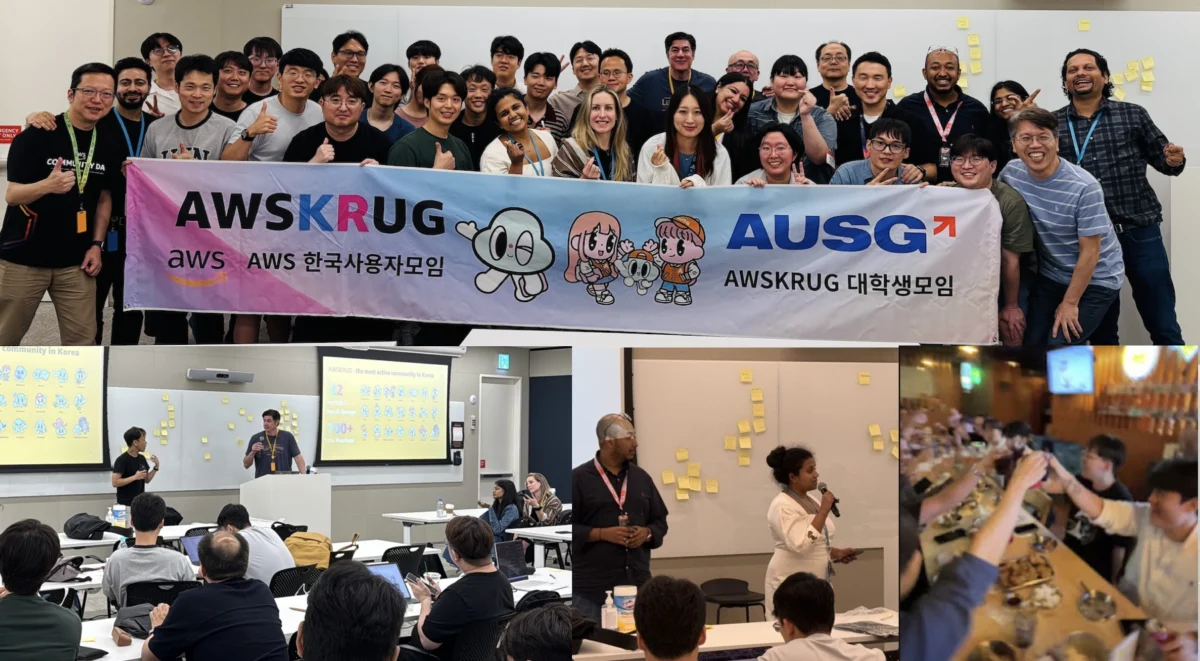
Main Facts
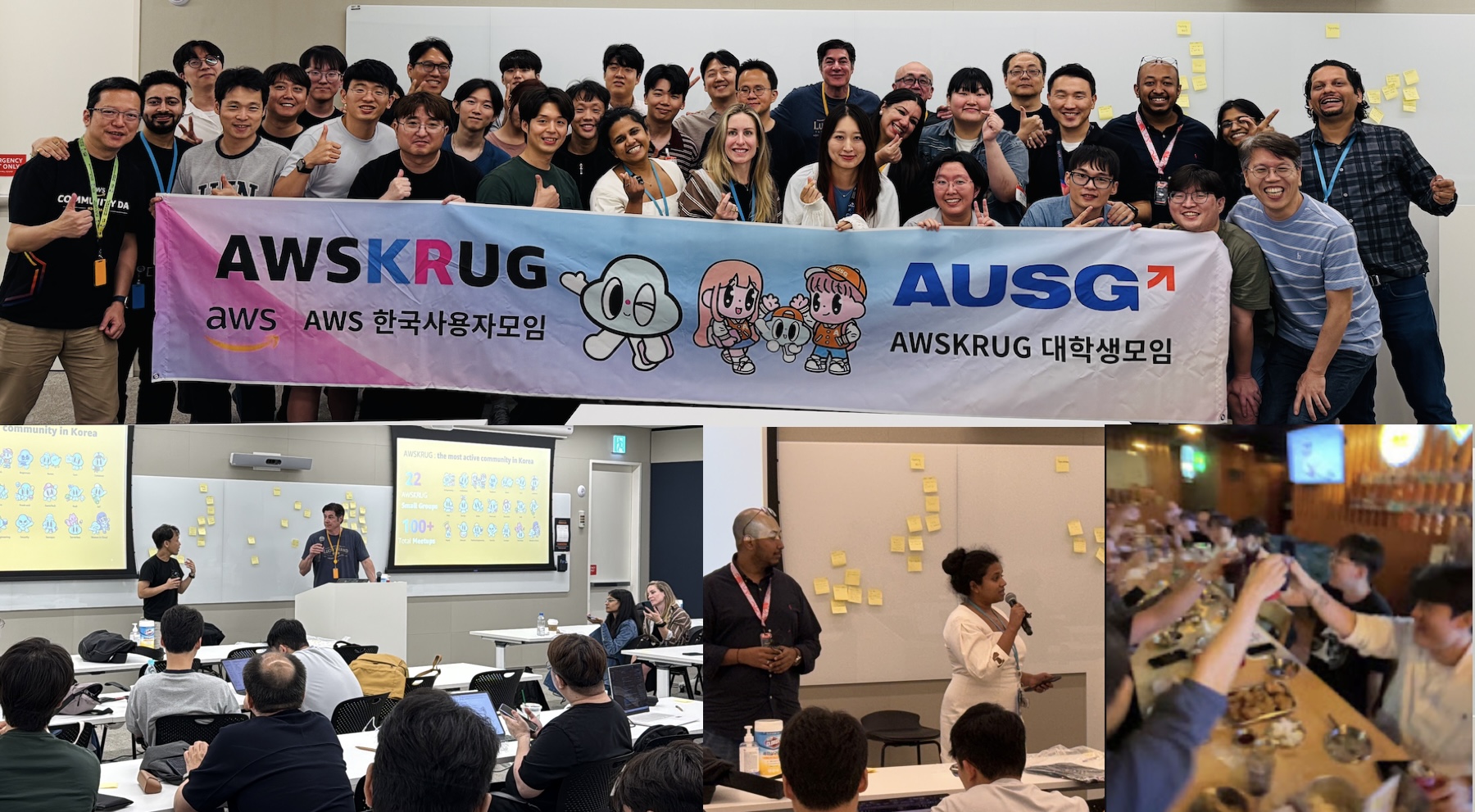
The Amazon Web Services (AWS) Developer Experience team continues to bridge the gap between cloud infrastructure and cutting-edge artificial intelligence, highlighted by a recent series of community engagements and powerful new developer tooling releases. Last week, leadership from AWS traveled to Seoul, South Korea, to connect directly with the AWS Korea User Group (AWSKRUG)—currently the largest cloud developer community in the nation. This vibrant ecosystem comprises 20 specialized meetup groups tailored to distinct technical topics and geographic regions, collectively hosting more than 100 events annually.
Parallel to these international community-building efforts, AWS announced a major leap forward in AI-assisted software engineering. The introduction of a one-click AWS Lambda setup prompt for coding agents marks a critical evolution in how developers interact with serverless architectures. By embedding serverless best practices, AWS Serverless skills, and the Serverless Model Context Protocol (MCP) server directly into AI coding workflows, AWS is drastically reducing friction for builders deploying cloud-native applications.
However, the week was not without its hurdles. AWS experienced a notable operational glitch involving AWS Cost Explorer, which displayed inaccurate estimated billing data and triggered erroneous budget and cost anomaly detection alerts for a subset of customers. AWS has since resolved the issue, confirmed that all core systems are operating normally, and pledged a transparent retrospective to fortify its billing and monitoring infrastructure against future anomalies.
Chronology of Events and Community Engagement
Early Week: Fostering Global Developer Ecosystems in Seoul
The week’s activities began with an intentional focus on grassroots developer relations. The AWS team’s visit to Seoul underscores the company’s commitment to gathering unfiltered, direct feedback from international markets.
- Mid-Week Community Summit: AWS representatives met with core AWSKRUG leaders to evaluate the community’s performance during the first half of the year. Discussions focused on identifying operational bottlenecks, highlighting successful initiatives, and establishing a direct line of requests for the AWS Developer Experience team.
- Cultural Exchange and Collaboration: True to tradition within the tech community in Seoul, the official meetings transitioned into a collaborative networking session featuring Chimaek—a popular Korean cultural pairing of fried chicken and beer—allowing for informal brainstorming and relationship-building between AWS engineers and community advocates.
Mid-Week: Launching the Lambda One-Click Prompt
Shifting from community relations to product innovation, AWS released a streamlined configuration workflow designed for modern AI coding agents.
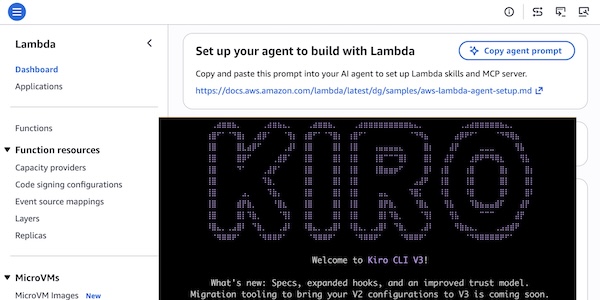
- AI Agent Integration: Developers utilizing popular AI assistants and coding environments—such as Claude Code, Kiro, Cursor, GitHub Copilot, Codex, Devin Desktop, and OpenCode—can now instantly bootstrap their agents with deep AWS Serverless domain expertise.
- Execution Pathway: By navigating to the Lambda console and selecting the newly introduced Copy agent prompt button (or by manually fetching the setup documentation via
https://docs.aws.amazon.com/lambda/latest/dg/samples/aws-lambda-agent-setup.md), engineers can seamlessly inject AWS infrastructure patterns into their local AI workflows.
Weekend: Addressing Billing Display Anomalies
The operational rhythm of the week concluded with an unexpected infrastructure incident that required immediate transparent communication from AWS management.
- Detection of Inaccurate Metrics: Over the weekend, several AWS customers reported anomalies within AWS Cost Explorer. The dashboard reflected inflated estimated cost and usage data.
- Cascade of False Alerts: Because of the inaccurate figures generated by Cost Explorer, automated safety mechanisms triggered erroneous budget warnings and cost anomaly detection alarms, causing brief panic among financial and engineering teams managing strict cloud budgets.
- Resolution and Remediation: AWS engineering teams acted swiftly to isolate and neutralize the bug. By early Sunday, services had returned to normal operating parameters, with accurate reporting restored across the AWS Health Dashboard.
Supporting Data and Technical Architecture
To fully appreciate the impact of last week’s announcements, it is vital to examine the underlying technical framework supporting the new AI developer tools and the scale of the communities involved.
The Scale of AWSKRUG
- Total Meetup Groups: 20 distinct, active sub-groups categorized by domain expertise and regional hubs.
- Annual Output: Over 100 localized and large-scale events hosted primarily throughout the greater Seoul metropolitan area.
- Demographic Reach: Represents thousands of cloud architects, systems administrators, software developers, and startup founders within the Asia-Pacific region.
Technical Breakdown: AWS Lambda Agent Setup and MCP Servers
The integration of AI coding agents with AWS Lambda relies on standardized communication protocols designed to contextualize large language models with real-time cloud data.
| Component | Function | Implementation Details |
|---|---|---|
| Serverless MCP Server | Connects AI agents securely to serverless documentation, templates, and deployment paradigms. | Accessed via the Agent Toolkit for AWS setup instructions. |
| Setup Prompt Configuration | Injects architectural best practices directly into the context window of local coding agents. | Triggered via Lambda Console -> Copy agent prompt or direct markdown fetch. |
| Supported AI Clients | Environments optimized for executing agentic workflows and automated code generation. | Claude Code, Kiro, Cursor, GitHub Copilot, Codex, Devin Desktop, OpenCode. |
Financial Telemetry: Cost Explorer Incident Metrics
- Affected Feature: AWS Cost Explorer (Estimated billing data, cost anomaly detection algorithms, and automated budget notifications).
- Impact Vector: Inflated cost projections leading to false-positive notification dispatches via Amazon Simple Notification Service (SNS) or dashboard interfaces.
- Service Status: Fully remediated; zero impact on actual resource provisioning, core compute engines, or underlying bank-side billing processing.
Official Responses and Post-Mortem Analysis
The dual nature of last week—balancing triumphant product launches with an unexpected operational hiccup—elicited measured, transparent responses from AWS leadership.
Addressing the Billing Inaccuracies
In an official statement released via the AWS Health Dashboard and community channels, AWS representatives addressed the Cost Explorer incident head-on:

"We sincerely apologize for the concern this incident caused our customers. We understand how critical accurate financial telemetry and reliable budget alerts are to organizations operating at scale. All AWS services are currently operating normally. We are conducting a thorough, comprehensive retrospective to pinpoint the root cause of this reporting failure, prevent similar events from reoccurring, and drastically improve our rapid-response protocols for billing-related incidents."
Developer Experience Strategy
Regarding the launch of the Lambda coding agent prompts, members of the AWS Developer Experience team emphasized a philosophy of "meet the developer where they are." Rather than forcing builders to adopt proprietary, closed-ecosystem tools, AWS is actively opening its architectural patterns to third-party coding agents. By standardizing around tools like the Model Context Protocol (MCP), AWS ensures that whether an engineer is utilizing Cursor, GitHub Copilot, or Claude Code, their interactions with serverless infrastructure remain secure, idiomatic, and aligned with enterprise best practices.
Implications for the Cloud and AI Ecosystem
The convergence of grassroots community engagement in Seoul, the rapid deployment of agentic AI tooling, and the lessons learned from the Cost Explorer incident carry profound implications for the future of cloud computing.
1. The Rise of Agentic Cloud Engineering
The introduction of one-click setup prompts for Lambda signals a fundamental shift in how cloud architecture is written. Historically, developers had to manually consult documentation, copy-paste snippets from tutorials, and manually configure IAM roles and function triggers. By packaging AWS Serverless expertise into an MCP server format consumable by AI agents, AWS is effectively democratizing enterprise-grade cloud architecture. Junior developers and seasoned architects alike can now leverage AI assistants that inherently understand cold-start optimization, event-driven patterns, and least-privilege security models out of the box.
2. The Maturation of Global Developer Communities
The deep dive into the AWSKRUG ecosystem highlights the undeniable power of localized, developer-led communities. While digital documentation and global forums are essential, face-to-face feedback loops—such as the leadership summits in Seoul—allow hyperscalers like AWS to fine-tune their offerings based on regional nuances, enterprise adoption trends, and distinct developer pain points.
3. Trust, Transparency, and Financial Governance
The temporary glitch in Cost Explorer serves as a timely reminder of the delicate reliance modern enterprises place on cloud financial management (FinOps) tools. As companies scale their serverless and containerized workloads, automated cost anomalies act as critical circuit breakers against runaway expenses. The swift admission of error, combined with a commitment to an open retrospective, reinforces AWS’s long-standing dedication to operational transparency.
As the tech industry looks ahead, the fusion of intelligent AI coding workflows with robust, community-driven cloud platforms promises to accelerate software delivery cycles while demanding rigorous oversight from cloud providers to ensure absolute reliability.
 Nana
Nana  Raul Delapena Setiawan
  Laily UPN