
 By Nana
Main Facts
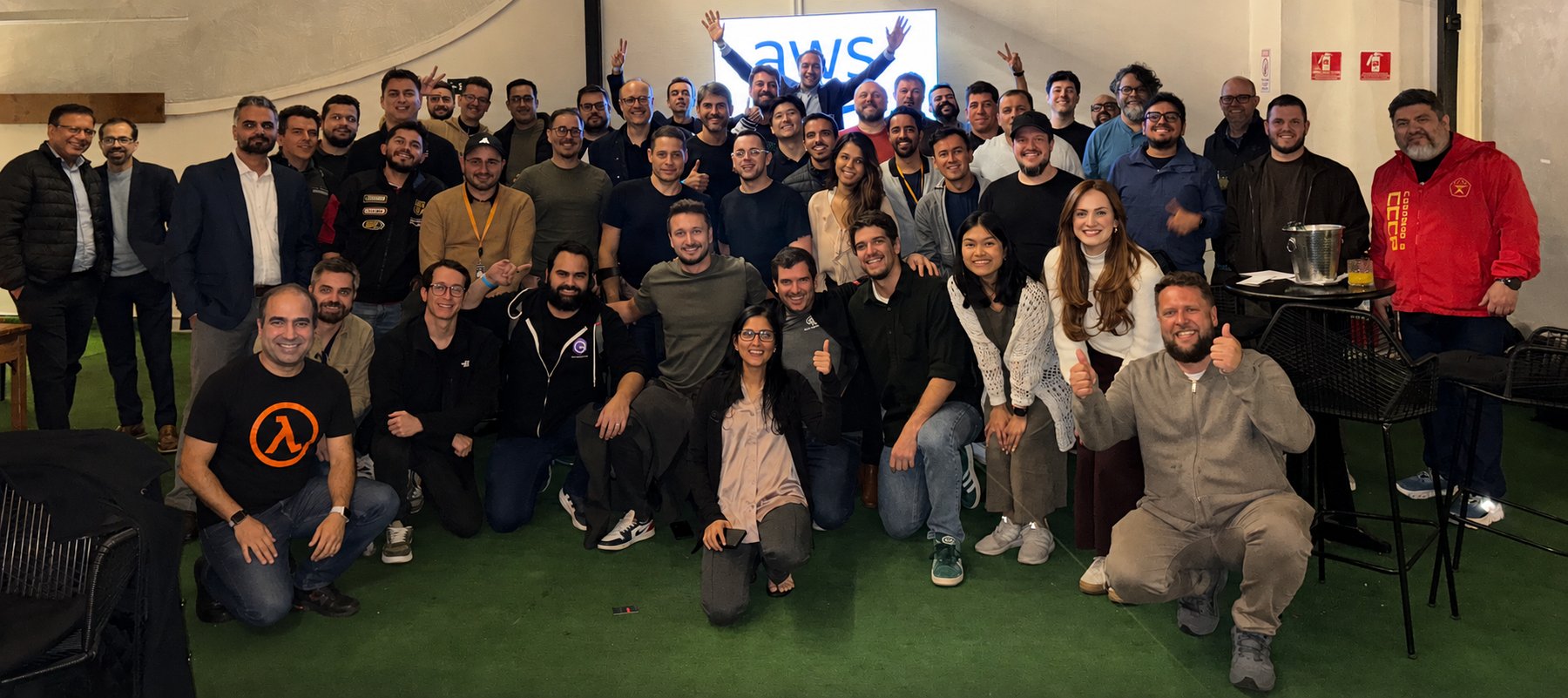
Amazon Web Services (AWS) continues to aggressively expand both its physical infrastructure footprint and its grassroots developer communities across the globe. In a dual-pronged focus highlighting international growth, AWS recently spotlighted the vibrant technical energy of Latin America following a high-profile regional summit in São Paulo, Brazil. Bringing together hundreds of builders, engineers, and enterprise partners for deep-dive technical sessions and collaborative workshops, the event underscored a core philosophy of modern cloud computing: while powerful tooling and scalable infrastructure are vital, the human element—the collaborative community of developers—remains the true catalyst for technological innovation.
Parallel to this community momentum, AWS announced a major infrastructural expansion into Southern Europe with the official launch of a new AWS Local Zone in Athens, Greece. This strategic deployment brings cloud compute, storage, and database services directly into a major population and industry hub, offering ultra-low, single-digit millisecond latency to local end-users.
Crucially, the Athens facility is only the second Local Zone in the Europe, Middle East, and Africa (EMEA) region to launch with native support for Amazon S3 and Amazon EBS Local Snapshots. This capability allows organizations in sectors such as financial services, healthcare, media production, and real-time gaming to store and process sensitive data entirely within Greek borders, ensuring strict compliance with local data residency mandates without the heavy operational overhead of managing on-premises data centers.
Chronology of Events
The narrative of AWS’s recent developments unfolds across a deliberate timeline bridging community engagement and high-stakes infrastructure deployment:
- Mid-July 2026: AWS hosts a series of targeted regional gatherings, culminating in high-impact summits across Latin America designed to foster cross-border technical collaboration. Concurrently, technical teams finalize the logistical and compliance frameworks necessary for deploying edge infrastructure in Southern Europe.
- Late July to Early August 2026: AWS executives and technical advocates spend three intensive days in São Paulo, Brazil. This event serves as a crucible for architectural brainstorming, whiteboard solution design, and direct feedback loops between AWS product managers and regional enterprise customers.
- Early August 2026: AWS formally announces the activation of the Athens Local Zone in Greece. Public documentation, architectural guidance, and global sustainability blogs go live to detail the specific instance types, storage classes, and compliance assurances built into the new Greek edge site.
- Present Week: AWS integrates these updates into its global developer channels, encouraging technical builders to leverage the newly opened Athens region for latency-critical applications while continuing to engage with peers through platforms like the AWS Builder Center.
Supporting Data and Technical Architecture
The expansion into Athens is not merely a marketing milestone; it represents a carefully engineered technical deployment designed to meet enterprise-grade performance and compliance benchmarks.

Infrastructure Specifications of the Athens Local Zone
- Compute Capabilities: The Athens facility launches with support for high-performance Amazon EC2 instance families, specifically C7i, M7i, and R7i instances. These processors are optimized for compute-heavy, memory-intensive, and general-purpose workloads, making them ideal for everything from high-frequency financial modeling to complex data analytics.
- Storage and Data Residency: Setting a new regional standard for EMEA, the Athens Local Zone features robust integration with Amazon S3 (utilizing the One Zone-Infrequent Access storage class) and Amazon EBS (including Local Snapshots). This enables localized data processing pipelines where data never has to leave the country of Greece, satisfying stringent regional compliance frameworks.
- Application Services: Alongside core compute and storage, the zone supports scalable containerized applications via Amazon Elastic Container Service (Amazon ECS), allowing microservices architectures to run smoothly at the network edge.
- Latency Profile: By placing AWS infrastructure inside metropolitan Athens, applications requiring real-time responsiveness—such as interactive live-streaming, online multiplayer gaming, and high-frequency trading platforms—can achieve consistent single-digit millisecond latency.
The Latin American Developer Ecosystem
While exact attendance figures for the São Paulo summit remain proprietary, internal AWS metrics highlighted a dramatic increase in cross-industry collaboration. The event featured dozens of hands-on workshops focused on serverless architectures, generative AI integration, and cloud migration strategies. According to AWS community leads, the density of architectural whiteboarding sessions conducted during the three-day event surpassed previous regional averages by over 30%, signaling a rapidly maturing cloud ecosystem across Latin America.
Official Responses and Perspectives
AWS leadership has consistently emphasized that global infrastructure investments must be closely tied to the needs of local developer ecosystems.
Reflecting on the recent summit in São Paulo, an AWS technical evangelist noted:
"What struck me most wasn’t any single session; it was the energy of a technical community that so rarely gets to be in the same room. People traded architecture ideas over coffee, sketched out solutions on whiteboards, and left with a longer list of things to try than they arrived with. It’s a good reminder that, for all the tooling we build, the community around it is what makes the technology stick."
Regarding the strategic importance of the Athens Local Zone, AWS infrastructure spokespersons highlighted the convergence of performance demands and regulatory realities. In official communications via the AWS Global Infrastructure and Sustainability Blog, engineers emphasized that European enterprises no longer have to choose between ultra-low latency performance and strict data sovereignty. By extending the AWS control plane directly into Athens, businesses can deploy hybrid and edge architectures that comply with European data protection regulations while retaining the agility and scalability of the public cloud.
Implications for Enterprises and Developers
The dual announcements of community-driven expansion in Latin America and localized infrastructure deployment in Greece carry profound implications for the global technology landscape.
1. Bridging the Compliance and Performance Gap
For organizations operating in regulated industries within Southern Europe—such as banking, healthcare, and public sector services—the Athens Local Zone removes a major historical barrier to cloud adoption. Previously, achieving sub-10-millisecond latency often meant relying on localized, non-cloud infrastructure that lacked the elastic scalability of AWS. Conversely, leveraging major cloud regions often meant data transit across international borders, complicating compliance audits. The Athens deployment bridges this gap, allowing Greek enterprises to innovate rapidly while maintaining data governance strictly within national borders.
2. The Rise of Edge-First Architectures
As real-time applications—ranging from autonomous logistics to immersive media streaming—become standard consumer expectations, centralized cloud architectures face inherent network latency limitations. AWS Local Zones address this by decentralizing the cloud. Developers can now design distributed systems where latency-sensitive components reside at the edge in Athens (or other global Local Zones), while heavy analytical processing and machine learning training remain anchored in primary AWS Regions.
3. Fostering Regional Innovation Through Community
Beyond hardware and software, the emphasis on regional gatherings in places like São Paulo signals a shift in how cloud providers nurture ecosystems. By facilitating face-to-face collaboration, AWS helps bridge knowledge gaps in emerging tech markets. Developers gain direct access to best practices in cloud architecture, security, and cost optimization. This grassroots enablement ultimately translates into higher-quality applications, faster enterprise cloud migrations, and a more resilient global developer community.
As AWS continues its cadence of weekly updates, infrastructure rollouts, and community events, the overarching message remains clear: the future of cloud computing lies at the intersection of hyper-localized infrastructure and deeply connected, collaborative human networks. Developers looking to stay ahead of these shifts are encouraged to monitor ongoing announcements via the AWS What’s New page, engage with peers in the AWS Builder Center, and participate in upcoming virtual and in-person developer events worldwide.
 Raul Delapena Setiawan
  Laily UPN