
 By rifanmuazin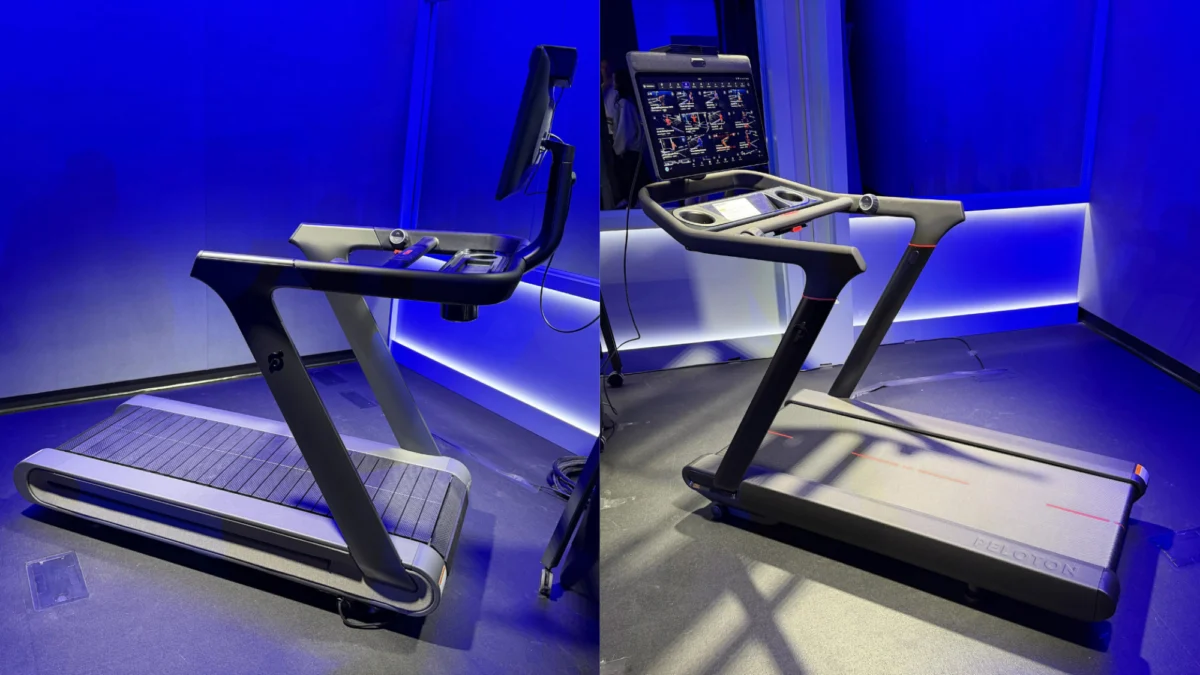
By Meredith Dietz
Senior Staff Writer
September 22, 2026
Peloton is shaking up the connected fitness landscape once again. Following a rigorous preview event at Peloton Studios New York, the iconic home-fitness brand has officially announced a massive expansion of its treadmill ecosystem. The sweeping hardware and software reveal includes three distinct new treadmills—the space-saving Tread Flex, the modernized Tread Vision, and the elite-tier Tread+ Vision—alongside a suite of intelligent software upgrades designed to revolutionize how users train at home.
Spanning a massive price range from $2,195 to $6,695, this new generation of equipment addresses long-standing consumer requests, such as a folding deck for smaller spaces and advanced training modes tailored for endurance athletes and Hyrox competitors. Crucially, Peloton is also bringing many of its most exciting software enhancements to legacy devices, ensuring existing members won’t be left behind in the brand’s march toward hyper-personalized fitness.
Main Facts: The 2026 Peloton Tread Lineup
Peloton’s latest hardware rollout is strategically segmented to capture different market demographics, from casual walkers to high-performance endurance runners.
1. Tread Flex ($2,195)
The undisputed headline for everyday consumers is the Tread Flex, Peloton’s very first folding treadmill. Designed with apartment dwellers and multi-use spaces in mind, the Flex reduces its footprint by roughly 50% when folded upright. Peloton representatives note that when stored, the machine is actually shorter than a Peloton Bike.

- Mechanics: A two-step hydraulic cylinder release lowers the running deck safely and gradually, while an integrated locking pin secures it in place when upright. Caster wheels allow for easy repositioning.
- Acoustics & Usability: Built with low-impact cardio, walking, and hiking in mind, the Flex operates remarkably quietly—peaking at just 70 decibels at its maximum speed of 12.5 mph (tested empty). An adjustable swivel screen facilitates seamless transitions from the belt to floor-based modalities like yoga, strength training, and stretching.
2. Tread Vision ($3,495)
Positioned as a comprehensive, top-to-bottom refresh of Peloton’s standard non-folding treadmill, the Tread Vision brings incremental, premium upgrades to nearly every user touchpoint. Engineered for mixed-household dynamics where multiple users cycle between walking, jogging, running, and heavy cross-training, it bridges the gap between domestic usability and robust performance engineering.
3. Tread+ Vision ($6,695)
For elite runners, marathoners, and intense endurance athletes, the Tread+ Vision stands as Peloton’s ultimate flagship machine. It retains the signature rubberized slat-belt deck riding on a heavy-duty ball-bearing system, which is engineered to absorb shock and actively return energy to the runner’s stride. Beyond inheriting all the advanced smart features of the Tread Vision, it introduces exclusive heavy-duty training configurations like Sled Mode and Free Mode, cementing its appeal for specialized sports training, such as competitive Hyrox racing.
Chronology: The Evolution of Peloton’s Treadmill Strategy
To understand the significance of the 2026 launch, it helps to examine Peloton’s turbulent yet resilient history in the treadmill market:
- Late 2018 / Early 2019: Peloton launches its initial commercial and high-end treadmills, the Tread+ and the original Tread, capturing early enthusiast adoption but facing scaling hurdles.
- 2021: Safety recalls temporarily stall the momentum of the slat-belt Tread+, forcing Peloton to redesign safety features and pull certain models off the market while it re-engineered its product safety protocols.
- 2022–2024: Peloton pivots heavily toward software-driven monetization, hardware restructuring, and cost containment, stabilizing its core bike and row businesses while quietly plotting its next-generation running portfolio.
- September 2026: Peloton unveils the Tread Flex, Tread Vision, and Tread+ Vision at its New York studios, signaling a mature, diversified hardware strategy that pairs hardware innovation with sophisticated AI-driven software.
Supporting Data & Deep Dive Into Software Features
While the hardware variations cater to spatial and physical performance needs, Peloton’s software announcements arguably represent the most disruptive element of the launch. Most of these new capabilities will roll out to older, compatible hardware models as well.
Run Analysis
Utilizing a discreet, built-in movement-tracking camera, Run Analysis brings automated, AI-driven form assessments to the home treadmill market.

- Metrics Tracked: Cadence, vertical oscillation, stride length, and vertical ratio.
- Scoring: Following a workout, users receive a "Running Efficiency Score" from 1 to 100, alongside actionable, personalized form tips.
- Privacy & Availability: The camera requires a one-time calibration and operates silently in the background without rendering a live, distracting display on-screen. It is available on the Tread Vision, Tread+ Vision, and legacy CTS Tread+ models (though disabled during Bootcamp, Warm Up, Cool Down, or ReRun sessions).
IQ Pace Targets
Designed to remove the guesswork from interval training, IQ Pace Targets analyze recent running history to recommend dynamic, personalized pace ranges. After approximately 10 running workouts, the algorithm calibrates to the user’s baseline and evolves in real-time as fitness improves. On-screen shortcuts match instructor cues directly to the user’s customized targets, allowing for seamless, one-tap speed or incline adjustments.
ReRuns
For runners who miss the unpredictable topography of the outdoors, ReRuns maps real-world outdoor routes directly onto the treadmill interface. Users can sync past outdoor excursions captured via the Peloton app or a connected smartwatch, letting the treadmill automatically adjust its elevation profile to match the real-world route. For indoor-first users, a preloaded route library features iconic tracks, including segments of the TCS New York City Marathon and classic Peloton Run Club paths.
Sled Mode & Free Mode
Exclusive to the Tread+ hardware tier, Sled Mode targets the rapidly growing functional fitness and Hyrox training communities. By introducing software-controlled resistance ranging from 30 to 300 pounds directly against the slat belt, users can safely simulate grueling heavy sled pushes indoors. Engaging "Free Mode" turns off motorized belt propulsion entirely, allowing the runner’s natural stride to drive the machine.
Targeted Heart Rate Workouts
Moving away from rigid speed-and-incline metrics, Peloton is introducing Zone 2-based, non-instructed sessions governed entirely by heart rate. Supported across all Peloton cardio equipment (Tread, Bike, and Row), these workouts provide real-time visual prompts designed to keep the user locked into their prescribed target physiological zone.
Official Responses and Industry Context
During the press previews at Peloton Studios New York, company executives emphasized that the brand is moving past the hardware disruptions of the early 2020s and leaning into a future defined by intelligent software ecosystems.

"Our members do not train in a vacuum, and neither should their equipment," noted a senior Peloton product representative during the hardware walkthrough. "With the 2026 lineup, we aren’t just building better belts and motors—we are building a responsive fitness partner that adapts to your biomechanics, your living space, and your specific competitive goals."
Industry analysts have responded favorably to the pricing strategy. By introducing the $2,195 folding Tread Flex, Peloton directly targets budget- and space-conscious consumers who may have previously opted for folding competitors from brands like NordicTrack or Sole. Conversely, holding the line on elite performance with the $6,695 Tread+ Vision ensures that commercial spaces, hardcore endurance junkies, and elite athletes remain deeply embedded in the ecosystem.
Implications: What This Means for the Fitness Market
Peloton’s autumn 2026 announcement carries several notable ripple effects for the connected fitness industry at large:
- Democratization of Form Analytics: By integrating automated computer vision into home fitness equipment without requiring wearable foot pods or external sensors, Peloton is raising consumer expectations for what home treadmills should do natively.
- The Space-Saving Imperative: The introduction of the Tread Flex acknowledges a hard economic reality: urban real estate is at a premium, and bulky, immovable cardio equipment faces severe adoption ceilings among apartment dwellers.
- Cross-Pollination of Software: By promising that features like IQ Pace Targets and ReRuns will trickle down to legacy devices, Peloton is actively fostering user retention and rewarding long-term brand loyalty.
As these machines begin shipping later this autumn, the true test will lie in how effectively the AI-driven form metrics and dynamic pacing algorithms perform under everyday household conditions. For now, however, Peloton has made it abundantly clear that it intends to remain the undisputed heavyweight champion of connected cardio.
 Laily UPN
  Asep Darmawan
  Nana Wu