
 By Pevita Pearce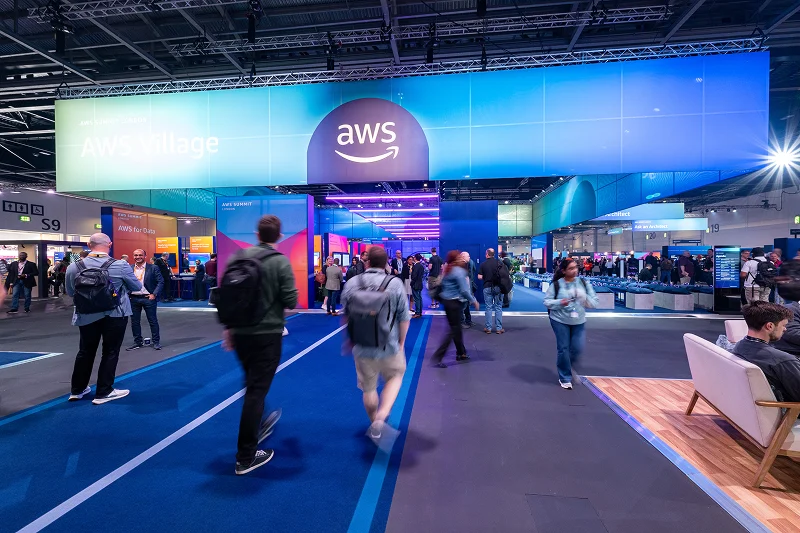
The technology landscape underwent a significant shift this week as the Javits Center in New York City opened its doors for the annual AWS Summit. While the event served as a hub for industry leaders, cloud architects, and developers to convene, the overarching theme was clear: the integration of "Agentic AI" is no longer a theoretical pursuit—it is the new operational standard for high-performance engineering teams.
From the unveiling of breakthrough productivity metrics within Amazon’s own internal teams to the launch of the AWS FinOps Agent, this week’s announcements signal a maturation in how organizations build, deploy, and manage cloud infrastructure.
Main Facts: The New Frontier of AI-Native Development
The headline news emerging from the Summit focuses on a paradigm shift in software engineering productivity. Dr. Swami Sivasubramanian, VP of Agentic AI at AWS, published a landmark report this week detailing the outcomes of extensive experiments conducted across hundreds of Amazon engineering teams.
The data suggests that when AI agents are integrated correctly into the development lifecycle, the results are transformative. Most notably, a small, dedicated team of six engineers successfully rebuilt the Amazon Bedrock inference engine in just 76 days—a project that was originally scoped for a 30-person team over a timeline of 12 to 18 months. This represents a massive leap in efficiency, with median productivity gains across various pilot programs reaching 4.5x in normalized deployment velocity. In some high-performing squads, these gains eclipsed 10x.
Complementing this, AWS announced the preview of the AWS FinOps Agent. This tool represents a critical step in automating the often-tedious aspects of cloud financial management. By leveraging AI to query cost data, generate reports, and proactively identify rightsizing or savings opportunities, the FinOps Agent aims to bridge the gap between engineering velocity and fiscal accountability.
Chronology of the Week’s Developments
The narrative of this week’s innovation can be traced through a series of strategic rollouts:
- Monday, June 16: As the AWS Summit kicked off, the spotlight turned to the "Frontier Teams" report. This documentation provided the foundational methodology for how Amazon’s internal units are currently utilizing AI to accelerate shipping cycles.
- Tuesday, June 17: The official keynote, featuring Dr. Swami Sivasubramanian and Chet Kapoor (VP of Security Services and Observability), provided a deep dive into the technical roadmap. The sessions focused on the convergence of developer tools, AI infrastructure, and the necessity of robust security in an agent-driven environment.
- Mid-Week: The release of the AWS FinOps Agent in preview mode moved the conversation from "AI for coding" to "AI for operations." The ability of the agent to interface directly with Jira and Slack channels highlights the move toward autonomous operational workflows.
- Ongoing: The AWS Summit continues to serve as a forum for ongoing technical sessions, where developers are learning to apply these "frontier" principles to their own proprietary stacks.
Supporting Data: The Case for AI-Native Adoption
The shift toward AI-native development is not merely anecdotal; it is supported by hard metrics observed during Amazon’s internal "Frontier Team" pilots. The following data points highlight the tangible impact of these workflow transformations:
1. Velocity and Cycle Time
- Bedrock Inference Engine: A reduction in project scope from 18 months to 76 days.
- Perfect Order Experience: Transitioned from a two-week feature cycle to a same-day shipping cadence.
- WW Grocery: Streamlined the design documentation process, slashing the time required from five days to just a few hours.
2. The Five Pillars of "Frontier" Performance
According to the findings, the transition to a frontier-level team requires five specific shifts in operational philosophy:
- Prioritizing Agent Context: Engineering teams must invest in "steering files," coding standards, and structured repository environments before a single line of production code is generated.
- Embracing Initial Friction: Productivity often dips initially as workflows are re-engineered. Teams that push through this "restructuring phase" see the highest long-term returns.
- Task Backlog Management: To allow agents to work in parallel, tasks must be well-scoped. This prevents the "constant supervision" trap that bottlenecks human developers.
- Explicit Intent: Code generation is only as good as the input. Teams are finding success by creating structured specifications before the AI begins drafting code.
- Shifting Testing Left: By integrating testing early in the process, agents can perform self-correction, ensuring that the code entering the CI/CD pipeline is already validated.
Official Responses and Strategic Vision
During the AWS Summit, leadership emphasized that this is only the beginning of a larger, systemic change. Dr. Sivasubramanian’s report explicitly notes that "commit velocity" is merely one metric in a much larger puzzle.
AWS leadership has acknowledged that the next phase of the conversation will need to address the complexities of release management, security operations, and the long-term maintenance of AI-generated systems (EOL upgrades). The introduction of the FinOps Agent serves as the first major step into this "Ops-heavy" side of AI.
By automating cost anomaly detection and root cause investigation, AWS is signaling to its enterprise customers that AI is moving beyond the "code generation" phase and into the "infrastructure management" phase. The ability of the FinOps Agent to automatically post findings to Slack channels or open Jira tickets effectively offloads the cognitive burden from DevOps teams, allowing them to focus on architecture rather than reactive troubleshooting.
Implications: The Future of Cloud Engineering
The implications of this week’s announcements are profound for the broader software industry. We are witnessing the transition from Cloud-Native (building on the cloud) to AI-Native (building via AI).

The Democratization of Velocity
As these practices move from internal Amazon teams to the broader AWS customer base, we expect to see a narrowing of the performance gap between small startups and massive enterprises. When a team of six can achieve what previously required thirty, the barrier to entry for complex, high-scale projects drops significantly.
The Evolution of the Developer Role
The role of the developer is evolving into that of an "AI Architect." Instead of writing syntax, developers are now spending their time refining specifications, maintaining steering files, and managing the quality of the AI’s output. This shift necessitates a new curriculum of skills—focusing more on system design and logic validation than on manual code entry.
Operational Autonomy
With tools like the FinOps Agent, the operational overhead of the cloud is finally beginning to scale at the same rate as the applications themselves. By automating the "boring" parts of cloud management—cost optimization, ticket creation, and anomaly monitoring—AWS is empowering engineers to maintain massive, complex environments with smaller, more efficient teams.
Looking Ahead
As the industry digests the insights from the AWS Summit, the focus will undoubtedly remain on security and governance. As Swami Sivasubramanian hinted, the next frontier will involve deep integration with security operations. As AI agents gain more autonomy to act on infrastructure, the guardrails surrounding those actions will become the most critical component of the AWS ecosystem.
For those unable to attend the Summit in person, the livestream of the keynote provides an essential overview of these capabilities. As the cloud continues to evolve into a more intelligent, autonomous entity, the tools announced this week will likely be remembered as the catalysts that turned the promise of AI into the reality of everyday engineering.
For further resources, builders are encouraged to visit the AWS Builder Center, where collaborative solutions and community-driven knowledge bases are actively helping developers navigate this transition. Whether you are scaling an existing enterprise system or building a startup from the ground up, the integration of agentic workflows is the defining challenge—and opportunity—of the coming year.
 Neng Nana
  Suro Senen
  Lina Hope