
 By Jia Lissa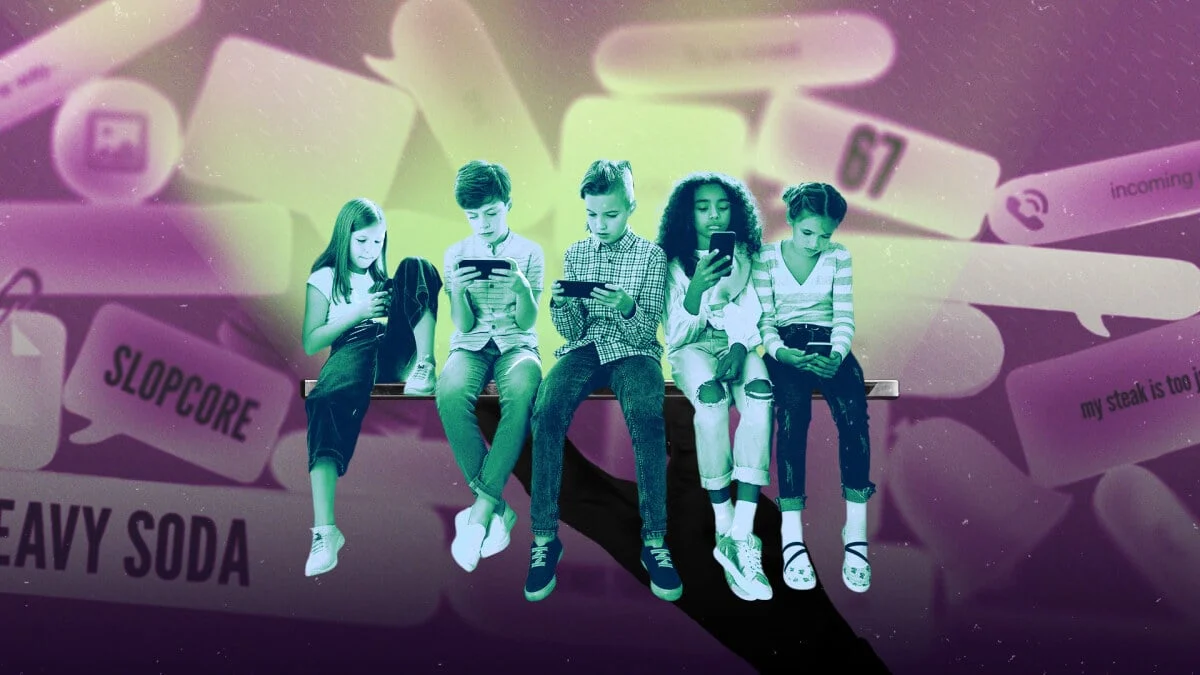
In the rapidly evolving landscape of the internet, language serves as the primary currency of social belonging. For those outside the age brackets of Generation Z (born 1997–2012) and Generation Alpha (born 2012–present), the lexicon used on platforms like TikTok, Discord, and Twitch can feel like an encrypted code. What begins as niche terminology—often originating from marginalized communities, gaming culture, or subreddits—frequently permeates the mainstream, leaving older observers confused.
This guide provides a structural analysis of the current linguistic trends, examining how these terms emerge, why they dominate the discourse, and what they reveal about modern digital socialization.
The Genesis of "Brainrot" and Online Vernacular
To understand the current state of slang, one must first recognize the influence of "algorithm-driven" communication. Many of the terms documented below are not static; they are highly mutable, often designed to bypass content moderation filters—a phenomenon known as "algo-speak."
Chronology of Evolution
The evolution of modern slang follows a predictable cycle:
- Niche Inception: A term originates in a specific community (e.g., gaming, hip-hop, or AAVE).
- Viral Adoption: Creators on platforms like TikTok pick up the term, often stripping it of its original cultural context.
- The "Brainrot" Phase: The term is repeated to the point of meaninglessness, becoming a joke in itself (e.g., "6-7," "Skibidi," "Doi doi doi").
- Mainstream Saturation: The term enters common parlance, at which point it is usually abandoned by the original cohort.
A Taxonomy of Contemporary Slang
Social Dynamics and Persona
- Aura: Originally a measure of one’s "cool" factor or presence. It has since evolved into "aura farming," where individuals perform specific actions to accrue or lose "aura points."
- Brat: Coined by pop artist Charli XCX, this denotes a person who is unapologetically messy, confident, and authentic. It is a departure from the "clean girl" aesthetic of the early 2020s.
- Mog: An aggressive form of comparison. To "mog" someone is to outshine them physically or socially.
- NPC: Derived from video games (Non-Player Character), this is now a pejorative term for individuals perceived as lacking independent thought or original personality.
- Rizz: Short for charisma. As a verb, "rizz up" means to successfully charm a romantic interest.
- Sigma Male: A satirical classification of a "lone wolf" male. While originally rooted in the "manosphere," it is now predominantly used ironically to mock self-serious internet personas.
Algo-Speak and Censorship Evasion
Because social media platforms frequently demonetize or shadow-ban content containing "sensitive" words, users have developed a shadow lexicon:
- Corn: A replacement for "porn."
- Dih: Used in place of explicit anatomical terms.
- Regarded: A coded way to say "retarded" to bypass AI moderation filters.
- Unalive: Used to describe suicide or homicide without triggering automated safety warnings.
The "Boy" and "Girl" Tropes
Gendered discourse has moved from traditional definitions to highly specific online archetypes:
- Boy Kibble: Refers to the minimalist, unseasoned diet often associated with young men (e.g., dry rice and unseasoned beef).
- Boysober: The act of abstaining from dating and sexual pursuit.
- Tradwife: A lifestyle aesthetic prioritizing domesticity and traditional gender roles.
- Venus Tummy: A body-positive term describing a naturally soft abdomen, drawing aesthetic comparisons to classical Greek statuary.
Supporting Data: Why Language Changes Faster Than Ever
The acceleration of slang is intrinsically linked to the "feed" architecture of modern social media. According to linguistic researchers, the half-life of a slang term in the 1990s was measured in years. Today, it is measured in weeks.
The "6-7" phenomenon is a prime example of this acceleration. It holds no semantic value; rather, it functions as a marker of identity for Generation Alpha. By using a phrase that explicitly lacks meaning, young users create a barrier to entry that excludes older generations, effectively "gatekeeping" their social circles through confusion.
The Implications of "Digital Vernacular"
The professional and social implications of this linguistic shift are profound. In the workplace, we see a clash between traditional professional communication and "Gen Z-speak."
The "Professionalism" Gap
When a manager uses terms like "it’s giving" or "no cap" in a formal setting, it can be perceived as an attempt to "fellow-kid," leading to a loss of credibility. Conversely, the rise of "looksmaxxing" (the aggressive pursuit of physical improvement) and "looks-based" slang has shifted the way young employees view personal branding.
Psychological Effects: The "Doomer" Mindset
Terms like "it’s so over" and "we’re so back" reflect a volatile emotional cycle inherent in online life. These phrases represent a binary worldview where every minor event is either a catastrophic failure or a monumental victory. This "doomer" aesthetic—a cynical, fatalistic outlook—has become a dominant cultural mood, influencing everything from political engagement to personal self-care.
Official Perspectives and Expert Analysis
Sociologists argue that the rise of "brainrot" language is a direct reaction to the overwhelming influx of information. By simplifying language into acronyms and nonsense phrases, the brain attempts to find comfort in brevity.
"When the world feels chaotic and uncontrollable, the youth turn to language that is chaotic and nonsensical," says Dr. Elena Vance, a digital anthropologist. "The repetition of phrases like ‘Skibidi’ or ‘SDIYBT’ is a defense mechanism. It’s an assertion of power over a digital environment that is, by design, trying to manipulate the user."
A Glossary of Selected Terms for the Uninitiated
For those attempting to navigate these waters, the following table clarifies some of the most frequently misunderstood terms:
| Term | Definition | Context |
|---|---|---|
| Bussin’ | Exceptionally delicious. | Food reviews. |
| Cap | A lie. "No cap" means "truthfully." | General conversation. |
| Crashout | An intense, impulsive emotional breakdown. | Online outbursts. |
| Delulu | Delusional; usually used in romantic contexts. | Dating/Fandoms. |
| Fanum Tax | Stealing food from a friend’s plate. | Streaming culture. |
| Gooning | A controversial state of focused, long-term stimulation. | Adult internet spaces. |
| Gyatt | An exclamation regarding an attractive posterior. | Social media reactions. |
| Mewing | A tongue exercise meant to improve jawline. | Fitness/Vanity trends. |
| Opp | Opposition/Enemy. | Conflict-based posts. |
| Yapping | Speaking at length without substance. | Criticism of streamers. |
Conclusion: The Lifecycle of Language
The existence of this dictionary is, in itself, a testament to the fleeting nature of modern slang. By the time a term is formally defined, it is often already considered "cringe" by the very demographic that created it.
The best advice for those over the age of 25? Observe, understand, but do not participate. The "cringe" factor—the sensation of profound embarrassment—is the natural immune system of digital language. When a phrase becomes fully understood by the establishment, it loses its utility as a tool for youth identity. As the digital landscape continues to evolve, the language used to describe it will undoubtedly become more cryptic, more fragmented, and more reflective of a generation raised in the total saturation of the internet.
 Layla Zulfa
  Asro
Asro  Reynand Wu