
 By Nana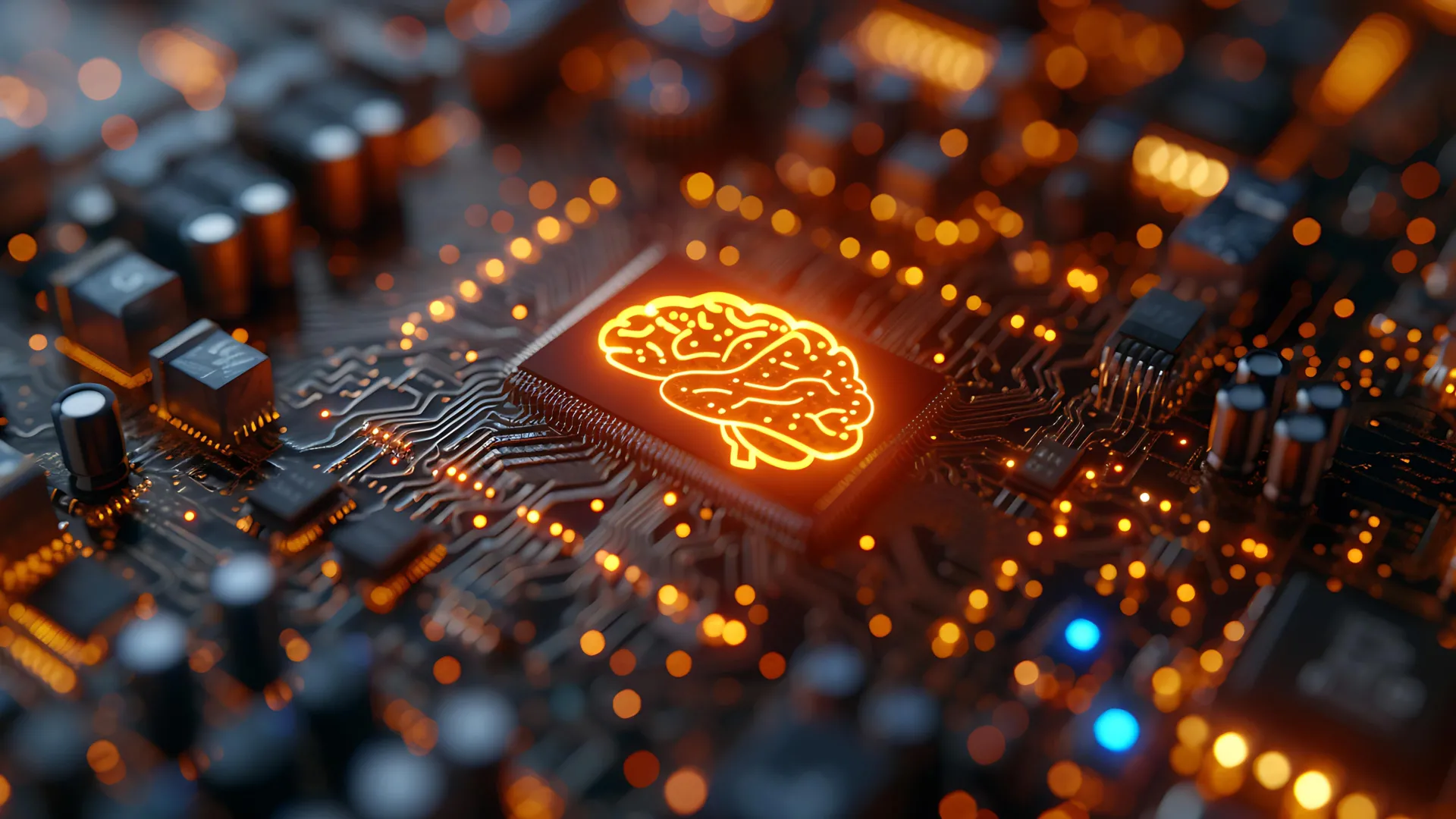
In the quiet laboratories of Sandia National Laboratories, a paradigm shift is underway that threatens to upend our conventional understanding of how computers solve the most complex problems in physics and engineering. For decades, the gold standard for modeling the universe—from the aerodynamics of a jet fighter to the volatile physics of nuclear deterrents—has been the massive, power-hungry supercomputer. However, a new study published in Nature Machine Intelligence suggests that the future of high-performance computing may not lie in bigger, hotter silicon processors, but in hardware that mimics the biological architecture of the human brain.
Computational neuroscientists Brad Theilman and Brad Aimone have unveiled a pioneering algorithm that enables "neuromorphic" hardware to solve partial differential equations (PDEs). These equations are the bedrock of scientific inquiry, governing everything from the flow of fluids and the behavior of electromagnetic fields to the structural integrity of skyscrapers. By successfully mapping these rigorous mathematical problems onto brain-like architecture, the Sandia team has cleared a path toward the world’s first neuromorphic supercomputer—a machine that promises to perform exascale-level computations with a fraction of the energy currently required by modern data centers.
The Mathematical Foundation: Why PDEs Matter
To understand the magnitude of this discovery, one must first grasp the ubiquity of partial differential equations. PDEs are the language of physical change. If you want to know how a bridge will sway in a hurricane, how a blood clot travels through an artery, or how a fusion reactor contains superheated plasma, you are dealing with PDEs.
Historically, solving these equations has been an exercise in brute force. Because PDEs describe continuous systems, computers must break space and time into billions of tiny, discrete pieces, calculating the interactions between each piece iteratively. This process is so computationally expensive that it requires the world’s most powerful supercomputers, which consume megawatts of electricity—enough to power a small town—to complete a single simulation.
Neuromorphic computing offers a radical departure from this "von Neumann" architecture, where memory and processing are physically separated. Instead, neuromorphic systems utilize integrated circuits that function like biological neurons and synapses. Information is processed locally, in parallel, and asynchronously, much like the neural pathways of the human brain. While these systems have long been touted for their potential in pattern recognition—such as identifying faces or classifying images—they were previously dismissed as too "noisy" or imprecise for the cold, hard rigor of advanced physics. Theilman and Aimone have proven that assumption wrong.
Chronology of a Breakthrough
The journey to this discovery did not happen overnight; it is the culmination of years of theoretical modeling and the convergence of neuroscience with applied mathematics.
- The Foundation (2012): Twelve years ago, a foundational model of cortical network behavior was introduced in the computational neuroscience community. While researchers understood that this model captured the essence of neural firing patterns, its broader mathematical utility remained unrecognized.
- The Hypothesis (2022–2023): Theilman and Aimone began investigating whether the "intelligent-like" behavior of neuromorphic chips could be harnessed for formal mathematical tasks. Their hypothesis was rooted in the observation that the human brain performs massive, complex calculations—such as adjusting for gravity and wind while hitting a baseball—without the conscious effort or the immense energy expenditure of a computer.
- The Development (Early 2024): The team developed a specialized algorithm designed to map the structural framework of these cortical networks onto neuromorphic hardware. They discovered a natural, non-obvious link between the circuit architecture and the structure of PDEs.
- The Validation (Mid-2024): After rigorous testing, the team successfully demonstrated that the neuromorphic system could solve PDEs with accuracy comparable to traditional methods but with vastly higher energy efficiency.
- Publication (Late 2024): The study was formally released in Nature Machine Intelligence, marking the first time such a bridge has been constructed between cognitive architecture and high-level applied mathematics.
Supporting Data: The Energy-Performance Gap
The promise of neuromorphic computing lies in its efficiency. In a traditional computer, moving data back and forth between memory (RAM) and the central processing unit (CPU) creates an energy "bottleneck." Every operation costs energy, and as the complexity of the simulation grows, the energy costs scale exponentially.
The Sandia team’s data suggests that neuromorphic systems solve this by using "event-based" computing. In this model, the system only consumes energy when a "neuron" fires—meaning it is idle during periods of relative stasis. Because PDEs often involve sparse interactions, the brain-like hardware can "ignore" large swathes of the simulation that are not currently changing, effectively focusing its computational budget where it is needed most.
While current supercomputers utilize exascale processing power to solve complex physical models, they are tethered to the power grid by cables that essentially limit their scalability. If neuromorphic systems can perform similar tasks using "cheap" biological-style computation, the implications for the National Nuclear Security Administration (NNSA) are profound. The NNSA maintains the nation’s nuclear deterrent, a mission that relies on high-fidelity simulations of physics that are too dangerous or impossible to test in the real world. A transition to neuromorphic supercomputing could allow the NNSA to maintain its standards of safety and accuracy while significantly reducing the carbon and electrical footprint of its simulation centers.
Official Perspectives: Bridging the Gap
The reaction within the scientific community has been one of cautious, yet profound, optimism. The Sandia team emphasizes that this is not merely an engineering tweak; it is a fundamental rethinking of the relationship between silicon and mathematics.
"We’re just starting to have computational systems that can exhibit intelligent-like behavior," says Brad Theilman. "But they look nothing like the brain, and the amount of resources that they require is ridiculous, frankly." Theilman notes that the bridge they discovered between the 12-year-old cortical model and PDE mathematics was hiding in plain sight, waiting for the right computational perspective to be applied.
Brad Aimone adds a note of philosophical and practical defiance: "You can solve real physics problems with brain-like computation. That’s something you wouldn’t expect because people’s intuition goes the opposite way. And in fact, that intuition is often wrong."
For the Department of Energy’s Office of Science and the NNSA, this research represents a strategic investment in the future of national security. By funding programs that look beyond the immediate horizons of traditional silicon, these agencies are effectively hedging against the inevitable limitations of current computer chip manufacturing.
Broader Implications: From Physics to Neurology
The reach of this research extends far beyond the simulation of fluid dynamics or electromagnetic fields. By understanding how a silicon-based "brain" solves mathematical problems, researchers are gaining a clearer window into how our own brains might be performing similar calculations.
"Diseases of the brain could be diseases of computation," Aimone notes. "But we don’t have a solid grasp on how the brain performs computations yet."
If the brain is, in effect, a highly efficient biological computer solving PDEs to navigate the physical world, then neurodegenerative conditions like Alzheimer’s or Parkinson’s could be viewed as a breakdown in the brain’s "algorithmic" efficiency. By developing better neuromorphic models, scientists may one day be able to create digital twins of neural networks, allowing them to test the impact of neurological disorders in a simulated environment. This could lead to a revolution in medical diagnostics, where doctors could predict the trajectory of a disease by observing how the "computation" of a patient’s brain begins to fail.
Building the Future: The Path Toward Neuromorphic Supercomputing
The team at Sandia is quick to emphasize that they are still in the early stages. Neuromorphic computing is an emerging field, and the path to a full-scale supercomputer involves overcoming significant hurdles, including the need for specialized hardware manufacturing and the development of software libraries that can translate traditional math into the "language" of neurons.
However, the momentum is undeniable. Theilman and Aimone are now calling for a multidisciplinary effort, inviting mathematicians, neuroscientists, and hardware engineers to collaborate on the next generation of algorithms. The goal is to determine if more advanced applied math techniques—those beyond basic PDEs—can also be mapped onto neuromorphic hardware.
"We have a foot in the door for understanding the scientific questions, but also we have something that solves a real problem," Theilman says.
As we stand on the precipice of a post-Moore’s Law era, where the traditional scaling of silicon chips is hitting physical limits, the "brain-like" approach provides a compelling, energy-efficient, and mathematically elegant alternative. By looking back at the biological architecture that has powered human survival for millions of years, the Sandia team has provided a blueprint for the future of computing—one that is not only smarter, but significantly more sustainable. The next generation of supercomputers may not be built in the image of the massive, cold, and rigid machines of the past, but in the image of the thinking, learning, and highly efficient organs we carry within our own skulls.
 Sagoh
Sagoh  Asro
Asro  Siti Muinah