
 By Asep Darmawan
In the evolving landscape of digital communication, the monopoly of centralized social networks is facing its most significant challenge in a decade. While platforms like X (formerly Twitter) and Threads continue to battle for dominance, a quiet revolution has been taking place under the hood of the internet. Bluesky, the decentralized, open-source microblogging platform, has transcended its origins as an experimental project to become a robust social powerhouse with over 44 million users as of May 2026.
For businesses, marketers, and digital creators, the question is no longer "What is Bluesky?" but rather, "How can we harness this platform to build authentic, lasting connections?" As the digital ecosystem shifts toward user sovereignty and algorithmic transparency, understanding the mechanics and implications of Bluesky is essential for any modern social media strategy.

The Genesis of a Decentralized Alternative
Bluesky began as an ambitious internal initiative at Twitter in 2019, championed by then-CEO Jack Dorsey. The mission was clear: to create an open, decentralized standard for social media that would prevent any single entity from controlling the flow of information or the architecture of the public square.
By 2021, the project spun off into an independent entity, Bluesky PBLLC. Its core innovation is the AT Protocol (Authenticated Transfer Protocol). Unlike traditional social media platforms where your identity, content, and follower graph are locked into a single company’s servers, the AT Protocol allows for portability. In theory, if a user becomes dissatisfied with the experience on one server or "instance," they can migrate their digital identity and social graph elsewhere—much like moving your email address between providers without losing your contacts.

A Chronology of Growth
The platform’s trajectory from a niche academic experiment to a mainstream player has been defined by key strategic milestones:
- 2019–2022: The development phase, focusing on the infrastructure of the AT Protocol.
- Late 2022: The launch of the invite-only beta. This period allowed the platform to scale its servers carefully and cultivate a community-focused culture.
- February 2024: A turning point. Bluesky opened its doors to the general public, dropping the invite requirement.
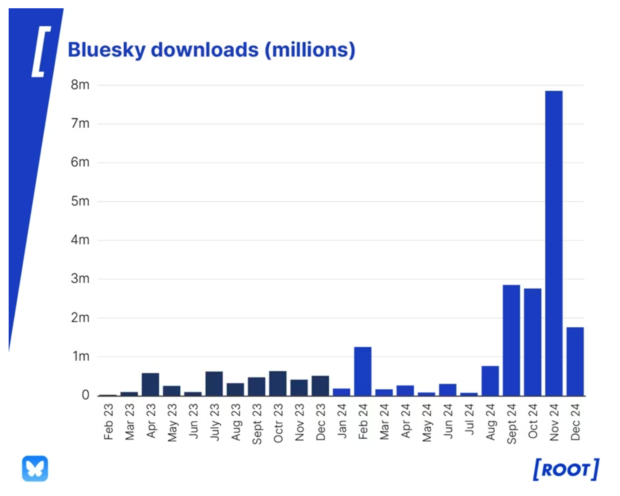
- November 2024: The "Great Migration." Following shifts in the political and cultural climate on other platforms, Bluesky saw an unprecedented surge in interest, briefly capturing the #1 spot on Apple’s App Store and accumulating millions of new downloads in a single month.
- 2025–2026: Consolidation and feature expansion. With 44 million users, the platform moved from a "fringe" alternative to a mainstream destination for journalists, niche experts, and organizations looking for a less hostile digital environment.
Supporting Data: The Landscape of 2026
The appeal of Bluesky lies in its distinct user experience. While it mirrors the text-first interface of X, the underlying philosophy is diametrically opposed to the ad-heavy, engagement-at-all-costs models of its competitors.

Market Comparison (as of May 2026)
| Category | Bluesky | Mastodon | Threads |
|---|---|---|---|
| User Base | 44M+ | 10.5M | 150M+ (Monthly) |
| Ad Model | None | None | Yes |
| Decentralization | Full (AT Protocol) | High | Partial |
| Character Limit | 300 | 500 | 500 |
| Video Capability | Up to 3 mins | Yes | Up to 5 mins |
The demographic profile of Bluesky is currently skewed toward the 18–34 age range (approximately 56% of the user base), with a significant concentration in the United States. Furthermore, the platform has become a "safe harbor" for professional sectors, particularly journalism and academic research, due to its commitment to open standards and the absence of intrusive algorithmic advertising.
The "Authenticity Advantage": Why Brands Are Engaging
The most compelling reason for the recent influx of businesses to Bluesky is not the size of the audience, but the quality of the engagement. Marketing experts suggest that the absence of a pervasive ad engine has preserved a "human-to-human" quality that is increasingly rare in the social landscape.

"What’s particularly notable about Bluesky are the genuine engagement levels," says Dana DiTomaso, Founder and Lead Instructor at Kick Point Playbook. "The platform currently has a higher proportion of real, engaged users who are genuinely interested in meaningful discussions. This translates to better quality interactions."
This sentiment is echoed by Niclas Schlopsna, CEO of spectup, who compares the current state of Bluesky to the "early days" of Twitter—an unpolished, raw space where brands can experiment with transparency rather than just polished corporate messaging.
Strategic Implications for Business
For organizations looking to integrate Bluesky into their 2026 strategy, the approach must differ from the "blast-and-broadcast" style used on platforms like Instagram or LinkedIn.
1. Thought Leadership and Long-Form Value
Because Bluesky is friendly to external links, it serves as a premier venue for distributing deep-dive content. Brands can leverage this to position themselves as industry authorities, linking directly to whitepapers, blog posts, and research without being penalized by an algorithm designed to keep users on-app.
2. Targeted Community Building
The use of "Custom Feeds" and "Starter Packs" allows brands to insert themselves into highly specific conversations. Rather than shouting into the void of a general algorithm, a business can participate in niche feeds dedicated to their specific industry, ensuring their content reaches users who have explicitly opted into that subject matter.
3. A Testing Ground for Messaging
Many marketers are now using Bluesky as a "creative laboratory." Before launching a major campaign on a high-traffic platform like X, brands can run messaging, polls, or creative concepts on Bluesky. The direct, often candid feedback from this community acts as a focus group, allowing teams to refine their narrative before it hits the mainstream.

4. Social Listening and Sentiment Tracking
With the integration of tools like Hootsuite, businesses can now treat Bluesky as a primary source for social listening. Tracking brand mentions and industry sentiment on the platform provides a "cleaner" data set, as the interactions are less likely to be skewed by bot activity or artificial engagement farms.
Official Stance and Future Outlook
The leadership at Bluesky has maintained a consistent vision: to build a network that treats the user as a participant, not a product. In recent communications, the company highlighted that over one billion posts have been created since launch, emphasizing that their goal is to provide a space for both news consumption and personal connection.

By partnering with social management platforms, Bluesky is actively lowering the barrier to entry for professional users. The strategy is clear: provide the tools for businesses to be present, but leave the culture of the platform in the hands of the users.
Conclusion: Is It Time to Switch?
For most businesses, the question is not whether to abandon other platforms, but how to rebalance their portfolio. If your brand relies on hyper-targeted, high-volume advertising, Bluesky may not be your primary driver of ROI in 2026. However, if your goal is long-term brand equity, authentic community building, and thought leadership, the platform is arguably the most valuable real estate available.

Even if you are not yet ready to commit to a full posting schedule, the most prudent strategic move is to reserve your brand handle immediately. By claiming your identity now, you protect your brand’s reputation and keep the door open for the future of the open web.
The era of the "walled garden" social network is beginning to show its cracks. In its place, a more flexible, user-owned, and authentic digital ecosystem is rising. Whether you are a small business owner or a global enterprise, the shift toward decentralized platforms like Bluesky is a trend that can no longer be ignored. The question is no longer if you should be there, but rather what you will contribute to the conversation when you arrive.
 Reynand Wu
  Muslim
  Nila Kartika Wati