
 By Asro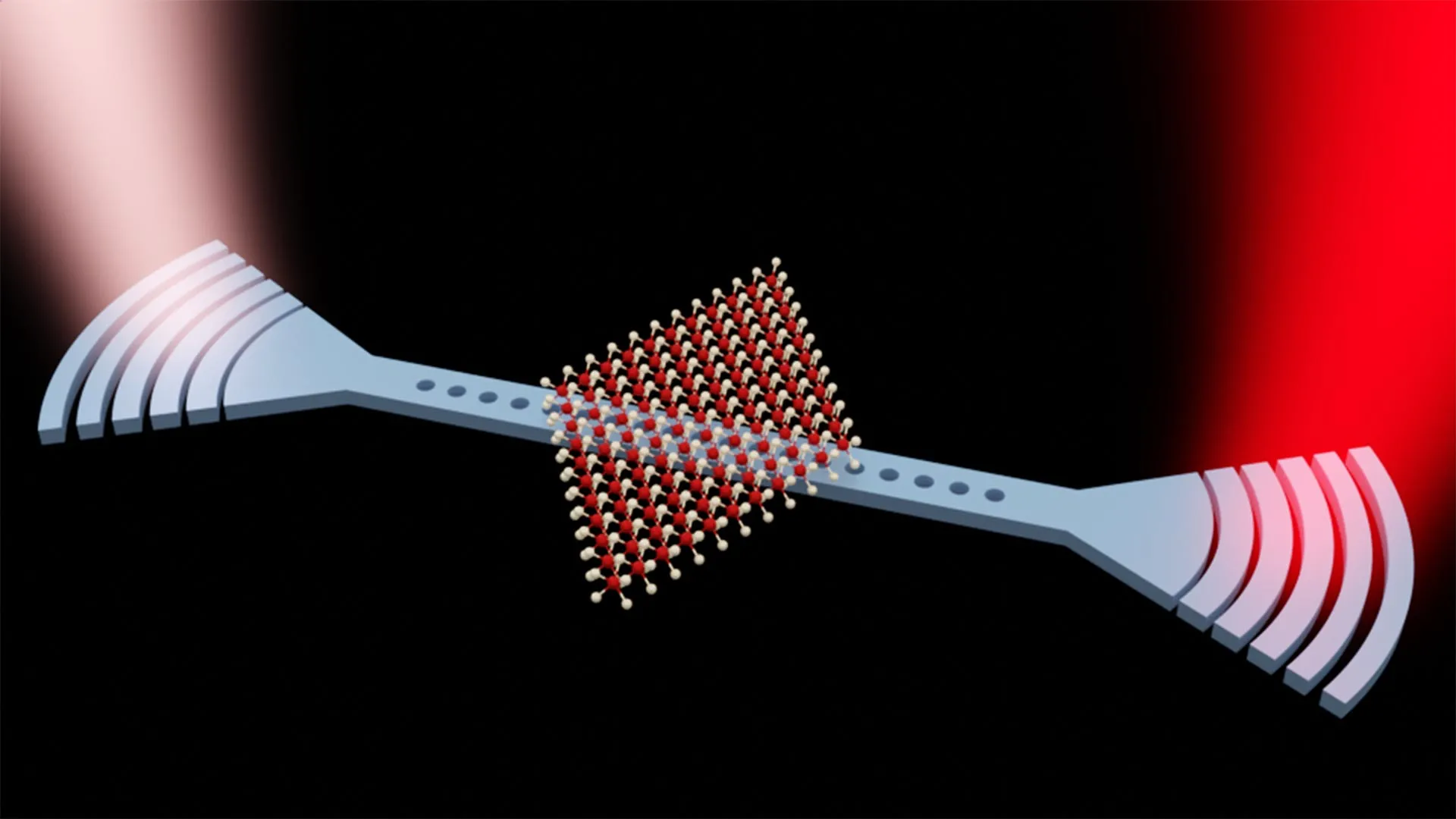
Eighty years after the University of Pennsylvania unveiled the Electronic Numerical Integrator and Computer (ENIAC)—a room-sized behemoth that fundamentally redefined human capability—the institution is once again standing at the precipice of a technological paradigm shift. As the silicon-based architecture that has powered the digital revolution begins to falter under the gargantuan demands of modern artificial intelligence, researchers at Penn are looking toward an unlikely successor: the photon.
By pivoting from the electron to the light particle, physicists in Penn’s School of Arts & Sciences are developing a new frontier in computing, one that promises to bypass the heat, resistance, and energy inefficiencies that currently serve as the glass ceiling for AI development.
The Legacy of ENIAC and the Silicon Bottleneck
To understand the magnitude of this shift, one must first look back to 1946. ENIAC, the brainchild of Penn researchers J. Presper Eckert and John Mauchly, was a marvel of the mid-20th century. By utilizing vacuum tubes to control streams of electrons, ENIAC performed complex mathematical calculations at speeds previously thought impossible. This electronic architecture became the bedrock of modern life. From the smartphone in your pocket to the massive server farms powering generative AI, the fundamental logic remains unchanged: information is moved, stored, and processed via the movement of electrons through silicon.
However, eight decades of progress have brought us to a point of diminishing returns. As AI models grow to encompass trillions of parameters, the physical limitations of the electron have become undeniable. Electrons carry an electrical charge, which creates significant friction—or resistance—as they travel through microscopic copper and silicon pathways. This resistance is not merely a technical annoyance; it is a thermal nightmare. As chips become denser, they generate massive amounts of heat, requiring complex cooling systems that consume even more energy. We are currently hitting a wall where the energy required to power the AI revolution is rapidly outpacing our capacity to provide it efficiently.
The Paradox of Photons
For years, the scientific community has looked to light as the inevitable successor to electricity. Photons are inherently superior to electrons for communication. They are charge-neutral, possess zero rest mass, and can traverse long distances with minimal degradation. This is precisely why fiber-optic cables have become the backbone of the global internet.
Yet, there has been a persistent, fundamental problem: light is notoriously antisocial. Because photons lack charge, they do not interact easily with one another or their environment. In computing, this is a fatal flaw. A computer relies on "switching"—the ability to flip a signal on or off to represent binary data (0s and 1s). Electrons do this easily because their charges allow them to repel or attract one another, creating the logic gates necessary for processing. Photons, however, prefer to pass right through each other like ghosts, making them abysmal at the logical decision-making required for computation.
Chronology of a Breakthrough
The research team, led by Bo Zhen, the Jin K. Lee Presidential Associate Professor in the Department of Physics and Astronomy, approached this challenge with a novel hypothesis: what if they could force light to behave like matter?
The journey toward this discovery, recently published in the journal Physical Review Letters, followed a rigorous path of quantum engineering:
- Initial Conceptualization: The team explored the potential of "exciton-polaritons"—quasiparticles formed when a photon is strongly coupled with an electron-hole pair within a semiconductor.
- Material Engineering: The researchers utilized atomically thin semiconductor materials, essentially creating a two-dimensional stage where light and matter could be forced into an intimate union.
- Experimental Validation: The team successfully demonstrated that by trapping photons within these thin layers, they could induce the light to interact strongly with its surroundings, enabling the elusive "all-light switching" that had previously been theoretically possible but practically unattainable.
- Energy Measurement: The team measured the energy consumption of these switches, finding they required only four quadrillionths of a joule—a level of efficiency that dwarfs current silicon-based switching architectures.
Official Perspectives: Bridging Light and Matter
"Because they are charge-neutral and have zero rest mass, photons can carry information quickly over long distances with minimal loss, dominating communications technology," explains Li He, co-first author of the paper and a former postdoctoral researcher in the Zhen Lab, who now serves as an assistant professor at Montana State University. "But that neutrality means they barely interact with their environment, making them bad at the sort of signal-switching logic that computers depend on."
The brilliance of the Zhen Lab’s approach lies in the "middle ground" they have occupied. They are not trying to replace the entirety of the computer with light; rather, they are using the exciton-polariton to bridge the gap between light’s speed and electronic computing’s logic.
"The bottleneck in current photonic AI chips is the ‘conversion tax,’" notes an independent observer familiar with the study. "Existing experimental chips use light for the heavy lifting of matrix multiplication, but when they need to make a decision—a nonlinear activation step—they have to convert the signal back into electricity. This conversion is slow, it consumes a massive amount of power, and it creates a thermal spike. By performing this activation step using exciton-polaritons, the Penn team is removing the biggest drain on efficiency in the photonic ecosystem."
Implications for the AI Era
The implications of this research extend far beyond the laboratory. As the world becomes increasingly reliant on large-scale AI models, the demand for energy-efficient hardware has moved from a technical challenge to an environmental and economic imperative.
1. Eliminating the Conversion Tax
If this technology scales, we could see the emergence of photonic chips that process information directly from sensory inputs—such as high-resolution cameras or LiDAR sensors—without ever needing to convert the signal into an electronic format. This could lead to a massive reduction in latency for autonomous vehicles and real-time robotics.
2. A Solution to the Energy Crisis
The "four quadrillionths of a joule" figure is not just a scientific curiosity; it is a benchmark for the future. As AI training shifts toward larger, more power-hungry models, the ability to perform logical operations at such low energy thresholds could allow for significantly more powerful AI systems that operate on a fraction of the current power draw.
3. Quantum Computing Potential
While the current focus is on classical AI acceleration, the ability to control and switch light at such fine granularities is a foundational step toward quantum computing. By leveraging the quantum properties of exciton-polaritons, future chips might be able to handle quantum bits (qubits) more effectively, potentially solving problems that are currently intractable for even the most advanced supercomputers.
Challenges to Commercialization
Despite the excitement surrounding this breakthrough, the road to mass production remains steep. The researchers emphasize that their current work is a proof-of-concept. Scaling the fabrication of atomically thin semiconductors to a commercial level, and integrating these photonic switches into existing CMOS (Complementary Metal-Oxide-Semiconductor) fabrication processes, will require a monumental effort from the semiconductor industry.
Furthermore, the stability of these quasiparticles outside of controlled, laboratory-grade environments must be tested. However, given that the research was supported by the US Office of Naval Research and the Sloan Foundation, it is clear that the defense and academic sectors recognize the strategic importance of transitioning away from pure electron-based logic.
Conclusion: A New Dawn for Computing
Eighty years ago, ENIAC proved that machines could think. Today, the work being done in the Zhen Lab at the University of Pennsylvania suggests that the machines of the future will not just think faster—they will think lighter.
By marrying the speed of the photon with the logic of the electron through the creation of exciton-polaritons, the team has provided a blueprint for a post-silicon era. While we are still in the early stages of this transition, the movement away from the "hot" world of electronic resistance toward the "cool" efficiency of light represents the most significant shift in computing since the vacuum tube was replaced by the transistor. As AI continues to push the boundaries of human knowledge, it is fitting that the next great leap in computing architecture is being led by the same institution that started the journey eight decades ago.
 Sagoh
Sagoh  Siti Muinah