
 By Asro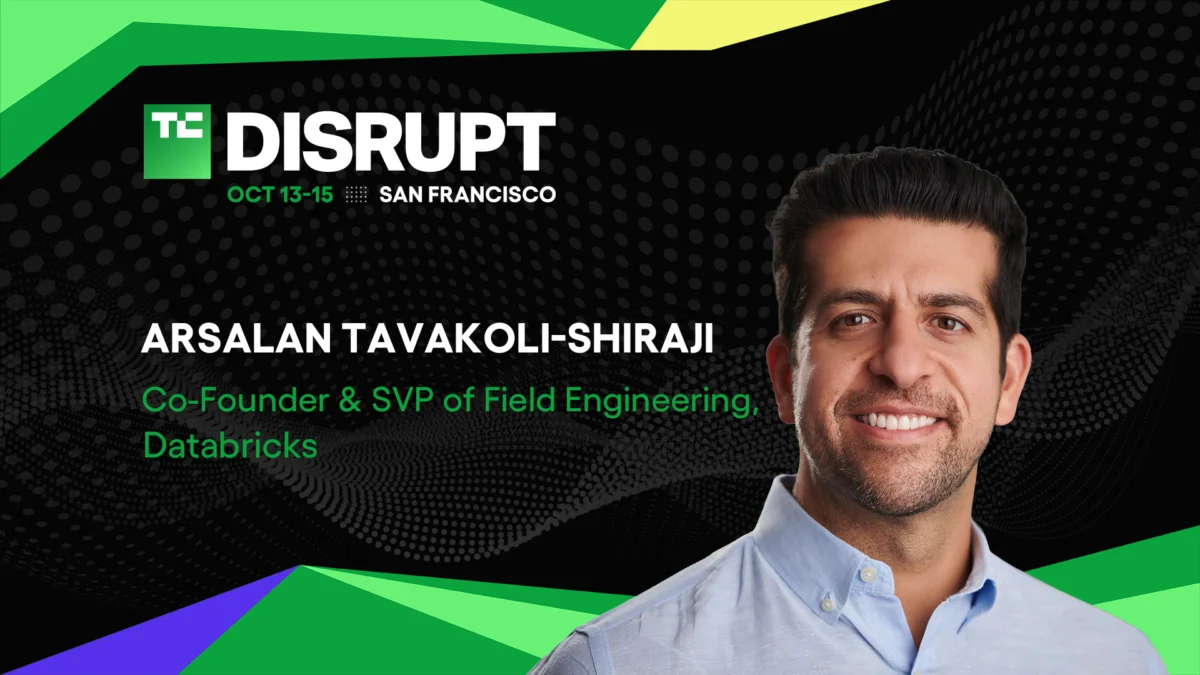
For the past several years, the narrative surrounding enterprise artificial intelligence has been dominated by a singular, seductive promise: the breakthrough. Founders and venture capitalists alike operated under the assumption that if they could build a model powerful enough, a demo impressive enough, and a vision bold enough, the enterprise market would beat a path to their door.
For a time, they were right. Experimentation was the currency of the era, and pilot programs flourished as companies scrambled to avoid "FOMO" (fear of missing out) in the wake of the generative AI explosion. However, as we move into the latter half of 2026, the landscape has undergone a tectonic shift. Enterprise organizations are no longer rejecting AI; they are, however, aggressively rejecting operational instability.
This maturation of the market marks a defining divide between the AI companies that will scale to IPO-level dominance and those that will stall once the initial momentum of their pilot programs fades.
The Myth of the "Broken" Enterprise
At the upcoming TechCrunch Disrupt 2026, scheduled for October 13–15 at Moscone West in San Francisco, Arsalan Tavakoli-Shiraji, co-founder and SVP of field engineering at Databricks, will address this pivotal evolution in his session, "The Enterprise Isn’t Broken. Your Assumptions About It Are."
Tavakoli-Shiraji’s premise is a direct challenge to the Silicon Valley orthodoxy that views large corporations as stagnant or "luddite" for failing to adopt the latest LLM-powered tools. Instead, he posits that the "failure" to deploy is a rational, calculated response to risk. The enterprise, he argues, is functioning exactly as it should: it is a complex, risk-averse engine designed for reliability, governance, and security. When a startup’s AI tool fails to integrate, it is rarely because the model itself is technically inferior; it is because the tool introduces too much entropy into a finely-tuned system.
The Chronology of the AI Hype Cycle
To understand why this shift is occurring, one must look at the trajectory of AI adoption over the last 36 months:
- 2023: The Era of Curiosity: Organizations allocated "innovation budgets" to test the waters. Success was measured by the "wow" factor of a demo. If a chatbot could summarize a document or write a snippet of code, the pilot was deemed a success.
- 2024: The Proliferation of Pilots: Companies began running dozens, sometimes hundreds, of disparate pilot programs. This led to a "pilot purgatory," where AI projects were scattered across business units without a unified strategy or path to production.
- 2025: The Governance Wake-up Call: Enterprises began grappling with the harsh realities of data privacy, copyright liability, and hallucinations. IT and Legal departments began exerting more influence over procurement, effectively hitting the "pause" button on unvetted tools.
- 2026: The Operational Mandate: We are now in the phase where only tools that can demonstrate long-term, stable, and secure ROI are granted a seat at the table. The focus has shifted from "can we build it?" to "can we operate it at scale for a decade?"
The "Pilot Purgatory" Problem
The most common point of failure for modern AI startups is the "Pilot Trap." An AI startup enters a Fortune 500 company, proves their model works in a sandboxed environment, and secures a three-month contract. But when the time comes to move that tool into the core production stack, the project dies.
Why? Because the model was never the hard part. The hard part is the "last mile" of deployment.
For an enterprise, adopting a new AI tool means inviting a new set of variables into their operational ecosystem. If an AI agent requires a specific, unstable version of a library, or if it lacks robust audit trails for its decision-making process, it is a liability. Founders who ignore the "boring" aspects of software—data lineage, role-based access control, latency guarantees, and integration with legacy middleware—are finding that their "revolutionary" products are being quietly shelved by enterprise CTOs.

The New Metrics of Success
As enterprise buyers mature, their evaluation criteria have shifted. The questions have moved from the technical to the structural:
- Governance & Auditability: Can this model explain its output? If it makes a mistake, how do we trace it back to the training data or the prompt?
- Workflow Friction: Does this tool augment our existing employees, or does it require them to change their entire way of working to accommodate the AI’s limitations?
- Total Cost of Ownership (TCO): What is the cost of inferencing at scale, and how do we manage that cost as usage grows?
- Operational Resilience: Does this service have the 99.99% uptime required for enterprise-grade applications, or does it rely on a fragile API connection to an external model provider?
- Security & Compliance: Does the data used to tune this model leave our VPC (Virtual Private Cloud)? What happens to our proprietary data after the model is trained?
Bridging the Gap: The View from Databricks
Arsalan Tavakoli-Shiraji offers a unique perspective on these challenges. His background is a rare hybrid of high-level enterprise strategy—honed during his time as an associate principal at McKinsey & Company—and deep-tech architectural expertise, evidenced by his PhD in computer science from UC Berkeley.
"The companies that win will be those that understand how to translate ‘AI magic’ into ‘enterprise machinery,’" Tavakoli-Shiraji notes. He advocates for a design philosophy where AI is treated as a component of a larger, reliable data infrastructure, rather than a standalone, "black box" solution. At Databricks, the focus has been on building the "Data Intelligence Platform," which treats AI not as an island, but as a layer that must be tightly integrated with the underlying data governance and security frameworks that enterprises have spent decades building.
The Implications for the AI Ecosystem
The implications for the broader AI ecosystem are profound. We are likely to see a massive consolidation in the industry. Startups that focused solely on "wrapper" applications—thin layers of UI on top of foundation models—will struggle to compete against enterprise-grade platforms that offer built-in compliance and integration.
Conversely, we are seeing the rise of "Enterprise-Native" AI companies. These are organizations that build from the ground up with the assumption that they will be audited, regulated, and scaled across thousands of users. They prioritize:
- Explainability over pure accuracy: A slightly less accurate model that is fully transparent is often more valuable to a bank or healthcare provider than a "black box" model that cannot be audited.
- Integration over innovation: The ability to plug into SAP, Salesforce, and legacy SQL databases is more important than having the "state-of-the-art" benchmark on a public leaderboard.
- Trust over novelty: Reducing uncertainty is the ultimate competitive advantage.
Join the Conversation at Disrupt 2026
The shift toward operational trust is the defining challenge of the current AI cycle. As the industry gathers at TechCrunch Disrupt 2026, the focus will move away from the hype of the "next big model" and toward the grueling, necessary work of institutionalization.
With 10,000+ founders, investors, and operators expected to attend, the event will serve as a barometer for the health of the enterprise AI sector. Whether you are a founder looking to bridge the gap from pilot to production, or an enterprise leader trying to separate signal from noise, the sessions on the AI Stage—presented by Google Cloud—are designed to provide a roadmap for the next stage of the journey.
Don’t miss out on the insights that will define the next chapter of enterprise AI. Ticket savings of up to $410 are available for a limited time. Register by May 29 at 11:59 p.m. PT to secure your spot at the center of the conversation.
The enterprise is waiting, but it is waiting for reliability. Are you ready to provide it?
 Sagoh
Sagoh  Iffa Jayyana
  Lina Hope