
 By Nana Wu
Ad fraud remains one of the most persistent and costly challenges in digital marketing. According to industry forecasts from Juniper Research, advertisers are projected to lose an astronomical $172 billion annually to ad fraud by 2028. While automated botnets and malicious actors affect campaigns across the board, the threat is most acute in highly competitive, high-cost-per-click (CPC) industries where malicious actors actively attempt to deplete competitors’ budgets.
For search engine marketers, the traditional playbook for combatting click fraud—relying on Google’s automated filters and third-party IP blocking software—is increasingly proving insufficient. When sophisticated bad actors bypass these defenses, advertisers are left paying for traffic that has zero chance of converting.
This investigative report details a real-world case study of a search campaign crippled by invalid clicks, analyzes why standard defensive measures failed, and explains a novel targeting workaround that successfully cut invalid clicks by 50% and restored campaign profitability.
Main Facts: The Anatomy of a High-CPC Ad Fraud Problem
The subject of this case study is a digital agency’s client operating in the highly competitive professional services sector, specifically offering book editing and ghostwriting services. In this niche, search intent is exceptionally high, and average CPCs are correspondingly elevated, making the vertical a prime target for click fraud.
The Paradox of High Intent and Zero Conversions
Initially, the client’s Google Search campaigns appeared highly optimized on paper. The search queries triggering the ads were highly relevant, displaying clear commercial intent. However, despite strong click-through rates (CTR) and high-quality search terms, the traffic failed to convert at a sustainable or profitable rate.
An internal audit of the traffic telemetry quickly revealed classic symptoms of click fraud:
- Anomalously high click volumes during specific hours of the day.
- Repeated clicks from identical geographical regions that yielded zero page engagement or scroll depth.
- Spikes in traffic that bypassed standard user behavior models, such as immediate bounces without any mouse movement or interaction with on-screen elements.
The Failure of Traditional Defenses
To mitigate the damage, the agency initially deployed industry-standard countermeasures. They integrated specialized third-party click fraud detection tools designed to monitor traffic and automatically blacklist suspicious IP addresses.

However, these tools yielded no measurable improvement in campaign performance. The core limitation lies in how modern fraudsters operate:
- IP Cycling: Sophisticated click operations do not rely on static IP addresses. Instead, they utilize Virtual Private Networks (VPNs) and residential proxy networks to cycle through thousands of unique IP addresses.
- Exclusion Limits: Google Ads imposes a hard limit of 500 IP address exclusions per campaign. In a high-volume fraud environment, a brand can exhaust this limit within days, leaving them defenseless against new IPs.
- Delayed Detection: Third-party tools block IPs after a suspicious click has occurred. If the fraudster uses a unique IP for every single click, reactive blocking is fundamentally useless.
Chronology: The Journey to a Technical Workaround
Faced with failing campaigns and ineffective third-party tools, the agency embarked on a systematic process to identify, escalate, and ultimately solve the invalid click problem.
[Phase 1: Diagnosis]
Identify traffic anomalies -> Spot high bounce rates & zero-engagement clicks.

[Phase 2: Reactive Defense]
Deploy third-party IP blockers -> Ineffective due to VPN/proxy IP cycling.

[Phase 3: Escalation]
File formal dispute with Google -> Google claims all fraud is filtered; no refund.

[Phase 4: Innovative Workaround]
Implement 540 Google-defined Audiences set to "Targeting" mode.

[Phase 5: Resolution]
Invalid click rate drops by 50%; campaigns return to profitability.
Escalating to Google Support
With data in hand, the agency filed a formal click quality investigation with Google. While Google’s support team acknowledged the presence of suspicious traffic patterns, their official verdict was unsatisfactory: they asserted that Google’s internal systems had already detected and filtered out the invalid activity, meaning the advertiser had not been billed for those clicks.
The agency’s billing and conversion data suggested otherwise. Believing that a significant portion of sophisticated invalid traffic was slipping through Google’s automated filters undetected, the team realized they needed a proactive strategy to prevent these users from seeing the ads in the first place.
Developing the Audience Filtering Hypothesis
The team began analyzing the fundamental differences between a human searcher and a bot or hired click-farm worker. They reasoned that while fraudsters can easily spoof clean IP addresses and clear their browser cookies, they rarely take the time to build realistic, long-term online profiles.
Google tracks users across its vast ecosystem (Search, YouTube, Maps, Chrome, and Android), categorizing them into predefined audiences based on demographic data, search history, and browsing behavior. A genuine consumer searching for book editing services likely has a rich digital footprint, placing them into various Google-defined audience segments (e.g., "Avid Readers," "Business Services," or "Luxury Shoppers"). Conversely, a transient bot or proxy-using clicker is highly unlikely to belong to these established cohorts.
Executing the "Targeting" Experiment
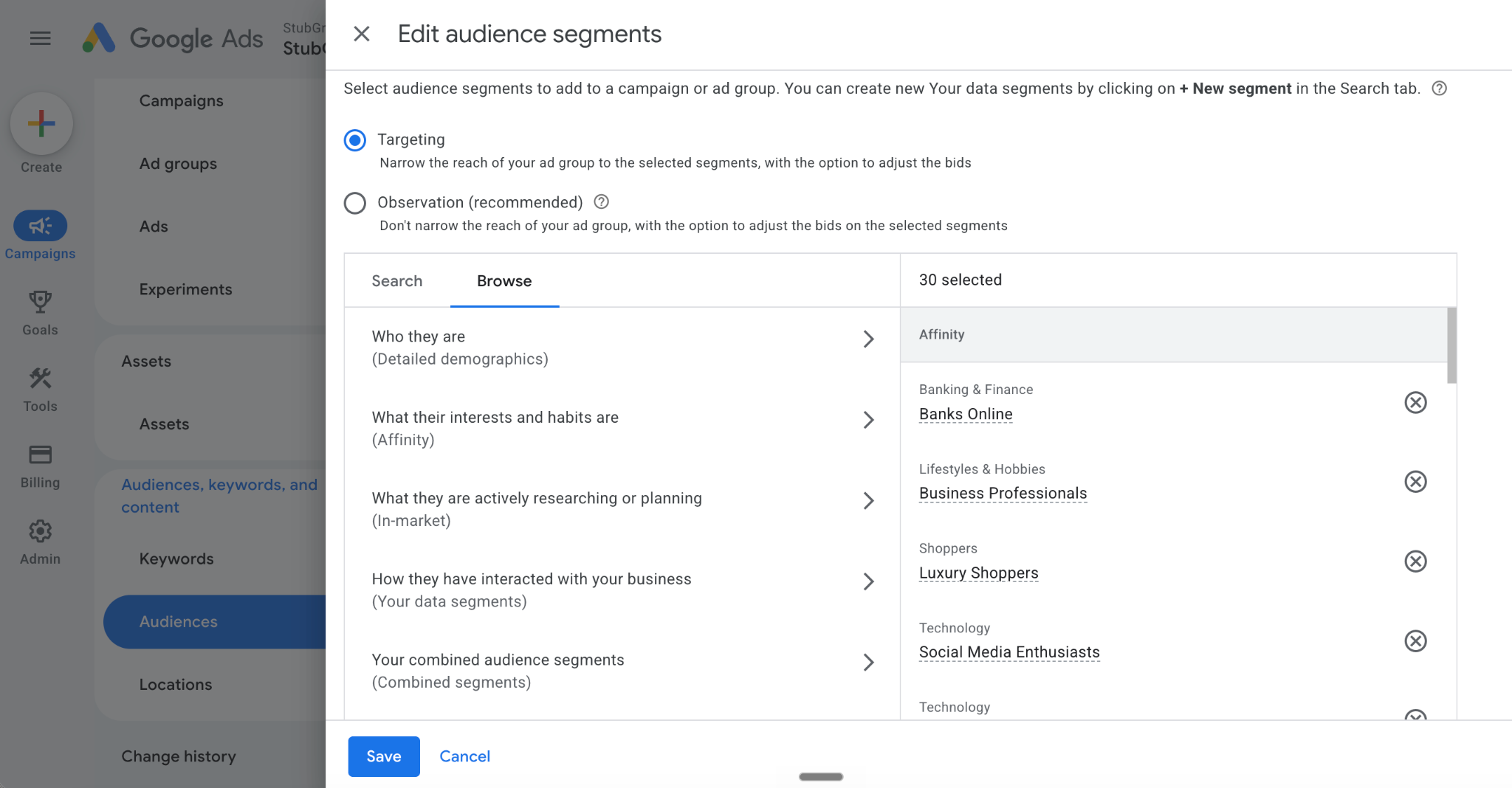
To test this hypothesis, the agency added 540 distinct Google-defined audiences to their Search campaigns. Crucially, they configured these audiences using the "Targeting" setting rather than the default "Observation" setting.

This structural shift changed the campaign’s logic:
- Standard Search Campaign Logic: Show ad if [User types Keyword].
- New "Targeting" Search Campaign Logic: Show ad only if [User types Keyword] AND [User belongs to at least one of the 540 selected Audiences].
The results were immediate. Upon applying this strict filter, the reported invalid click rate plummeted by 50%, and the campaign’s conversion rate surged back to highly profitable levels. By refusing to serve ads to users who lacked a verified Google audience profile, the agency successfully locked out the majority of the fraudulent traffic.
Supporting Data: The Scale of Ad Fraud and Benchmarks
To understand why this workaround was necessary, it is helpful to examine broader industry data regarding Google Ads click quality.
Industry-Wide Invalid Click Rates
While the average advertiser may assume click fraud is a marginal issue, data suggests otherwise. A comprehensive study conducted by Fraud Blocker analyzed over 43,700 Google Ads accounts and identified an average invalid click rate of 11.4%.
However, this average masks the severity of the issue in highly competitive verticals. In sectors with high CPCs—such as legal services, home improvement, finance, and specialized B2B services—invalid click rates frequently exceed 40%. In these environments, nearly half of an advertiser’s budget can be systematically wasted.
| Vertical Category | Estimated Invalid Click Rate | Risk Level |
|---|---|---|
| Low Competition / Low CPC | 2% – 8% | Low |
| Average Across All Verticals | 11.4% | Moderate |
| Highly Competitive (Legal, Finance, B2B) | 30% – 40%+ | High |
Official Responses and Platform Mechanisms
Google maintains a robust infrastructure dedicated to maintaining ad traffic quality, though its automated nature can sometimes lead to friction with advertisers.
How Google Defines and Handles Invalid Clicks
According to Google’s official documentation, invalid clicks include:
- Accidental clicks that provide no value to the advertiser (such as the second click of a double-click).
- Manual clicks intended to increase an advertiser’s hosting costs or drive up profits for website owners hosting the ads.
- Clicks and impressions generated by automated tools, robots, or other deceptive software.
Google employs a multi-layered detection system consisting of real-time filters and offline analyses. If a click is flagged as invalid before the advertiser is billed, it is filtered out, and the advertiser is not charged. If Google identifies invalid activity retroactively, they issue an "Invalid activity credit" to the account, which appears on the monthly billing statement.
Auditing Your Account’s Traffic Quality
Advertisers can monitor their exposure to invalid traffic directly within the Google Ads UI.
- Campaign-Level Columns: Advertisers can add the "Invalid clicks" and "Invalid click rate" columns to their campaign performance reports to see what percentage of total traffic Google is actively filtering out.
- Report Editor: For a more granular view, the "Invalid activity credit" report in the Report Editor provides detailed information on the exact credits issued to the account over time.
Strategic Implications: Implementation Guide and Risk Assessment
For search marketers facing severe click fraud, implementing strict audience targeting can be a game-changing tactic. However, because this approach fundamentally alters how Google serves ads, it must be executed with care.
Step-by-Step Implementation Guide
To apply this tactic within a Google Search campaign, follow these steps:
- Navigate to your Google Ads dashboard and select the target Search Campaign.
- In the left-hand navigation menu, click on Audiences, keywords, and content > Audiences.
- Click Edit audience segments.
- Under the setting options, select Targeting (Note: Do not select "Observation", as this will only gather data without restricting ad delivery).
- Click Browse and systematically select a broad range of audiences across demographic, affinity, in-market, and life event categories. Aim to build a diverse net of hundreds of audiences to ensure genuine searchers are not excluded.
- Click Save.
Google Ads UI -> Select Campaign -> Audiences -> Edit Audience Segments -> Select "Targeting" -> Add Broad Cohorts -> SaveWeighing the Pros and Cons
While highly effective at mitigating fraud, this strategy is an aggressive intervention that carries inherent trade-offs.
PROS:
+ Immediately reduces invalid clicks by filtering out profile-less bots/proxies.
+ Restores profitability to campaigns suffering from aggressive competitor clicking.
+ Bypasses the 500 IP address exclusion limit imposed by Google Ads.

CONS:
- Limits overall reach by excluding legitimate users without established Google profiles.
- Increases campaign management complexity (requires monitoring hundreds of audiences).
- Not suitable for low-fraud accounts where maximum reach is desired.
Conclusion and Recommendations
The success of this audience-filtering workaround highlights a critical reality in modern search engine marketing: as automated fraud techniques grow more sophisticated, advertisers cannot rely solely on platform-level automation or reactive IP blocking to protect their budgets.
By shifting from open keyword targeting to a hybrid model of Keyword + Verified Audience Profile, advertisers can construct a highly effective shield against invalid traffic. This strategy is not recommended for every account; however, for those operating in high-CPC, hyper-competitive environments where click fraud is actively tanking campaign performance, this approach represents a powerful tool to reclaim control over ad spend and restore measurable ROI.
 Jia Lissa
  Nana Muazin
  Layla Zulfa