
 By Asep Darmawan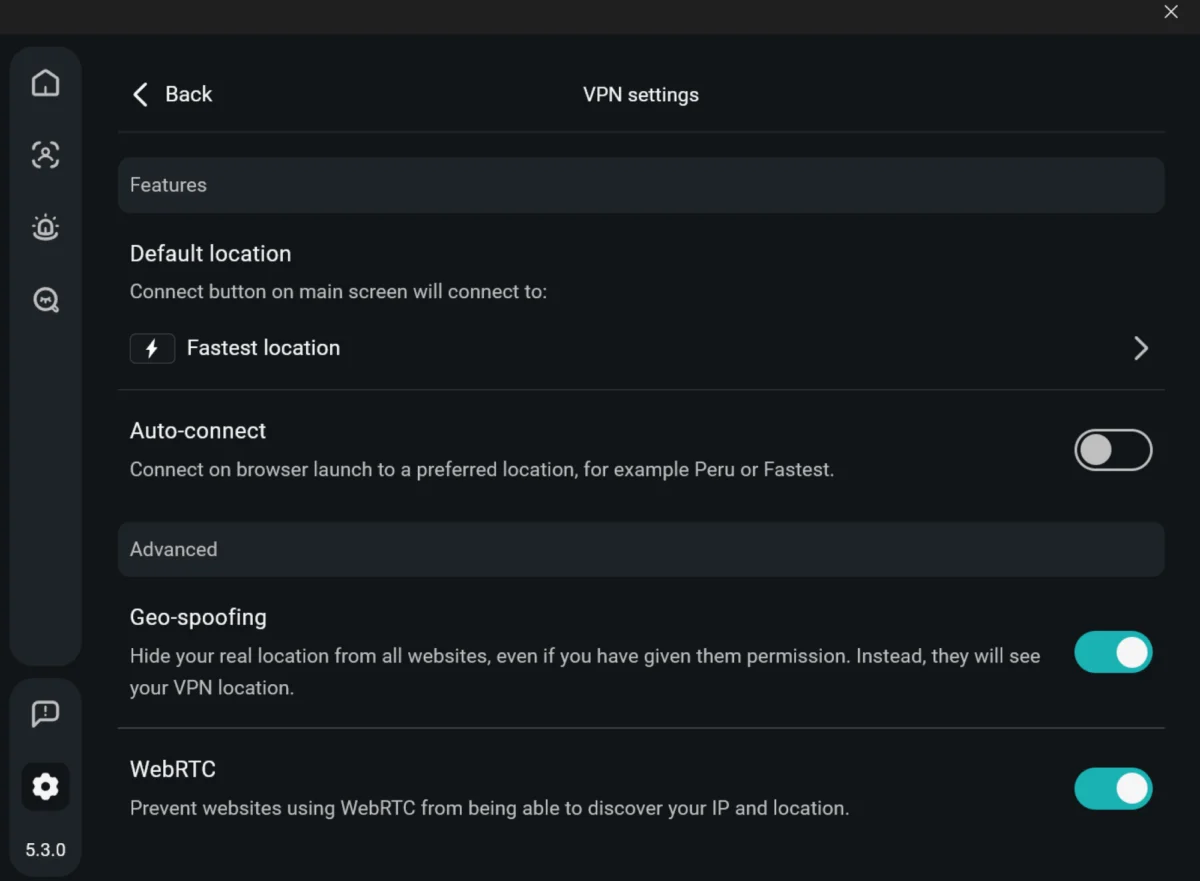
Main Facts
In the modern digital landscape, virtual private networks (VPNs) have become the gold standard for consumer-facing internet privacy. By routing a user’s web traffic through a secure, remote server, a VPN effectively masks their original Internet Protocol (IP) address. This mechanism creates an encrypted tunnel that theoretically prevents Internet Service Providers (ISPs), local network administrators, and malicious third parties from tracking online activity.
However, a pervasive architectural vulnerability built directly into the core of modern web browsers threatens to undermine this protection entirely: WebRTC leaks.
WebRTC (Web Real-Time Communication) is an open-source framework natively integrated into virtually all major web browsers—including Google Chrome, Mozilla Firefox, Microsoft Edge, Opera, and Apple Safari. Designed to facilitate lightning-fast, peer-to-peer (P2P) communications for bandwidth-heavy activities like high-definition video conferencing, voice calls, and live screen sharing, WebRTC requires direct connectivity between devices.
To achieve this low-latency efficiency, WebRTC utilizes the User Datagram Protocol (UDP). Crucially, this protocol often completely bypasses the encrypted Transmission Control Protocol (TCP) tunnels established by VPNs. As a result, a user’s true, unmasked public IP address can be exposed to websites, servers, and malicious actors during a connection handshake, rendering even the most robust VPN useless against this specific vector of attack.
Chronology
To understand how WebRTC became a primary privacy loophole, it is necessary to examine the evolution of browser-based communication standards.

- 2011 (The Inception of WebRTC): Recognizing the need for rich, plugin-free media communication on the web, Google—along with contributions from Ericsson and others—open-sourced WebRTC. The World Wide Web Consortium (W3C) began drafting standards to integrate the technology directly into browsers, eliminating the need for third-party plugins like Adobe Flash or Microsoft Silverlight.
- 2012–2015 (Standardization and Early Adoption): Major browser developers rapidly built WebRTC APIs directly into their core engines. Chrome and Firefox were among the first to enable the feature by default. During this development phase, developers focused intensely on speed, audio/video quality, and seamless cross-platform communication, while privacy implications regarding IP exposure remained largely secondary to functionality.
- 2015 (The Discovery of the Vulnerability): Security researchers and privacy advocates, most notably Daniel Roesler, published findings demonstrating that WebRTC could be exploited to reveal a user’s local and public IP addresses even when they were connected behind a VPN or proxy. This brought widespread attention to the tension between high-speed P2P communication and absolute network anonymity.
- 2017–2020 (Industry Adaptation): As consumer adoption of VPNs surged, cybersecurity firms began integrating WebRTC leak prevention tools directly into their software suites. Browser developers also introduced varying degrees of control, with Firefox allowing full disabling of the feature, while Chromium-based browsers lagged behind, forcing users to rely on third-party extensions.
- Present Day (Ongoing Vulnerability): Despite increased awareness, WebRTC remains enabled by default across nearly all modern web browsers. Even in Incognito or Private Browsing modes, the underlying communication protocol actively functions unless explicitly mitigated by advanced VPN settings or manual browser configuration.
Supporting Data
The threat posed by WebRTC leaks is substantiated by technical realities and user behavior metrics across the global internet ecosystem:
- Universal Integration: WebRTC is built into over 90% of the active desktop and mobile browser market share via Chromium (Chrome, Edge, Brave, Opera), Gecko (Firefox), and WebKit (Safari) engines.
- Default Vulnerability: In 100% of major out-of-the-box browser installations, WebRTC is enabled by default. Users must actively discover the vulnerability and take manual steps to secure their connections.
- Bypassing Incognito Mode: Privacy-conscious users frequently rely on "Incognito" or "Private" windows under the assumption that their digital footprint is minimized. However, internal security audits confirm that WebRTC operates identically in private browsing modes, leaking true IP addresses just as it does in standard windows.
- The Contrast in Protocols: Standard VPN traffic primarily relies on TCP (Transmission Control Protocol), which prioritizes data integrity and error checking inside an encrypted tunnel. WebRTC relies heavily on UDP (User Datagram Protocol) to prioritize speed, systematically punching holes through standard network address translation (NAT) firewalls and exposing underlying routing data.
Official Responses
As public awareness surrounding digital surveillance has expanded, responses from browser developers, VPN providers, and cybersecurity standard organizations have varied significantly:
1. Browser Developers
- Mozilla (Firefox): Firefox remains the industry leader in providing native, out-of-the-box control over WebRTC. Mozilla allows advanced users to toggle the feature completely off via the
about:configinterface without requiring external software extensions. - Google (Chrome) & Microsoft (Edge): Because Chromium-based browsers prioritize web application performance and seamless developer integration for tools like Google Meet and Microsoft Teams, neither Google nor Microsoft provides a simple, native toggle switch to disable WebRTC entirely. Instead, they shift the responsibility to web developers and third-party extension creators available on their respective web stores.
- Apple (Safari): Apple has taken a more restrictive approach to privacy, incorporating granular data-leak prevention protocols into Safari, though native full-disable switches remain absent in favor of managed proxy configurations.
2. The VPN Industry
Leading commercial VPN providers—including Surfshark, NordVPN, ExpressVPN, and others—have formally acknowledged WebRTC leaks as a critical threat to user confidentiality. Consequently, modern VPN applications frequently incorporate dedicated "WebRTC protection" toggles within their desktop and mobile clients. These features typically work by monitoring browser traffic, enforcing firewall rules, or injecting scripts that block STUN (Session Traversal Utilities for NAT) requests, thereby preventing external servers from querying a browser’s true IP address.
Implications
The existence of WebRTC leaks carries profound implications for internet users, privacy advocates, journalists, whistleblowers, and everyday citizens who rely on VPNs to safeguard their digital identities.
The Illusion of Security
The most dangerous aspect of a WebRTC leak is the false sense of security it creates. A user may pay for a premium VPN service, verify that their connection shows a foreign IP address on a basic webpage, and believe they are entirely anonymous. However, the moment they participate in a web-based video call, visit a maliciously crafted website equipped with IP-harvesting scripts, or use an interactive web application, their real IP address, geographic location, and ISP details can be instantaneously logged.

Broader Privacy Threats: Browser Fingerprinting
WebRTC leaks do not exist in a vacuum. They intersect dangerously with other covert tracking methodologies, such as browser fingerprinting. While a VPN masks your IP, fingerprinting combines hundreds of unique data points—including hardware specifications, operating system versions, installed fonts, GPU signatures, and screen resolutions—to construct a persistent "shadow profile" that can track a user across the web. When combined with a WebRTC leak, malicious entities can tie a user’s unmasked physical location directly to their browser’s unique hardware fingerprint, completely defeating the purpose of privacy software.
Balancing Convenience and Security
Ultimately, WebRTC highlights the eternal struggle in computer science between utility and security. WebRTC makes real-time browser communication frictionless, enabling instant video chats and collaborative documents without requiring clumsy plugins. Yet, that very frictionless connectivity compromises user sovereignty over their own data.
For everyday users, the takeaway is clear: simply turning on a VPN is no longer enough. To achieve true digital privacy, users must audit their browsers, utilize leak-detection tools (such as BrowserLeaks or IPLeaks), configure advanced VPN settings, or manually disable WebRTC when maximum anonymity is required.
 Nana Wu
  Laily UPN
  Pevita Pearce