
 By Nila Kartika Wati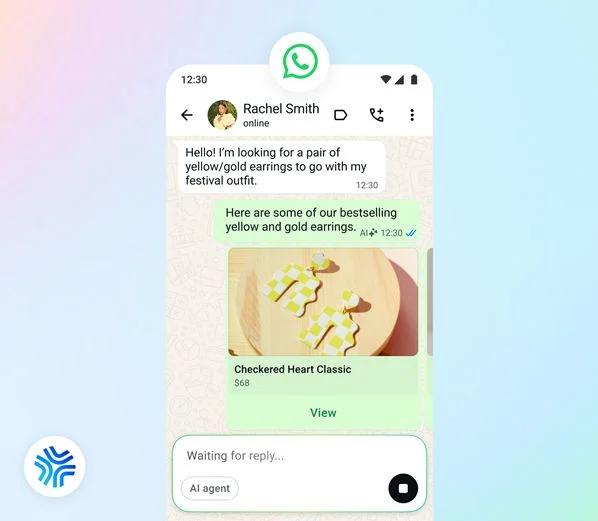
In a move that signals a seismic shift in the digital economy, Meta has officially unveiled the "Meta Business Agent"—an ambitious, AI-driven infrastructure designed to automate customer experience (CX) and streamline commerce across its massive messaging ecosystem, including WhatsApp, Messenger, and Instagram. By providing businesses with a sophisticated, customizable layer for automated interactions, Meta is effectively transforming its social platforms from simple communication channels into powerful, AI-integrated commerce engines.
The launch, which spans both the consumer-facing Agent and a robust "Meta Business Agent Platform" for developers and enterprises, marks a significant departure from basic chatbot functionality. Instead, Meta is betting on "agentic commerce"—a future where AI doesn’t just respond to queries but proactively manages relationships, drives sales, and integrates deeply with existing corporate tech stacks.
The Core Infrastructure: Scaling Conversational AI
At the heart of this announcement is the Meta Business Agent Platform. This is not merely a tool for small retailers; it is a comprehensive infrastructure layer that allows organizations to build, customize, and deploy AI agents at scale. By integrating directly with enterprise mainstays such as Shopify, Zendesk, and Shopee, Meta is positioning its messaging apps as the primary interface for the modern consumer journey.
Moving Beyond the Chatbot
Traditional chatbots have long been criticized for their rigidity and inability to handle complex, nuanced customer requests. Meta’s new agent utilizes advanced Large Language Models (LLMs) to navigate these limitations. The goal is to handle high-volume inquiries—ranging from order tracking and FAQ resolution to complex product recommendations—without constant human intervention.
According to Meta, the momentum is already significant. Over one million businesses are currently leveraging early versions of this agent technology on WhatsApp and Messenger, providing 24/7 support that was previously unattainable for many mid-market players.
Chronology of Development: The Path to Agentic Commerce
The launch of the Meta Business Agent is the culmination of a multi-year strategy focused on "Business Messaging."
- 2020–2021: The Foundation: Meta heavily invested in the WhatsApp Business API, recognizing that messaging was the preferred channel for consumers in emerging markets.
- 2022–2023: The AI Pivot: With the rapid advancement of generative AI, Meta pivoted from simple rule-based automation to LLM-powered conversational experiences. The company began testing AI assistants in its core apps to gauge user reception.
- Early 2024: Internal Beta Testing: Meta began integrating internal AI tools to assist their own teams, specifically testing "morning briefing" features that summarize missed overnight chats and provide sentiment analysis on thread data.
- Late 2024: Global Rollout: Meta officially announced the Meta Business Agent and the accompanying Platform, signaling a shift toward full-scale commercial availability for businesses of all sizes.
Supporting Data and Market Impact
The shift toward AI-driven messaging is backed by compelling data. Meta’s research indicates that consumers are increasingly frustrated by traditional website navigation and long wait times on phone support. By shifting the "point of sale" into a familiar messaging environment, Meta is targeting a reduction in friction that currently plagues e-commerce conversion rates.
Lowering the Barrier to Entry
One of the most critical implications of this launch is the democratization of sophisticated CX technology. Previously, only Fortune 500 companies could afford to build custom AI infrastructure. Meta is now providing the building blocks for small-to-medium businesses (SMBs) to deploy the same caliber of automation.
Key performance indicators (KPIs) tracked by early testers of the platform suggest:
- Reduced Response Times: Average resolution times for common inquiries have dropped by over 60% in pilot programs.
- Increased Conversion: Businesses using AI to guide users through product catalogs have seen a measurable uptick in completed checkouts compared to those relying on static web pages.
- Scalability: The ability to handle thousands of simultaneous inquiries during peak sales periods (such as Black Friday) without scaling human headcount.
Official Responses and Strategic Vision
Meta has been clear about its motivations. In its official announcement, the company stated, "We’re introducing Meta Business Agent, which lets businesses of all sizes increase their output and deliver personalized experiences for customers using AI."
The focus, however, is not on removing humans from the equation, but on augmenting them. A core component of the Meta Business Agent is the "human-in-the-loop" capability. This feature allows businesses to define precise triggers—such as high-value sales inquiries or frustrated customer sentiment—that automatically escalate a conversation from the AI to a live team member.
Future-Proofing the Platform
Meta is also looking toward internal operations. Beyond client-facing interactions, the agent is being designed to assist internal teams with administrative tasks. Features currently in the pipeline include:
- Market Research: Summarizing customer feedback trends to help product teams iterate faster.
- Calendar Management: Automating scheduling for service-based businesses directly through WhatsApp.
- Cross-Platform Analytics: Providing a unified view of customer sentiment across Instagram, Messenger, and WhatsApp.
Implications for the CX Industry
The introduction of the Meta Business Agent poses significant questions for the Customer Experience industry.
The Rise of Agentic Commerce
We are witnessing a transition from "commerce as a website" to "commerce as a conversation." As these agents take on more autonomy—not just answering questions but potentially closing deals and managing complex returns—the platform becomes the "front door" of the business.
The Challenge of Brand Safety
With great power comes the need for rigorous guardrails. As these agents become more autonomous, the risk of "hallucinations" or off-brand responses grows. For CX managers, the priority is no longer just hiring more support agents; it is now about "AI governance." Defining the boundaries of what an agent can say, how it handles sensitive financial data, and when it must defer to a human is the new frontline for operational management.
Competitive Landscape
By integrating with Zendesk and Shopify, Meta is effectively neutralizing the threat of third-party "messenger app" disruptors. It is forcing a consolidation of the tech stack: businesses no longer need to manage a separate website support widget if the entirety of their customer journey can be handled within the apps their customers already use daily.
Availability, Pricing, and Accessibility
The Meta Business Agent is currently being expanded to a global audience. While Meta is currently providing initial access for free to drive adoption and data collection, the company has confirmed plans to transition to a paid subscription model in the coming months. This will likely involve tiered pricing based on the volume of conversations handled or the level of integration complexity.
To ensure businesses are actually found by consumers, Meta is also revamping its discoverability tools. Users will soon be able to search for AI-powered businesses by name, phone number, or shared contact cards directly within the WhatsApp interface, creating a "yellow pages" style directory for the AI era.
Conclusion: A New Era for Businesses
The Meta Business Agent represents more than just a software update; it is a fundamental reconfiguration of how business is done online. By embedding intelligence into the most ubiquitous messaging platforms on the planet, Meta is attempting to own the "middle mile" of the customer relationship.
For SMBs, this is a transformative opportunity to compete on a level playing field. For enterprises, it is an essential upgrade to maintain relevance in an era of instant gratification. However, the ultimate success of this initiative will depend on Meta’s ability to balance the efficiency of automation with the nuance of human connection. As we move into 2025, the businesses that succeed will be those that view these agents not as a replacement for human staff, but as a force multiplier for their brand’s voice, reliability, and reach.
The era of agentic commerce has officially begun, and the storefront of the future is no longer a URL—it is a chat thread.
 Iffa Jayyana
  Raul Delapena Setiawan
  Laily UPN