
 By Evan Lee Salim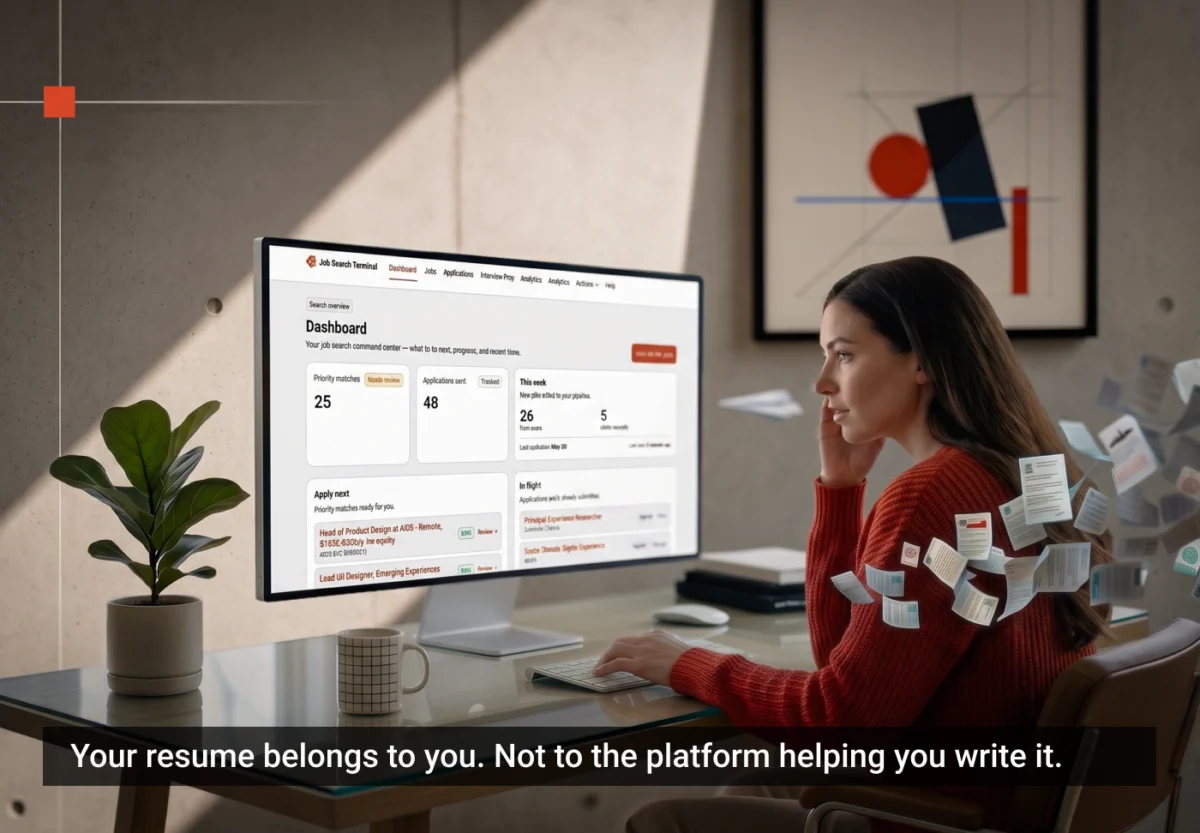
The modern job hunt has transformed into a high-stakes digital obstacle course. As corporations aggressively adopt artificial intelligence to streamline recruitment, job seekers find themselves in a Kafkaesque nightmare: attempting to explain their life’s work to unseen machines that operate on opaque, proprietary logic. This shift has placed an unprecedented burden on the applicant, who is now expected to master prompt engineering, reverse-engineer algorithms, and pay for premium "career optimization" platforms just to secure a seat at the interview table.
The AI Paradox: When Resumes Talk to Machines
The integration of Large Language Models (LLMs) into applicant tracking systems (ATS) has created a troubling feedback loop. A landmark 2025 research paper, titled “AI Self-preferencing in Algorithmic Hiring,” has quantified the extent of this issue. The study reveals a startling phenomenon: LLMs exhibit a consistent “self-preference bias,” favoring resumes that mirror their own linguistic patterns and formatting output.
According to the researchers, this bias ranges between 68% and 88%. In simulations across 24 distinct occupations, candidates who utilized the same LLM used by the hiring software were 23% to 60% more likely to be shortlisted than equally qualified individuals using human-written resumes.
This is not merely a technological hiccup; it is a fundamental distortion of the labor market. When an algorithm prefers a resume because it "sounds like" its own output, the hiring process ceases to be a search for the best candidate and becomes a search for the most compliant text. This leads to the "homogenization of talent," where applicants are forced to strip away the nuance and unique voice of their professional experience to appease a system they cannot see or understand.
The Burden of the Invisible Gatekeeper
The implications of this shift are profound. The traditional "human element" of recruitment—the ability to recognize potential, appreciate unconventional career paths, or identify soft skills that defy keywords—is being systematically sidelined.
The current landscape forces candidates into a state of perpetual adaptation. If you do not "decode" the algorithm, you are invisible. If you do not pay for the latest optimization tool, you are at a competitive disadvantage. This creates a pay-to-play ecosystem where the barrier to entry for employment is no longer just talent, but the ability to navigate a convoluted digital architecture.
A Response: The Job Search Terminal
Recognizing the systemic decay of the job-seeking process, developer Pavel Bukengolts has introduced the Job Search Terminal, an open-source, local-first dashboard designed to restore the balance of power. Unlike traditional career platforms that monetize user data and lock features behind paywalls, the Terminal is a utility built for the user’s autonomy.
Reclaiming Control Through "Local-First" Architecture
The central philosophy behind the Job Search Terminal is simple: the applicant should own their data. In a typical job-seeking platform, your resume, your history, and your goals are stored in a cloud database owned by a third party. They become the gatekeepers of your professional identity.
The Terminal, by contrast, operates locally on the user’s machine. It requires no accounts, no cloud database, and no subscription. By keeping data on the user’s hardware, it ensures that professional history—the most intimate data an individual possesses—remains private.
Why AI, If AI Is the Problem?
A critical question arises: If AI-driven bias is the core issue, why use an AI-integrated tool to combat it?
The answer lies in the distinction between "autopilot" and "augmentation." The Job Search Terminal uses AI for parsing, comparing, and drafting, but it mandates human oversight. The user provides their own API key, reviews the output, edits the language, and ultimately decides what is true and useful. It is not an attempt to "beat" the AI with more AI; it is an attempt to stay "legible" in a system that has become increasingly difficult to read. It allows the applicant to remain the primary architect of their professional narrative.
Implications for the Future of Work
The rise of AI-driven hiring has created a crisis of trust. When candidates believe the game is rigged—or worse, when the data confirms it is—they lose faith in the meritocratic promise of the job market.
The Erosion of Human Judgment
As HR departments lean further into automated filtering, they risk losing the "human touch" that is essential for long-term organizational health. An algorithm can optimize for keywords, but it cannot measure cultural fit, grit, or the ability to innovate in the face of ambiguity.
The Rise of the "Algorithmic Arms Race"
We are currently entering an arms race where job seekers are forced to use AI to bypass the AI that is currently rejecting them. This cycle is unsustainable. If everyone uses AI to polish their resumes to a mirror finish, the signal-to-noise ratio in hiring will reach a breaking point, eventually forcing companies to abandon these systems or find new ways to verify human authenticity.
Call for Transparency
The industry must demand greater transparency from software vendors. If companies are to use AI to filter talent, they must be held accountable for the biases these systems introduce. The "black-box" nature of current hiring tools is no longer acceptable in a professional environment that prides itself on diversity, equity, and inclusion.
Practical Steps: How to Use the Terminal
For those interested in reclaiming their agency, the Job Search Terminal provides a straightforward, transparent workflow:
- Parsing: The tool digests job descriptions and your resume to highlight gaps and matches.
- Comparison: It objectively maps your experience against the requirements, showing you exactly where you stand.
- Drafting: It offers suggestions for tailoring your narrative without stripping away your authentic professional voice.
- Judgment: The user makes the final call. The tool does not apply on your behalf; it prepares you to make the most informed decision possible.
For users unfamiliar with GitHub or command-line interfaces, the project includes an installation guide that allows users to leverage AI coding assistants like Claude Code or Codex to set up the environment, democratizing access to technical tools for non-technical users.
Conclusion: A New Standard for Job-Seeking
The hiring market is fundamentally broken, but it is not beyond repair. While one tool cannot solve the systemic issues of global recruitment, it can provide a blueprint for a more equitable future. By moving toward local-first, transparent, and user-controlled tools, we can begin to shift the focus of the hiring process back to where it belongs: the connection between a skilled human and a challenging role.
As the industry moves forward, the focus must shift from "optimizing for the machine" to "clarifying for the human." The Job Search Terminal serves as a proof-of-concept that we do not need to sacrifice our data, our money, or our professional integrity to participate in the modern economy.
Resources:
- Project Page: Job Search Terminal
- Source Code: GitHub Repository
The struggle for agency in the digital age is far from over. Tools like these represent the first step in a larger movement to put the power back in the hands of the people actually doing the work.
 Ammar Sabilarrohman
  Neng Nana
  Sagoh
Sagoh 